Engineered Spirits (@EngineerdSpirit) header
Engineered Spirits (@EngineerdSpirit) profile picture

Engineered Spirits. Hand-crafted for your enjoyment. Sit a spell.

Prospect, Tennessee
Joined July 2020
Photo by Engineered Spirits (@EngineerdSpirit)Photo by Engineered Spirits (@EngineerdSpirit)Photo by Engineered Spirits (@EngineerdSpirit)Photo by Engineered Spirits (@EngineerdSpirit)Photo by Engineered Spirits (@EngineerdSpirit)Photo by Engineered Spirits (@EngineerdSpirit)Photo by Engineered Spirits (@EngineerdSpirit)Photo by Engineered Spirits (@EngineerdSpirit)Photo by Engineered Spirits (@EngineerdSpirit)Photo by Engineered Spirits (@EngineerdSpirit)
Do you know what's in your whiskey? Well, we know exactly what goes into ours. The farm's corn, the farm's springwater and Middle Tennessee-grown wheat and barley. And, in just over three more years, you'll be able to taste that difference too!
2
1
3
100
This past year, due to construction and utility work, both of the elderberries we’ve been harvesting from were destroyed. We have plenty of small ones, but it takes 2-3 years from the time they’re planted to get flowers or berries. We’re planting these three #downonthefarm ASAP.
2
2
4
The winter months, when many hardy shrubs and trees go dormant, is the best time to remove invasive species and plant natives in their place #downonthefarm. Today's project takes us to a damaged section of the distillery’s picnic area, where we’re planting a native clematis.
2
2
28
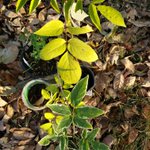
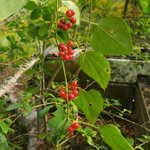
Here, among the limestone boulders and scattered artifacts from Papa's workshop, Carolina Snailseed has gained a foothold. This native vine can be difficult to get rid of, but birds enjoy its bright red berries, while small mammals will sometimes shelter within its tangled stems.
3
3
10
We’re thoroughly cleaning this carboy to ensure there's no contamination from bacteria or residual yeast. When we make our wine, we first put it in a five-gallon brew bucket to ferment. But, after we’ve racked it, we like to put it in glass, so we can keep an eye on its clarity.
2
2
9
Muscadines are going dormant #downonthefarm, so now’s the time to dig a few up for transplanting. Surprisingly, we’ve never found any fruit, just small plants or gigantic vines stretching high up into the trees. Hopefully, we can start some that will be a little easier to access!
3
3
39
Just past the picnic area is a tangle of downed trees, some from “unexpected” utility work and some laid low by storms. Chinese privet has quickly sprung up to fill the void. This year we’ll be spending a lot of time cleaning up the deadfall and killing as much privet as we can!
1
2
1
3
56
We have several species of native American Asters growing in the #distillery's picnic area, about half of which were growing there originally. This year, we're collecting seeds from many of them, so we can sow them in the area that was damaged by utility work earlier this year.
3
4
92
We won't compost these Hardy Orange seeds; this is one plant we don't need to spread around unintentionally! But sometimes we do harvest the peels as well. It just depends on which ingredient we need for our next experiment.
2
2
48
One of the reasons we dislike Hardy Orange is because each tiny orange has hundreds of seeds and only a tiny amount of juice. But a great way to reduce the amount of seeds that hit the ground is to harvest them!
2
2
42
We collected a few hardy oranges #downonthefarm to replenish our stock of highly acidic orange juice from these exotic invaders. We use the juice and peels of these as a substitute for orange juice, bitter orange, and orange peel in our recipes.
2
2
35
We talk a lot about the different fruits and botanicals we use, but the one we've spent the most time on is undoubtedly the Jimmy Red corn we use to make our whiskey. We think it's incredibly special, not just because of its heritage, but also because we grow it #downonthefarm.
2
3
22
There's wild beauty to appreciate everywhere #downonthefarm so, when we need a break from our work, we just step a few feet away to enjoy it. This patch of native Goldenrod and Helenium is just below the orchard and right beside our springhouse.
2
1
3
24
We've let the pectin do its work on our persimmon fruit and juice, what winemakers refer to as "must", for the last 24 hours. Now, we're ready to see how much alcohol potential it has before we add our yeast.
3
4
53
A few years ago, we harvested native elderflowers and elderberries #downonthefarm. After those first experiments, we were eager to use them again, but we need to plant a whole lot more if we're going to harvest enough for wine! We'll grow these on for a year before planting them.
3
3
17
Our highest priority has always been to use the farm's limestone spring water as the main ingredient for our products. We've been waiting for weeks and, finally, we've received the latest water test results. But we still haven’t heard if the State will let us use it or not!
3
3
11
This statuesque #wildflower is native Helianthus maximiliani, Maximilian's Sunflower, which loves full sun and thrives in prairies with infertile soils. This clump will expand in time, filling the limestone outcrops beside the distillery with golden flowers each October.
3
3
91
Pectin has proven to be extremely useful when making wine from these fibrous persimmons. We want to get as much sugar out of them as possible to make the best quality wine. Then, after we've left it for 24 hours to work its magic, we'll add our yeast.
3
1
3
93
We've found that using pectin helps us make better wine, in the same way it helps you make better jams or jellies. But we have to use it at just the right temperature if we want it to be effective.
2
2
32
Our third batch of homemade, native persimmon wine this year commences! But no matter how many times we do this, we never fail to learn something new! And that's why we practice. Each attempt helps us hone our craft.
3
5
28