
Post-doc @AlzheimerAms 🧠 | PET imaging | Alzheimer’s disease | genetically identical twins
Joined July 2020
- Tweets82
- Following121
- Followers337
- Likes543


Pinned Tweet
So excited and honored to be invited to present the opening plenary at #AIC2025 this year in Toronto! 🧠
🙏 I would be very grateful if you could help me gather the most inspiring papers (including your own!) of the past year by completing this survey: alz.surveymonkey.com/r/923BT…

🚨Calling all neuroimagers! Help @EmmaCoomans shape the opening plenary at #AIC2025 (Toronto, July 26th) "Accomplishments of the Past Year" and share the most impactful neuroimaging research from the past year via this brief survey (~5min) by May 30th.
act.alz.org/site/R?i=eOejFv9…
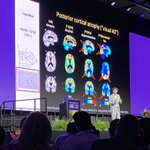
I had so much fun presenting the opening plenary at #AIC25! ✨🧠If you missed it or want to have another look at the slides, find them through the QR code on the last image in the tweet below!
We started #AIC25 off with a great plenary by @EmmaCoomans giving the yearly "Year in Review"! Such an informative and comprehensive talk, giving a great overview of all the important neuroimaging work of the last year. See the last image for a QR code to download slides! 👏👏


✨ REMINDER!! ✨ please help me gather the most inspiring papers of the last year (including your own!!) by completing the survey below! 🙏
Looking so much forward to presenting the @NeuroimagingPIA year in review talk at #AIC2025 this July!! 🤩
alz.surveymonkey.com/r/923BT…

So excited and honored to be invited to present the opening plenary at #AIC2025 this year in Toronto! 🧠
🙏 I would be very grateful if you could help me gather the most inspiring papers (including your own!) of the past year by completing this survey: alz.surveymonkey.com/r/923BT…
Emma Coomans retweeted

Individuals with more severe clinical Alzheimer disease symptoms than their biological stage often have additional pathologies. ja.ma/3H0b6TU

Emma Coomans retweeted

I am recruiting for 2 posts to join our FTD research!
A research assistant or postdoc working on PET and coordination of a new study: jobs.cam.ac.uk/job/49140/
A biostatistician to work on blood-based markers in ONFIRE: jobs.cam.ac.uk/job/49134/
Deadline 8th Dec - share widely!
Emma Coomans retweeted

Having started my career in basic neuroscience research, I have always understood Alzheimer disease to mean the pathophysiology associated with amyloid plaques and tau tangles. As a clinician, I appreciate that the relationship between Alzheimer disease and cognitive impairment is complex.
1. Clinically diagnosing the cause of cognitive impairment is different than diagnosing that the patient has Alzheimer disease (pathology). Many of my patients with cognitive impairment have multiple diagnoses (e.g., sleep apnea, medication-related cognitive dysfunction, depression, previous cerebral infarction), and sometimes have Alzheimer disease (based on biomarker testing). I do what I can to mitigate the effects of all of these conditions, and when Alzheimer disease is present I do not assume that it is the sole or even the primary cause of cognitive impairment. This is true across multiple potential etiologies: for example, I may diagnose someone with cerebrovascular disease and a prior infarct based on MRI findings, but determine that this condition is asymptomatic and not contributing to their cognitive impairment.
2. Given the simplicity of some biomarker tests and the difficulty of clinical assessment, there is a risk that clinicians may diagnose the etiology of cognitive impairment as Alzheimer disease without doing a full work-up. This is why appropriate use recommendations for biomarkers always mandate that biomarker results must be integrated with a clinical evaluation and not used as a “stand-alone.”
3. Alzheimer disease pathology accumulates silently for ~10-20 years before the onset of cognitive impairment. However, during this pre-clinical phase the accumulation of amyloid pathology is associated with many other biomarker changes that appear pathological (e.g., abnormal CSF synaptic biomarkers, brain atrophy, brain hypometabolism). While the brain is remarkably resilient to damage and individuals may or may not develop symptoms, the brain is sick and the pre-clinical phase is a disease state.
4. Suggesting that a disease only exists when organs are severely damaged and failing (dementia) seems counter to what we have learned in other areas of medicine. For example, patients diagnosed with hypertension or asymptomatic coronary artery disease may change their diet and medications to avoid a heart attack. Individuals with asymptomatic chronic kidney disease may or may not go on to require dialysis, but they can be monitored and sometimes treated.
5. There are valid concerns about the stigma and risks of asymptomatic individuals being labeled as having Alzheimer disease given that they may or may not develop cognitive impairment. The solution is simple—we don’t perform biomarker testing in asymptomatic individuals outside of research studies or clinical trials. Again, this has been mandated by appropriate use recommendations for biomarkers.
We can help patients by promoting accurate understanding and appropriate use of biomarkers. #EndAlz
Emma Coomans retweeted

We're excited to finally share our review of fMRI hyperactivity in the Alzheimer’s disease pathological cascade, the result of a fun collaboration with @CorriveauNick, @fislarissa, Eoin Molloy, & @anne_maass
Now out in @braincomms - summary thread below!
academic.oup.com/braincomms/…

Very much looking forward to the results of this study, and very excited the first participants have been included! Great work by @vermeiren_marie 🤩

Pleased to present the design paper of a Dutch multicenter study in which we aim to assess the clinical value of Tau PET, led by @vermeiren_marie (@AlzheimerAms).
"The impact of tau-PET in a selected memory
clinic cohort: rationale and design of the TAP-
TAU study"
Link to paper @AlzheimersRes: alzres.biomedcentral.com/art…


Emma Coomans retweeted

🔥Years in the making, now published! My final postdoc project in @NatureComms shows that Tau and TSPO PET follow gradients🌈 of connectivity in #Alzheimer disease 🧠
nature.com/articles/s41467-0…
Thanks to @alzassociation @Sunnybrook @MCSA_Montreal
Now ready for new adventures!🌍☺️

After a few days in NY, my poster has reached its final destination! Stop by my poster today during AIC (nr. 64) and join our tau-PET-session during #AAIC24 on July 30th to hear about prevalence of tau-PET-positivity in a multicenter study including 41 (!) cohorts worldwide 🌎


Emma Coomans retweeted

🚨 NEW PREPRINT!
"Prediction of future cognitive decline among cognitively unimpaired individuals using measures of soluble phosphorylated tau or tau tangle pathology"
I am very pleased to present our most recent work!
It concerns a large multi-cohort study in which we conducted a head-to-head comparison between plasma p-tau217 vs Tau-PET among 1,534 cognitively unimpaired individuals and tested how well they were associated with clinical progression over time.
🧵You can find a nice thread here > xitter.cf/biofinder_study/status…
Link to preprint >
medrxiv.org/content/10.1101/…
This study would not have been possible without the @biofinder_study team and our fantastic collaborators (a.o. @prevent_ad, @AlzheimerAms, @WUADRC, @WisconsinADRC), including @alexa_pichetb, @DivyaBali06, @karlssonlinda1, @SebastianPalmqv, @NiklasMattsson4, @EStomrud, @JosephTherr, @NesrineR95, @pedrorosaneto, @EmmaCoomans, @CharlotteTeuni1, @sylv_villeneuve. @BenzingerNeuro1, @SuzanneESchind1, @RandallBateman3, @vincentDore2, @AzadehFeizpour & @OskarHansson9 + many others who are not active on X.
And a special thanks to @gesalba; I really enjoyed working on this project together.


🚨Preprint alert!
We are pleased to present our latest work: “Prediction of future cognitive decline among cognitively unimpaired individuals using measures of soluble phosphorylated tau or tau tangle pathology” led by @RikOssenkoppele and @gesalbla.
medrxiv.org/content/10.1101/…

Writing this scientific commentary together with @RikOssenkoppele was so much fun! Congrats to the authors for their paper recently published in @Brain1878!
The implications of Aβ pathology: Only time will tell
🚨 Our scientific commentary is just out in Brain!
@EmmaCoomans and I had the privilege to write an editorial on the recent publication "Characterizing brain tau and cognitive decline along the amyloid timeline in Alzheimer’s disease" @Brain1878.
Take home message:
"The modelling work conducted by Cody et al. suggests that the first decade after amyloid-β onset – before tau has reached the inferior temporal gyrus and before the most pronounced effects on cognition are observed – is a crucial time window for intervention (see Figure)."
Link to editorial > academic.oup.com/brain/advan…
Link to primary paper > academic.oup.com/brain/advan…

Yesterday was such a fun and beautiful day, racing through the Dutch countryside and raising money for Alzheimer’s research together with @_michael_scholl and his beautiful car! Many thanks to the #AlzheimerRally2024 organization team for this great day! 🚗🚗


Emma Coomans retweeted

We are looking for a highly motivated #postdoc to join our team for an exciting collaborative project on #AI image analysis. The position entails working closely with academic and industry partners in Sweden, the US, the UK and Germany.
Please share!
web103.reachmee.com/ext/I005…
Emma Coomans retweeted
What an excellent PhD defense of an extraordinary thesis yesterday! Proud and pleased that @EmmaCoomans will continue as a postdoctoral researcher on my @ERC_Research project TAU-NOW.
@AlzheimerAms

Emma Coomans retweeted

Published online: Performance of a [18F]Flortaucipir PET Visual Read Method Across the Alzheimer Disease Continuum and in Dementia With Lewy Bodies bit.ly/45aRFOv
#NeuroTwitter @EmmaCoomans @RikOssenkoppele

Emma Coomans retweeted

Very interesting editorial: "The lack of adoption of (new) MRI biomarkers (in clinic) is a significant failure for the field of dementia imaging research, and it is unlikely that simply applying ever more sophisticated methods of machine learning [..] will change this situation."

New editorial out in Brain:
Brain MRI research in neurodegenerative dementia: time to deliver on promises academic.oup.com/brain/artic…
Happy that the final paper of my phd thesis is now out! If you are interested in tau-PET visual reads / the clinical implementation of tau-PET, check out our latest paper published in Neurology @GreenJournal @AlzheimerAms
@EmmaCoomans strikes again (2nd paper published in 1 week)!
"Performance of a Flortaucipir PET Visual Read Method Across the Alzheimer Disease Continuum and in Dementia With Lewy Bodies".
n.neurology.org/content/neur…
@AlzheimerAms @GreenJournal.

Interested in the complex interplay between cerebrovascular burden and Alzheimer’s disease pathology? 🧠 Check out our newest paper just published in @Brain1878! Big thanks to all co-authors but especially @OskarHansson9 and @RikOssenkoppele!!
🚨NEW: our paper “ Interactions between #vascular burden and #amyloid-β pathology on trajectories of #tau accumulation” led by @EmmaCoomans is now published @Brain1878.
@biofinder_study @AlzheimerAms @OskarHansson9
academic.oup.com/brain/advan…

Interesse in een update over zorg en onderzoek rondom dementie? Meld je aan voor Alzheimer Actueel waar onder andere @SuzanvAmerongen, Elliz Scheijbelaar en ik iets zullen vertellen over ons onderzoek 🧠 #WereldAlzheimerDag #Alzheimer10daagse

Op #WereldAlzheimerDag nodigen wij u uit voor Alzheimer Actueel: een informatieve middag waarin onze experts een update geven over zorg en onderzoek rondom #dementie. Gepresenteerd door Johnny de Mol. Aanmelden via 👉 alzheimercentrum.nl/patiente…
📷 William Rutten #Alzheimer10Daagse
