

Ellutia design and produce a range of innovative gas chromatography instruments. Our systems are designed to be smaller, faster and give greater sensitivity.
Ely, Cambridgeshire
Joined November 2010
- Tweets986
- Following204
- Followers272
- Likes31







GC Detectors Explained: FID, TCD, ECD, GC-MS, and TEA. Which One Do You Need?
bit.ly/4yp5R6g

Detector selection rarely gets discussed until something goes wrong.
A method producing inconsistent results. A sample matrix causing interference. A maintenance schedule that is eating into lab time. These are often detector problems presenting as method problems.
The decision made at the start of method development, which detector, at what sensitivity threshold, for which compound class, shapes everything downstream. Getting it right early means fewer corrections later.
There is no single answer. FID for organic compounds. TCD for permanent gases. ECD for halogens at trace levels. TEA for N-nitroso compounds where specificity matters as much as sensitivity. Each was designed for a specific analytical task.
The common mistake is treating MS as the default for anything requiring trace-level sensitivity. For certain applications it is. For others, a selective detector is a more direct route to a reliable result.
We wrote a practical guide to working through that choice. Still relevant if you are at the start of a new method or reconsidering an existing one. Link in comments.
#GasChromatography #MethodDevelopment #AnalyticalChemistry #GCDetectors #LabScience

The split ratio is one of the most basic settings on a GC. It is also one of the easiest to get wrong.
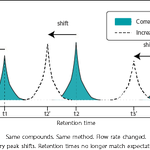
Most of the time, you set it during method development and never think about it again. But gas flow drifts. Columns get changed. Septa and liners get replaced. And after each of those, the actual split ratio can shift without the instrument flagging anything.
The result is a method that looks correct on screen but is quietly producing inconsistent results.
We wrote a full guide covering how to choose a split ratio based on your sample concentration, what overload and lost sensitivity look like on a chromatogram, and how to verify that the ratio you set is the one you are actually getting.
Link in comments.
#gaschromatography #splitratio #methoddevelopment #gctroubleshooting
Read the post here: blog.ellutia.com/blog/gc-spl…

Split Ratio in GC: How to Choose It, How to Check It, and What Happens When It's Wrong
bit.ly/4wm0sLG

More sensitivity isn't always the answer.
In trace nitrosamine analysis, sensitivity gets most of the attention. But a detector that responds to everything in a complex sample matrix creates a different problem: your nitrosamine peak is there, it's just buried under everything else.
The detector you choose determines two things: whether it can find your compound at the concentration you need to test to, and whether it can see it clearly against everything else in the sample. Get one wrong and the result is wrong.
We've written a comparison of the three detectors that come up most in this space: GC-MS, NPD, and the TEA. How each one works, where each one has limits, and how to match the choice to what your analysis actually needs to answer.
Link in the comments.
#nitrosamines #analyticalchemistry #gaschromatography #detectorselection
Read the post here: blog.ellutia.com/blog/nitros…
Which Detector for Nitrosamine Analysis? A Comparison of GC-MS, NPD, and the TEA
bit.ly/4ailn9T

Quick one for anyone in cosmetics manufacturing, formulation, or QA.
If your products contain Methyl-N-methylanthranilate, the sell-through deadline in the UK is 6 July 2026. After that, any non-compliant stock becomes unlawful to supply.
But the deadline itself is really just one example of a wider direction. Nitrosamine testing in cosmetics has been a known requirement for years. What is changing is how closely manufacturers are expected to demonstrate that testing is actually happening, not just that a finished product happens to pass.
The challenge most manufacturers run into is that testing for named nitrosamines like NDMA and NDELA only catches the ones on the list. New nitrosamines get identified in cosmetic products on a fairly regular basis, often in categories nobody was looking at. A fixed list cannot catch something nobody knew to look for.
ATNC analysis solves this by testing for total nitrosamine content rather than working through a list. Below the level of concern, you are done. Above it, you know to look further.
We have written about this on the blog, covering the chemistry, the regulation, and what bringing ATNC testing in-house actually looks like.
Link in comments.
#Nitrosamines #Cosmetics #ATNC #RegulatoryCompliance #AnalyticalChemistry

Read it here: blog.ellutia.com/blog/nitros…
Nitrosamines in Cosmetics: What Manufacturers Need to Know About Testing and Compliance
bit.ly/4g6LuEz
Most GC troubleshooting starts in the wrong place.
You have checked the column. You have checked the sample prep. The temperature programme looks fine.
The results are still inconsistent.
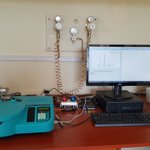
Carrier gas flow is usually the last thing an analyst suspects, and often the first thing that should have been checked. The number on the GC display is what the instrument was told to deliver. What is actually reaching the column can be different, and without a direct measurement there is no way to know.
Components age. Fittings loosen. Seals wear gradually enough that no single run looks obviously wrong. The drift is slow, which is exactly what makes it easy to miss.
A direct flow check takes seconds. It removes flow as a variable from your troubleshooting and gives you a number you can record and stand behind.
We wrote about this in detail on the blog this week, covering what flow actually controls, where problems hide, and how to build flow checks into a routine without adding significant overhead.
Link in comments.
#GasChromatography #GC #AnalyticalChemistry #LabScience #ChromatographyTips


Carrier Gas Flow: The Overlooked Cause of GC Inconsistency
bit.ly/4fxtNxx

Your method is defined. Your compound class is set. You are running the same test hundreds of times a year.
At what point does GC-MS stop being the right tool and start being an expensive habit?
It is a fair question. Mass spectrometers are genuinely versatile. For labs that need to identify unknowns, confirm structures, or cover a wide range of compound types in a single system, that flexibility pays for itself.
But for labs with a fixed, well-characterised method and high sample throughput, the infrastructure of GC-MS can be more than the method needs. Vacuum systems, pump maintenance, source cleaning, trained analysts for data interpretation. All of that is manageable. The question is whether it is necessary.
A selective detector built for your compound class often gets to the same result with less overhead and simpler data. Not always. But often enough that it is worth asking before you renew or replace.
We covered the full decision framework in a recent post on our blog. Link in comments if it is useful.
#GasChromatography #AnalyticalChemistry #LabCosts #DetectorSelection #GCMethod