

Tiktok: https://xitter.cf/t.co/Cpy2tAFboV
Joined August 2024
- Tweets62
- Following6
- Followers6
- Likes233





Pinned Tweet
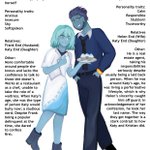
Hello! I'll post about my art, my ocs and my book on this account!
Thanks for reading and engaging! 💗
#art #artist #digital #digitalartist #digitalart #meettheartist #meettheartist2024 #artmoots

1
5
128
Elements retweeted

💙 💙 💙 💙 💙 💙 💙 💙 💙
💘 ハラヒメ始動記念🎉
プレゼントキャンペーン 💘
🫐六麓荘宝役 #堀金蒼平 さωの
直筆サイン入りポストカードが当たる🎁
抽選で3名様にプレゼントするЙё→🤩💖💖
🌈応募方法
① @harahimejp をフォロー
② このポストをリポスト
🌈応募期間 11/18(水)〜11/24(火)23:59
🌈当選者にDMするからフォロー外さないでЙё😎✌️
#原宿ヒメゴトハウス
💙 💙 💙 💙 💙 💙 💙 💙 💙

Elements retweeted
🩷 🩷 🩷 🩷 🩷 🩷 🩷 🩷 🩷
💘 ハラヒメ始動記念🎉
プレゼントキャンペーン 💘
💗尖石めろ役 #住谷哲栄 さωの
直筆サイン入りポストカードが当たる🎁
抽選で3名様にプレゼントするЙё→🤩💖💖
🌈応募方法
① @harahimejp をフォロー
② このポストをリポスト
🌈応募期間 11/17(火)〜11/23(月・祝)23:59
🌈当選者にDMするからフォロー外さないでЙё😎✌️
#原宿ヒメゴトハウス
🩷 🩷 🩷 🩷 🩷 🩷 🩷 🩷 🩷

My commissions are open; prices in euros and paid via paypal or discord wishlist
Headshot 5€
Halfbody 15€
Full body 20€
I also do character designs


1
11
Here is some art related to Elements that I have made in the past months!
#art #artist #digital #digitalartist #digitalart #ElementsOE #ocs #artmoots


1
6
011126
• Elements Book Updates | Revised chapter 11
This entire year I've been reworking the wording of my chapters and I am almost done.🙏 I really want to write again and not just correct my past.
1
11
Elements retweeted

“Africa Project”
I would like to pause the discussion about entering the Japanese manga industry for a moment and talk about something else.
It is about Africa.
I will also be sharing a work related to this project, so I hope you will take an interest in it.
Steve and I have been interested in aspiring manga artists around the world for almost 30 years.
We believed that manga industries would eventually emerge in countries all over the world.
For the past ten years in particular, we have been working on what we call the “Morocco Project.”
I made a commitment to keep working until the day a manga industry was born in Morocco and aspiring Moroccan manga artists could build good lives as manga artists in their own country.
The articles Steve and I have been publishing are also part of that project.
We have not simply been writing articles and talking.
We have not simply been making predictions.
We have developed business ideas, anticipated problems that might arise in the future, prepared solutions in advance, and studied what would be needed for rapid and large-scale growth.
We even came up with several inventions that could potentially become “patents.”
For example, Japan basically does not need manga schools.
But we believe the rest of the world does need institutions for manga education.
And even Japan, although it does not fundamentally need them, could benefit from having them.
So we designed a global manga education institution.
We even came up with ideas for the interior design of the school and the designs of T-shirts for the students.
In fact, we once received a proposal from someone willing to invest around 20 million dollars to actually build the school.
I would have loved to see the school built at the time, but I turned down the offer because I was asked to take an ownership stake and run the business.
I understand that it was a generous offer from someone who trusted me and wanted to make me wealthy.
But I have no intention of running a business, and I have no intention of taking an ownership stake.
Among all these efforts that went beyond simply talking and writing, there was also manga creation.
“Then when are you going to talk about Africa?”
Please wait just a little longer.
The greatest effort I can make for a place is to draw manga for it.
The greatest gift an apple tree can give is an apple, and the greatest gift a manga artist can give is manga.
For example, if I wanted to help create a manga industry in North America, what should I do?
Writing and speaking to provide a vision and encouragement would be the beginning.
I think it would also be important to advise and, when necessary, contribute ideas so that good digital platforms can emerge.
Helping with education would also be valuable.
Producing manga projects would be another possibility.
But the ultimate gift I can give is to actually draw manga for the North American manga industry.
And earlier this year, I worked on a project to create manga for Zimbabwe, a beautiful African country with enormous, almost limitless potential.
Here is how it happened.
Earlier this year, while I was interacting with mangaka around the world on X, I met a Japanese mangaka who was working to support them.
Her name is Hiroko Oda-sensei.
While we were talking by email, Oda-sensei told me that she knew of a manga magazine in Zimbabwe and had published a manga in it.
She said:
“I’m the first Japanese mangaka to publish a manga in Africa.”
“Wow!!!”
I replied immediately.
“Then I want to be the second.”
And so I became the second Japanese mangaka to publish a manga in Africa.
This is that story.
To be continued...
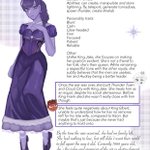
At the start of this month, I finally remade the character sheets of Katy's parents.
#ElementsOE


140725
• Element Book Updates | Finished Chapter 12
Here are the parents of the water element mcs! I reworked their sheets. Kristian's dad is missing but I'll rework his character sheet too! #ocs
🐰 I finished the chapter last night! Yayy!!!


Elements retweeted
A Heartfelt Request to Manga Fans Around the World Regarding the Tokiwaso Project
camp-fire.jp/projects/930324…
The crowdfunding campaign for Hiroko Oda-sensei's Tokiwaso Project is being conducted in Japan.
Simply put, its primary audience is Japanese manga fans and people in the Japanese manga industry. I believe this, too, comes from her sincere desire to strengthen and support the community closest to the project.
Although it is possible for people outside Japan to contribute, the project is not particularly easy for overseas supporters to discover or understand. The campaign description is in Japanese, and the crowdfunding platform itself is also intended primarily for Japanese users.
As I thought about this project, one idea came to mind.
If this campaign were to receive visible support from manga fans around the world, I believe it would send a truly meaningful message—not only to Japanese manga fans, but also to the Japanese manga industry, as well as to Japanese companies and public institutions.
That message would be simple: "Discovering and supporting manga artists from around the world is worthwhile."
For Japanese supporters, contributing to a project that introduces international manga creators is, above all, an act of generosity. There may be no immediate strategic reason to support it beyond simply wanting to encourage a wonderful idea.
For manga fans and aspiring creators outside Japan, however, the success of this project could mean something far greater.
If the Tokiwaso mook can continue to be published—and perhaps one day even become a regular publication—the opportunities it creates will belong to you. It would also become undeniable proof that your country has the potential to nurture a thriving manga industry.
That is an incredibly valuable message.
I also hope that manga journalists, media outlets, and influencers around the world will introduce this project to their audiences.
And above all, if everyone reading this could help spread the word, I would be truly grateful.
Thank you so much.

Elements retweeted
“Kalabash”
Do you know there are aspiring manga artists in Zimbabwe?
There are manga artists, too.
There is even a manga school.
Did you know that?
And there is a manga magazine.
Its name is Kalabash! #Kalabash4
Can you imagine how Steve and I felt when we heard all of this from Hiroko Oda-sensei?(@OdaHirokoIllust)
For almost 30 years, we have dreamed about the future of manga around the world.
For ten years, we have worked on what we call the “Morocco Project,” working toward the day when a manga industry would emerge in Morocco, Africa.
And yet, before there is a global fund for the future of manga, before the major manga-producing countries have begun supporting and working toward it, and before the big tech companies of the manga industry have opened up new markets, Zimbabwe already has not only aspiring manga artists, but manga creators, a manga school, and a manga magazine.
The great people of this great country are building it all themselves.
We were moved to tears.
I could imagine how difficult their efforts must have been, and I could deeply feel their love for manga.
More than anything, we realized that we had been sitting somewhere warm, doing nothing.
We felt an enormous sense of guilt.
And above all, Zimbabwe's Kalabash is powerful evidence of the future of manga.
It is like starlight shining down from the heavens onto the earth.
To me, it felt like a revelation.
A revelation about the future of manga, yes.
But also a revelation that said:
“Boichi! Steve! You two were right!”
“Yes!”
So I wanted to give them the greatest gift I could.
I wanted to draw manga for them.
I wanted to become the second, after Oda-sensei.
Oda-sensei passed my proposal on to the Zimbabwean manga magazine Kalabash, and they got in touch with Steve, my global manager.
This work was provided to Zimbabwe free of charge.
I have no intention of taking money for projects like this.
I have an extreme dislike for people who have money but are stingy when it comes to paying mangaka.
I have seen at least one mangaka die because of people like this in Korea.
They are like devils in the manga industry.
Money intended for the manga industry should be spent on mangaka.
It should be spent on creating manga.
That is the fundamental principle, and I believe it is absolutely the right direction.
Any other approach kills manga artists, and eventually kills manga itself.
But I am more than willing to stand beside people who are genuinely devoted to advancing manga.
Of course, it is impossible for me to keep drawing manga for every such person around the world.
I could probably do this two or three times at most, and I have already done it once for Zimbabwe.
The other time was not for a manga, but I made several efforts for Oda-sensei's Tokiwaso Project.
She actually offered me a cover illustration and proposed a fairly substantial fee, but I told her I did not want to accept payment.
I wanted to draw these things for free and, through them, show that I stand with the people who are devoted to the future of manga.
Anyway, once I was in contact with Kalabash, I did not wait for their final approval.
I began planning the manga and studying Zimbabwe.
I don't know much about Zimbabwe.
I am truly sorry about that.
Zimbabwe is a wonderful country that is well known around the world.
I simply don't know much about it because I am very ignorant.
And that means I need to study.
There is something I often say:
“Having knowledge means you are intelligent. Wanting to know—that is love.”
I am not particularly intelligent, but I have no intention of meeting Zimbabwean readers without studying their country.
Wanting to know is love.
The primary readers of the manga I am going to draw will be the people of Zimbabwe.
I have a responsibility to love them.
And I did not want to draw a manga that simply cheers for and celebrates Zimbabwe's manga industry.
I wanted to put a message about the future of manga into it.
And although this manga is for Zimbabwe, it is also part of the “Morocco Project.”
The Morocco in the name of the project does not actually mean the country of Morocco.
I use the name Morocco to remember and thank a young aspiring manga artist from Morocco who gave me deep inspiration and insight.
In reality, it means “every country in the world.”
So the feelings I am putting into this manga are my support for all the countries of Africa.
To be continued...
Elements retweeted
“A Message”
I sent the editor of Zimbabwe’s manga magazine #Kalabash a proposal, and I received approval to create the work.
That means I have the chance to become the second Japanese manga artist to publish a manga in Africa.
I cannot treat something this precious as if I were free to do whatever I want.
I did what a mangaka is supposed to do with an editor.
So I sent the proposal.
Once it was approved, I sent the character designs. After those were approved, I created and submitted the thumbnail storyboard.
It was approved, and I began drawing.
I listened to the editor’s advice, and I received reference materials and assistance from them.
This is how manga is made.
This is the enjoyable process of creating manga.
For both the manga artist and the editor.
This process itself was also a gift I wanted to give to Zimbabwe.
But I needed it, too.
Because this would be my first time meeting readers in Zimbabwe.
What if I made the manga however I wanted and ended up causing problems for them?
Readers deserve to be respected.
I wanted to meet the readers of Zimbabwe with the help of the Kalabash editor’s sense and judgment.
In other words, it was a gift—but it was also something I very much wanted to receive.
I decided to create the manga as a spin-off of my work Sunday’s Momonga.
There are several reasons for this.
Of all the IPs I have created, Sunday’s Momonga is the only one I can use freely without needing permission from a publisher.
And Momonga was created for exactly this kind of purpose from the very beginning: to be used for the future of manga, including the development of new devices and the expansion of manga around the world.
That is why I created it without relying on the support of any Japanese publisher.
There is another reason.
Sunday’s Momonga is the work I created with the purest expression of love I could put into a manga.
There was no other vision, goal, or strategy behind it.
I created it simply from the things I love.
So if other opportunities arise in the future to do something for the future of manga, Sunday’s Momonga will be the first work I reach for.
But there was one final, and most important, reason why I decided to make a Momonga spin-off.
I did not want to put only the message, “Zimbabwe needs a manga industry.
Africa needs a manga industry,” into this work.
The powerful force of manga comes from the industries that grow around manga.
Manga creates related industries.
That is one of the most important reasons why every country in the world needs a manga industry.
So I decided to put another message into the manga:
“Zimbabwe and Africa need a character industry.”
That was the decisive reason I chose to make this a Momonga spin-off.
I decided to title the Momonga spin-off:
Zimbabwe Adventure.
To be continued...


I drew Scaramouche with an ita bag of my genshin oc and it felt too good not to post
#genshinimpact


Hey guys 🐰 Here is all the characters done in the last werk! I reworked two of my old ones and also created new oc art for the Airings!
If you want please check out the tiktok for that, thanks for 50+ followers!
vm.tiktok.com/ZNdgvUB9k/


020725
• Element Book Updates | Finished Chapter 11
I'm so tired, I worked for almost nine hours straight but I got to finish this chapter!! One step closer to finishing my book <3 It's 34 pages long!
#author #elementsoe