

Tweets (my views) and retweets (not necessarily) reflect my interests not my opinions. Anaesthetist. Immigrant internationalist.
Joined May 2010
- Tweets6.7K
- Following3K
- Followers1.2K
- Likes8K




Edwin Borman retweeted

Onchocerca volvulus is a parasitic filarial nematode that causes onchocerciasis (commonly known as river blindness). O. volvulus distribution follows that of the dipteran vectors. Black flies breed in fast-running water of mountainous streams in regions of Africa and South and Central America and have a fairly long flight range. Thus, onchocerciasis can be found several miles from the nearest endemic breeding site. Because much of the world’s coffee is grown on mountainous hillsides, the prevalence of onchocerciasis among workers on coffee plantations is high.
Page 285 📕 Parasitic Diseases, Eighth Edition
Download a copy for free! parasiteswithoutborders.com/…

Edwin Borman retweeted

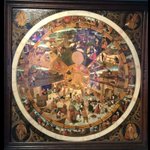
This strange square 👇 is undoubtedly the most extraordinary work of literature in human history. Yet, unfortunately, barely anyone in the West has ever heard of it.
There was this woman poet in 4th century China called Su Hui (蘇蕙), a child genius who had reportedly mastered Chinese characters by age 3.
At 21 years old, heartbroken by her husband who left her for another woman, she decided to encode her feelings in a structure so intricate, so beautiful, so intellectually staggering that it still baffles scholars to this day.
Came to be known as the Xuanji Tu (璇璣圖) - the "Star Gauge" or "Map of the Armillary Sphere" - it's a 29 by 29 grid of 841 characters that can produce over 4,000 different poems.
Read it forward. Read it backward. Read it horizontally, vertically, diagonally. Read it spiraling outward from the center. Read it in circles around the outer edge. Each path through the grid produces a different poem - all of them coherent, all of them beautiful, all of them rhyming, all of them expressing variations on the same themes of longing, betrayal, regret, and undying love.
The outer ring of 112 characters forms a single circular poem - believed to be both the first and longest of its kind ever written. The interior grid produces 2,848 different four-line poems of seven characters each. In addition, there are hundreds of other smaller and longer poems, depending on the reading method.
At the center a single character she left implied but unwritten: 心 (xin) - "heart." Later copyists would add it explicitly, but in Su Hui's original the meaning was even more beautiful: 4,000 poems, all orbiting the space where her heart used to be.
Take for instance the outer red grid of the Star Gauge. Starting from the top right corner and reading down, you get this seven-character quatrain:
仁智懷德聖虞唐,
貞志篤終誓穹蒼,
欽所感想妄淫荒,
心憂增慕懷慘傷。
In pinyin, it is:
Rén zhì huái dé shèng yú táng,
zhēnzhì dǔ zhōng shì qióng cāng,
qīn suǒ gǎnxiǎng wàng yín huāng,
xīn yōu zēng mù huái cǎn shāng.
Notice how it rhymes? táng / cāng / huāng / shāng
The rough translation in English is: "The benevolent and wise cherish virtue, like the sage-kings Yao and Shun, With steadfast will I swear to the heavens above, What I revere and feel - how could it be wanton or dissolute? My heart's sorrow grows, longing brings only grief."
Now read it from the bottom to the top and you get this entirely different seven-character quatrain:
傷慘懷慕增憂心,
荒淫妄想感所欽,
蒼穹誓終篤志貞,
唐虞聖德懷智仁。
The pinyin:
Shāng cǎn huái mù zēng yōu xīn,
huāngyín wàngxiǎng gǎn suǒ qīn,
cāngqióng shì zhōng dǔzhì zhēn,
táng yúshèngdé huái zhì rén.
It rhymes too: xīn and qīn, zhēn and rén
And the meaning is just as beautiful and coherent: "Grief and sorrow, longing fills my worried heart, Wanton and dissolute fantasies - is that what you revere? I swear to the heavens my constancy is true, May we embody the sage-kings' virtue, wisdom, and benevolence."
That's just 2 poems out of the over 4,000 you can construct from the Xuanji Tu!
At the very center of the grid, the 8 red characters wrapped around the central heart, she "signed" her poem with a hidden message:
詩圖璇玑,始平蘇氏。 "The poem-picture of the Armillary Sphere, by Su of Shiping."
Or reversed:
蘇氏詩圖,璇玑始平。 "Su's poem-picture - the Armillary Sphere begins in peace."
Many scholars, and even emperors, throughout Chinese history have been completely obsessed by Su Hui's puzzle.
For instance, in the Ming dynasty, a scholar named Kang Wanmin (康萬民) devoted his entire life to the poems (kangshiw.com/contents/461/26…), ending up documenting twelve different reading methods - forward, backward, diagonal, radiating, corner-to-corner, spiraling - and extracting 4,206 poems. His book on the subject ("Reading Methods for the Xuanji Tu Poems", 璇璣圖詩讀法) runs to hundreds of pages.
Empress Wu Zetian herself, the legendary woman emperor of the Tang dynasty, wrote a preface to the Xuanji Tu around 692 CE (baike.baidu.com/item/%E7%BB%…).
Incredibly, there's even far more complexity to the Xuanji Tu than just the poems:
- The name 璇玑 (Xuanji) - Armillary Sphere - is astronomical in meaning and the way the poems can be read mirrors the way celestial bodies orbit around a fixed center. It's a model of the heavens.
- Her original work, with the characters woven on silk brocade, was in five colors (red, black, blue/green, purple, and yellow) which correspond to the Five Elements (五行) - the foundational Chinese philosophical system that explains how the universe operates. So it's also a model of the entire cosmic order according to ancient Chinese philosophy.
- It's also of course deeply mathematical with this 29 x 29 perfect square grid, with sub-squares, lines and rectangles, and a structure which allows for symmetrical reading patterns in all directions
- Last but not least, the content of the poems themselves contain multiple registers. On top of expressing her personal grief and longing for her husband, it's also filled with accusations against the concubine (Zhao Yangtai) he left her for, reflections on politics (with many references to sage-kings) and philosophical reflections.
So the Star Gauge is simultaneously:
- A love letter (expressing personal longing)
- A legal brief (arguing her case against her rival)
- A cosmological model (structured like the heavens)
- A Five Element diagram (encoding the fundamental structure of the world according to ancient Chinese philosophy)
- A mathematical construction with perfect symmetry and precision
And yet, for all this complexity, we should not forget this was all ultimately in service of the simplest human message imaginable: a 21-year-old woman asking the love of her life "come back to me".
Her husband did, eventually. According to what empress Wu Zetian herself wrote in her preface to the Xuanji Tu, when he received Su's brocade he was so "moved by its supreme beauty" that he sent away his concubine and returned to his wife. As the story goes, they lived together until old age.
The heart at the center was filled after all.


Edwin Borman retweeted

Andrew Wiles on the morning he discovered how to fix his proof of Fermat's Last Theorem


Popular favourite, Hieronymus Bosch
Where Heaven is weird, you definitely don’t want to go to Hell, and the place in the middle seems a distinctly nasty mixture of the two…
The Last Judgement
#Groeningemuseum


1
125
When you’re home, feel like you’re dying of the plague, hallucinating demon spirits coming out of the barn, and a bunch of wandering minstrels playing shawms and skull harps come wandering by… the Trials of Job by, who else but, Hieronymus Bosch, #Groeningemuseum


1
97
When you go out for dinner with your mates and… one quite literally gets so drunk he’s almost under the table… two start a fight, because one is running off with the money… and a gatecrasher turns up looking like death - of, wait, that is…


2
89
Why, when you can paint like this, can you not paint fingers and toes??? Master of the embroidered foliage
#groeningemuseum


1
98
Fascinating research by @NTFabiano & colleagues showing how fMRI with analysis of brain networks may have predictive value for a person’s risk of developing depression
And the paper is available free!
🧠


1
1
191
Edwin Borman retweeted
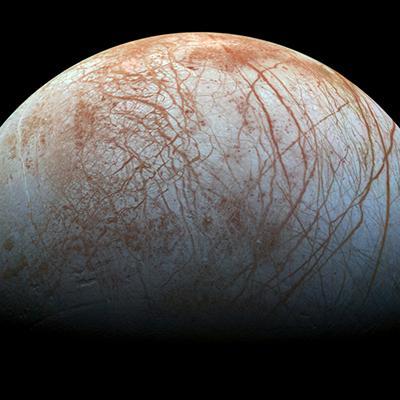
Ok, listen up. Here's your briefing about what we know so far, and what we hope to find out when we get to Jupiter's ocean moon Europa: europa.nasa.gov/why-europa/e…

ALT Illustration showing a cross-section of Europa's interior. The top layer is ice, with cracks that may possible vent geysers to the surface. Below that is global ocean of liquid water. The bottom layer is the rocky core, which could have volcanic vents.
Our planet…
live-streamed from the ISS…
🌍
“That’s here. That’s home. That’s us. On it everyone you love, everyone you know, everyone you ever heard of, every human being who ever was, lived out their lives…” (Sagan)
🌎
(except those lucky few on the ISS, of course)
🌏
@sen

Our planet, as seen from orbit. Watch Sen’s livestream from the ISS 🌏 xitter.cf/i/broadcasts/1OwGWXbNA…
153
Edwin Borman retweeted

What is the diagnostic accuracy of clinical tests for confirming tracheal intubation or excluding oesophageal intubation?
@VirtueOfNothing @jadamlaw @NicholasChrimes @AndyHiggsGAA @doctimcook
buff.ly/3BowTSy

Not my preferred art but, with open eyes and mind, seeing so much more in the Pre-Raphaelites
“Victorian Radicals” at @BM_AG
“”Flaming June” at @royalacademy
Superseded by the 20th century radicals but beauty, skill, different world-view aplenty


1
3
239

It’s arrived!
“Close-up” by @MattDoogue
Great to be able to learn more about how you capture/create your amazing images and the thought you put into them


12
1,009
Edwin Borman retweeted

In healthy unanesthetized volunteers, norepinephrine increased arterial pressure but decreased the cerebral blood flow. Cerebral blood flow was correlated with cardiac output, not arterial blood pressure. Read more: ow.ly/fEfL50QUKcB

Edwin Borman retweeted

You knew #bumblebees were friendly but…is that bumblebee actually waving at you?
Please #retweet/#share for the #bees.
When talking to people about bumblebees (which we do a lot!😊) they tend to mistakenly associate them with two things; honey and stings.
Here’s a thread on #stings to set the record straight.
We’ll get to honey another day.
Thanks, as always, good people. 🙏🏼🐝
1/12
Edwin Borman retweeted

We have published the findings of our survey of members’ perceptions & experiences of anaesthesia associates.
The survey responses have been reported by Research By Design, who conducted the survey on our behalf. The report is available on our website: ow.ly/cIHo50Rc1vf

ALT Logo of the Royal College of Anaesthetists



