

Freelance research, editorial support, and fact-checker for education authors and publishers. Now accepting new clients! https://xitter.cf/t.co/TqIkLFSKxs
- Tweets3.2K
- Following412
- Followers1.2K
- Likes667








ALT Conservative women’s attempts to eliminate suspected antiAmerican influences in the schools and to achieve some measure of control over their children’s education reveal several insights into their world-view, which remained consistent throughout the decade. The overall purpose of an education, for instance, was not to encourage intellectual growth and original thought; indeed, there was a distinct anti-intellectual component in their thinking. Education meant developing, through careful recitation of patriotic deeds, and promoting, through reading and writing about America’s manifest destiny, an unswerving loyalty to the United States. The whole notion of academic freedom contradicted this loyalty. The concept of a free exchange of ideas in the classroom conflicted with conservative women’s firm belief in the inviolability of America’s constitutional government, capitalist economy, and Christian heritage.

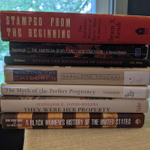
ALT By attacking progressive education, especially the U.S. history curriculum, conservative women would foreshadow future conflicts over the content and scope of knowledge presented in the classroom. It seemed fraudulent, as it would to their successors in the post-war world and beyond, that the historical narrative could embrace a wide range of stories told from perspectives other than their own white, upper-class, native-born American background.84 Their fixation on what they considered America’s noble and heroic history was not just a matter of patriotic nostalgia. Conservative women feared that they were witnessing the severance of their link to a past that validated their own status as authentic Americans. Their identity and, just as important, their children’s identity, centered in part on a particular construction of historical events, for it reinforced a vision of what America should be and where their place was in it.


ALT Alathena Johnson, from the 1915 yearbook of Wellesley College; a young white woman wearing eyeglasses and a white collared blouse

ALT Alathena Johnson Smith, from a 1972 newspaper story; an older white woman with coiffed hair, smiling outdoors, wearing eyeglasses and a white top with a strand of beads