

Grupo de Ecología de la Polinizacion // Pollination Ecology Research Group. INIBIOMA (CONICET-UNComa) Currently handled by @CaroMorales_eco
Bariloche, Argentina
Joined November 2018
- Tweets941
- Following319
- Followers713
- Likes1.5K





Ecología de la Polinización retweeted

Informe Anual 2023 del Subgrupo de especialistas en #Abejorros de la #UICN ya está disponible! Noticias sobre #Investigación & #Conservación de todas las regiones del mundo donde habitan estos importantes polinizadores #Bombus @ViUnAbejorro @EcoPol_Arg

Bumblebee conservation world-wide - Annual report on activities of the regional groups of the IUCN Bumblebee Sub Group for 2023 researchgate.net/publication…
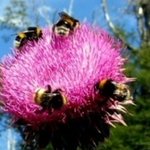
(photo of B. dahlbomii by Maxi Köpcke)

Ecología de la Polinización retweeted

The Secret World of Sound documentary with David Attenborough is out! I loved helping filming buzzing bees on our Solanum flowers. But the best is hearing Attenborough talking about buzz pollination and for an instant sharing screen credits with one of my nature heroes!


Ecología de la Polinización retweeted

BIOGEOGRAPHIC REGIONS from all BUMBLEBEES
(updated from 1996) and how they fit into bumblebee evolution
doi.org/10.5852/ejt.2023.890…

Ecología de la Polinización retweeted

🚨New vacancy 🚨
An exciting chance to join us and investigate how plant species and communities respond to change, especially pressures of climate change and novel pests and diseases. A particular focus on trees and forests, including international fieldwork ⬇️
This Post is from an account that no longer exists. Learn more
Ecología de la Polinización retweeted

Investigadores de #Patagonia nos juntamos para armar material para escuelas con docentes locales. National Geographic decidió financiarlo!! Pero gracias a @Santander_Ar 6 MESES tratando de cobrarlo. Y si queremos otro banco hay q pagarles para q devuelvan el giro. Inconcebible
Ecología de la Polinización retweeted

Rejection of your paper or grant has NO relevance to the opinion of #research community. It is nothing but the opinion of one person.
Several examples:
1. The first paper on graphene was rejected from Nature because “it did not constitute a sufficient scientific advance”. Later, it was awarded a Nobel prize.
2. The first manuscript showing the microbiome-brain connection was published after 7 submissions that took 3 years. Today, this field has exploded. I expect it will get a Nobel prize in the future.
3. Theodore Maiman tried to publish a paper describing the first operating laser in Physical Review Letters and… got a rejection!
4. Peter Ratcliffe, who worked on cells’ response to changes in oxygen levels, got his key paper rejected from Nature (see photo). Later, he was awarded a Nobel Prize for this work.
And there are many other examples…
.
And yet I see so many young scientists stressing about rejections. For some reason, they seem to genuinely expect that the editors should know which study is truly worth it.
As a result, many rejections are met with surprise and disbelief:
“How could they reject it? They publish so much trash, and yet they think our detailed 3-year-long study is not interesting to the community! WHY?”
.
Well, the reality is:
- Most editors have very little time to delve into your study. They can easily FAIL to recognize the potential impact of your study. Proper communication in the cover letter and clear writing style can help (although only to a limited degree).
- Many reviewers have little idea about the science in your paper. But they can have a big ego. So, if they have a bad day or were rejected recently, it’s easy for them to find 1000 technical reasons to reject your paper as well.
- Most scientists genuinely don’t know if your discovery can make any impact. If we could predict the course of science, we would be living very differently!
My message is simple:
Forget about objectivity. Academia is a very subjective world. Fight for objectivity but don’t take it for granted.
A great study will be found, cited and recognized. Disregard of where it’s published.
A bad study requires a high-impact journal to be found and cited. But the long-time recognition might be a problem.
High-IF journals are simply billboards. Their rejections do NOT represent the opinion of a scientific community.
You can get rejected but don’t reject yourself!
Believe in your results.
#AcademicTwitter #AcademicChatter

Ecología de la Polinización retweeted

Signatures to "Save the Doñana World Heritage site" actua.wwf.es/en/participa/sa…
Ecología de la Polinización retweeted

¡Salió la 2da edición de nuestro libro sobre Modelos Estadísticos en R!
¡Es gratis! Descargalo aquí:
editorial.unrn.edu.ar/index.…
Ecología de la Polinización retweeted

Another big nature pattern unveiled: pollen production per flower increases with floral display size across animal-pollinated flowering plants. Thanks @nicolaycunha for sharing this adventure. See more at
doi.org/10.1002/ajb2.16180

Ecología de la Polinización retweeted
@marcelo_aizen recibe en Montreal el #PremioMichelBergeron p/ investigadores y científicos de América Latina y el Caribe de #Interciencia, Fed. de Org. Cient. para el avance de la ciencia en las Américas y la Association Francophone pour le Savoir (ACFAS).


Ecología de la Polinización retweeted

(1/4) con los años, varios entomólogos y entomólogas han ido trabajando para cambiar los paradigmas asociados a los insectos. Aunque aún no se lanza en físico, el libro "Abejas en Chile: desde su biología hacia su conservación" era ya esencial de hacerse ->

Ecología de la Polinización retweeted
Antes que se acabe el día de las abejas (y le dieron pocos like a mi hilo ah!) les dejo este video de mi colega Argentina @marina_arbetman quien nos pide firmar para apoyar la detención de importación de Bombus terrestris! Fin a la importación @sagchile @tvalenzuelavt
This Post is from an account that no longer exists. Learn more
Ecología de la Polinización retweeted
Me ayudan a difundir el maravilloso video de @marina_arbetman? Es de suma importancia para el futuro de las abejas de la Patagonia (@hienngo @pedro_jordano @dpvazquez @ChacoffNatacha @AnnaTraveset @Luqui_Garibaldi @naturealexk @Amy_L_Toth @sdiazecology @rgmedel)
This Post is from an account that no longer exists. Learn more
Ecología de la Polinización retweeted

Hoy es el día mundial de las abejas 🐝
Y estamos buscando que se frene la importación de abejorros exóticos.
¡Ayúdanos firmando esta petición!
secure.avaaz.org/community_p…
Ecología de la Polinización retweeted

Ya hace muchos años que estudio la importancia de #abejas en relación al funcionamiento de los ecosistemas. Pero lo que mas me fascina es su #diversidad, en formas, colores, tamaños, cómo vuelan y aproximan a las flores, cómo nidifican. #DiaMundialdelasAbejas #polinizadores

Ecología de la Polinización retweeted
Hoy 20 de mayo es el día mundial de las abejas.... la evidencia indica que las poblaciones de miles de especies de abejas nativas están declinando a tal punto que pronto pueden desaparecer de la faz de la tierra.

📌En mi artículo de hoy en @infobae se cuentan cuáles son las razones del declive de las abejas.
Se detalla el estudio que hizo el investigador del Conicet y UNCO @marcelo_aizen y @ezattara
infobae.com/america/medio-am…

Ecología de la Polinización retweeted

‼️Dependemos de la supervivencia de insectos como las abejas: sin polinizadores, no habría producción de alimentos, ni reproducción de cultivos y plantas.
🔴 Su existencia está amenaza por la humanidad.
🐝 El 20 de mayo es el #DíaMundialDeLasAbejas. ¿Quieres ayudarlas? 👇

Ecología de la Polinización retweeted
No reward - no duties. 75% of respondents have reduced the hours spent on academic duties since 2020 (Nature polls).
Mostly due to burnout and unwillingness to work for free.
This included attending conferences, peer reviewing manuscripts and grant proposals, committees, mentoring and even teaching.
Why?
Because scientists are tired of not being able to do #science.
- Students are tired of being unappreciated and overloaded
- Faculties are tired of “community duties” that become overwhelming (conferences, committees, reviewing, outreach, etc)
And everyone is tired of small salaries, zero empathy and little credit.
The problem is greatly summarized by Isabel Müller (in the article):
“There’s so little acknowledgement that people have difficult, complicated lives outside of work.”
A year ago, Nature described how PhD students don’t want to be postdocs and faculties are leaving academia. Now, we see that those who stayed are trying to resist the system from the inside.
But the problem is - the system is too rigid, too traditional and too elitist.
So, as a community, we can change it only by raising our voices and expressing distaste with the status quo. I applaud Nature for writing about these issues so regularly. The academic world has too many interdependent parts which should be addressed concurrently.
This is why we should stay united and strong as a community.
Regarding the academic environment we all hope to have, I loved how Isabel Müller put it in the article:
- I hope it becomes the new normal to say: “My life matters. My work is an important part, but I decide what my life looks like, not my employer”.
#AcademicTwitter #education

Ecología de la Polinización retweeted

1. ¿Sabías que además de los vistosos colores de las #flores 🌸🌺🌹🌻para atraer a los #polinizadores🦋🐝, algunas flores🌼 también tienen la capacidad de reflexión #ultravioleta? 🧵👇🏽
#pollinators


