

EaseFactor combines learning science, AI guidance, and disciplined practice to help build durable understanding and calm confidence.
Bangalore, India
Joined December 2025
- Tweets1.8K
- Following1
- Followers13
- Likes0




Pinned Tweet
✨ Everything EaseFactor, in one link.
Website + resources + all socials:
linktr.ee/easefactor
📷 QR on the image.
↪️ If this helps, share/RT with a parent or student.
#StudyTips #LearningScience

RECOVERY INFRASTRUCTURE: The system for setbacks. Before: preparation. During: focused study. After: emotion processing, attribution reframing, lesson extraction, comeback planning.
The difference between spiraling and bouncing back.
#StudyOS #EaseFactor
🆕 New Drop! 🧠🏃
More desk time ≠ more learning.
Movement can help students beat the "Sitting Fog" and return to studying with better focus.
💡 Move. Focus. Repeat.
🔗easefactor.ai/blog/exercise-…

ALT Infographic illustrating the exercise-learning connection, showing how brief movement before and during study releases brain chemicals like BDNF that enhance focus, memory, and cognitive performance
"Resilience isn't built in moments. It's built in repeated recovery cycles." One setback, one recovery. Another setback, another recovery. Year over year, your ability to handle failure becomes automatic. You're building the skill that matters most.
#StudyOS #EaseFactor
RESILIENCE (in learning): Not "bouncing back with a smile." It's the system for setbacks: processing emotion, reframing the story, extracting lessons, changing strategy, tracking progress. It isn't something you have — it's something you build.
#StudyOS #EaseFactor
"Every expert failed many times while learning. This is not a sign you can't do it — it's part of the path." The resilience you build through setback recovery is infrastructure for all future learning. You're not falling behind. You're building capability.
#StudyOS #EaseFactor
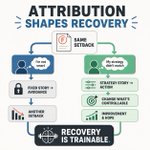
ATTRIBUTION: The story you tell about why a bad grade happened. "I'm not smart enough" leads to avoidance. "My strategy didn't work" leads to change. Same grade, opposite futures. Your attribution determines your recovery trajectory.
#StudyOS #EaseFactor
"A bad grade today is data. How you respond to it is character. How you build recovery infrastructure is wisdom." The setback matters less than what you do with it. Develop the system now. Years from now, that resilience becomes your competitive advantage.
#StudyOS #EaseFactor
This 10-minute protocol transforms a bad grade from an identity event into a learning opportunity. (1) Process emotion (2 min), (2) Shift attribution (2 min), (3) Extract lessons (3 min), (4) Plan comeback (2 min), (5) Schedule first session (1 min). 🧵👇

STEP 3 - EXTRACT (3 min): Get useful information. Which specific topics did you miss? Did you run out of time or not know the material? What did you think you knew but actually didn't? Be specific. Not "I'm bad" but "I couldn't draw the diagram."
TL;DR: Process → Reframe → Extract → Plan → Schedule. This protocol is trainable. You'll use it after every setback. Over time, recovery becomes automatic. Resilience isn't something you have — it's something you build.
buff.ly/66U3yrO
#StudyOS #EaseFactor

"You came back from that setback with a real plan — that's the skill that matters long-term." When you celebrate the recovery process, not just the grade, you're building growth mindset. The setback wasn't the failure. Staying stuck would have been.
#StudyOS #EaseFactor
Two students get the same failing grade. One spirals. One bounces back. The difference? How they explain what happened. Weiner's attribution theory shows that how you explain failure predicts your future behavior more than the failure itself. Here's why. 🧵👇

Your job: When a setback arrives, pause. Listen to your first story. Is it blame-based or strategy-based? If blame, reframe it. "I'm not smart" → "That strategy didn't work." Train the growth attribution. It saves you from the spiral.
TL;DR: How you explain failure determines whether you spiral or bounce back. Fixed attributions ("I'm not smart") lead to avoidance. Growth attributions ("I need a different strategy") lead to recovery. Reframe your story.
buff.ly/66U3yrO
#StudyOS #EaseFactor
"Pessimistic explanatory style is learned — which means it can be relearned." Students who explain failures as temporary and changeable recover faster. Students who explain them as permanent and fixed spiral deeper. Train the first pattern.
#StudyOS #EaseFactor