

In making , Stay tuned, Something interesting to follow..
Earth
Joined August 2023
- Tweets932
- Following186
- Followers500
- Likes1.8K





Pinned Tweet
Asteroid hyalosis occurs when tiny calcium or lipid deposits form within the vitreous humor (The gel-like substance that fills the space between the lens and the retina) "See Green highlighted ". These deposits are typically small, spherical, and composed of calcium and phospholipids. They usually don't cause any symptoms or vision problems, though some individuals may notice floaters, which are small, semi-transparent shapes that drift across the field of vision.

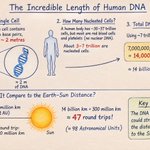
The total length of all the DNA molecules in the human body is so large , that if put end to end , it would reach from the Earth to the Sun and back over 47 times #DNA #amazingfact

38
Quantum physics suggests that at the deepest level, reality may not be as fixed and certain as we perceive it. There may be multiple possibilities, while we experience only one outcome as our reality. It makes us wonder, are we simply living in one of countless possible realities and is consciousness the window through which the universe experiences this particular version of existence.
Perhaps reality is far more than what we see, what we call life is just one expression of an infinite landscape of possibilities.
Perhaps the universe is full of possibilities, but consciousness allows us to experience one as reality.

1
43
We tend to believe that reality exists independently and that our consciousness simply observes it. But what if the reality we experience is not merely something we observe, but something our consciousness continuously interprets, organizes and gives meaning to.Our senses capture only a fraction of the physical universe. Our eyes perceive a narrow spectrum of electromagnetic radiation, our ears detect a limited range of frequencies, and our brains transform electrical and chemical signals into what we experience as colour, sound, texture, space and time.
In other words, the world we see is not necessarily the world as it fundamentally exists. It is the brain's interpretation of information received from the external environment.
A sunset, for example, is physically a complex interaction of electromagnetic radiation, atmospheric particles and the observer's visual system. Yet, to consciousness, it becomes beauty, nostalgia, tranquillity or even sadness. The physical event may be the same, but the experienced reality is profoundly different.
This raises an extraordinary distinction, that the universe may exist independently of us, but the reality we experience is inseparable from the consciousness through which we experience it.

45
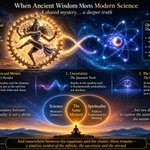
Perhaps one of the most fascinating intersections of human thought lies in the apparent convergence of Shiva, the ancient philosophical representation of cosmic existence, and the uncertainty principle of quantum mechanics.

73
When food enters the mouth, the salivary glands produce saliva containing enzymes like amylase, which kickstarts the breakdown of starches into simpler sugars. As the food travels to the stomach, gastric glands release hydrochloric acid and the enzyme pepsin, breaking down proteins into smaller peptides.The small intestine is where the majority of digestion and nutrient absorption occurs. It's divided into three parts: the duodenum, jejunum, and ileum. Enzymes from the pancreas and bile from the liver break down carbohydrates, proteins, and fats into simpler molecules that can be absorbed. Finger-like projections called villi and microvilli greatly increase the surface area of the small intestine, allowing for efficient absorption of nutrients into the bloodstream. On the other hand, the large intestine primarily absorbs water and electrolytes from the remaining indigestible food matter after the absorption of nutrients in the small intestine. The large intestine also hosts beneficial bacteria that assist in the breakdown of certain undigested materials and produce some vitamins (like vitamin K and B vitamins). It ultimately forms and stores feces before elimination.
1
173
Soft-shell turtles are carnivorous, feeding on a diet that includes fish, insects, crustaceans, and sometimes aquatic vegetation. They have sharp beaks that help them capture and tear apart their prey. These turtles are known for their ambush predatory tactics, lying buried in the sand or mud and waiting for prey to come close. In terms of reproduction, they lay eggs in clutches, burying them in sandy or muddy banks. The temperature of the nest can determine the sex of the hatchlings, a phenomenon known as temperature-dependent sex determination. Soft-shell turtles are ectothermic, relying on the environment to regulate their body temperature.
1
77
Christmas tree worms are filter feeders, which means they feed on particles passing by in the water column using the ‘hairs’ on their body. These ‘hairs’ are called cilia, which act like tiny bristles to create water currents that direct digestion of food. They mainly feed on microscopic plankton, but occasionally they will take in sand to use as building material to help anchor themselves into the coral. These cone-shaped worms are one of the most widely recognized sedentary polychaete worms. They come in many colors including orange, yellow, blue, and white and they are small with an average size 3.8 cm. They reproduce through broadcast spawning, which is when both males and females release their reproductive material into the water column where fertilization then takes place. A fertilized egg only takes 24 hours to develop into larva, at which point it settles and begins burrowing into hard coral to create a tube to dwell in.
1
73
Mitosis is a type of cell division that produces two daughter cells identical to the parent cell. It occurs in somatic cells and is involved in growth, repair, and maintenance.Meiosis is a type of cell division that occurs in reproductive cells (germ cells) and results in the formation of gametes (sperm and egg cells). Meiosis involves two rounds of division, ultimately producing four daughter cells with half the number of chromosomes as the parent cell. This process contributes to genetic diversity.
72
Perhaps the greatest paradox of existence is that light can travel across billions of years of cosmic history, witnessing the evolution of the universe in our timeline, yet accumulate no passage of time along its own path. What we perceive as an eternity is in the geometry of spacetime, a journey with zero elapsed time. It reminds us that time is not an absolute reality, but a dimension of existence shaped by motion and the universe itself.
54
Voyager 1 is bout to hit a milestone of 1 light-day from Earth on November 18, 2026 (around 10:16 UTC / 5:16 a.m. ET).
Current distance (mid-Nov 2026) ~173 AU / ~25.9 billion km from Earth. A radio signal takes nearly 24 hours one way.
It entered interstellar space in 2012 and remains the farthest human-made object. It still sends data (power is limited , so some instruments are off)

ALT Image Source : JPL Voyager 1 crossing into intersettelef space
89