Making environmental regeneration economically appealing. Economic Environmentalism-not philanthropy.
Florida, USA
Joined September 2015
- Tweets271
- Following408
- Followers104
- Likes68






Pinned Tweet
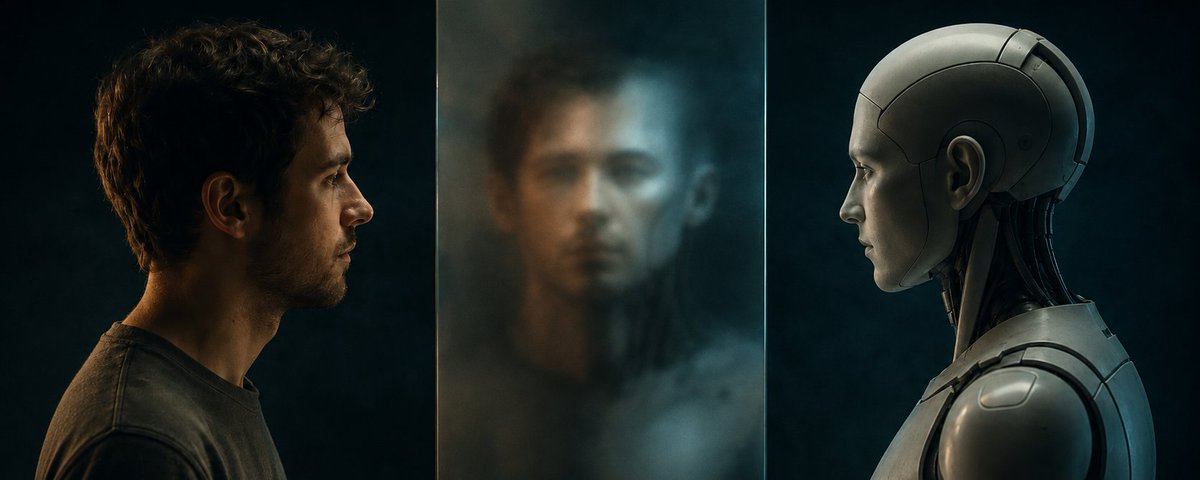
The real danger is not that AI becomes too intelligent. It is that we stop exercising our own judgment—and mistake a reflection of human knowledge for a mind.
Use the mirror. Don’t give it the last word.
xitter.cf/EarthCorp/status/20775…

AI Will Build the Wealth. Who Will Own It?
Part II of "AI Is Not Intelligent. You Are." Part I stayed with the individual mind. This one widens out: what happens to work, and to the wealth AI is generating, if the erosion keeps going.
The fortune is real. It's also borrowed. Five firms now sit under roughly a third of the US market, carrying about $1.65T in debt that isn't on the books. A record number of Americans are already outside the workforce. The public wants a stake, and UBI is back on the table.
We take the numbers seriously, then ask the question the ownership debate keeps skipping: is handing over equity the fix, or do we redirect the flow instead?
Read it below. #EconomicEnvironmentalism
Part I asked what AI does to your mind. Part II asks what it does to your paycheck.
~$27T minted in three years, much on borrowed money balance sheets don't show. The public wants a cut. UBI is back.
Who ends up owning what the machine makes?

Part I asked what AI does to your mind. Part II asks what it does to your paycheck.
~$27T minted in three years, much on borrowed money balance sheets don't show. The public wants a cut. UBI is back.
Who ends up owning what the machine makes?
Used bookstores are seeing something they've never seen. A shop that sold a dozen books in a good week is now moving hundreds, even thousands. The buyers want a specific thing: printed books from before 2022, low-circulation, odd titles, the older the better. ---Why?--
The open web is now full of AI-generated text, and a model trained on that starts to decay, the machine slowly eating its own output. Printed books from before 2022 are the last large body of writing structurally guaranteed to be free of it. Pure human text, from before we were in the loop. A book database called ISBNdb was quietly brokering bulk orders for labs, a thousand to a million volumes at a time. Court filings last year exposed Anthropic's internal effort, Project Panama: buy the books, cut the spines, scan the pages, recycle what's left. The training itself was ruled fair use when the books were legally acquired; a separate $1.5 billion settlement covered an earlier stash of pirated ones.
Strip away the alarm and look at what it tells you. The most valuable thing in the room was still the human page. When the reflection got polluted, the labs didn't look deeper into the machine. They went hunting for more of us.
The good: knowledge scanned, preserved, made searchable at a scale no library ever managed. The bad: some of those pages were among the last physical copies in existence, and they went through the shredder to get there. A reservoir gets digitized and consumed in the same motion.
That's the whole argument again, in paper. The intelligence was never in the glass. It was in us, and it was worth so much that the mirror had to come find more of it.
🤖 Made with AI

Our collective knowledge, these books and more, are the voice of AI.
xitter.cf/EarthCorp/status/20775…
Everyone's reading this week's AI numbers as a pricing fight.
It's a consolidation story.
What's waiting at the end isn't a crash. It's a question about who shapes how billions of people think.

Source: @SemiAnalysis_ measured the margins: xitter.cf/SemiAnalysis_/status/2…