

Awori, Yoruba, Engineer. Fighting for Awori to govern Lagos & Ogun at every level. Uniting all Yoruba tribes for our future! #AworiGovernance #YorubaUnited
Joined May 2022
- Tweets891
- Following48
- Followers2.7K
- Likes125





Pinned Tweet
Things You Can Do to Be More Respectful of Lagos State Indigenes and Their Culture
By following these steps, you can enjoy your Nigerian privilege in Lagos peacefully without trampling on the rights of the natives.
1. Understand that being a Lagos State indigene means different things to different people. Some identify primarily as Awori, the earliest settlers. Others belong to the Egun in Badagry, the Eko (a melting pot of Saros, Aguda, Tapa, and Benin influences) in Lagos Island, or the Ijebu in parts of Epe and Ikorodu. While Lagos is diverse, its indigenous people must be recognized and respected.
2. Find out whose land you are on and honor it. Every part of Lagos State has its indigenous people—whether the Awori, the Egun in Badagry, or the Eko in Lagos Island. Recognizing these roots is key to truly understanding Lagos beyond its modern identity.
3. Never ask anyone if they are a “true Lagosian.” Lagos has always been a city of migration, but its indigenous people should not have to prove their authenticity. Many Lagosians can trace their ancestry back generations, and their lineage is often more complex than outsiders assume.
4. Do not lightly claim that you have Awori, Egun, Eko, or Ijebu heritage. Lagos welcomes all, but being a Lagos indigene is different from simply being born or living in Lagos. Saying “My great-grandfather lived on Lagos Island” does not automatically make one indigenous. Honor the distinction.
5. Avoid saying things that diminish or erase indigenous Lagos culture. Phrases like “Eko for show” or the assumption that Lagosians are just “hustlers” overlook the deep traditions of the Awori, Egun, Eko, Ijebu, and other native groups. Lagos is more than just business—it has a cultural soul.
6. Don’t “play Lagos indigene.” Lagos culture is not entertainment for outsiders. Wearing Aso Oke as a costume, using Yoruba slang for clout, or engaging in selective “heritage tourism” without respecting the real people behind the traditions is exploitative.
7. Be where the people are. Visit historical Awori, Ijebu, Eko, and Egun settlements, support local cultural centers, and engage with Eyo festivals, Oro traditions, and heritage sites like the Badagry Slave Route, the Brazilian Quarter, and Iga Idunganran, which reflects Benin influence in its early monarchy.
8. Support Lagos indigene businesses by buying from indigenous artisans. From beadwork to fabric weaving, Awori, Egun, Eko, and Ijebu craftsmen have traditions that deserve to be preserved. Choose authentic Lagos State indigene products over mass-produced imitations.
9. Invite an elder or traditional leader to open major events with prayers or blessings. If hosting an event in Lagos State, acknowledge the Awori, Egun, Eko, or Ijebu communities whose land you are on. Research first and provide appropriate honorariums to show respect. Visit the palaces (Obas) for additional guidance.
10. Understand that Lagos State is diverse. Indigenous Lagosians are not just Awori—there are Egun, Eko, Ijebu, and other groups with distinct traditions and customs. Recognize their differences instead of treating them as the same.
11. Don’t assume all Lagos State indigenes are wealthy because of commerce. While Lagos is a financial hub, many indigenous communities have been displaced by development projects, migration, and pressure to accommodate new residents. Lagos State indigenes have faced land seizures, economic shifts, and struggles that are often overlooked.
12. When recognizing people, do not exclude Lagos State indigenes. Indigenous Lagosians are often left out of conversations about Lagos’ success. Acknowledge them when discussing the city’s history, economy, and contributions.
13. Don’t expect every cultural custom to be explained to you. At a traditional event? Observe and respect rather than demand explanations. Some practices are sacred and not meant to be overly dissected or commercialized.
14. If you’re at an event, be thoughtful about time. Traditional gatherings may not run on rigid schedules. Many prioritize relationships, storytelling, and community over strict timing. Respect the flow instead of imposing external expectations.
15 Be sensitive during mealtimes. In many Lagos (Yoruba) traditions, elders eat first, and younger or able-bodied people serve them. Be mindful at cultural events and do not rush to the food line without observing the customs.
16. Don’t call traditional outfits “costumes.” Whether it’s Aso Oke, Fila, Dansiki, ceremonial attire, kareta, or Egungun regalia worn by Lagos State indigenes, traditional clothing holds deep cultural and personal significance. Many garments are family heirlooms or handmade with care.
17. Do not assume Lagosians have high rates of social vices. Stereotypes about Lagosians—whether about wealth, land selling, crime, or lifestyle—are misleading. The history of Lagos State indigenes is far richer than media portrayals often suggest. Even outlets like @ARISEtv don’t fully grasp this history.
18. Do not tokenize people. Lagos indigenes should not be included in conversations just for the sake of “diversity.” Build genuine relationships with the communities rather than using them for optics.
19. Ensure the voices of Lagos Indigenes are amplified. If Lagos’ history is being discussed, Awori, Egun, Eko, Ijebu, and other indigenous voices should lead the conversation—not outsiders writing their stories for them.
20. Don’t bring up migration theories that erase indigenous identity. Some narratives suggest that all Lagosians are settlers from elsewhere, ignoring the deep history of Awori, Egun, Eko, Ijebu, and other native peoples. Recognize their rightful presence.
21. Check your Nigerian privilege if you are not indigenous to Lagos. Just because Lagos is welcoming does not mean non-indigenes should feel entitled to its land, politics, culture, or opportunities without respecting the people who have always been here.
22. Use the present tense when talking about indigenous Lagosians. Many people speak of Lagos indigenes as if they only existed in the past. But indigenes are still here—preserving traditions, shaping modern Lagos, and influencing its future.
By
Prince Gbenga Ajiboye from the Ikudigbaro Royal Family, Ete Kingdom, Lagos, Nigeria. and
Prince Adeniyi Baruwa from Aromire, Oluwa and Akinsemoyin Royals houses, Lagos, Nigeria
Baba Awori retweeted

Hello everyone,
My name is Dipo Atanda.
I just completed my CNG Conversion & Maintenance Training.
I can help you:
✅ Convert your Car to CNG - Save up to 70% on Fuel
✅ CNG Servicing & Maintenance - No Leaks, No Wahala
✅ CNG Diagnosis & Repairs

Our Blood Is Not for Rent: Why Only an Aboriginal Child of the Soil Can Heal the Ache of Lagos
When Dr. Obafemi Hamzat @drobafemihamzat stood before a cheering crowd and declared that "if you are a child and you live in Lagos, then you are a child of Lagos," he may have thought he was delivering a clever campaign soundbite. To the political class, it was applause-line rhetoric. To the aboriginal Awori and Ijebu people of Lagos—whose ancestors tilled these swamps, guarded these creeks, and poured libations onto this soil centuries before there was a Nigeria—it felt like another quiet knife twisting into an old, unhealed wound.
Let no one twist our pain into intolerance. As aboriginal Awori and Ijebu people, we are law-abiding, welcoming, and constitutional citizens of Nigeria. We fully acknowledge and respect the 1999 Constitution of the Federal Republic of Nigeria. Until that Constitution is amended otherwise, every Nigerian citizen has the right to live in Lagos, raise their children here, practice their faith, and demand safety and good governance from the state. Protecting every child who lives within our borders is a moral duty we gladly uphold.
But hospitality is not erasure, and residency is not bloodline.
There is a world of difference between the legal construct of citizenship and the sacred, organic reality of indigeneship. You can acquire residency by moving into a house; you cannot manufacture an ancestral tether to the earth by political decree. For generations, the indigenous Awori and Ijebu custodians of Lagos have watched in aching silence as our openness was mistaken for weakness and our generosity was weaponized against us.
Our elders carry the quiet, crushing trauma of watching strangers mock us on our own soil. We walk through a megacity built atop our ancestors' sweat and see an architecture of erasure—where our heroes are sidelined, our heritage is treated as an afterthought, and our youths are locked out of the economic and political levers of their own homeland. And when we dare to speak up, we are gaslit with slogans that reduce our ancient identity to a mere mailing address.
That is why we must not—and will not—abuse the opportunity of this moment by staying silent. And that is why having an aboriginal Awori or Ijebu as Governor of Lagos State is no longer a matter of sentiment; it is a matter of survival.
Since the military decree of the Land Use Act of 1978 stripped indigenous communities of their radical title and placed the trusteeship of every inch of soil in the hands of the State Governor, the occupier of Alausa holds the power of life or erasure over our ancestral inheritance. For too long, we have watched our destiny managed by people who do not carry our scars, do not feel our grief when an ancestral grove is paved over without remembrance, and do not understand what it means to be treated like a tenant in the home your forefathers built.
As the timeless proverb says: he who wears the shoes knows where it pinches.
A Governor who does not come from the aboriginal Awori or Ijebu stock can govern Lagos efficiently—but he will never feel Lagos in his bones the way an indigene does. He will not lose sleep over the vanishing dialects of our coastal towns, the forgotten shrines of our forebears, or the quiet despair of an indigenous child who feels invisible in the land of their birth. Only the wearer of the shoe knows the exact spot where the leather cuts into the flesh.
Lagos will always remain a home of refuge, commerce, and opportunity for all Nigerians—as the Constitution demands and as our ancestors' hospitality has always modeled. Every resident child deserves protection and a fair future. But the stewardship of Lagos must return to the children of the soil who know where it pinches.
We welcome the world to our home—but we refuse to be erased from it.
Signed: Baba Awori
🚨 AYÉ GBA TÁPÀ, Ó FẸ́ KỌ́'LÉ ÌGÚNNÙ...
Àmọ́ èyí kì í ṣe ilé Ìgúnnù o, ILÉ ỌBA NI! 👑
High Court Halts Backdoor Oshodi Coronation: The Landlords Have Spoken!
Yoruba elders say: “Ayé gba Tápà, ó fẹ́ kọ́'lé Ìgúnnù.”
(We welcomed the stranger with open arms, and now he wants to erect his shrine).
Well, Oshodi is NOT an Igunnu shrine—OSHODI IS AN INDIGENOUS AWORI CROWN!
⚖️ THE JUDICIARY HAS DRAWN THE LINE!
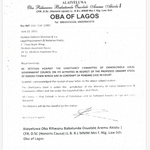
While corrupt elements in government tried to smuggle in a secret White Paper to crown an Arota (domestic retainer) over his landlord, the High Court of Lagos State (Justice M. A. Savage) stood for justice on Monday, 2nd November 2026 (Suit No: ID/15762GCMW/2026)!
The Court slammed an INTERIM INJUNCTION directly restraining:
- The Governor of Lagos State
- The Attorney-General & Commissioner for Local Government
- The Oshodi/Isolo LGA Chairman
- Oshodi Tapa & Oshodi Arota families
- And specifically: ALHAJI HAKEEM ADESOPE is RESTRAINED from being crowned Oba of Oshodi!
Any attempt to move forward before the 3rd of December 2026 court date is a straight road to PRISON for contempt of court!
💔 THE EXECUTIVE FAILED US, BUT THE LAW WILL NOT!
Let us tell ourselves the painful truth: The Lagos State Government bureaucracy failed the Awori people.
- They ignored historical truth.
- They ignored their own 1934 British Intelligence Reports.
- They ignored the Justice Silva Tribunal that awarded the stool to Olushi Onigbesa.
They tried to trade our ancestral birthright behind closed doors. But do not take the law into your hands. Let us trust the Courts. The judiciary remains the last hope of the oppressed, and the documents don't lie!
✊ THIS IS WHY AN INDIGENE MUST GOVERN LAGOS!
Let this open the eyes of every son and daughter of Aworiland and indigenous Lagosians:
This humiliation happens because we are not in the driver's seat of our own state!
When those who do not know the sacred history of our soil hold the reins in Alausa, our crowns become political bargaining chips, and tenants are given the power to harass their landlords.
Never again! We must organize, unite, and ensure that authentic indigenes take the mantle of leadership in Lagos State to permanently protect our heritage, our culture, and our ancestral dignity.
TO THE PLOTTERS:
Chief Oshodi Tapa was a war captain (Arota of Oshilokun) who lived and was buried at Epetedo, Lagos Island. He was never an Oba. His retainers cannot rewrite history with cash or lobbying.
Oshodi land belongs to the Awori. The Obaship belongs to the OLUSHI ONIGBESA / AGEDEGUDU FAMILY.
Remain peaceful. Remain vigilant. Share this truth everywhere!
Signed: Baba Awori


Urgent Call to Save Yoruba Land: Pharaoh’s Poison and Red Sea of Blood Threaten Our Future
Yoruba land is under siege, and we must unite to survive. Pharaoh’s poison flows through our markets, where fake drugs kill silently. A Red Sea of blood stains our farms, where herder violence destroys lives. These crises threaten our people, our land, our future. We call for action now.
The Red Sea of violence strikes our communities. In Igangan, 20 lives were lost in one night, farms burned. In Yewa, families mourn loved ones. Over five years, an estimated 2,000–4,000 Yoruba have died—some claim 29,000—through attacks and kidnappings targeting our land. The evidence is stark: ruined crops, burned homes, shattered lives. Yet, the government calls these “clashes,” offering no protection. Herders encroach on our forests, destroying agbo herbs, the heart of our healing. This bloodshed must end.
Pharaoh’s poison spreads in our markets, where fake drugs, contaminated water, wine, and food threaten every home. In Lagos, Ibadan, and Abeokuta, a pill can kill. Organ failure claims lives—perhaps 1,000–5,000 dead in five years, with thousands suffering, kidneys and livers failing. I’ve lost family, their deaths unreported. @AbiolaAutos, a man, battles kidney failure, his organs gone, dialysis costing N30,000 weekly, with no support. A young Lagos indigene, a bold advocate for Yoruba heritage, fights organ failure in silence, her voice lost, her case hidden to protect her from perpetrators’ mockery. Countless others suffer across Yoruba land, untold, as LUTH reports rising kidney cases, 20–30% linked to fake drugs, with only 10 dialysis machines in Lagos. These deaths multiply, untracked, hidden. NAFDAC reports 20% of drugs are fake, but every purchase feels like a risk. Without checkups, our people die unaware.
We relied on agbo when organ failure was rare. Migrants—herders and traders—encroached on our lands, dismissing agbo. In the 1980s, Yoruba pharmacies prioritized care. Today, some profit-driven markets, often led by Igbo traders, sell fake drugs laced with powder, pins, garri. In 2024, the Southwestern Governors’ Forum highlighted a chilling threat from Anyi Anambra, tied to our region’s health and security crises: “I hate Yoruba and Benin—our kin. I’ll poison your food, water, with otapiapia, Sniper, ‘Eat and Die’—you’ll die slowly. Igbos, be wicked!” She bragged of poisoning in Canada, jailed there, but her words echo in our markets. We take these poisons, and years later, we’re dead—kidneys gone, no trace. We trust traders. We worship with them, share gatherings, remain kind, while their fakes destroy us. Many blame “family fetish,” not the perpetrators. Victims like our advocate hide, fearing bullying, mocked in pain.
These crises weaken Yoruba to claim our land. Some traders sell fakes; some herders attack. Not all, but Anyi Anambra’s hate signals a dangerous intent. The Red Sea’s bloodshed is visible—bodies, burned farms. Pharaoh’s poison is invisible—a loved one’s fine, then gone. Which is worse? You decide, but we must act. Yoruba land, break the silence! Report every herder attack, every organ failure death! Share on X with #YorubaOrganFailure, #YorubaAttacks—alert Governor Sanwo-Olu, Chairman of the Southwestern Governors’ Forum, the Ooni of Ife, Afenifere, Yoruba Council of Elders, NAFDAC! Sons, daughters, kings, chiefs—unite! Demand action to stop these threats. Canada jails perpetrators like Anyi Anambra; America destroys fake drugs. Nigeria lags, but our voices drive NAFDAC raids on fake factories. Speak louder!
We propose: Regulate pharmacies with global standards—audit 20,000 outlets, certify every drug, trace supply chains. Shut down 10,000 fake drug markets—Oyingbo, Idumota—immediately. Allocate N150 billion yearly to NAFDAC to seize fakes, prosecute perpetrators. Train 1,000 Yoruba investigators to monitor markets, jail bribe-takers, ensuring transparency. Establish 5,000-strong Yoruba state police, N750 billion to scale Amotekun, patrolling farms and forests. Create 100 community reporting hubs—led by chiefs, NGOs, X—with anonymous platforms to log attacks and deaths, protecting victims from bullying. Pass laws fining social media bullies N15 million to shield the sick. Fund N15 billion for 100 dialysis clinics, 200 machines, to save @AbiolaAutos, our advocate, thousands more. Federal police with bias won’t save us. Soldiers must guard our farms; government must revive agbo. On X, Nigerians cry: “Herders take our land!” “Fake drugs kill!” Outrage isn��t enough. Yoruba land, unite! Our lives are in the fields, our health in markets, our future at stake. Act for truth, for @AbiolaAutos, for our silenced advocate, before these threats end us.
EVEN THE OBA OF LAGOS CONFIRMS IT: "OSHODI IS AN AROTA OF ESHINLOKUN!"
How Can an Arota’s Retainers Wear a Crown Over the Indigenous Landowners of Oshodi?
A scandalous plot is underway in the Ministry of Local Government to hijack the ancient soil of Oshodi and crown a non-indigenous dynasty over the aboriginal Awori (Agedegudu / Olushi Onigbesa Royal Family).
They claim "conquest" and "ownership" on social media. But look at what THEIR OWN WORDS, THE COURTS, AND THE OBA OF LAGOS have officially recorded:
1. THE OBA OF LAGOS ON RECORD (June 22, 2021)
In an official letter (Ref: 001/Vol. 1/001), the paramount monarch of Lagos, His Royal Majesty Oba Rilwan Akiolu I, officially wrote:
“All I know is that Oshodi is Arota [domestic servant/retainer] of Eshinlokun and he followed Kosoko to Epe and later Returned.”
If Chief Oshodi Ladunji Tapa himself was an Arota of the Oba of Lagos, by what native law and custom can the Arota of an Arota wear a beaded crown over the owners of the land?
2. THE CONFESSION UNDER OATH (High Court Suit 134/30 - April 1931)
The mainland patriarch, Sanni Ajenifuja, confessed under oath before British Judge William Butler Lloyd:
“My father was put there by 1st Defendant’s father [Agedegudu’s father]. I was born there. I PAY TRIBUTE TO 1ST DEFENDANT [BAALE OSENI AGEDEGUDU].”
(Court Order: Money awarded exclusively to Baale Oseni Agedegudu!)
3. THE SUPREME COURT PLEADING (FSC 413/1961 - March 1963)
In Paragraph 4 of their Statement of Defence, the Oshodi family admitted under oath:
“The Awori people... were the INDISPUTABLE OWNERS OF LAND in the area from time immemorial.”
4. THE 1933 GOVERNMENT REGISTERED DEED (Vol. 318, Page 12)
When British Governor Sir Donald Cameron built the Oshodi Public Market, he purchased the land from “OSENI AGEDEGUDU, BALE OF OSHODI”—not Oshodi Tapa, and not an Arota!
THE VERDICT:
1. Oshodi Tapa was an Arota (domestic retainer) who lived, died, and was buried at Epetedo, Lagos Island.
2. The mainland settlers were customary tenants who swore under oath that they paid tribute to Baale Agedegudu.
3. The 206 acres in court cases was a farm grant—it was NEVER a kingdom or a crown.
YORUBA CUSTOM IS SACRED: A TENANT CANNOT CROWN HIMSELF KING OVER HIS LANDLORD!
- Gov. Babajide Sanwo-Olu @jidesanwoolu: Withdraw the illegal Letter OLGAS.65/S.205/9!
-Respect Pending Suit: ID/1457GCMW/2026 before the Lagos High Court!
Implement the Justice Silva Tribunal (2012): Crown the rightful royal family—The Olushi Onigbesa / Agedegudu Family!
Signed: Baba Awori


🚨 HOW A TENANT TRIES TO CROWN HIMSELF KING OVER HIS LANDLORD:
The Truth About Oshodi Land, the Betrayal in Alausa, and the Plot to Rob the Agedegudu Family!
Please read and share this before history is stolen in broad daylight!
What Would You Do If Your Tenant Claimed to Own Your Father's House?
Imagine this:
Over 150 years ago, your grandfather in his generosity granted a portion of farmland to a visitor and his household retainers (Arota) to farm and feed themselves.
Today, that visitor’s descendants and former domestic servants wake up, hire lobbyists in government, and declare:
“We are now the Kings and Owners of this entire city. The family that gave us the land has no right to a crown!”
This is NOT fiction. This is the exact injustice being orchestrated against the indigenous AWORI people—the AGEDEGUDU / OLUSHI ONIGBESA FAMILY—by elements in the Lagos State Government and the Oshodi Tapa / Arota cabal!
🔥 THE THREE UNANSWERABLE TRUTHS THEY CANNOT BURY
While they spread lies on social media claiming "conquest," THEIR OWN ANCESTORS LEFT BEHIND WRITTEN CONFESSIONS UNDER OATH!
1. THE 1931 COURT CONFESSION (Suit No. 134/30)
In April 1931, in the High Court of Lagos before British Judge William Butler Lloyd, the patriarch of the Oshodi mainland family, SANNI AJENIFUJA, took the witness stand under oath.
Look at his exact words from the Certified True Copy:
“My farm is near the cattle yard... MY FATHER WAS PUT THERE BY 1ST DEFENDANT’S FATHER [AGEDEGUDU’S FATHER]. I WAS BORN THERE. I PAY TRIBUTE TO 1ST DEFENDANT [OSENI AGEDEGUDU].”
(Court Order: Money awarded exclusively to Baale Oseni Agedegudu!)
Question for the public: Since when does a man who swore in open court that he pays tribute to his landlord become the King over that same landlord’s ancestral land?!
2. THE 1933 GOVERNMENT REGISTERED DEED (Vol. 318, Page 12, Lagos Land Registry)
On 30th November 1933, the British Governor of Nigeria, Sir Donald Cameron, needed land to build the famous Oshodi Public Market.
Who did the British Government recognize and buy the land from?
- Not Oshodi Tapa!
- Not the Arota!
-The official Deed was executed between Governor Cameron and “OSENI AGEDEGUDU, BALE OF OSHODI”!
If the Agedegudu family does not own Oshodi, on whose authority did the Government build Oshodi Market in 1933?
3. THE SUPREME COURT HAS ALREADY SPOKEN!
- The Lagos State Government set up an independent judicial commission—The Justice A. O. Silva Chieftaincy Tribunal (2005–2012).
- After 7 years of examining all archives, the Tribunal ruled: The Obaship of Oshodi belongs EXCLUSIVELY to the Olushi Onigbesa / Agedegudu Royal Family.
- The Oshodi Tapa and Arota factions sued to overturn this ruling all the way to the Supreme Court of Nigeria @SupremeCourtNg —AND THEY LOST!
The Lagos State Council of Obas already sat and ratified the candidate of the Olushi Onigbesa family!
🛑 THE CONSPIRACY IN ALAUSA: WHY ARE THEY DISOBEYING THE LAW?
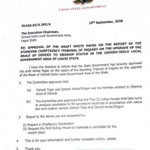
In total contempt of the Supreme Court and the Justice Silva Tribunal, a secret administrative letter (Ref: OLGAS.65/S.205/9, dated 18th September, 2026) was suddenly sneaked out from the Ministry of Local Government, under @jidesanwoolu led Administration.
It attempts to smuggle in a "Draft White Paper" declaring that only Oshodi Tapa and his domestic retainers (Arota) can become Oba of Oshodi!
- Oshodi Tapa was a Nupe war chief (Abagbon) whose house and grave are at Epetedo on Lagos Island! He never lived in Oshodi. He never conquered Oshodi.
- An Arota means a domestic servant/retainer. In what part of Yorubaland has an Arota ever been crowned King over the Onílẹ̀ (the original landowning royal family)?!
📢 A CRY FOR JUSTICE TO ALL YORUBA SONS & DAUGHTERS
This is no longer just an Awori matter. This is a direct assault on the soul and tradition of Yorubaland!
If civil servants in Alausa can take an administrative memo, erase a 1933 registered deed, ignore a 1931 court confession, disregard a Supreme Court victory, and crown tenants over their landlords:
- No ancestral land in Lagos is safe!
- No royal stool in Ikeja, Ikorodu, Epe, Badagry, or Lagos Island is safe!
- Any tenant who rents a house or farm today can wake up tomorrow and claim your father’s inheritance!
OUR SIMPLE DEMANDS:
1. Governor Babajide Sanwo-Olu @jidesanwoolu : Do not stain your legacy with this daylight robbery! Withdraw Letter OLGAS.65/S.205/9 immediately!
2. Hon. Attorney-General of Lagos State (Mr. Lawal Pedro SAN): Stop the disregard for the rule of law! Respect Suit No. ID/1457GCMW/2026 currently before the High Court!
3. Council of Obas and Chiefs: Defend the dignity of your crowns! Reject this dangerous insult to our ancestors!
SHARE THIS EVERYWHERE UNTIL IT REACHES THE GOVERNOR'S DESK!
AWORILAND IS NOT A NO-MAN'S-LAND!
JUSTICE FOR THE AGEDEGUDU / OLUSHI ONIGBESA FAMILY!
Signed: Baba Awori, Follow on X @EOyigi


From 206 Acres of Mercy to Claiming the Entire Kingdom — Can a Warrior Steal the Original Owner’s Throne?
There was no conquest.
Only a gift given in kindness.
Join the conversation tomorrow:5:00 PM Lagos Time
12:00 PM Eastern Time
xitter.cf/i/spaces/1vKpPNapqOQKE
A HISTORICAL DEEP DIVE: DEBUNKING THE "CONQUEST" MYTH IN OSHODI
Who Was Oshodi Tapa? What Is an Arota? Did Any Conquest Take Place?
INTRODUCTION: THE MISCONCEPTION OF "CONQUEST"
In public discussions and social media commentary regarding the Obaship of Oshodi, a frequent and historically baseless claim is made:
“Oshodi Tapa was a great warlord; he conquered the territory, drove out the owners, and took the land by right of conquest.”
This narrative is historically false, legally ungrounded, and contradicted by all archival and colonial records.
Neither Chief Oshodi Tapa nor his followers ever waged a war of conquest against the Awori people of Oshodi. There was no siege, no battle, and no subjugation of the indigenous population on that mainland soil.
1. WHO WAS OSHODI TAPA? (THE HISTORICAL FACTS)
To understand Oshodi Tapa, one must rely on authentic 19th-century accounts—most notably John B. Losi’s History of Lagos (1914, pp. 103–105), colonial correspondence in British Foreign Office dispatches (FO 84 Series), and Church Missionary Society journals:
- His Origins: Oshodi Tapa was born Landuji along the banks of the River Niger in the Nupe (Tapa) country (present-day Niger State) around the 1780s. As a captured youth, he was brought to Lagos during the era of the slave trade.
- His Entry into the Royal Court: He was brought into the palace of Oba Oṣinlokun (son of Oba Ologun Kutere). According to oral tradition, the young boy pleaded “Landuji” in the Nupe tongue, meaning “adopt me / make me your child,” and the King took him into royal wardship, placing him under the household head Ṣagbemi Arowoṣefuja (Losi, p. 103).
- Overseas Commerce & Education: When Portuguese merchants requested royal boys to travel abroad to learn European languages and business, King Oṣinlokun sent Landuji and Dada Antonio to the Americas (Bahia, Brazil) and Portugal. Landuji returned fluent in English, Portuguese, and Yoruba, becoming a prominent factor, toll collector, and commission merchant for European firms such as Messrs. G. L. Gaiser (Losi, pp. 103–104).
- His Official Chieftaincy Title: Recognizing his administrative capability and loyalty, Oba Oṣinlokun/Kosoko elevated him to the Abagbon Class (the War-Chiefs / Captains of Lagos) with the title of Balogun Oṣodi (Losi, p. 12). His primary royal portfolio was Ipẹti Ayaba—the custodian and guardian of the King's harem and queens’ apartments (Losi, p. 104).
- His True Domain Was Lagos Island (Epetedo): Oshodi Tapa’s official residence, chieftaincy seat, and political base were on Lagos Island. After spending a decade in exile with King Kosoko in Epe (1851–1862), Oshodi returned under British amnesty and was granted land by the colonial government at Epetedo (Lagos Island). He died on July 2nd, 1868, and was buried at Epetedo, where his monument stands to this day (Losi, p. 105).
Historical Fact: Oshodi Tapa was a celebrated Lagos Island war chief (Abagbon), diplomat, and merchant. He was never an Oba, never claimed an independent kingdom, and never held royal lineage or a beaded crown.
2. WHAT DOES AROTA MEAN UNDER YORUBA CUSTOMARY LAW?
Much confusion surrounds the term
- Customary Meaning: Under Yoruba customary law and historical sociology (as documented by Dr. P. C. Lloyd in Yoruba Land Law, Oxford, 1962), an Arota was a domestic retainer, household servant, freed captive, or military follower attached to the household of a wealthy chief or patron.
The Legal Status of an Arota:
The legal nature of Arota tenancy was exhaustively examined and settled by the Judicial Committee of the Privy Council in the landmark cases:
1. Sakariyawo Oshodi v. Moriamo Dakolo (1930) AC 667
2. Sakariyawo Oshodi v. Brimah Balogun (1936) 2 All E.R. 163
The Privy Council affirmed that:
- An Arota enjoys a customary, usufructuary right of occupancy over the compound or farmland allotted to him by his master/chief so long as he does not commit customary treason (denial of title).
- An Arota does not possess the radical, allodial ownership of the land.
- More importantly, an Arota is a dependant status, not a royal ruling house. Under no stretch of Yoruba customary law can a community of domestic retainers (Arota) be turned into a royal ruling house to wear a crown over the aboriginal landowners.
3. DID OSHODI TAPA CONQUER AWORILAND? (THE MYTH OF CONQUEST)
The argument that Oshodi Tapa acquired modern Oshodi by "conquest" is an invented fable.
Every battle and military action in which Oshodi Tapa participated is documented in British consular files, missionary diaries, and local histories. None of them involved conquering the mainland Awori:
Ija Omiro (Salt Water War): June 1845, Lagos Island civil war between King Akitoye and Prince Kosoko (Losi, pp. 39–40). Fought strictly on Lagos Island around Isale-Eko and the Lagoon.
Battle of Agidingbi / Bombardment of Lagos: Dec. 26–27, 1851, British Royal Navy under Commodore Bruce attacked Lagos Island to depose Kosoko and abolish the slave trade (Losi, pp. 44–45). Oshodi commanded the shoreline batteries. Fought along the Marina; Kosoko and Oshodi were defeated and fled to Epe.
Epe Lagoon Guerilla Wars: 1852–1854, Oshodi operated from Epe, raiding British and Egba canoe convoys on the eastern lagoon to maintain Kosoko's trade at Palma (Biobaku, pp. 48–51). Fought on the waterways between Epe, Palma, and the lagoon.
Ija Afasẹgbojo: August 1853, Post-Akitoye succession skirmishes on Lagos Island against British and Egba reinforcements (Losi, p. 47–48). Fought in the streets of Lagos Island.
There is not a single record of any battle, siege, or skirmish between Oshodi Tapa and the Awori in the territory of modern Oshodi.
- Oshodi Tapa did not invade the Awori.
- The Awori were never defeated by him in any war.
- Oshodi was never an occupying general over an enslaved or subjugated Awori population.
4. WHY AND HOW WAS OSHODI TAPA GIVEN THE LAND?
If there was no conquest, how did the Oshodi name become associated with the mainland?
a. A Peaceful Agricultural Grant: In the mid-19th century, wealthy chiefs on Lagos Island required large hinterland farms to grow provisions (cassava, yams, maize) and cultivate oil palms to feed their expanding households, domestic slaves, and armed retainers.
b. The Awori Root of Title: The entire mainland expanse—from Isheri down to the coast, embracing Ojuwoye, Oshodi, and the surrounding farming districts—formed the ancestral territory of the Awori, under the traditional crown and suzerainty of the Oba Onigbesa of Igbesa / Olushi Onigbesa Royal Family (Agedegudu lineage).
c. The Customary Grant to Tapa: The Olushi Onigbesa granted a parcel of mainland bush to Chief Oshodi Tapa under standard Yoruba customary tenancy (Alejo system), with the customary acknowledgment of tribute (Isakole).
d. Settling the Arota on the Farm: Chief Oshodi Tapa did not live on the mainland. He placed his Arota (retainers and farm stewards) under overseers to cultivate and harvest the land. It became known as "Oko Oshodi" (Oshodi's farm). Over generations, the settlement of these retainers expanded, eventually taking the name of their patron.
e. The Proof of Radical Title (Colonial Compensations): When the British colonial government constructed the railway line through the mainland in the late 1890s, and when public utilities were acquired, compensation was paid directly to the Olushi Onigbesa family as the radical, allodial owners of the land, not to the Oshodi family or their retainers.
5. HOW DOES THIS WRAP INTO THE CURRENT LEGAL DISPUTE?
Understanding this history exposes the deception behind the Draft White Paper (Letter OLGAS.65/S.205/9):
a. The 206 Acres vs. The Sovereign Realm: The 2000 Supreme Court judgment (SC 53/95) affirmed that the Oshodi Tapa family and the Oshodi Arota/Ologun family are joint owners of 206 acres of land. That 206 acres was simply the boundary of the agricultural parcel granted by the Onigbesa! It is a private property boundary, not a kingdom.
b. Land Grant Does Not Equal Royal Crown (Eni t'ó ni'lẹ̀ l'ó ni Ọba): Under Yoruba jurisprudence, a customary tenant or stranger grantee cannot claim to become the crowned King (Oba) over the land of his grantor.
c. The Justice Silva Tribunal (2012): When the Lagos State Government set up an independent judicial inquiry under Justice A. O. Silva, the tribunal went through the archives, historical deeds, and oral traditions. It arrived at the inevitable historical conclusion: The Olushi Onigbesa Royal Family is the sole family entitled to the Obaship of Oshodi.
d. The "Conquest" Argument Is a Legal Smokescreen: Proponents of the Draft White Paper rely on the myth of conquest on social media because they know that under customary law, a tenant or retainer has no claim to a crown. Since they cannot prove royal descent from the Onílẹ̀, they invent a conquest that never happened.
Myth: "Oshodi Tapa was a King."
Historical Reality: False. He was an Abagbon (War-Chief) of Lagos Island, titled Balogun Oshodi, in charge of the royal harem (Ipẹti Ayaba). He lived and was buried at Epetedo, Lagos Island.
Myth: "Oshodi Tapa conquered Oshodi by war."
Historical Reality: False. He never fought any battle against the Awori on the mainland. His recorded wars were on Lagos Island, the Lagos lagoon, and Epe.
Myth: "Oshodi land belongs entirely to the Oshodi family."
Historical Reality: False. They hold joint title with the Arota over only a specific 206-acre parcel of farmland granted by the Awori. The allodial ownership of the territory belongs to the Olushi Onigbesa (Awori).
Myth: "The Arota can produce an Oba."
Historical Reality: Customary Impossibility. An Arota is a customary domestic retainer. By native law and custom, retainers cannot be crowned kings over the aboriginal owners of the soil.
Myth: "The Courts gave the Obaship to Oshodi Tapa."
Historical Reality: False. The Supreme Court (SC 53/95) only determined private land ownership over 206 acres. The Justice Silva Chieftaincy Tribunal (2012) recommended the stool exclusively to the Olushi Onigbesa Royal Family.
Signed: Baba Awori, Follow on X @EOyigi

AN URGENT CLARION CALL TO ALL YORUBA SONS, DAUGHTERS, MONARCHS, AND CULTURAL LEADERS:
STOP THE IMPOSITION AT OSHODI! AWORI LAND IS NOT A SPOIL OF WAR!
An Open Address to Governor Babajide Sanwo-Olu @jidesanwoolu, the Governor’s Advisory Council (GAC), the Lagos State Council of Obas, Awori Monarchs, and All Yoruba Influencers and Celebrities Worldwide.
THE CRISIS AT OUR DOORSTEP
A monumental injustice is being orchestrated in the heart of Lagos State. A rogue administrative maneuver inside the corridors of Alausa seeks to strip the indigenous Awori people (The Olushi Onigbesa Royal Family) of their ancestral royal stool and crown the descendants and retainers of an immigrant 19th-century war-captain as the Oba of Oshodi.
Through an administrative letter dated 18th September, 2026 (Ref: OLGAS.65/S.205/9), the Ministry of Local Government and Chieftaincy Affairs has surfaced an illegal "Draft White Paper" declaring that only the Oshodi Tapa and Oshodi Arota/Ologun families are entitled to produce the Oba of Oshodi.
Let the entire Yoruba race awake! An injustice to the Awori in Oshodi is an open invitation to the desecration of traditional stools across the entire Southwest.
1. LET THE RECORD SPEAK: THE UNVARNISHED HISTORICAL TRUTH
A. Oshodi Tapa Was Never an Oba
According to classical historians, including John B. Losi in his History of Lagos (1914, pp. 103–105), the patriarch Oṣodi Landuji Tapa was:
- A native of the River Niger (Nupe/Tapa) who arrived in Lagos as a young servant boy under Oba Oṣinlokun.
-An agent and toll collector for European merchants who was later appointed into the Abagbon (War-Chief) class as Balogun Oṣodi, with the specific duty of guarding the Oba’s harem (Ipẹti Ayaba).
- A loyal military general to Prince Kosoko who fought in the civil wars, went into exile in Epe, returned to Lagos under British amnesty in 1862, and lived, died, and was buried at Epetedo on Lagos Island on July 2nd, 1868.
Chief Oshodi Tapa was an honorable war chief on Lagos Island. He was never an Oba. He never wore a crown. He was never an Awori royal. His ancestral domain and seat of chieftaincy is strictly at Epetedo, Lagos Island.
B. The Awori Are the True Onílẹ̀ (Lords of the Soil)
The entire territory of Oshodi forms part of the ancient allodial estate of the Awori, founded by the descendants of Ogunfunminire (Olofin of Isheri) under the crown of the Oba Onigbesa of Igbesa / Olushi Onigbesa Royal Family (Agedegudu lineage).
- The mainland farmlands were granted under customary tenancy (Alejo/Arota) to Oshodi Tapa’s household retainers.
- When the colonial railway traversed Oshodi and when public lands were acquired for municipal development, the British Colonial Government paid the statutory land compensation directly to the Olushi Onigbesa family, confirming their radical, unsevered title as the authentic landowners!
2. THE LEGAL FRAUD: 206 ACRES OF FARMLAND DOES NOT EQUAL A CROWN!
The promoters of this imposition rely on the Supreme Court judgment in SC 53/95 to claim royal authority. This is a deliberate and fraudulent deception:
1. A Private Land Suit: SC 53/95 (decided on July 14, 2000) was exclusively a dispute over private ownership of 206 acres of land between the descendants of Oshodi Tapa on Lagos Island and their former mainland retainers (Oshodi Arota/Ologun).
2. No Traditional Jurisdiction: The Supreme Court never created an Obaship, never declared an "Oshodi Kingdom," and never adjudicated on traditional chieftaincy rights over Aworiland.
3. Customary Law is Absolute (Eni t'ó ni'lẹ̀ l'ó ni Ọba):
Under settled Yoruba customary law (reaffirmed by Dr. P. C. Lloyd in Yoruba Land Law), ownership or tenancy of a piece of land does not confer traditional sovereignty. A tenant or stranger (Alejo/Arota), no matter how wealthy or influential, cannot wear a beaded crown over the heads of the aboriginal royal landowners (Onílẹ̀).
3. THE JUSTICE SILVA TRIBUNAL REPORT: JUDICIALLY AFFIRMED, UNLAWFULLY SUPPRESSED
The Lagos State Government cannot claim it is acting in the dark:
- The State’s own judicial body—the Justice A. O. Silva Standing Chieftaincy Tribunal (2005–2012)—examined all oral traditions, colonial records, and court judgments.
- The Silva Tribunal concluded that if the traditional stool of Oshodi is to be upgraded to an Obaship, the sole family entitled to the crown is the OLUSHI ONIGBESA ROYAL FAMILY.
- The Oshodi Tapa and Arota factions challenged the Justice Silva Tribunal report in court. THEIR LAWSUITS FAILED ALL THE WAY TO THE SUPREME COURT!
- The Lagos State Council of Obas and Chiefs has already sat, deliberated, and formally ratified the candidate of the Olushi Onigbesa family for the Oshodi throne.
So why is the Ministry of Justice attempting to smuggle in a Draft White Paper that directly subverts the Silva Tribunal, overrides the Supreme Court, and bypasses the Council of Obas?
4. A HISTORICAL PARALLEL: "THE TAPA CANNOT SACK YORUBALAND A SECOND TIME"
We remind the Yoruba nation:
- In the 16th century, the Nupe (Tapa) cavalry invaded and sacked Oyo-Ile, desecrating our ancestral home and driving the Alaafin into exile for generations.
- In the 19th century, the bravery of our warrior ancestors reclaimed the peace of Yorubaland.
- Shall we now sit idly by in the 21st century while administrative mercenaries use executive paper to hand an ancient Awori crown to the descendants of a Tapa war chief and his domestic retainers?
If an Abagbon war captain and his Arota (domestic servants) can wake up in 2026 and be crowned kings over their grantors on Awori soil:
- Who will protect the Idejo lands of Lagos Island?
- Who will protect the traditional stools of Ikeja, Ota, Ikorodu, Epe, and Badagry?
- What stops tenants and strangers from claiming the Obaship of Ibadan, Abeokuta, Osogbo, or Akure?
5. A SPECIAL APPEAL TO YORUBA CELEBRITIES, CREATIVES, AND INFLUENCERS
To our musicians, actors, writers, journalists, digital influencers, and cultural champions—our proud voices in the arts and public discourse:
Your voices have built modern Nigerian culture. Now, your culture needs your voices!
Lagos is not a "no-man's-land." Every inch of this land has ancestors who bled for it, kings who guarded it, and traditional lineages who preserved its soul. When the history of a people is rewritten for political expediency, silence is complicity.
- Ask Governor Babajide Sanwo-Olu and the Attorney General of Lagos State: Why is the Justice Silva Tribunal Report being buried? Why is the Supreme Court being ignored? Why is Aworiland being provoked?
-Stand with the indigenous owners of the land. #JusticeForOlushiOnigbesa #OshodiIsAworiLand #DefendYorubaHeritage
OUR UNEQUIVOCAL DEMANDS
1. Immediate Revocation of Letter OLGAS.65/S.205/9: We demand that the Ministry of Local Government and Chieftaincy Affairs withdraw the tainted directive immediately.
2. Respect the Rule of Law and Pending Litigation: The Lagos State Government and the Oshodi-Isolo Local Government must cease all actions regarding the Obaship of Oshodi pending the determination of Suit No. ID/1457GCMW/2026 currently before the Lagos State High Court, Ikeja.
3. Implement the Ratified Decision: The Lagos State Executive Council must formally adopt and gazette the Justice A. O. Silva Tribunal Report (2012) and respect the resolution already ratified by the Council of Obas, vesting the stool in the Olushi Onigbesa Royal Family.
Signed: Baba Awori, Follow on X
@EOyigi

A Lesson in Audacity: Questioning the Market Gatekeeping on Indigenous Soil
Lagos State has always had its custodians. The land belongs to its aboriginal roots—the Aworis and the Ijebus—and the territory where these major trade markets sit is Awori ancestral ground. Throughout history, the Aworis have extended hospitality and open arms to non-indigenes, allowing people of all tribes and nations to settle, commerce, and prosper.
Yet, the scene unfolding in this video reveals an unbelievable irony.
Non-aboriginal traders, Igbos—who left their own ancestral homelands to pursue commerce under the umbrella of Nigerian integration—are seen actively protesting and demanding that Chinese business owners leave the market.
The Chinese entered this market seeking enterprise, exactly as others did decades before them. Neither group owns the land beneath their stalls. For a guest community on indigenous Awori soil to attempt to dictate who can or cannot trade there is not just illogical; it is a stunning display of audacity.
If anyone holds the customary and moral prerogative to regulate presence, commerce, and access to this land, it is the aboriginal Awori owners. You cannot enjoy indigenous tolerance while enforcing intolerance on another man’s ancestral heritage.
Signed: Baba Awori
“When the Crown and the Council Belong to the Same Womb, History Forgives Nothing.”
Dear Chairperson @honmuhibatrufai,
I do not write this letter with joy. I write with a bleeding heart, from the raw, aching spirit of an indigene who walks the streets of Ojo every day, seeing the humiliation of our heritage.
For years, we complained that non-indigenes did not understand our pain. We clamored for our own. We said, “Let our sons and daughters take the mantle.”
Today, God has placed our land in an extraordinary, historic alignment: The Olojo of Ojo Kingdom, HRM Oba Galib Adeniyi-Rufai, sits on the ancestral throne of our fathers, and his biological sister, Princess Muhibat Rufai-Adeyemi, sits on the executive chair of the Local Government Council.
Never in the contemporary history of Ojo has a single family carried such immense, sacred custody of both the traditional soul and the civic treasury of our people.
Yet, never has Ojo been so physically abandoned, administratively paralyzed, and emotionally broken.
1. Look at Volkswagen–Alaba: The Gutter of West Africa’s Cash Cow
Hon. Muhibat, have you driven through the Volkswagen–Alaba International Market link road lately?
Alaba International is the economic jewel of Ojo, an engine of billions in commerce, levies, and revenue that feeds both council and state. Yet its primary arterial feeder is today a national disgrace.
- Roads reduced to swamp basins where pregnant mothers, elderly traders, and youths in kekes and koropes are thrown around in dirty brown floodwaters daily.
- Half-abandoned, poorly cast concrete drainage channels crumbling into mud trenches, looking like a disaster zone.
- Businesses folding up, vehicles ruined, and millions lost in man-hours just to navigate a two-kilometer stretch.
How do you look your people in the eye? How does your conscience find sleep when the road that feeds our council is treated worse than an abandoned farmland?
2. The Tragedy of Record Wealth: Where Is the Money?
Let us call a spade a spade.
We thank President Bola Ahmed Tinubu (GCFR) @officialABAT. Through the landmark local government financial autonomy framework, billions of Naira are leaving the Federation Account Allocation Committee (FAAC) directly into council accounts. Ojo Local Government is currently receiving a financial windfall that no administration before you ever tasted.
So where is the money going?
Before you came into office, Rosulu Olusola Idowu was chairman. He was quiet, unassuming, and operated with far leaner budgets. Yet you cannot walk the streets of Ojo today without stepping on interlocked roads laid during his tenure. He left a physical footprint.
What will be your legacy?
- Zero infrastructure.
- Demoralized council staff with welfare at an all-time low.
- Zero youth empowerment.
- Total neglect of our indigenous communities.
Are our local council leaders so untrained in governance that when billions arrive, they freeze like statues, unable to plan, pave a street, or build a functional gutter?
3. Worse Than a Shigidi: The Wall of Arrogance
In our Yoruba cosmology, an elder can approach a shigidi on an altar, pour a tot of ogogoro, chant words of reverence, and the spirits of the ancestors will answer.
Today, the people of Ojo can commune with their ancestors faster than they can reach or receive a word from Princess Muhibat.
You have become completely inaccessible. Aloof. Untouchable.
If this indictment is false, I throw an open challenge to your media aides and PR handlers: Publish the receipts. Step forward with verifiable pictures, GPS locations, and financial records of completed projects. Show us where the billions sent by the Federal Government have been spent. We are waiting.
4. A Corridor of Gold, A Leadership in Slumber
While Ojo drowns in the mud of the Volkswagen link road, history is moving ahead of us.
Just across our corridor, APM Terminals and project developers have advanced the Badagry Deep Sea Port negotiations. The port will bring container terminals, massive logistics clusters, and freight networks directly through our backyard.
Where is Ojo’s 10-to-20-year master plan? Where are the logistics parks? Where are the maritime training initiatives for Ojo youths? Where is the lobbying at the State and Federal levels?
You are sitting on a highway of gold, acting as if Ojo is an isolated village with no tomorrow. When our children become destitute spectators in their own homeland tomorrow, history will record that Princess Muhibat Rufai-Adeyemi was asleep at the steering wheel.
5. AN OPEN PLEA AND CHARGE TO THE LEADERSHIP
To Kabiyesi, The Olojo of Ojo, Oba Galib Adeniyi-Rufai (Adeife I):
Kabiyesi o! Eba wa da si oro yi ooo. Aburo yin gidi-gidi ni.
You sit on the throne of our ancestors, wearing the beaded crown of our forebears. You cannot look away. She is not just an indigene; she shares your father’s blood, your mother’s womb, and the royal family name. If Ojo collapses under her watch, the name Rufai will bear the generational curse of an ancient kingdom ruined from both the palace and the council. Call your sister to order. Summon her before the Alale of Ojo land, before the land itself begins to speak against her.
To Pastor Cornelius Ojelabi @APCchairman (Lagos State APC Chairman):
Twale Sir, you are an Awori patriarch. You rose from this very corridor and seat as an indigenous leader.
In the party primaries, about twelve capable, visionary indigenes spent their hard-earned money to buy forms, offering their competence to lead Ojo. The party apparatus handpicked Muibat.
Look at what has become of that choice. As you prepare to lead the party into future campaigns, with what mouth will party canvassers stand on the mud of Volkswagen–Alaba to ask the people for votes? If you love the APC and you love your Awori roots, you must step in and compel this council to work.
To Hon. Olusegun Ege (Lagos State House of Assembly):
My honorable representative, My Padi, are the elected leaders of Ojo merely exchanging pleasantries and laughter in closed WhatsApp groups while the constituency collapses? You pass through these roads. You see the suffering of the voters who stood in the sun for you. Can you not shake the table? Can you not demand performance from the council? Silence in the face of local rot is complicity.
To Governor Babajide Sanwo-Olu @jidesanwoolu & President Bola Ahmed Tinubu @officialABAT:
You have given local governments the financial muscle to transform lives. But autonomy without accountability is an invitation to local tyranny and squander.
We appeal to your offices: send oversight monitors to Ojo Local Government. Ask for performance audits. Do not let the goodwill of your administration be drowned in the stagnant waters of Ojo's neglected roads.
6. A Notice to Other Lagos Councils & A Call to the Streets
To the remaining 19 Local Government and 37 LCDA Chairmen in Lagos State: do not mock Ojo.
We are starting here, but our civic searchlight will shine on every single one of you. You have spent over a year under the direct allocation regime. The era of taking billions and commissioning paint and street signs is over. Show us your works.
To the great people of Ojo:
Arise! Stop whispering in secret. Stop suffering in silence inside flooded kekes. That allocation money does not belong to the Rufai family, it does not belong to party chieftains, and it does not belong to contractors. It is your money. Demand that it paves the Volkswagen–Alaba road. Demand that it fixes our gutters. Demand that our youths be trained.
Hon. Muhibat, wake up!
Step down from your pedestal. Put on your boots. Walk the mud of Volkswagen–Alaba. Clear the gutters. Invest the people's money in the people.
Do this now so that the land of Ojo may remember you with pride, and so the Alale can bless your name, rather than judge your silence.
Signed: Baba Awori


THE AWORI SANCTITY OF IDDO IS IMMOVABLE: YOU CANNOT RELOCATE OUR GENESIS
Watch the attached video closely. Listen to the united, unbroken voice of the Awori Idejo Obas—the direct bloodline and custodians of Olofin—as they stood side by side outside the palace in Ijora to declare:
“A ò kọ̀ ọ́! Kò ní bàjẹ́ lórí tiwa!”
(“We reject it! It will not be destroyed in our time!”)
This addendum is issued to place on the global record the historical magnitude and legal illegality of what the Federal Ministry of Works is attempting to do at Iddo.
1. The Blasphemy of "Relocating" an Ancestral Seat
To speak of "relocating" the ancestral seat and sacred resting place of Olofin at Iddo is as sacrilegious and unthinkable as asking the Christian world to relocate the Tomb of Jesus in Jerusalem, or asking the Islamic world to uproot the Prophet’s Mosque in Medina.
Iddo is not a residential layout; it is our Orirun—the spiritual navel, the source, and the seat of pre-colonial Awori sovereignty. You cannot re-engineer or "relocate" an origin. A people’s fountainhead cannot be transported in a truck or assigned an alternate plot of land.
2. The Unbroken Timeline: Older than Nigeria, Older than Empires
Before anyone dares bring bulldozers near Iddo, let history remind the Federal Government of who met whom:
- In the 1470s, when the Portuguese maritime explorers (Ruy de Sequeira and his contemporaries) first navigated the Lagos lagoon, Olofin’s seat at Iddo was already flourishing, and his Burial Site was there.
- In the mid-1500s, when expeditions from the Benin Kingdom arrived on the shores of the lagoon, Olofin’s dynasty at Iddo was already the supreme sovereign.
- In the 1800s, when British colonial expeditions and consular missions stepped foot on the territory, they met the Idejo class established as the absolute landowners and custodians of Iddo.
- In 1914 and 1960, when the Nigerian state was amalgamated and granted independence, Iddo was already an ancient sacred reality.
Centuries of world kingdoms, invaders, and colonial administrators met Iddo where it stands and dared not displace it. By what authority does a modern ministerial development project attempt cultural erasure that 500 years of global history never dared execute?
3. International Law and United Nations Mandates
The proposed relocation is a direct violation of international instruments to which Nigeria is an active signatory.
United Nations Declaration on the Rights of Indigenous Peoples (UNDRIP)
Article 11 (1):
“Indigenous peoples have the right to practise and revitalize their cultural traditions and customs. This includes the right to maintain, protect and develop the past, present and future manifestations of their cultures, such as archaeological and historical sites...”
Article 12 (1):
“Indigenous peoples have the right to manifest, practise, develop and teach their spiritual and religious traditions, customs and ceremonies; the right to maintain, protect, and have access in privacy to their religious and cultural sites...”
Article 25:
“Indigenous peoples have the right to maintain and strengthen their distinctive spiritual relationship with their traditionally owned or otherwise occupied and used lands, territories, waters and coastal seas...”
UNESCO 1972 World Heritage Convention & ICOMOS Charters
Under international conservation law, the cardinal rule of heritage management is preservation in situ (in place).
The International Council on Monuments and Sites (ICOMOS) explicitly forbids the relocation of monuments and cultural spaces, establishing that:
The relocation of a heritage site or any part thereof is unacceptable except where the safeguarding of that site is paramount, or where it is justified by reasons of supreme national interest that cannot be resolved through technical alternatives.
Modern engineering exists to adapt around heritage, not to bulldoze it. If civil engineers in Rome, Athens, Cairo, and London can re-align multi-billion-dollar bridges, subways, and expressways to preserve ancient ruins, Nigerian engineers have zero technical or legal justification to demolish or displace the seat of Olofin Atekoye at Iddo.
4. The Awori Verdict: Our Heritage Will Not Perish
As seen in the video, our revered Obas—the Ojora of Ijora, the Olu of Iwa and Apapa, the Oloto of Otto, the Olumegbon of Ajah, the Onisiwo, in concert with Oniru, Elegushi, and Onikoyi—have spoken with one resolute voice.
Iddo is the living identity of the Awori. It is the physical certificate of our land and birthright.
We repeat: The infrastructure must be redesigned. Iddo stays.
To understand Lagos History better, grab a copy of The Lagos Deception on Amazon: a.co/d/0g8N1Kgi
Signed: Baba Awori, Follow on X
@EOyigi

HANDS OFF IDDO: OUR ANCESTRAL SEAT IS NON-NEGOTIABLE
Following the six-hour emergency meeting held yesterday by our revered Idejo Obas at the palace of HRM Oba Ojora in Ijora, regarding the Federal Ministry of Works and Infrastructure’s move to relocate our ancestral seat in Iddo, the indigenous Awori voice stands absolute, undivided, and resolute:
The answer is NO. Iddo is not for sale, not for compromise, and not for relocation.
1. Ancestral Sites Are Sacred and Protected by Global Law
Nowhere in the civilized world does a government bulldoze or relocate its deepest historical roots for the sake of an infrastructure project. The seat of Olofin Atekoye in Iddo is not an ordinary parcel of land—it is the cradle of indigenous Awori governance, the fountainhead of the Idejo landowning class, and tangible, living proof of our pre-colonial sovereignty.
Under international instruments, including the United Nations Declaration on the Rights of Indigenous Peoples (UNDRIP) and the UNESCO Conventions on the Protection of Cultural and Natural Heritage, governments are legally and morally bound to protect, preserve, and respect indigenous sacred and historical sites. Any attempt to displace this heritage violates international human and indigenous rights conventions.
True development adapts to heritage; it does not erase it. Bridges, roads, and rail lines can be engineered around history—history cannot be rebuilt once destroyed.
2. We Reject the Systematic Erasure of the Awori Identity
For decades, there has been a continuous, calculated campaign to dilute and erase every physical and historical trace of the Awori on our own ancestral soil.
First came the distortion of our lineage—deliberately muddling the history of Olofin Ogunfunminire and Olofin Atekoye to bury evidence of Awori pre-eminence. Now, precisely because the world is recognizing Iddo as the definitive seat of Olofin Atekoye and the bedrock of pre-colonial Awori administration, an attempt is being made to wipe the physical evidence off the map.
Let it be known: We see the agenda. This is an attempt to ensure that future generations find no surviving monument of Awori primacy, governance, and identity in Lagos. We refuse to be made invisible on the land our forebears cleared, governed, and defended.
3. A Red Line for Yoruba Land
Whatever options were laid on the table during the Idejos’ meeting yesterday, our stance as the Awori people is unequivocal: There can be no compromise.
What happens at Iddo will set a dangerous precedent. If the ancestral home of the Idejo progenitors can be carted away by executive decree, no sacred site, royal groove, or indigenous heritage across Yorubaland will ever be safe again. We are drawing the battle line at Iddo for the dignity of every indigenous heritage site in Nigeria.
4. The Urgent Call for Aboriginal Governance
This aggression underscores the harsh reality facing the Awori people: Lagos State urgently needs an aboriginal indigenous governor. A government detached from the blood, spirit, and soil of the Awori will always view our sacred heritage as mere real estate. Only an indigenous son of the soil understands that our ancestral roots are priceless and non-negotiable.
OUR DEMANDS:
1. Immediate Cessation: The Federal Ministry of Works and Infrastructure must immediately halt any proposed relocation, encroachment, or demolition plan targeting the ancestral home of Olofin Atekoye at Iddo.
2. Design Adjustment: All engineering, infrastructural, and urban development plans must be redesigned to integrate, preserve, and honor the site as a national cultural monument.
3. Formal Heritage Designation: The Lagos State Government and the National Commission for Museums and Monuments (NCMM) must immediately gazette Iddo as an untouchable historical and heritage conservation zone.
Development must respect history. Hands off Iddo.
Signed: Baba Awori


ADUN: Standing Firm on Ideology — Taking Action, Not Standing By
The Awori Development Union (ADUN) lives its ideology through decisive action rather than mere declarations.
ADUN has formally joined the national conversation on State Police by submitting a comprehensive Position Paper on the Draft National Policing Bill. The memorandum advocates for indigenous recruitment, community-rooted policing as true guardians rather than external forces, and robust anti-abuse safeguards — including body-worn cameras, transparent accountability mechanisms, and meaningful community oversight — to ensure security grounded in local knowledge, culture, and trust.
Read the full Position Paper and official coverage here:
dailynewscover.com/awori-dev…
Awori indigenes are invited to join the Awori Development Union (ADUN) and contribute to turning shared ideology into lasting impact:
➡️ forms.gle/PdMzq8ut9hcZYtVz8
ADUN — Action. Not Standby.
CAC Registration No: 9296097
Signed: Baba Awori
🤖 Made with AI


POLICING SHOULD FEEL LIKE HOME, NOT AN OCCUPYING FORCE!
Have you ever wondered what real security should feel like?
Real security isn’t seeing an officer who doesn't understand your language, doesn't know your streets, or treats you like a stranger in your own ancestral home.
Real security is knowing that the person guarding your neighborhood actually cares about your neighborhood.
As Nigeria moves toward creating State Police, a bold proposal has to be sent to the Federal Government. Our message is clear:
"A State Police Officer must be a Community Guardian rooted in our culture, not an occupying force!"
💡 What Does This Mean for You and Your Family?
Here are the 5 Big Protections we are fighting to put into law:
1. 🏠 Our Own People Guarding Our Streets
- Local First: The officers stationed in our towns and villages should be vetted indigenes who know our geography, language, and culture.
- True Respect: When an officer knows your family, your Baale, and your community, they protect you with pride, not fear.
- National Choice: Citizens who want to serve across the whole country can join the Federal Police, while local police stay focused on local homes!
2. 👑 Bringing Power Back to Our Chiefs & Baales
- Security shouldn’t be decided only in big offices far away.
- Our traditional rulers—our Obas, Baales, and Ward Heads—will have an official seat at the table to advise police commanders, report community concerns, and keep our neighborhoods peaceful.
3. 📱 NO MORE CASH ON THE ROAD! (Say Goodbye to Extortion)
- No Cash Allowed: Officers on patrol will be legally banned from taking or demanding cash at checkpoints or stations.
- Simple E-Ticketing: If someone commits a traffic error, fines will be paid directly to the government treasury using simple phone codes (USSD like *737# or *901#) or POS—no cash changes hands!
4. 📹 Technology That Protects YOUR Rights
- Body Cameras: Officers must wear body cameras while on duty. The video goes straight to an independent, tamper-proof cloud server—no officer can delete or edit it!
- Scan-to-Verify Badges: Every officer will wear a special QR Code on their chest. You can scan it with your phone to instantly confirm who they are and report any misconduct directly.
- No Secret Arrests: Every arrest must be logged digitally into a central system within 2 hours. If anyone is held beyond 24 hours without a judge’s order, automatic alerts go out to state authorities!
5. 🗣️ YOU Get a Say Before the Law is Passed!
- Before any State Police law is passed, lawmakers MUST hold public town halls in our communities. You, your youth leaders, market women, and elders will have a chance to speak and be heard.
🤝 THE VISION IS SIMPLE:
We want a police force where:
- A mother feels safe when her child walks home at night.
- A trader is respected at checkpoints without being extorted.
- An officer is seen as a neighbor, a protector, and a friend.
Signed: Baba Awori. (Follow on X @EOyigi)

Understanding Our Roots and Rights: A Educational Guide to Co-Existence in Lagos and Nigeria
The Four Pillars of Identity
To build a peaceful society, a nation must honor its history while respecting the constitutional rights of all its people. In Lagos State, confusion often arises because people confuse four distinct terms. By understanding how these four pillars work together, we can eliminate friction, defeat historical gaslighting, and ensure that every resident lives in peace, dignity, and security.
1. Aboriginal (The Primordial Custodians)
What It Means: An Aborigine (Amo-ile) belongs to the foundational ethnic group that first cleared the land, established spiritual custody over the soil, and created the initial socio-political order centuries before modern state boundaries or colonial interventions
The Historical Facts in Lagos:
The Awori Nation: Spanning 84.2% of Lagos State’s 57 local administrative units (LGAs/LCDAs), the Awori are the primordial aboriginal population. Founded by the royal patriarch Olofin Ogunfunminire from Ile-Ife, the Awori established the initial settlements at Isheri, Ebute Metta, Iddo Island, and Lagos Island (Eko). The Idejo (White-Cap Chiefs)—direct descendants of Olofin—hold the absolute, ancestral radical title to the soil
The Ijebu Nation: Covering the remaining 15.8% of Lagos State’s ancestral administration (primarily Ikorodu and Epe divisions), the Ijebu are the aboriginal custodians of the eastern lands
The Legal Precedent: In the landmark 1921 Privy Council Judgment (Amodu Tijani v. Secretary, Southern Nigeria), the highest court in the British Empire legally established that the land of Lagos belongs communally to the aboriginal Idejo chiefs, proving that the Oba held political/usufructuary authority, while the radical title to the soil remained 100% Awori.
2. Indigene (The Traditional Spectrum & Assimilated Heritage)
What It Means: An Indigene is a member of a lineage that has been historically integrated into the traditional political, social, and chieftaincy fabric of a specific territory over generations. While all aboriginals are indigenes, not all indigenes are purely aboriginal by origin—many became indigenes through historical treaties, royal marriages, and centuries of peaceful assimilation.
The Historical Facts in Lagos:
The Benin-Derived Lineage: The Obaship of Lagos was born out of a 17th-century diplomatic alliance between the Awori prince Ashipa (Fagade of Isheri) and the Kingdom of Benin. Ashipa’s son, Oba Ado, carried patrilineal Awori blood and maternal Benin royal ancestry. The Bini chiefs (Akarigbere) were welcomed by the Awori landowners (Idejo) to manage statecraft, becoming fully integrated indigenes.
The Saro & Aguda Returnees: In the 19th century, liberated Yoruba slaves returning from Sierra Leone (Saro) and Brazil/Cuba (Aguda) were granted land on Lagos Island (e.g., Popo Aguda, Olowogbowo) by the Awori landlords. Over generations, they became vital traditional and professional stakeholders in Eko.
The Tapa & Egun Enclaves: Tapa (Nupe) trading allies on the Island and Egun fishing communities in Badagry and Ojo settled at the accommodation of their Awori hosts, becoming an integral part of the state’s historical identity.
The Key Distinction: These historical groups became indigenes at the grace, accommodation, and hospitality of the aboriginal Awori and Ijebu hosts.
3. Yoruba (The Overarching Regional Civilization)
What It Means: Yoruba is the overarching civilizational, cultural, and linguistic umbrella that unites various sub-groups—including the Awori, Ijebu, Egba, Oyo, Ondo, Ekiti, Ijesha, and Ife.
The Historical Facts in Lagos:
Both the Awori and the Ijebu are sub-groups of the broader Yoruba family, tracing their spiritual and cultural origin back to Ile-Ife.
Lagos State as a Yoruba land confirms its alignment with the wider regional civilization of Southwestern Nigeria. However, belonging to the broader Yoruba family does not erase the specific local landownership of the Awori and Ijebu within Lagos State.
4. Nigerian Citizen (The Constitutional Civic Contract)
What It Means: A Nigerian Citizen is any person holding legal nationality under the Constitution of the Federal Republic of Nigeria, regardless of their ethnic background, state of origin, or religion.
The Rights of a Citizen:
Every Nigerian citizen—whether Igbo, Hausa, Egba, Fulani, Ibibio, or non-indigene Yoruba—has the absolute constitutional right to live, work, conduct business, buy private property (under applicable state laws), vote, and enjoy full protection under the law anywhere in Nigeria, including Lagos State.
The Crucial Clarification: Citizenship grants equal civic rights, but it does not convey ancestral landownership or rewrite history. A citizen who buys a house or rents a shop in Lagos acquires legal property rights, but does not acquire aboriginal "Son of the Soil" status.
The Harmony Formula: How Everyone Lives at Peace
Once these four tiers are clearly understood, there is no need for rivalry, fear, or hostility. Peace is achieved through a simple, two-way commitment:
| THE BALANCE OF PEACE |
ABORIGINAL / INDIGENE RIGHTS (Protection of Heritage & Soil)
1. Recognition as original hosts.
2. Custodianship of radical land title and traditional stools.
3. Honor of ancestral history and cultural monuments.
CIVIC CITIZENSHIP RIGHTS (Equal Protection & Commerce)
1. Right to reside, work & trade.
2. Full constitutional safety.
3. Protection of private property and investments legally acquired.
1. What Is Required from Non-Indigenes and Settlers:
Respect the History: Abandon false slogans like "Lagos is a No Man's Land." Acknowledge that the land you live, work, and thrive on has original, aboriginal custodians (the Awori and Ijebu) whose ancestors preserved it.
Separate Commerce from Ancestral Claims: Enjoy your legal investments, land purchases, and businesses, while recognizing that buying property confers economic ownership of a plot, not political or ancestral ownership of the land’s heritage
Support Local Culture: Live as appreciative guests and partners in progress, supporting the traditions, peace, and security of your host communities
2. What Is Required from Aboriginals and Indigenes:
Protect Law-Abiding Citizens: Welcome all peaceful residents—whether Igbo, Hausa, or fellow Yorubas from other states—who contribute to the economic growth of Lagos.
Avoid Blaming the Victim: Distinguish between individual bad actors or provocative political rhetoric and the millions of ordinary citizens who simply seek a honest livelihood
Institutional Governance over Land: Focus on legislative, legal, and educational frameworks (such as enforcing long-term land leases rather than outright sales, and preserving traditional history in schools) rather than engaging in street-level hostility
Conclusion: A Shared Future
Lagos is great because of its aboriginal foundation, its rich history of assimilation, and its vibrant modern commercial diversity.
Aboriginality protects the truth of our past.
Indigeneship honors our shared traditional institutions.
Yoruba Identity anchors our regional cultural strength.
Citizenship guarantees our modern democratic rights.
None of these four principles needs to destroy the other. When history is respected and the law is upheld, everyone can live, prosper, and be at peace.
Copyright Notice ©2026 Baba Awori. All rights reserved. This work is the intellectual property of Baba Awori and may not be reproduced, distributed, or used without prior written permission. Follow on X @EOyigi


We Opened the Door, We Did Not Sell the House: The Awakening of Aworiland.
For over a thousand years, the Awori people have stood as the quiet custodians of the most prosperous gateways in West Africa. From the riverine shores of Lagos to the fertile plains of Isheri, Ota, and Ado-Odo, our ancestors pioneered a civilization built on peace, commerce, and a profound sense of hospitality. We welcomed the world. We became the cradle that nursed modern Nigeria's economic heart.
But today, we must speak a truth that has been avoided for too long: We opened the door. We did not sell the house.
In recent decades, our peace has been mistaken for absence. Our tolerance has been weaponized to fuel our systematic erasure. When we demand our rightful place in the governance of our ancestral lands, we are dismissed as "myopic" by political elites. When we ask why a 1,000-year-old civilization is subjected to traditional councils created in modern eras—like those of 1830 or 1996—we are met with administrative gaslighting.
We have watched our heritage diluted, our lands encroached upon, and our identity talked down to in the very spaces our ancestors cleared. We are told that because our home has grown so large, we no longer have the right to call it ours.
Let us be absolutely clear: the Awori's does not seek exclusion. We recognize and celebrate the rich, diverse tapestry of modern Nigeria. We welcome the enterprise of the Igbo, the trade of the Hausa and Fulani, and the kinship of our fellow Yoruba sub-groups. We pride ourselves on being the ultimate hosts.
But hospitality has boundaries. In every culture across this federation—from Enugu to Sokoto—the distinction between the host (Onile) and the guest (Atipo) is sacred. No guest, no matter how prosperous or politically aligned, usurps the landlord. Gbàle-Gbàko kìí s’Onílẹ̀—the accepted stranger does not inherit the family compound.
The era of our silent retreat is over. We are the voice of an awakened people reclaiming their narrative, their borders, and their dignity. We are still here, rooted in the deepest clay of this land, long before modern state borders were ever conceived.
To our guests, we say: thrive and build with us in peace. But to the political and traditional institutions of Lagos and Ogun, we declare: the original landlords are back.
Hospitality is not surrender. The door remains open, but the house belongs to Olofin.
Signed: Baba Awori.


The "Lebensraum" Legacy: How the 1955 Tripartite Rivalry Manufactured the Modern Battle for Lagos
Historically, the political battles of Lagos have been framed as modern, democratic disagreements. However, Sir John Macpherson’s 1955 address reveals that the ethnic tug-of-war over Lagos is the direct result of deep-seated, colonial-era dynamics.
By analyzing his uncensored assessment of the tripartite Nigerian structure, we can see how the modern "Lagos is a No Man’s Land" debate is simply a continuation of mid-century ethnic survival strategies.
1. The Eastern (Igbo) Search for "Lebensraum" vs. The "No Man's Land" Rhetoric
Perhaps the most telling and provocative observation in Macpherson's 1955 address is his description of the Eastern Region's population and migration patterns.
In the Eastern Region there is pressure of population on poor soils, and the dominant tribe in the East, the Ibos, who are a vigorous, thrustful, pushful people, avid for education, would like to have 'lebensraum', er at least opportunity, in other parts of the country. For that reason, I think it can be said that, in general, they are more keen on a united or unified Nigeria than are the people of the other Regions"
The Connection to Lagos Reality:
The use of the German geopolitical term "Lebensraum" (meaning "living space" or "room for expansion") is highly illuminating. Macpherson notes that because of poor soil and high population density, the Igbo strategy was to seek space and opportunity outside their homeland, making them the most vocal advocates for a "united or unified Nigeria" where borders do not restrict movement
In modern Lagos, this dynamic has manifested as the aggressive political narrative that "Lagos is a No Man's Land." The demand for political leadership and unchecked expansion in Lagos by non-indigenous groups is not a new desire; it is the natural evolution of the quest for lebensraum diagnosed in 1955. A highly unified, borderless Nigeria remains a strategic necessity for those who seek to convert ancestral Yoruba and Awori spaces into commercial and political "living rooms" for their own expanding populations
2. The Western (Yoruba) Mobilization: Fighting the Eastern Challenge
Macpherson’s 1955 speech describes a Western Region that was wealthy but politically complacent, until forced to react to Eastern migration and political pressure.
"The West is the wealthiest of the Regions, largely because most of the cocoa is grown there... In recent years the Yoruba people, and other people of the West have been stirred out of a certain easy-going lethargy, under the leadership of a vigorous group of intellectuals who want them to face the possibility of a challenge from the vigorous people from the Eastern Region"
The Connection to Lagos Reality:
This historical analysis directly explains the intense, highly defensive ethnic polarization witnessed during modern Lagos elections. The rise of Yoruba ethno-nationalism in Lagos is the legacy of the "vigorous group of intellectuals" (initially Obafemi Awolowo and the Action Group) who had to "stir" the West out of "lethargy" to protect their territory.
Whenever modern Lagosians organize politically to resist external electoral dominance, they are reacting to the exact same "challenge from the Eastern Region" that Macpherson identified over 70 years ago. The modern Yoruba defense of Lagos is a survival mechanism born from the fear that complacency will result in the total political annexation of their ancestral space
3. The Northern (Hausa) Fear of Southern Takeover
Macpherson also details why the Northern Region fiercely resisted early self-governance and administrative integration with the South:
"...there is no land ownership problem, because from the very beginning of the British administration the land was kept for the people, mainly under communal ownership"
The Connection to Lagos Reality:
This admission by the colonial Governor-General is a devastating weapon against those who claim Lagos was a conquered "No Man's Land" or that the British possessed the absolute right to cede its soil. Macpherson admits that under British rule, land ownership was recognized as communal and kept for the indigenous people.
The modern tragedy of Lagos is that the post-colonial Nigerian state—using military fiat like the Land Use Act of 1978—achieved what even the British colonialists did not attempt: the wholesale destruction of communal, indigenous landownership.
Conclusion: Eclipsing the Aboriginal Host
Sir John Macpherson’s 1955 address exposes Nigeria as "an arbitrary block of Africa" held together by an administrative framework.
The hard truth of modern Lagos is that the ancestral, communal land of the Awori and the Ijebu has been turned into the ultimate gladiatorial arena for the tripartite national struggle. In this clash, the Igbo quest for lebensraum, the Yoruba defense of southwestern territory, and the federal government's administrative power have completely eclipsed the original host indigenes.
As the "centrifugal forces" Macpherson warned about continue to pull at the fabric of Nigeria, the indigenous people of Lagos must remind the nation of Macpherson’s own 1955 admission: the land of Lagos belongs communally to its original peoples, and no amount of national political theater can erase that radical truth.
Signed: Baba Awori


