

An independent think tank delivering practical, actionable insights for governments, businesses, and society
Hamburg, Germany
Joined April 2026
- Tweets58
- Following85
- Followers10
- Likes2







Autumn 2026: crowds on the streets of Europe, slogans all over the feeds. Who is really behind the protests, and who is just riding the wave?
We put the question to four experts from Italy, Poland and France: how are protest movements amplified, reframed and exploited by foreign actors, and where do the limits of foreign interference lie?
youtu.be/VlCckKHzsj0?si=Zn5P…

22
Putin invited European representatives to Moscow after the #ShenzhenSummit . Could refusing his terms be spun as obstructing peace?
Read Iryna Kühnapfel’s ECST analysis of how the summit could fuel pressure over talks, oil sanctions and the ICC:
ecst-eu.org/shenzhen-summit-…

14

#Bulgaria backed the EU’s latest Russia sanctions — but only after securing three exemptions.
Under Rumen Radev, Sofia is testing how far national interests can reshape European policy without an outright veto.
Who benefits, and who pays the price?
ECST analysis: ecst-eu.org/bulgarias-quiet-…
Photo by ANP / Associated Press.

The #USMidterms2026 could make American troop withdrawals from Europe harder. But keeping troops doesn't guarantee NATO's security.
Will a new Congress strengthen collective defence — or fuel competition among allies for US protection?
ecst-eu.org/what-the-us-midt…

30
Russia doesn't need to be stronger than Europe. It only needs Europe to be slower.
At #BSC2026, the uncomfortable question wasn't how much Europe can spend on defence, but how quickly it can turn billions into real capabilities.
Moscow isn't waiting for Europe's bureaucracy to catch up. And with 2029 looming as a potential deadline for Russia's military readiness, every delay comes at a price.
Can Europe close the gap before Moscow puts NATO to the test?
Dr Iryna Kühnapfel examines what the debates in Berlin revealed — and which decisions will determine the answer: ecst-eu.org/berlin-security-…


13
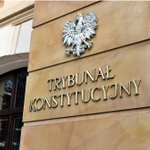
🇵🇱 Two official channels of Poland's Constitutional Tribunal contradict each other over who leads the court. One institution, two competing claims of authority.
That's an opening for #FIMI: a forged ruling or fake statement becomes harder to debunk when even genuine official messages conflict.
No evidence shows Russia caused the crisis. But with Poland's 2027 elections approaching, exploiting it would fit a familiar pattern of information manipulation.
🔎 Our analysis: ecst-eu.org/two-websites-one…
Photo: Entrance to the building of Poland’s Constitutional Tribunal in Warsaw. © Adrian Grycuk / Wikimedia Commons, CC BY-SA 3.0 PL.

6
🇺🇸 The #USMidterms are set to reshape Trump's final two years in office. With Democrats projected to control both chambers of Congress, the administration faces greater scrutiny and new obstacles to passing legislation. But the president retains substantial executive authority.
🇪🇺 For NATO allies, the immediate issue is the reliability of US security commitments. Congress has already restricted funding for troop reductions in Europe below 76,000. A Democratic majority could impose further conditions, but cannot prevent every presidential decision. Europe may gain stronger congressional safeguards without gaining greater predictability from Washington.
📷 Photo: © Lorie Shaull / KAXE.

25
🇪🇺 Russia does not need to create a protest movement to exploit it. And hybrid pressure does not stop at disinformation.
In our latest ECST report, we examine how the manipulation of existing grievances and acts of sabotage fit into a wider continuum of hybrid influence.
Across 23 documented cases in eight NATO countries, we find overlapping strategic objectives and vulnerabilities — but no evidence of a single command coordinating both activities.
That distinction matters. Europe needs to counter Russian interference without discrediting legitimate protest.
📄 Read the report:
ecst-eu.org/wp-content/uploa…
🤖 Made with AI

15
Frontier #AI could turn shared banking infrastructure into a systemic cyber vulnerability.
Why securing individual banks is no longer enough — and what Europe must do to strengthen financial resilience.
Our latest ECST analysis: ecst-eu.org/beyond-instituti…
🤖 Made with AI

19
Who pays? Who speaks? Who is real?
AI is changing political campaigning, and these questions are getting harder to answer.
ECST’s Dr. Iryna Kuehnapfel attended the EAPC European Conference #EAPC2026 in Frankfurt as the association marked 30 years with “Welcome to the Age of AI & Technology”.
The tools that help candidates reach voters can also create fake supporters and serve covert foreign influence. Campaign professionals and FIMI researchers need to compare notes more often. Disclosing who funds a campaign and where AI is used is a practical place to start.


16
Two days at #YES2026 in Kyiv raised a question Europe cannot afford to ignore: can territorial concessions end the war without paving the way for the next one?
ECST’s Iryna Kühnapfel reflects on Russia’s strategic ambitions, Western components in Russian missiles, sanctions enforcement and the information battles shaping Europe’s peace debate.
A ceasefire is not the same as lasting security.
Read her first-hand account: ecst-eu.org/peace-on-paper-w…


31
Russia’s information warfare has evolved. Has Europe’s response?
A new ECST report by Iryna Kühnapfel, Senior Research Fellow specialising in #FIMI, and Prof Gerhard Sabathil, former senior EU diplomat, maps the digital ecosystem behind Russian influence operations across Europe.
The researchers identify a six-tier architecture of influence and examine major networks and operations including Storm-1516, Doppelgänger/RRN, Portal Kombat/Pravda Network and Operation Overload.
And the next phase is already emerging: LLM grooming, AI-generated avatars, synthetic electoral campaigns and parallel information ecosystems.
📌 24 recommendations. One central question:
Europe already has many of the tools to counter FIMI — does it have the political will to use them consistently and at scale?
🔗 Read the full report: ecst-eu.org/information-and-…
🤖 Made with AI

28
Religion is not only a matter of faith. It can also become part of the infrastructure of political influence.
At #ecprgc26, ECST Research Team member Julia Martens presented our work on Russia’s use of religion as a hybrid tool in Europe, drawing on the ECST report “The Religious Factor as an Instrument of Russia’s Hybrid Influence in Europe: The ROC Network and the ‘Russkiy Mir’ Ideology (2022–2026)”: ecst-eu.org/wp-content/uploa…, alongside a survey of 25 experts from 10 countries.
The exchange with Laura R. Olson, Lino Klevesath, Antonius Liedhegener and Matthias Kortmann brought the focus to what comes next: mapping key actors, tracing religious–political connections, comparing patterns across countries, and examining how these structures evolve as Russia’s traditional channels abroad face growing restrictions.
A strong basis for the next stage of ECST’s work.
🤖 Made with AI


33
Will Russia attack NATO?
On 4 September, our FIMI expert Iryna Kühnapfel joined an @AtlanticCouncil Eurasia Center discussion with Garry Kasparov, Torrey Taussig, Glenn Corn and Agnia Grigas. The debate raised a question that goes beyond the prospect of a conventional Russian attack.
Russia is already attacking NATO — through sabotage, cyber operations, drone incursions, political interference and FIMI. The problem is that Europe still tends to see these as separate incidents rather than elements of the same confrontation.
That is exactly what makes this approach effective: Russia can test NATO’s cohesion and response without crossing the line that would make a collective reaction inevitable.
The tanks may or may not come. The attack is already under way.

40
Ahead of Serbia’s snap election, Russian #FIMI may target not only voters, but the legitimacy of the electoral process itself.
Fabricated leaks, attacks on observers, synthetic media and narratives laundered through local actors are among the scenarios to watch.
New analysis by ECST FIMI expert Iryna Kühnapfel is already available here:
ecst-eu.org/serbia%e2%80%99s…
🤖 Made with AI

93
#Iran does not need to deploy its own operatives across Europe. It can buy capabilities locally.
Criminal networks can provide surveillance, logistics and violence. Cyber actors provide access. Proxy brands provide amplification.
New analysis by Dr Iryna Kühnapfel examines crime as a proxy in Iran’s hybrid operations in Europe.
Read it here: ecst-eu.org/crime-as-a-proxy…
🤖 Made with AI

39
What if the next Russian–Chinese influence operation in Europe doesn’t look joint at all? One actor leaks, another amplifies, AI localises — while institutions see only separate incidents. Is Europe ready for a federated #FIMI ecosystem?
More food for thought here 👇:
ecst-eu.org/the-next-generat…
🤖 Made with AI

36
Far right in #poland is turning spectacle into political power.
From football ultras and Falanga to Rodacy Kamraci and Braun’s symbolic provocations, these networks convert grievance into mobilisation — and give hostile narratives an authentically Polish voice.
Our latest analysis explains how this ecosystem can advance Russia’s #FIMI objectives without any proven chain of command from Moscow.
Read the full article:
ecst-eu.org/when-%e2%80%9cpa…
🤖 Made with AI

1
33