

Digital Leadership is my business. Not learning? You’re lagging! 2025 Leader PowerSkills🎙️ Space Host🌐x-Global exec📚29k students, Leaders 2 Legends Community
Joined December 2011
- Tweets6.6K
- Following3.6K
- Followers2K
- Likes32.6K





Pinned Tweet
Self-help is past its due date
It’s as useful as faxing an email!
Here’s more of what we need:
• People need more courage, less conformity
• More Imagination, less prescription
• More Innovation, less prediction
• More Adaptability, less rigidity
• More Reinvention, less repetition
• More creation, less consumption
•More Curiosity, less complacency,
•More Resilience, less reliance
One word: What do you need more or less?
Word

I see the protests in France are trending.
Since I just spent 10 days there during the heart of them, I figured I'd chime in with what's actually going on.
The news and clickbait accounts on X will show you the outlier events: burning buildings, raging violence and everything that triggers you.
I was in the heart of Aix en Provence during the biggest protest day and filmed the center where it was happening. (See below)
This is right the University, across from the church, dead center of town.
The students are dancing, singing, kicking soccer balls and have comically barricaded the entrance doors to force the school to close.
I visited many cities in France during the protest period, and saw zero violence or malpractice of any kind.
More broadly, I spent more than a month this year in France across 3 trips and 10+ cities, including Paris, Bordeaux, Aix en Provence, Nice, Antibes, Biarritz, and others, and it's incredibly safe, charming, peaceful and beautiful.
Every city I visited is nicer than almost every American city, and there's zero comparison.
So much that it wouldn't even be insulting to France to try, because nobody who has spent significant time in both countries would take this comparison seriously.
I spoke with the students at length about their views. I also spoke with waiters, drivers, merchants, staff and whoever.
They were all civil, well articulated and genuinely wanted to see change.
We can disagree about their reasoning, logic or whatever, and it's true that France has fiscal problems, but to chalk up the France protests to raging extremist violence from "pick your favorite group to blame", is a laughable misrepresentation of what's actually going on.
If you exclusively watch the news and believe the top 1% extreme situations, you have likely been psyoped.
May their names be a blessing
Our hearts are with all who suffer the pain of injury and loss. I’m so sorry


Wisdom like a prayer for America, Europe and Ruzzia

### Shimon Peres to Vladimir Putin:
“I said to him:
‘You are 63 years old, and I am 93. Tell me, what do you want to achieve over the next 30 years? What are you fighting for? Are you hoping to irritate America?’
He replied: — No.
— Does America want to take part of Russia?
— No.
— Do you have problems with Obama because of some misunderstanding?
He asked: — Why are you asking me this?
I said: — Listen, I am not a spy. You can talk to me about anything.
He asked: — And what do you think?
I replied: — America will win, no matter what you do.
— Why? — he asked.
— Because they are happy, and you are not.
And I continued:
When an American wakes up in the morning, what does he see? To the south, Mexico — and Mexicans are welcomed into his country. To the north, Canada, his best friend in the world. And to the east and west, fish swimming in the water. What does Obama have to worry about?
And you? Who do you see around you when you wake up in the morning? Japan, China, Afghanistan?
My God! They know you have an enormous territory, yet you give them nothing. You possess 20 percent of the world's freshwater reserves, but you share nothing with others.
And when the snow in Siberia melts, the first people you will see there will be the Chinese. After all, there are many Chinese in the east and very few Russians.
The second thing I told him was this:
America has the best ratio of land area to population in the world. You have the worst.
Twenty million square kilometers! My God! But you don't have enough people to develop that territory. Your people are dying.
Do not be seduced by applause or by what people tell you. They will never forgive you for this.
Why do Russians live, on average, only 62 years, while Americans live to 82?
And then I told him:
— You behave like a tsar.
What did the tsars do? They built two cities — St. Petersburg and Moscow — as showcases. You can find anything you want there.
But the rest of Russia is Nigeria covered in snow.
Your people are dying. You are not giving them the opportunity to live with dignity. Do you really think they will forgive you?
— Why is America great? — he asked.
— Because America gives. And why does Europe have problems? Because Europe takes.
America gives.
People think Americans do this because they are generous. I believe they do it because they are wise.
When you give, you make friends. The most valuable investment you can ever make is an investment in friendship.
America had the courage to implement the Marshall Plan. It devoted an enormous share of its GDP to helping Europe, which was lying in ruins at the time.
And by doing so, America proved that such assistance is one of the best investments in the world.
There was not a single European country that had not been an empire. The French, the British, the Portuguese — they all had colonies.
And what happened?
They were driven out and left with nothing.
Britain was the greatest empire, the empire on which the sun never set. It controlled all the oceans.
But even the nonviolent resistance of the Indian people forced Britain to leave, reducing it to just three small islands that it now doesn't know what to do with.
Believe me,’ I told Putin, ‘enemies and hostility are the greatest losses in life.
You are investing in stupidity.’”
— Attributed to Shimon Peres, former President of Israel, recounting a conversation with Vladimir Putin.

Elizabeth C. Pagé retweeted

I am the préfet of the Haute-Vienne, in Limoges la Rouge, the red city built on porcelain, in the part of France that Paris remembers only when it is on fire.
It is on fire now. Or it was, Saturday evening; by the time you read this the glass will be swept from the place and the cafés will have reopened and someone will be eating a tartine six metres from where the hôtel de ville lost its roof, debating with great seriousness whether the police were too hard or not hard enough.
Both opinions will be held by people who were safely at home. Both will be forgotten by Wednesday. That is not a flaw in my country. That is the finest machine my country has ever built, and I will come to it, because it is the only thing here I am truly proud of.
They burned the mairie. I condemn this without reservation. The parquet has ruled the fire was lit sciemment, knowingly, deliberately, by hand, and I agree, and we are actively pursuing those responsible, of whom nineteen are already in garde à vue as I write. The Justice Minister has called it violence of an unheard-of gravity. The President has promised that those who pillaged our mairies will be punished, that we will all stand as one against the semeurs de chaos, the sowers of chaos. When Beauvau, the Interior Ministry, called at 18h40 to ask why the roof was alight, I gave the correct figures. I am, in this matter, entirely cooperative.
I did not put myself on the list of suspects. It did not occur to me. One does not arrest the author of the report.
And yet I have sat here since the roof came down with a small administrative discomfort I cannot file anywhere, and I would like to describe it, because I believe it is the most honest thing a man in my position has committed to paper in some years.
The boys with the lighters burned one building, in one evening. I have burned a great deal more than that, over four budgets, from this desk, with a stamp.
Let me explain the stamp, because the stamp is the whole of me. I did not decide the austerity. I did not stand in the Assembly.
I did not personally cut the fifty-two teaching posts from this académie, a figure our teachers described, in January, in a sentence I have not been able to put down, as though the lycée had been wiped off the map. I decided none of it. I received it, as a circulaire, twelve pages, and I applied it, and I signed it, and my signature is the thing that turns a decision taken by a man who will never visit this city into a fact that happens to its children.
Without it, the circulaire is a suggestion. With it, it is an arrêté préfectoral, and an arrêté is the Republic made flesh. Louis XIV said l'État, c'est moi, I am the State. For a man of my rank it is smaller and truer. L'État, c'est mon tampon. The State is my rubber stamp. That is my entire function, and I have performed it, I will say this for myself, without once being late.
So I have been thinking about the word sciemment. Knowingly. The parquet used it for the casseurs, and they are right; the boy with the mortar knew what he was doing. But I will gently observe that every fire in this story was lit knowingly. No one cut the teaching posts in his sleep. No one froze the wages by accident. No one lifted the farmer's diesel to one euro seventy by mistake, and he drove his tractor to my gates with an empty tank to prove it, and I received him, and I sent it upward, and it came back as a measure worth perhaps fifteen centimes, announced with great precision.
Every arson in this department was committed sciemment. The difference between myself and the boys in the hoods is not intent. We both did it knowingly. The difference is that mine went through on headed paper, pushed past the Assembly with le 49.3, the article that lets you govern a country that did not ask to be governed by you, so it is called a budget; and theirs went through with a lighter, so it is called a crime. One of us will face a judge by Monday. The other will be at his desk, having lunch, for which there is always time, because there is always cheese.
Do not imagine we are a state that cannot count. We count magnificently, and this is the part I find genuinely beautiful. On Saturday they burned the building, and by Sunday morning the façade had been assessed as very nearly one hundred percent destroyed, surveyed, classified, mourned on the national news as a heritage catastrophe.
By Sunday morning. And when the schools opened last month without their teachers, the ministry announced the replacements it had scraped together, and gave the number not as "around three thousand," which would have been honest, but as very precisely three thousand and twenty-four. To the single teacher. I have never been so moved by an integer. Because it tells you, exactly, what this state intends to give back. We count to the last unit what we have decided to return, and leave uncounted, forever, uncountably, what we have decided to take.
There is no figure anywhere, in any circulaire that has crossed this desk, for the hours of mathematics a child here has gone without since September. I have looked. I am thorough. There is a box on the form for the destroyed façade. There is no box for the boy. To be counted by this Republic, it seems, you must first be made of stone.
We have a name for our own government. We named it after a pastry. Le mille-feuille, the thousand-leaf, a tower of fine, delicate, overlapping layers, and at the very bottom, pressed flat beneath all of them, always, a child waiting for a teacher.
Three weeks ago his mother came to the permanence, the hours when the state consents to be spoken to. She said her son had had no mathematics teacher since the start of term. I wrote it down. I have the note. I sent it upward, correctly, through the channel, and the answer came back, in time, as a circulaire on les priorités de la rentrée, the priorities for the new school year. Twelve pages. The mother is still waiting. The façade will be rebuilt before her son has a teacher, and rebuilt in finer stone, because the façade is insured, and listed, and photographed, and the boy is none of these things. A president promised to heal la fracture sociale, the social fracture, when I was a student at the school that trains men like me. The fracture has since been promoted. It is now the foundation.
The mayor said something Saturday night, meant kindly, that I cannot stop turning over. He stood before his gutted building and said, it is a monument that burns, but not the Republic. I understood what he meant. I think he has it exactly backwards, and I think some part of him knows it. The monument is the one thing in this square that will survive. It burns loudly; it announces itself; it collapses on camera; it has its heritage assessment by Sunday.
The Republic, the real thing, the compact by which this state once fed the poor and taught the child and could be held to it by a woman at a permanence, that left years ago, on tiptoe, uninsured, with no roof to fall and no bell-tower to come down, and no one filmed it, and no one assessed the loss, because a republic, unlike a monument, does not announce when it burns. That is the only true difference between them. It is also the entire reason we will save the monument and let the other thing go. We save what makes a sound.
If we are honest about craft, and craft is all that is left to a man in my office, I am the superior arsonist. The boys burned a building in an evening and it is already out. Mine took four budgets, and mine is still alight, and mine will still be burning at the next rentrée, in every starved lycée in this académie, quietly, legally, on headed paper, and no elite unit will be scrambled to put it out, and no one taken into custody for it, and the markets, I am assured, are pleased. They sent a column of CRS to defend a building from fire. They have never once sent anyone to defend a child from the budget. My function has a name: le maintien de l'ordre, the maintenance of order. No one has ever given me a department for le maintien du reste, the maintenance of everything else. The water cannon does not protect the Republic from arson. It protects the state's monopoly on it.
Now. The machine I promised you. The thing I am proud of.
By morning the place is clean. I give the order; it is done. The crews are already staged, they are always staged, we are a people who have rehearsed the morning after for two centuries. The glass vanishes. The burned cars are towed to a yard beyond the ring road where no one of importance has to see them. The cafés open. The same tartine is ordered. And by Wednesday the whole city will have agreed, with that small haussement d'épaules, that shrug that is the one authentic monument we have left, that ça aurait pu être pire. It could have been worse.
Here is the confession beneath the confession, the one there is no form for. We are not bad at reckoning. That is the flattering lie the foreigners tell about us. We are the most advanced reckoning-avoidance engine ever assembled by a free people. The shrug is not weakness; the shrug is the load-bearing wall. It is what lets the state set a slow fire in a classroom in full confidence that by the time the smoke reaches the street it will read as weather.
Ça aurait pu être pire is not resignation. It is the stamp an entire nation presses onto its own losses, so they become true enough for the dossier, small enough to carry, and forgotten by Wednesday.
They will clean my city by morning. The casseurs' fire will be out by Wednesday. Mine will not. I will sign the report that says order has been restored, and the report will not be untrue, and it will not be the whole of it, and the distance between those two things is the entire history of this Republic, the whole of my career, and the one document I have never been issued the stamp to file.
My wife texts to ask if I have eaten. Tu as mangé? Then: Il reste du fromage. There is still cheese.
There is always cheese. That was never the problem.
What there is never, in this country, for the ones at the bottom of the mille-feuille, is a teacher, a reckoning, or a word of help, only, when the smoke clears, a stranger's hand on the shoulder and the thing we say in France instead of doing anything: bon courage.
Elizabeth C. Pagé retweeted

The $10 Billion Rental: Why Canada Wins the A.I. Lottery -
When a massive American tech giant secretly signs a twenty-year lease in Cape Breton, it is easy to assume the U.S. is walking away with the prize.
But you awesome Canadians, look closer.
This groundbreaking $10 billion artificial intelligence data centre is actually a brilliant flip in Canadian economic victory, leaving Nova Scotia holding ALL the winning cards.
In this high-stakes game, the Americans are not conquering anything; they are simply renting it. 😄
EverWind Fuels, a proud CANADIAN company, retains FULL ownership of the massive infrastructure.
The unnamed U.S. conglomerate will pump billions of dollars directly into Nova Scotia's local economy just for the privilege of plugging in.
So, while the tech company gets computer processing power, Nova Scotia secures the REAL treasure: 2,000 construction jobs, 215 PERMANENT high-tech careers, and a roaring economy.
Canada completely wins the green energy battle.
The Americans must pay for a $2 billion upgrade to our electrical grid, INCLUDING eighty brand-new wind turbines partly owned by the Mi’kmaq First Nations.
This means Canada gains FREE, revolutionary environmental infrastructure without a SINGLE DIME added to local power bills.
The Americans might write the cheques, but Canada BANKS the profits, the JOBS, and the clean energy future.
Nova Scotia just proved that you don't need to be a Silicon Valley giant to completely dominate the global tech race.
Awesome job, Nova Scotia.
Be proud of your incredible Maritime province, and THIS incredible, glorious country of Canada.
#cdnpoly
#canpoli
#nspoli
#peipoli
#MAGA
#Republicans
#usa

Elizabeth C. Pagé retweeted

In the dark hours of a freezing night in occupied France, a woman took off her clothes and squeezed through the narrow iron bars of a Gestapo prison cell. She held her dress between her teeth, dropped onto the street, and disappeared. Her name was Marie-Madeleine Fourcade.
Before the war she had lived a life of fast cars, airplanes, and classical music. When the Germans occupied France she joined a small secret network that gathered intelligence for the Allies. In 1941 its leader was arrested and handed control to her. She was thirty-one, the mother of two young children, and she accepted without hesitation.
Under her leadership the group grew into Alliance, the largest secret intelligence network in France. More than three thousand men and women joined. Nearly twenty percent were women. They used animal code names. The Gestapo called the organization Noah’s Ark. Marie-Madeleine chose Hedgehog for herself.
The Nazis spent years looking for a male general. They never imagined the person running the network was the fashionable young woman standing in front of them.
Many of her closest agents were captured, tortured, or killed. To protect her own children she sent them away. She could not even hug them goodbye. She stood behind a curtain and watched them walk down the street.
She was captured twice and escaped both times. Her agents gathered intelligence on German positions along the Normandy beaches that helped the Allies plan the invasion.
When the war ended, official recognition often favored men. She was left off many lists of national heroes. She never seemed interested in personal glory. For the rest of her life she helped surviving agents and the families of those who had been killed.
Near the end she said, “God gave me the strength to stand in the dark so that others could walk in the light.”

Elizabeth C. Pagé retweeted

My warm congratulations to Robert E. Hall and Michael Woodford on being awarded the Nobel Prize in Economics!
Your research on economic stabilisation has greatly improved our understanding of people's economic decisions and strengthened the foundations for effective policy.

BREAKING NEWS
The Royal Swedish Academy of Sciences has decided to award the 2026 Sveriges Riksbank Prize in Economic Sciences in Memory of Alfred Nobel to Robert E. Hall and Michael Woodford “for microeconomic foundations of macroeconomic stabilisation.”
#NobelPrize

Elizabeth C. Pagé retweeted
I am a member of the Norwegian Nobel Committee.
There are five of us. Five people, appointed by a parliament most of the planet could not find on a map, who decide, once a year, which human being the world has agreed to call good.
I know. I know. I think about it on the tram.
We meet in a building on Henrik Ibsens gate, a street named after a man who wrote almost exclusively about people discovering they are frauds, which nobody on the committee finds funny except me. There is a room with a long table and the portraits of the dead laureates looking down, Mandela, the Dalai Lama, a great many earnest men in spectacles, and one portrait we do not discuss, which is Kissinger, 1973, awarded while the bombs were still falling, after which two of our predecessors resigned and the satirist Tom Lehrer said political satire was now obsolete. We keep him on the wall. A reminder. Every family has the uncle.
It is October in Oslo, which means the sun gives up around four in the afternoon like a civil servant, and it rains the particular Norwegian rain that isn’t quite falling, just hanging there, judging you. I arrive with wet shoes. I always arrive with wet shoes. There is coffee, because this is Norway and there is always coffee, we drink more of it per person than almost anyone alive, and someone’s wife has sent kanelboller, the cinnamon buns, and we sit, five Norwegians, damp, caffeinated, sugared, and we decide the moral standing of the entire species.
Let me tell you how it actually works, because the world imagines a cathedral and it is, I promise you, a book club with a mandate.
287 nominations this year. 208 people, 79 organizations. Anyone can nominate, that’s the secret nobody understands: a professor, a parliamentarian, a former laureate, so the “nominee” list is meaningless, it’s a suggestion box, and every autumn some congressman nominates his own golden retriever and the press writes “SHORTLISTED.” Nobody is shortlisted. There is no short list the public ever sees. There is us, and the coffee, and the rain, and the portraits, and a Norwegian stubbornness that is older than the prize itself.
We read reports. The institute’s advisers write them, thick dull documents, and we argue. Our chairman told the BBC once that in the final meeting “there is a high temperature.” High temperature, for a Norwegian, means someone slightly raised an eyebrow and then apologized for it. We don’t do high temperature. We do a long silence, and then Kristin says “well,” and everyone knows exactly what “well” meant, and it’s settled. That’s our shouting. “Well.” You’d have to be raised here to hear the violence in it.
Now. This year. I will not say the name, because we never say the name, but you know the name.
A certain head of state wanted this prize the way a child wants a thing in a shop window, which is to say loudly, and in public, and with the full belief that wanting it was itself the argument. He said he deserved it. He said he’d ended eight wars, a number that grew most times he said it, like a fish. He had other heads of state phone us. Israel’s prime minister posted it on the internet, “Give him the Nobel.” The leaders of Cambodia and Pakistan announced they’d nominated him, as though announcing it were part of it, as though we tally mentions. A man flew around the globe collecting endorsements for a Norwegian committee the way you’d collect signatures for a petition to the council about a noisy dog.
And here, uff da, is the detail I treasure, the one that makes me smile into my coffee. The nomination deadline is the 31st of January. He took office on the 20th. So for all the phone calls, all the posts, all the gilded lobbying, the only nominations that could possibly count for this year’s prize were filed in the first eleven days of his term, before he had, by his own arithmetic, ended a single one of the eight wars. He campaigned all year for a prize whose window had shut while he was still hanging up his coat. We didn’t have to reject him. The calendar did. We just watched. Norwegians are very good at watching. We have long winters.
People think we sit there weighing his deeds. We don’t. That’s the thing I can’t make the world understand. We’re not grading his homework. We don’t owe anyone the prize for a ceasefire, however real, however loud the announcement. “He made peace” is not a sentence that ends in a medal, the way he believes it does, the way he believes every good thing ends in his name on it. The will of a dead Swede says the prize goes to whoever did the most for fraternity between nations. A dead Swede, I should add, who made his entire fortune inventing dynamite and selling arms, and spent his last years horrified at his own obituary, which called him a merchant of death, and so bought his way to immortality as a man of peace. The whole prize is one guilty arms dealer’s attempt to launder his name. We are, all of us, administering a dead man’s public relations. I find this clarifying. It keeps me humble. It should keep everyone humble, and it keeps, by my count, no one humble at all.
So who did we give it to?
An eighty-five-year-old woman. A judge. Born in Durban, under apartheid, granddaughter of a Tamil man who came to South Africa as indentured labor, a bus driver’s daughter from the poor Indian quarter, who became the first non-white woman to run a law practice in her province, who defended Mandela’s people when defending them was dangerous, who sat on the Rwanda tribunal and the court at the Hague, and who, at eighty-five, is right now a judge weighing whether a genocide is a genocide. When we told the world, our chairman said the rule of law “underpins the system we have set up to ensure peace,” and that “peace requires justice.” She wasn’t even in Oslo. She was in Nuremberg. In courtroom 600. The actual room where they tried the Nazis. You cannot stage that. God staged that, and God, it turns out, is a better satirist than any of us.
She did not phone us. She did not post. No prime minister demanded it for her on the internet. She had, as far as our deliberations are concerned, the one qualification the loud man could never manufacture, which is that she wanted the work and not the medal. The medal finds those people. It flees the ones who chase it. This is not a rule we wrote. It’s just the only pattern the hundred-odd years of our mistakes has ever shown.
The reaction from across the ocean was immediate. His spokesman posted that we “place politics over peace.” Ja. Perhaps. We’re five damp pensioners in a rainy city; of course it’s political, it was always political, it was political when we gave it to a sitting American president nine months into his first term for the promise of things he had not yet done, and we have been quietly embarrassed about that one for fifteen years, so believe me, we had a particular reason this year to prefer a woman with fifty years of verdicts behind her over a man with eight wars in front of him and a deadline already behind him.
Here is what he will never understand, the thing I’d tell him on the tram if he ever took one. We are the one prize he cannot buy, cannot post his way to, cannot have a friendly dictator phone in for him. Not because we’re incorruptible, nei, we’re as vain and wrong and human as the portraits on our wall. But because the entire point of the thing, the only power a small cold country’s book club has ever held, is that it goes to the person not performing the wanting. The moment you demand it, you’ve proven you don’t understand what it’s for, and proving that is itself the disqualification. He ran the most expensive campaign in the history of the prize and the campaign was the reason. He was never losing to Navi Pillay. He was losing to the concept.
It’s dark now. Four o’clock dark. The buns are gone. Kristin said “well” an hour ago and we all went home. I’m on the tram with my wet shoes, and somewhere across the water a very powerful man is explaining to a camera that the prize is rigged, that we’re corrupt, that he’ll win it next year, and he genuinely might, we’re only five idiots and we’ve been wrong before, Kissinger is still on the wall.
But not this year. This year an old woman in Nuremberg, in the room where the law once stared down the exact kind of man who thinks wanting a thing loudly enough should make it his, got a phone call she didn’t ask for.
That’s the job. We don’t reward the man who ends the war and announces it.
We reward the woman who spent fifty years deciding what a war was.
He’ll never see the difference. That’s rather the whole point of him.
Takk for i dag. I have to change trams.
Canada powered by Canadians

She needed ten hours of work for a high school science project.
She gave it three hundred.
By the time seventeen-year-old Anya Pogharian entered a clinical laboratory at Héma-Québec, she was no longer carrying an ordinary science-fair experiment.
She was carrying a dialysis machine she had built herself.
The device was called the Dialysave.
The test was simple.
A standard hospital dialysis machine could filter four liters of blood in roughly two and a half hours.
Anya’s five-hundred-dollar prototype needed to prove it could do the same.
Four liters.
Real human blood.
Clinical laboratory conditions.
The Dialysave finished in twenty-five minutes.
That was the moment everything changed.
Anya’s invention had filtered the blood about six times faster than the hospital benchmark, using a machine that cost a fraction of the thirty-thousand-dollar systems commonly used in medical facilities.
She had not begun with money, a research team, or a company.
She had begun by watching patients.
A year earlier, Anya volunteered inside a Montreal dialysis unit. She saw people sitting beside large machines as blood traveled out of their bodies, through filters, and back again.
The treatment lasted hours.
Patients returned several times each week.
Afterward, many were too exhausted to do anything except go home and sleep.
Their lives were arranged around the machine.
Work.
Family.
Travel.
Freedom.
Everything depended on the next dialysis appointment.
That was what stayed with Anya.
She went home and began reading equipment manuals, engineering diagrams, and technical descriptions.
She learned that dialysis machines used pumps, tubing, valves, filters, and electronic controls.
Many of the parts were already commercially available.
So she ordered them.
Then she built a prototype on a workbench in her parents’ home.
The first version cost approximately five hundred dollars.
And it worked.
Anya entered the project in science competitions and began receiving awards and attention. News of the low-cost machine spread quickly.
Messages arrived from patients and families around the world.
People wrote from countries where dialysis was too expensive, too distant, or unavailable.
A medical company offered supplies.
Héma-Québec offered Anya an internship and the opportunity to test the device in a professional laboratory.
There, working with research director Louis Thibault, she refined the design and prepared for the decisive experiment.
They hoped the Dialysave might match the hospital machine.
They did not expect it to outperform it so dramatically.
Twenty-five minutes.
That result did not mean the machine was immediately ready for hospitals. Medical devices require years of safety testing, certification, funding, and regulatory approval.
The Dialysave has not yet reached the large-scale use Anya imagined.
But she proved something important.
A teenager, working from home with affordable components, could challenge assumptions surrounding one of medicine’s most expensive machines.
Anya did not spend three hundred hours because she wanted a better school grade.
She did it because she had watched sick people lose entire days of their lives to treatment.
She saw a machine everyone accepted as inevitable.
Then she asked whether it could be faster, smaller, and affordable.
The answer came from a laboratory filled with real human blood.
Twenty-five minutes.
Sometimes innovation begins when someone young enough to question everything refuses to accept that expensive and difficult must always mean necessary.

Elizabeth C. Pagé retweeted

Faszinierende Technologie:
Die Ukraine migriert russische Bots in die Cloud.


Elizabeth C. Pagé retweeted
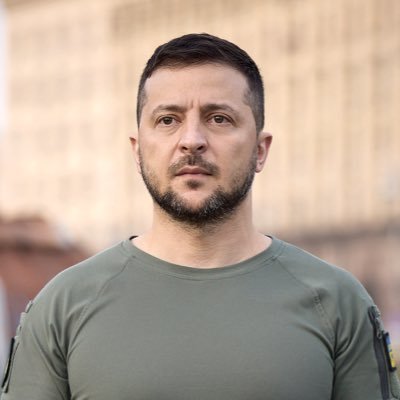
I am grateful to @MarkJCarney for his sympathy for Ukrainians amid the ongoing Russian strikes. The Prime Minister is very well informed about our defense needs, particularly anti-ballistic defense and preparations for winter. It is very good that Canada has become actively involved in developing the FREYJA anti-ballistic system jointly with Europe. This is exactly what can provide greater protection not only to Ukraine but also globally.
Of course, we also discussed the energy ceasefire announced by the President of the United States. Ukraine supports this step, and we have stated so, but now we need a response from Russia – what Russia will say to the American President and whether it will stop striking our energy infrastructure.
I thank everyone who helps defend Ukraine and advances clear, fair steps toward peace! Thank you to Canada and Mark personally for their full support!
Birth of A Nobel: Anne Carson

올해 노벨 문학상 수상 앤 카슨에 대한 여러 기사들 중 가장 돋보이는 소개 글에서 발췌:
카슨은 직업상 시인이지만 사실은 일종의 고고학자나 다름없다. 문화라는 토기의 파편들을 샅샅이 뒤져 우리 시대의 빛이 그 아름다움을 비추게 한다.
그 파편들을 자신의 시를 위한 씨앗으로 사용하는 것을 좋아하며, 그의 가사와 비평 에세이에 등장하는 고전 문화의 참조점들-사포, 베케트, 카프카, 미켈란젤로 안토니오니, 시몬 베유는 간혹 작품에 접근하기 어렵게 만드는 실험적 분위기를 풍기게 하지만, 막상 읽어보면 금세 즐거움과 기쁨으로 바뀌곤 한다.
그의 시는 전통과 문자적 해석에 대한 복종을 거부하고 창의적인 환상을 받아들인다. 때문에 그의 시를 접하는 데 필요한 진입 장벽은 놀라울 정도로 낮다-물론, 놀랍다는 건 책마다 한두 쪽 분량의 각주가 실리는 시인 치고는 그렇다는 뜻이다.
카슨은 출생지인 토론토 대학에서 고대 시인 사포에 관한 박사 학위 논문을 썼다. 사포는 카슨이 초기에 탐구했던 주제이면서, 그의 작품이 지금 우리에게 중요한 이유와 어쩌면 노벨상 수상 이유의 중요한 단서를 제공한다. 사포의 시는 단편적으로만 전수되었는데, 사랑과 그리움에 대한 집착 못지않게 그의 글쓰기 방식은 장르를 넘나들면서 파격적이고 끊임없이 변화하는 카슨의 시적 행보에 영감을 주었다.
카슨의 장난기와 유머, 호기심, 그리고 무엇보다도 다정함 덕분에 그의 시는 역사와 고전이 독자를 잃을지도 모른다는 우려는 말할 것도 없고, 오늘날 차갑고 거칠어진 사회적 세계에 대한 강력한 해독제가 되어 준다. 그의 작품에서 가장 감동받는 점은 추상적인 생각을 구체적인 감정으로 바꾸고 그 감정을 우리 자신의 것으로 만들어 주는 그의 능력이다.
theatlantic.com/books/2026/1…

Elizabeth C. Pagé retweeted

Amazing moment.
Navi Pillay has received the Nobel Peace Prize ! bbc.co.uk/news/live/ck5yng9z…
We are at the Nuremberg Court; I cannot think of a stronger symbol for her Nobel prize.
We are all so thrilled!
This is her first reactions upon hearing the news:


Elizabeth C. Pagé retweeted

October is Women's History Month.
During this month, we celebrate women from Canada's history who have helped shape the country.
Today, it is Emily Carr.

Tracing Anne Carson, Nobel Prize in literature 2026,

LIBROS RECOMENDADOS DE ANNE CARSON (Premio Nobel de Literatura 2.026).
1- Autobiografía de rojo.
Considerada una de sus obras más reconocidas, combina poesía y novela para reinterpretar el mito de Gerión y Hércules. Carson transforma un relato clásico en una historia contemporánea sobre el deseo, la soledad y la identidad.
2- Hombres en sus horas libres.
En este libro, Carson mezcla poemas, reflexiones y referencias históricas y literarias. Su escritura rompe las fronteras entre géneros y demuestra su particular forma de dialogar con el pasado desde una mirada contemporánea.
3- La belleza del marido.
Subtitulada Un ensayo en 29 tangos, esta obra aborda el amor, el matrimonio y la ruptura. Carson utiliza la estructura del tango como metáfora de una relación marcada por la atracción y el conflicto.
4- Si no, el invierno.
La canadiense traduce los fragmentos conservados de la poeta griega Safo y reconstruye, a partir de textos incompletos, una voz femenina de hace más de dos mil años. El libro refleja su profunda conexión con la literatura clásica.
5- Nox.
Una de sus obras más personales, Nox, nació como homenaje a su hermano Michael, fallecido en 2000. El libro combina fotografías, recuerdos, traducciones y fragmentos de texto, convirtiéndose en una exploración íntima del duelo y la memoria.
Estos cinco títulos permiten recorrer las principales obsesiones de Anne Carson: los mitos clásicos, el amor, la pérdida, la memoria y las posibilidades de la literatura. Su capacidad para mezclar géneros y épocas la ha convertido en una de las voces más originales de la literatura contemporánea.
eldebate.com


Elizabeth C. Pagé retweeted

Anne Carson. “You could whisper down a well. You could write a letter and keep it in a drawer. You could inscribe a curse on a ribbon of lead and bury it in the ground to lie unread for thousands of years. The point is not to find a reader, the point is the telling itself.”
