

We work for thriving farming communities. We are committed to collaborative solutions against #ChildLabour supporting farmers & families where tobacco is grown.
Geneva, Switzerland
Joined February 2013
- Tweets6.2K
- Following945
- Followers80.7K
- Likes1.5K






Heads-up!
Today is the abstract deadline for @paaclaind Indonesia's 2026 conference on business and children's rights.
Research and practical experience can strengthen due diligence and child labour prevention across value chains.

What does the transition from ECLT to ECLA mean for our work on child labour in agriculture? Keep following @ecltfoundation as we explain the change and continue sharing programme, partnership and advocacy updates.

More than two decades of working with agricultural communities have reinforced three lessons: understand household livelihoods, strengthen local capacity and value farmers' knowledge.
As ECLT evolves into ECLA, these lessons continue to guide our work.
eclt.org/user/pages/06.publi…

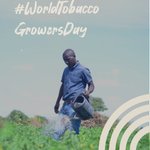
On World Tobacco Growers’ Day, we recognise our longstanding partnership with ITGA.
As ECLT evolves into ECLA, farmers' knowledge and perspectives remain central to shaping sustainable livelihoods and child labour prevention.
Our reality, our voice and our future.

On World Tobacco Growers’ Day, we recognise our longstanding partnership with ITGA.
As ECLT evolves into ECLA, farmers' knowledge and perspectives remain central to shaping sustainable livelihoods and child labour prevention.
Our reality, our voice and our future.

We support @paaclaind Indonesia's call for papers on children's rights, due diligence and child labour in global value chains.
Researchers, businesses and civil society are invited to contribute.
Abstract deadline: 5 November 2026.
bit.ly/RegistForm_CFP_PAACLA…

The world committed to ending child labour by 2025 under SDG Target 8.7.
Yet nearly 138 million children remained in child labour in 2024.
On #UnitedNationsDay, we examine the gap between international standards and effective protection.

Poverty can push children into work that disrupts education, limiting future opportunities.
Village Savings and Loan Associations can help strengthen household financial resilience.
Explore our free course on VSLAs and child labour prevention: learn.eclt.org/courses/break…

61% of child labour worldwide occurs in agriculture.
Household income, education, climate pressures and protection systems can all shape children's vulnerability. Which challenge is hardest to address in practice?
Share your perspective in our LinkedIn poll:
linkedin.com/feed/update/urn…

Child labour prevention involves different actors and responsibilities.
The challenge is understanding how livelihoods, education, social protection and supply-chain interventions connect, and where gaps remain.
Explore our systems-thinking perspective: eclt.org/en/news/why-lasting…

Families experiencing poverty need support, not blame.
Decent work, living incomes, social protection, quality education and affordable childcare can reduce the pressures that contribute to child labour.
Prevention begins with understanding families' realities.
#EndPovertyDay

Effective child protection requires local capacity to recognise and respond to risks.
Our free course explores monitoring, human rights due diligence and the practical steps involved in building stronger community protection mechanisms.
Enrol now: learn.eclt.org/courses/commu…

When a child is identified in child labour, what should happen next?
Learn what effective remediation looks like in practice, and why removing a child from work does not necessarily resolve the risks they face.
Read the interview: eclt.org/en/news/effective-c…

When intensive unpaid household chores are included in child labour statistics, the gender gap reverses, and girls are slightly more likely to be in child labour.
This #DayOfTheGirl, learn why gender matters: learn.eclt.org/courses/gende…

Financial pressure, uncertain harvests, isolation and prolonged stress can affect farmers and their families.
This #WorldMentalHealthDay, learn why mental wellbeing is part of building resilient agricultural communities: learn.eclt.org/courses/under…

Uganda’s coffee communities are combining agricultural knowledge with child-protection expertise to identify and refer child labour cases.
A practical example of stronger local systems in action.
Read the @ilo story: ilo.org/resource/article/ext…

Every cotton garment begins in a field.
Preventing child labour means understanding risks across the supply chain, from farming communities to finished products.
This #WorldCottonDay, we celebrate collaboration with Better Cotton to advance responsible sourcing.

From the SDGs and climate action to decent work and resilient livelihoods, September’s global debates shared a common thread: our challenges are interconnected.
Our latest article explores what that means for child labour prevention in agriculture. eclt.org/en/news/why-lasting…

Teachers can often see the warning signs before a child leaves school: repeated absences, falling behind or struggling to combine work and education.
This #WorldTeachersDay, we recognise their role in keeping children connected to learning—and the support they need to do it.

Who picked the beans in your cup?
Most coffee is produced by smallholders, yet insufficient income, price volatility and climate pressures can increase vulnerability to child labour.
This #InternationalCoffeeDay, we look at the livelihoods behind the finished cup.
