

📙EVIDENCE-BASED SUPPORT FOR CHILDREN AND YOUNG PEOPLE WITH ADDITIONAL NEEDS - THE ROADMAP -Caroline Bowen @SpeechWoman & Pam Snow @PCSnow1604 of 📗@TxChoices.
- Tweets43
- Following1K
- Followers1.1K
- Likes76


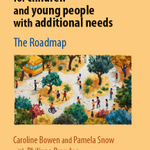

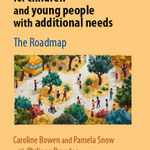




ALT Book cover and Table of Contents: "Evidence-based support for children and young people with additional needs: The Roadmap" by Caroline Bowen and Pamela Snow, with Philippa Brandon. Foreword by Heidi Gregory. Table of contents Acknowledgements ix Foreword xi Preface xii 1 Speaking to experts and learning the lingo 1 2 Research evidence 29 3 Making reasoned choices 51 4 Guilt and the quest for wűnderkinder 77 5 Parenting 109 6 Reading, writing and spelling 133 7 Language and speech 169 8 Voice, resonance and fluency 211 9 The developing brain: Executive functioning, working memory and self-regulation 253 10 Autism 281 11 The highs and lows of Augmentative and Alternative Communication (AAC) 319 12 Fitting in and getting on with others 359 13 Myth-busting, identifying misinformation and fact checking 383 Epilogue 419 Glossary 423 Index

ALT Book cover and Table of Contents: "Evidence-based support for children and young people with additional needs: The Roadmap" by Caroline Bowen and Pamela Snow, with Philippa Brandon. Foreword by Heidi Gregory. Table of contents Acknowledgements ix Foreword xi Preface xii 1 Speaking to experts and learning the lingo 1 2 Research evidence 29 3 Making reasoned choices 51 4 Guilt and the quest for wűnderkinder 77 5 Parenting 109 6 Reading, writing and spelling 133 7 Language and speech 169 8 Voice, resonance and fluency 211 9 The developing brain: Executive functioning, working memory and self-regulation 253 10 Autism 281 11 The highs and lows of Augmentative and Alternative Communication (AAC) 319 12 Fitting in and getting on with others 359 13 Myth-busting, identifying misinformation and fact checking 383 Epilogue 419 Glossary 423 Index


ALT Contents Foreword Acknowledgements Preface 1 Speaking to experts and learning the lingo 2 Research evidence 3 Making reasoned choices 4 Guilt, wünderkinder and the quest for brilliance 5 Parenting 6 Reading, writing, and spelling 7 Language and speech 8 Voice, resonance, and fluency 9 The developing brain: executive functioning, working memory, and self-regulation 10 Autism 11 The highs and lows of Augmentative and Alternative communication (AAC) 12 Fitting in and getting on with others 13 Myth-busting, identifying misinformation, and fact checking Epilogue Glossary Index


ALT Bowen, C., & Snow, P., with Brandon, P. (due UK Spring, 2025). Evidence-based support for children and young people with additional needs: The Roadmap. COVER PICTURE A street scene showing adults and children on a road, surrounded by trees, with a parked yellow bus nearby.

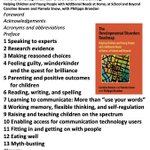
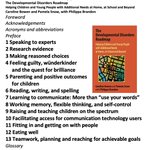
ALT Cover image and Table of Contents for "The Developmental Disorders Roadmap". CONTENTS Foreword Acknowledgements Acronyms and abbreviations Preface 1 Speaking to experts 2 Research evidence 3 Making reasoned choices 4 Feeling guilty, wünderkinder and the quest for brilliance 5 Parenting and positive outcomes for children 6 Reading, writing, and spelling 7 Learning to communicate: More than “use your words” 8 Working memory, flexible thinking, and self-regulation 9 Raising and teaching children on the spectrum 10 Enabling access for communication technology users 11 Fitting in and getting on with people 12 Eating well 13 Myth-busting Glossary Index

ALT Cover photo and Table of Contents for The Developmental Disorders Roadmap. 1 Speaking to experts 2 Research evidence 3 Making reasoned choices 4 Feeling guilty, wünderkinder and the quest for brilliance 5 Parenting and positive outcomes for children 6 Reading, writing, and spelling ¬¬¬¬7 Learning to communicate: More than “use your words” 8 Working memory, flexible thinking, and self-regulation 9 Raising and teaching children on the spectrum 10 Facilitating access for communication technology users 11 Fitting in and getting on with people 12 Eating well 13 Myth-busting Glossary Index


ALT Table of Contents and cover image for "The Developmental Disorders Roadmap: Helping Children and Young People with Additional Needs at Home, at School and Beyond". Foreword Acknowledgements Acronyms and abbreviations Preface 1 Speaking to experts 2 Research evidence 3 Making reasoned choices 4 Feeling guilty, wünderkinder and the quest for brilliance 5 Parenting and positive outcomes for children 6 Reading, writing, and spelling 7 Learning to communicate: More than “use your words” 8 Working memory, flexible thinking, and self-control 9 Raising and teaching children on the spectrum 10 Facilitating access for communication technology users 11 Fitting in and getting on with people 12 Eating well 13 Teamwork, planning and reaching for achievable goals Glossary Index

