

Dynamic Rivers is an environmental consultancy dedicated to naturalising river and valley floor form and functioning.
England, United Kingdom
Joined November 2018
- Tweets431
- Following366
- Followers1K
- Likes215


Fallen leaves are the energy/carbon foundation for watercourses , creating shelter, microhabitats and feeding zones. Engineered channels transport water sediment and organic material out of the system destroying this link. Restoring diversity and dynamism encourages retention.

Busy beavers!
A lodge constructed laterally along the bank in this higher energy watercourse (Water of May, Perth and Kinross). These creatures seem to favour an interlocked wood and sediment cluster over vertical posts and cabling for some strange reason. It will never last!

Natural inherently stable LARGE wood.
This cluster formed around a single large bankside treefall with its roots attached to the bank, trapping other large wood until it breaks down and moves downstream. No danger to infrastructure and easily replicated when restoring rivers.

Perhaps the most important diagram ever drawn explaining river behaviour, defining system self adjustment under the influence of catchment forcing factors.
Understand and work with this and we will end up with natural rivers. Go against it and expect issues as the river reacts!

State of the art river restoration in action, artificial bank protection, both?
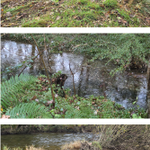
How would a BNG River Condition Assessment score the images below?

Speakers confirmed for the Innovation in Restoration Conference, Old Trafford Cricket Ground, 15th October 2026. Get your ticket here: tickettailor.com/events/west…

How is this idiot able to peddle this incorrect, unsubstantiated rubbish to the aging middle class? All the more reason to redouble our naturalisation efforts and get the successes into the public domain. Keep up the good work everyone!
Botham should stick to cricket chatter.

RIVER RESTORATION IS CHANGING!
Come to Old Trafford and get up to date with the latest approaches to restoration/naturalisation at this great value one day event featuring top practitioners from across the country.
Book your ticket here:
tickettailor.com/events/west…

Great day at Liverpool FC yesterday, engaging schoolchildren in river restoration. Some interesting free thinking amongst the more constrained perceptions of natural!
Well deserved thanks go to Olly Southgate (EA) and Mersey Rivers Trust for a splendid event.

Ash wind blow, partially rooted on the river bank at Heddon, North Devon. This tree has continued growing over at least the last decade resisting many floods with only half its roots attached. Why not put the chain saw and wire away and mimic this when using large wood in rivers?

Muddy margins upset many but, as the spoor illustrate, its value for nature is immense. Enough said!

More from Common Farm. Phase I deliberately left spoil in a rough state. The images below contrast the recolonisation of the spoil with the original grassland. So many species taking advantage of the disrupted ground. We would be very interested in any plant ID's for both pics.

Phase II of the rewetting of Common Farm, Windermere. Not river related but this field stood out in the landscape and when visited was a sea of Lady's Smock. Guessing this has been left deliberately ungrazed? Regardles there were some very happy green veined whites (& faries!).

Oystercatcher eggs. First record at the site on Tipalt Burn in Northumberland. You don't get a much better vindication of the valley floor wetting work than that!

30 large wood examples across multiple naturalisation schemes in the UK. All have dramatically improved local system form and functioning and NONE have moved downstream to create a flood risk issue despite not being terthered by cable and stakes. Don't engineer - mimic nature!

Beavers may not be the flood risk reduction panacea most are claiming, but they do make things wet!
Permanent diffuse anastomosing networks are commonly associated with their lodges, driving functional wetland habitat. Makes you wonder just how wet our waterscapes once were...

Common Farm shows clearly how underdrainage has dried our riverscapes, delivering water straight to main channels and significantly increasing flood potential downstream.
Climate change alone is not to blame.
Disrupting drainage WILL reduce flood risk, we need more of it.

Common Farm, Windermere. An intensly drained dairy farm in 2003. Reduced maintenance through to 2021 resulted in slow wetting.
This evidence guided underdrainage disruption in 2025 bringing water back into the landscape delivering massive NFM and environmental benefits.

Super exemplar video in the link below, highlighting how poor farmland can be repurposed to deliver major gains for the environment and demonstrating the value of a truly holistic approach to chalk stream naturalisation:
youtube.com/watch?v=Z3IdH8gY…

Great innovation and major associated achievements by the North Devon Riverlands team. Video link below. Look out for how the contour ditch technique spreads water across the steepest of slopes!
lnkd.in/e94gtnHr
