




Jim retweeted

There is no substitute for having a product people want to use. You can craft the most beautiful system, make the most persuasive argument, spend the most money, etc. and none of it matters if end users don't demand the product. In business and policy alike, focus on the users.
Jim retweeted

DEX Wars update:
@aeroxyz processed 14% of all DEX spot volume this past week, its highest share ever, and up from 10.5% three weeks ago.
3 months ago, Aero was the #5 DEX by spot volume, behind @Uniswap, @pancakefi, BisonFi, and @Pumpfun. Uniswap was doing over 4x Aero’s weekly volume.
Today, Aero is #2, and that gap is down to 2.2x.
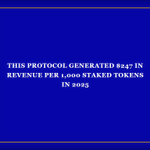
The combination of predictive allocation + increased tokenized equity trading is turning Aero into a powerhouse, and $AERO stakers are feasting.
The gap to Uniswap halved in one quarter. One more like it and #1 is on the table.
Data by @Blockworks


Aero is processing 10.5% of all DEX spot volume so far this week, per @DefiLlama.
That’s its highest weekly share in two years, and the 2nd highest ever.
It seems like @aeroxyz isn’t just coming for tokenized equity volume.
The DEX wars keep heating up.


Jim retweeted

So @coinbase staking unit…can we look into staking for other projects not just the L1!!?
Another revenue opportunity!!

BREAKING: The SEC just issued new guidance on crypto tokens, staking, and investment contracts.
1. Once a crypto network is functional, work to maintain, improve, or grow it no longer counts as "essential managerial efforts" under the Howey test.
2. Staking receipt tokens can be treated as digital commodities, not securities, depending on how they're structured.
3. A crypto asset itself can be a non-security, even if some transactions involving it are still investment contracts.
4. The SEC's framework now covers digital commodities, digital collectibles, digital tools, stablecoins, and digital securities.
These FAQs reflect SEC staff views only and carry no legal force, unless the Commission itself adopts a formal rule later.
Another major step toward clearer crypto rules in the U.S.
Jim retweeted

read the SEC's new crypto assets FAQ
the securities laws are starting to look opt-in now, at least as applied by the SEC to crypto
if you raise money by selling a non-rights-bearing token, are careful about what you represent or promise, and have a functional crypto system, there is now an extremely broad path outside the securities laws--arguably 'functionality' is not even necessary but there's some equivocation on this
the buyback guidance goes further than I expected. once the system is functional, even announcing a token buyback *program* (which I guess even could be a 'perpetual program') does not, in the staff's view, constitute a promise of essential managerial efforts. same for promises to improve the system or grow its network effects
so you can retain enormous influence over the thing, keep developing it, support its price with buybacks (including under a permanent "program"), and get many of the benefits of having a public investment instrument, without giving holders the rights or protections that normally come with one
they have opened a loophole in a regulatory regime whose whole point was supposed to be that you couldn't draft your way around economic reality (see e.g. papers.ssrn.com/sol3/papers.…)
can't really say if this is good or bad, but VCs etc. got a lot of what they wanted & the market should absorb all the implications of this
among others, I am growing skeptical how much of a 'long tail' there will be for tokenized equity. . .if you can get people to buy a coin in the style of BNB, HYPE, PUMP, etc., with minimal regulation, why voluntarily take on the burdens of selling them equity? if you are not mag-7 level, it doesn't seem there would be much reason to focus on equity securities for your capital-raising. . . if you want to access 'traditional buyers' you can wrap the token in an equity instrument like an ADR for those institutions. . .
the obvious next question is how far this extends beyond crypto businesses. can an ordinary company attach a functional token to its business and apply 100% of its profits to discretionary buybacks, without giving holders any right to those profits or making representations about future business efforts that independently trigger Howey? the FAQ doesn't expressly resolve that, but it opens a pretty enormous door
equity still gives investors something a discretionary buyback token doesn't. . .the question is whether the market will pay enough for those rights to make granting them worthwhile. otherwise the incentive is to keep the equity for insiders and sell everyone else the coin
crypto's current focus on hyping tokenized equity may be misguided, the bigger trend is "get all the benefits of equity with none of the burdens"
of course this is SEC guidance, not a repeal of the statutes or a command to the courts. a private plaintiff or a future SEC could have other ideas
but did not think I'd see it in my lifetime. . .the securities laws are being "disrupted" in substantial part by incentivizing making fewer commitments to investors. and if Warren Dems eventually take control and try to undo all this, after an entire market has organized around it, the resulting chaos will be something to behold
sec.gov/about/divisions-offi…
Jim retweeted
Aero is set for takeoff 🛫
Launch date and details here:
aero.xyz/articles/aero-launc…

Sit down… I’ve got some bad news about Santa

wait… so you’re telling me these KOLs “printing” on fomo and pump were just:
> partnered with teams to buy coins using funds given to them
> paid cash to publicly hodl those coins
> never actually had their own capital at risk
> round-tripped the “profits” because it was never their money
> led thousands of their “followers” who are used as exit liquidity to the slaughterhouse
> and somehow convinced everyone they’re god-tier traders
wild. don’t confuse an undisclosed paid partnership with someone actually trading their own capital.
one is trading.
the other is paid marketing.
Realistically, there is unlikely to be a ton of uptake under the Exemption since there are already permissionless versions of tokenized stocks that trade 24/7/365. But, we're starting to see how the SEC will enable tokenized securities trading on AMMs and public blockchains moving forward and that is bullish.
1
9
201
Jim retweeted

My thanks go to everyone who put so much effort into the CLARITY Act— across the Administration, Congress, investors, and innovators. Our collective conviction that America must continue to lead is indispensable.
I have been unequivocal: with or without legislation, we will act decisively within the SEC’s statutory authority to deliver certainty for American investors and for the entrepreneurs shaping our technological future.
Stay tuned.

I want to pick my words carefully here, but I think on the industry side there's a "too big to fail" explanation being put out there by the people who have invested the most in lobbying and have narrow priorities. i.e. XRP and similar getting a free pass / putting CEXs on sounder regulatory footing / are the lobbyists themselves trying to tell you this is a W

It's terrible for ethereum imo. Nobody actually cares what's in the bill they just want to dump their coins for higher on the news.
1
5
918
I've been pretty vocal about why I don't think CLARITY in its current form is great for the industry (and that was before BRCA was gutted / the vertical integration changes), but people didn't really want to hear that, so instead let me propose that Chair Umpires should have the option of putting a clock on competitors' second serve if they think the match is being slowed down too much.
👏👏👏 @GOPMajorityWhip

🚨NEW: Onstage at the @SolanaInstitute Summit, @GOPMajorityWhip tells @KristinSmith he’s “concerned” about the changes to the BRCA:
“I don’t like the fact that you literally are giving up that safe harbor on the criminal side, and I do worry about local state’s attorneys generally making this more of a weaponization-type thing.”
Emmer is the original sponsor of the BRCA and first introduced it in the House in 2018.
5
632