

#Chainlink ⛓️ is taking the flexibility of the Internet and wrapping it in cryptographic truth to unleash the 4IR. Enlisted ⛓️ 🪖 Jan 2018.
Joined March 2021
- Tweets12.5K
- Following1.1K
- Followers3.8K
- Likes128K




Pinned Tweet
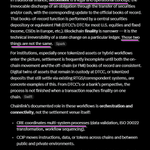
Page 59 of ICMA's June 2026 report.


Swift is hosting a panel together with the international capital markets association (ICMA) about scaling tokenized assets on the 10th of september 👀
The distributed ledger was the first step. Expansion to other DLT usecases is the next one and @chainlink will be the one powering this!


LinkDrake retweeted

The Bank for International Settlements today published a speech from MAS referencing Global Layer One (GL1).
GL1's June 2026 documentation identifies Chainlink's Automated Compliance Engine (ACE) as an implementation example.
Participants include JPMorgan, HSBC, Standard Chartered, MUFG, Banque de France and MAS.
ethereum:0x514910771af9ca656af840dff83e8264ecf986ca


The Bank for International Settlements today published a speech from Singapore's central bank (MAS) referencing Global Layer One (GL1).
The initiative's June 2026 technical documentation features Chainlink's compliance technology.
GL1 participants include JPMorgan, HSBC, Standard Chartered, MUFG, Banque de France and MAS.
MAS envisions a network of networks connecting distributed ledgers and traditional financial infrastructure to support regulated cross-border transactions in tokenized assets.
MAS reports that a growing number of major DLT networks are adopting GL1 standards.
The initiative's white paper identifies Chainlink's Automated Compliance Engine (ACE) as an implementation example, including its Policy Manager, Compliance Rules Engine and Cross-Chain Identity (CCID) capabilities.


LinkDrake retweeted

The $LINK / $ETH pair paints a very interesting story. It shows a 2021 bull-market peak of 0.047 ETH, a deep retracement, and a multi-year accumulation channel.
Based on today's prices, $LINK would need to flip .0085 or $20 to break out and flip that into support. A retest of .047 is roughly $112, which only increases as ETH moves.
Now let's assume a future price of $ETH around $4,500, the equivalent price of Chainlink would be $202.50 based on the chart below.
Chainlink will retest the peak of this chart, the main variable is the price of ETH when it does.
When you see lofty altcoin targets, weigh the primary assets altcoins are paired against... ETH & BTC for a reality check.
My target for Chainlink has consistently been in the $80-$100 range, but @StanChart's $200 forecast is very much in play, depending on how the pairs move with the rest of the market.
Now you may think this is hopium, so I included a $BTC chart as well.. At $125k BTC and a peak of .0016 that's equivalent to $200 $LINK. If BTC chops while alts run and stays around $85k, that's $136. The numbers aren't too far off at all.
Either way, I see two bullish setups primed for a market shift.


LinkDrake retweeted

Absolutely correct and based post from Kamino.
If your interop protocol has no security guarantees (having a standardized security floor) like LayerZero, then the assets you move around have to be discounted via a risk premium when used as collateral.
"A modular model, where each issuer configures its own verifier set per lane and can change it at any time, is close to impossible to underwrite at scale. Without an enforced minimum security floor, the conservative assumption is that most issuers default to settings that remain highly centralized, because growth and risk management pull in opposite directions. Continuous oversight is not feasible when security depends on a bespoke setup the issuer controls and can alter without notice, and each token becomes its own audit, repeated every time settings change or a chain is added."
Bingo.
Either you use Chainlink CCIP to unlock higher borrowing limits & LTV ratios, or your tokens get pegged. Literally.
$LINK $KMNO $ZRO
P.S.
Attached my previous posts and other risk curators' announcements on the same topic below.

LinkDrake retweeted

S&P Global, the 165-year-old authority behind global credit ratings and the S&P 500 itself, agreed to acquire OpenZeppelin, the security standard securing an estimated $250 billion in digital assets and auditor of record for $38 trillion in onchain value transferred.
If you've touched a major stablecoin, tokenized fund, or DeFi protocol, OpenZeppelin's audited code was probably underneath it.
OpenZeppelin announced a strategic partnership making Chainlink's infrastructure native across its tooling, not just price feeds, but ACE (its compliance engine) and CCIP (its cross-chain interoperability protocol).
That means every institution pulling a vetted template from OpenZeppelin's library inherits jurisdictional compliance logic and cross-chain settlement by default, pre-wired, pre-audited.
This is the distribution unlock the Chainlink thesis has been building toward.
Institutions don't need to evaluate and choose Chainlink anymore, they inherit it automatically the moment they build on the standard that the world's most trusted risk-assessment brand now owns!
Pair that with Chainlink's growing footprint across Swift, DTCC, the Bank of England, MAS and HKMA and this isn't one more partnership, it's Chainlink becoming the default substrate underneath the tooling traditional finance already trusts.
It’s now a FAR stickier position than any single deal and arguably the clearest distribution catalyst yet for $LINK's institutional thesis.

NEW: @OpenZeppelin, which S&P Global agreed to acquire, embeds Chainlink into its tooling standard used by the vast majority of the industry, including BlackRock, WisdomTree, Franklin Templeton, and more.
Chainlink CCIP, CRE, & ACE are now built into the tools behind $38+ trillion in transferred value.

LinkDrake retweeted
Put two and two together, anon.
$LINK


Today we’re announcing a strategic partnership with @chainlink
Chainlink CCIP and ACE are now natively embedded across OpenZeppelin tooling, giving institutions and developers one trusted foundation for moving assets and operations onchain.

LinkDrake retweeted
NEW: @OpenZeppelin, which S&P Global agreed to acquire, embeds Chainlink into its tooling standard used by the vast majority of the industry, including BlackRock, WisdomTree, Franklin Templeton, and more.
Chainlink CCIP, CRE, & ACE are now built into the tools behind $38+ trillion in transferred value.
Today we’re announcing a strategic partnership with @chainlink
Chainlink CCIP and ACE are now natively embedded across OpenZeppelin tooling, giving institutions and developers one trusted foundation for moving assets and operations onchain.
LinkDrake retweeted

"Not one chain will rule them all."
Nadine Chakar, DTCC.
That's the $LINK thesis. @chainlink
LinkDrake retweeted

"at Davos we're talking about the Fourth Industrial Revolution and theyre really missing the fourth computing paradigm. its a really important thing to talk about. over the course of my investing career ive invested in mainframes, distributed computing, mobile computing and now decentralized computing. its the Fourth Paradigm that can fundamentally change the way in which we compute." - Genn Hutchins - Davos, January 2019
- people have been focused on block production TPS and the chain gas race to zero. - they stopped at Chainlink is a price feed. - they dont know what a "generalized consensus computation oracle framework" is.
The Chainlink Runtime Environment - the decentralized system no one owns.
$LINK. Fourth Computing Paradigm. Fourth Gen blockchain.
The oracle wars were over before the even started.


I wonder what got them curious?
Chainlink
The Open Decentralized Industry Platform that no one owns
#4thIndustrialRevolution #Davos #WEF19
$LINK
pscp.tv/w/1YpJkVnVRWMGj?q=cn…
LinkDrake retweeted
Mark Nichols, Co-President of Digital Assets at @Broadridge, joins the Link:NYC stage on tokenization at scale, from issuance to redemption.
With Broadridge processing $8 trillion in onchain repo monthly, he brings expertise on what changes operationally when settlement, collateral, and repo move onchain.

LinkDrake retweeted
It’s not that complicated but clearly folks still refuse to see/ accept it.
Blockchain tunnel vision is a Hell of a Drug! 🤣

You're trying to communite with him on his level obviously but the real issue is noone in this space even understands what settlement means.
Chains do finality, settlement is a *financial term* and depends on jurisdiction / usecase / compliance requirements, settlement means a whole other thing, where from DTCC/Swift's perspective, settlement hasn't happened until the digital twin has also been updated - e.g. both an on-chain and off-chain process.
And Chainlink is orchestrating that end to end process for them both, so Chainlink is actually facilitating settlement, not a given chain.

LinkDrake retweeted
mfers built a mythology on how THEIR blockchain - disconnected from the real world - an unseeing, unknowing golem - would become the worlds computer and replace all the worlds institutions with protocols.
@Chainlink went out and built that computer. which abstracts and orchestrates compute across all the worlds decentralized and centralized databases. which the worlds largest institutions are now using to migrate themselves from manual processes to automated protocols.
- Immutable auditability.
- Smart contract defined guardrails.
- Stateful tokenized assets - Unified Golden Records.
- Consensus Compute.
- Proof over Promises - synchronized trust.
The Chainlink Runtime Environment
Everything. $LINK'ed.


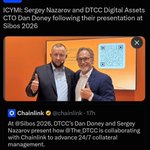
On stage at @Sibos 2026, Chainlink and @The_DTCC demonstrated how Chainlink Fulcrum enabled a cross-chain securities financing transaction.
xitter.cf/chainlink/status/21046…


LinkDrake retweeted

$Link Earlier today DTCC’s Executive Director said Chainlink Isn’t just "nice to have" but instead called it a PRE CONDITION for adoption 👀
Yea... I think we're going to make it.


$116 TRILLION. And Finance Is Moving On-Chain
What role could @Chainlink $LINK play as market infrastructure like DTCC connects to blockchain?
@EidJohann breaks down tokenization, collateral, and the missing link to legacy finance.
#Tokenization
LinkDrake retweeted

Every time I read an excellent detailed post on @chainlink I realize the level of knowledge required to understand the opportunity with ethereum:0x514910771af9ca656af840dff83e8264ecf986ca which is most likely why the token is not already higher. When you start to get institutional coverage of the protocol it will become clearer.
Someone can spend years following cryptocurrency markets or financial markets and still lack the background necessary to appreciate the opportunity.
I only see it because I started following the link story around a year after they came on the scene and several individuals likes fishy, null, drake that have laid out breadcrumbs over and over again and parsed stuff I didn’t understand with AI (once that was available) but it’s taken a lot of time looking into the various fud arguments to build the conviction needed to hold until the market matures.

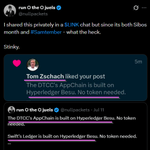
"Interop between permissioned Besu ledgers" isn't even 5% of a solution for what DTCC needs, which is why Chainlink is being used.
What about interop to Solana? Tempo? Hyperliquid? Zero? Canton? Stellar? Arc?
Canton, Stellar, and Arc are the actual *already* announced chains that DTCC’s tokenization service is expanding to (with many more to come).
Besu has absolutely no way of enabling interop to where DTCC already confirmed they are launching.
But on top of that, what about composability with non-financial networks like Fedwire, Fednow, Swift, DTCC, CLS, FIX, credit card networks, etc, which clear and settle transactions offchain?
You need a protocol that can do "orchestration" to allow for bidirectional movement of data, value, and state sync with these off-chain systems.
What about all the data needs?
What about compliance?
What about privacy?
The goal of tokenization is to have synchronized data and value across many different chains *and* systems to enable regulated 24/7 markets with atomic DvP & PvP with T+ 0 settlement.
"Interop between permissioned Besu chains" and/or intracluster connectivity within Ethereum L1 isn't even a 5% solution.
Chainlink is the only protocol that *already* does:
Data (Risk parameters, continuous price updates, NAV, Proof of Reserves, etc.)
- Interoperability between all blockchains, public and private
- Compliance (KYC/AML/Sanctions list, etc.)
- Privacy (Confidential computations required to protect sensitive information)
- Connectivity to existing financial systems (Swift, etc.)
- Connectivity to AI Agents
- and more
Now you see how trivial a single blockchain is compared to the true problem.
But it doesn't just end there. We've all these extra things to add into the transaction. Are we gonna use multiple separate solutions for each, each with their own architectures, security models, etc.?
No, what we need is a fully verifiable, decentralized runtime environment to orchestrate everything a transaction needs.
Enter the Chainlink Runtime Environment.
Every single operation in a transaction (from the list of requirements above) is fully verifitable, tamper-proof, traceable, and auditable.
The Chainlink Runtime Environment (CRE) is what orchestrates the full lifecycle of these transactions.
Just look at the quotes from DTCC CTO and the slide from the workflow they just demoed at SWIFT's SIBOS conference.
No blockchain even comes close to fulfilling this.


LinkDrake retweeted

𝗨𝗽𝗱𝗮𝘁𝗲𝗱 𝗖𝗵𝗮𝗶𝗻𝗹𝗶𝗻𝗸 𝗧𝗵𝗲𝘀𝗶𝘀 - Token Utility, Revenue Scaling, Staking, Buybacks, and what sets Chainlink apart from competitors.
Chainlink is now a full platform for verifiable, institutional-grade tokenization workflows.
𝟭. 𝗧𝗼𝗸𝗲𝗻 𝘂𝘁𝗶𝗹𝗶𝘁𝘆: 𝗳𝗲𝗲𝘀 𝗶𝗻 𝗟𝗜𝗡𝗞
The Chainlink Runtime Environment (CRE) orchestrates workflows across chains, data, compliance, and privacy. Each workflow step pays a CRE orchestration fee in LINK, and each cross-chain action pays a CCIP fee in LINK. Chainlink data is paid for too.
In Chainlink's Fulcrum demo of a tokenised repo loan with the DTCC, one loan carried 4 orchestration fees plus 1 CCIP fee, all paid in LINK. That's just one loan.
𝟮. 𝗥𝗲𝘃𝗲𝗻𝘂𝗲 𝘀𝗰𝗮𝗹𝗶𝗻𝗴: 𝗴𝗿𝗼𝘄𝘁𝗵 𝗱𝗿𝗶𝘃𝗲𝗿𝘀
🔹 More adopters → more workflows → more fees.
On Fulcrum, DTCC's CTO Dan Doney says:
- "Effectively this is a model that ultimately takes what amounts to transactions in excess of 20 trillion a day and completely automates the process."
- "Thanks to the orchestration of CRE and CCIP this can connect any two chains together… any asset anywhere in any jurisdiction with any custodial system, any time of day, is now mobile in terms of collateral. This truly changes the game… There's roughly 80 trillion dollars worth of assets that could be used in collateral processes… This kind of system frees up 52 trillion dollars worth of assets."
We can see how this scales with DTCC, now apply it to every other institutional user of CRE.
🔹 More complex workflows → more fees.
CRE fees scale with compute, so Confidential Compute, more data and more compliance checks all mean more fees.
🔹 TradFi and DeFi converging → more fees.
TradFi brings trillions in assets and real volume to DeFi. CRE sits in the middle, processing it all.
TradFi won't rebuild its systems to use DeFi. It'll connect them through CRE, with each workflow paying LINK.
🔹 Agentic transactions → more fees.
AI agents transacting onchain, from paying for data to executing trades, all need orchestration and cross-chain execution (Chainlink for Agents).
🔹 Chainlink as the generalized guardrail for AI.
Chainlink verifies AI's inputs, verifies AI outputs through multi-AI consensus, and orchestrates agentic actions, all through consensus. It becomes the Truth Machine for not only finance, but also AI.
𝟯. 𝗦𝘁𝗮𝗸𝗶𝗻𝗴: 𝘀𝗲𝗰𝘂𝗿𝗶𝘁𝘆 𝘁𝗵𝗮𝘁 𝘀𝗰𝗮𝗹𝗲𝘀 𝘄𝗶𝘁𝗵 𝘃𝗮𝗹𝘂𝗲
As more value is secured, node operators should stake more LINK as collateral so the cryptoeconomic incentives stay aligned.
The more LINK an operator stakes, the more it stands to earn and the more it risks losing through slashing if it underperforms.
This creates a bigger supply sink for LINK over time as the total value secured inceases, especially if retails holders can stake on behalf of node operators too.
𝟰. 𝗕𝘂𝘆𝗯𝗮𝗰𝗸𝘀: 𝗶𝗻𝗱𝗲𝗳𝗶𝗻𝗶𝘁𝗲 𝗮𝗻𝗱 𝗴𝗿𝗼𝘄𝗶𝗻𝗴
The Chainlink Reserve converts revenue into LINK and buys it from the market. LINK is the only thing that accrues value from the success of the Chainlink protocol.
Rising adoption means more revenue, which makes the weekly buybacks indefinite and likely to grow in size.
𝟱. 𝗧𝗵𝗲 𝗱𝗶𝘀𝘁𝗶𝗻𝗰𝘁𝗶𝗼𝗻 𝗯𝗲𝘁𝘄𝗲𝗲𝗻 𝗖𝗵𝗮𝗶𝗻𝗹𝗶𝗻𝗸 𝗮𝗻𝗱 𝗶𝘁𝘀 𝗰𝗼𝗺𝗽𝗲𝘁𝗶𝘁𝗼𝗿𝘀
Most competitors are built around one or two verticals. Each one solves a single piece of the puzzle. Chainlink solves it all.
The real killer: consensus computing.
Every operation in CRE workflow goes through decentralised consensus. That's the oracle problem, but solved for everything that touches blockchains, not just data.
𝗪𝗵𝘆 𝘄𝗼𝘂𝗹𝗱 𝘄𝗲 𝘂𝗽𝗴𝗿𝗮𝗱𝗲 𝘁𝗵𝗲 𝗳𝗶𝗻𝗮𝗻𝗰𝗶𝗮𝗹 𝘀𝘆𝘀𝘁𝗲𝗺 𝘁𝗼 𝗯𝗹𝗼𝗰𝗸𝗰𝗵𝗮𝗶𝗻 𝗿𝗮𝗶𝗹𝘀 𝗶𝗳 𝗲𝘃𝗲𝗿𝘆𝘁𝗵𝗶𝗻𝗴 𝘄𝗲 𝗰𝗼𝗻𝗻𝗲𝗰𝘁 𝘁𝗼 𝘁𝗵𝗲 𝗯𝗹𝗼𝗰𝗸𝗰𝗵𝗮𝗶𝗻𝘀 𝗱𝗼𝗻'𝘁 𝗵𝗮𝘃𝗲 𝘁𝗵𝗲 𝘀𝗮𝗺𝗲 𝘀𝗲𝗰𝘂𝗿𝗶𝘁𝘆 𝗽𝗿𝗼𝗽𝗲𝗿𝘁𝗶𝗲𝘀 𝗮𝘀 𝘁𝗵𝗼𝘀𝗲 𝗯𝗹𝗼𝗰𝗸𝗰𝗵𝗮𝗶𝗻𝘀?
$LINK


LinkDrake retweeted
"Interop between permissioned Besu ledgers" isn't even 5% of a solution for what DTCC needs, which is why Chainlink is being used.
What about interop to Solana? Tempo? Hyperliquid? Zero? Canton? Stellar? Arc?
Canton, Stellar, and Arc are the actual *already* announced chains that DTCC’s tokenization service is expanding to (with many more to come).
Besu has absolutely no way of enabling interop to where DTCC already confirmed they are launching.
But on top of that, what about composability with non-financial networks like Fedwire, Fednow, Swift, DTCC, CLS, FIX, credit card networks, etc, which clear and settle transactions offchain?
You need a protocol that can do "orchestration" to allow for bidirectional movement of data, value, and state sync with these off-chain systems.
What about all the data needs?
What about compliance?
What about privacy?
The goal of tokenization is to have synchronized data and value across many different chains *and* systems to enable regulated 24/7 markets with atomic DvP & PvP with T+ 0 settlement.
"Interop between permissioned Besu chains" and/or intracluster connectivity within Ethereum L1 isn't even a 5% solution.
Chainlink is the only protocol that *already* does:
Data (Risk parameters, continuous price updates, NAV, Proof of Reserves, etc.)
- Interoperability between all blockchains, public and private
- Compliance (KYC/AML/Sanctions list, etc.)
- Privacy (Confidential computations required to protect sensitive information)
- Connectivity to existing financial systems (Swift, etc.)
- Connectivity to AI Agents
- and more
Now you see how trivial a single blockchain is compared to the true problem.
But it doesn't just end there. We've all these extra things to add into the transaction. Are we gonna use multiple separate solutions for each, each with their own architectures, security models, etc.?
No, what we need is a fully verifiable, decentralized runtime environment to orchestrate everything a transaction needs.
Enter the Chainlink Runtime Environment.
Every single operation in a transaction (from the list of requirements above) is fully verifitable, tamper-proof, traceable, and auditable.
The Chainlink Runtime Environment (CRE) is what orchestrates the full lifecycle of these transactions.
Just look at the quotes from DTCC CTO and the slide from the workflow they just demoed at SWIFT's SIBOS conference.
No blockchain even comes close to fulfilling this.
LinkDrake retweeted

Join us as we sit down with @EidJohann from @Chainlink to uncover why $LINK could become the backbone of global finance. Wall Street, CCIP, DTCC, AI and the future of crypto. xitter.cf/i/broadcasts/1DxleVaaD…
