

Doc. Dramedy Queen Ru|En|De PhD in love, hate, sex & pain Мать генсеков. Дайте мне тазик-эвтаназик
Konoha, Hidden Leaf V.
Joined October 2021
- Tweets6.1K
- Following306
- Followers1.1K
- Likes20.6K




Pinned Tweet
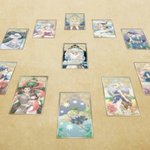
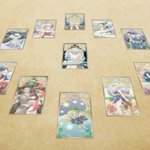
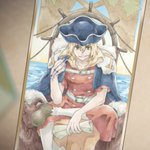
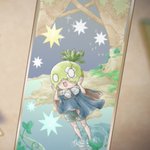
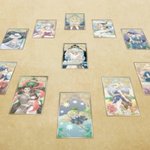
It's time for a really serious talk, folks. I was absolutely disappointed with how the fandom interpreted the tarot from the fourth season ending, so now the professionals (haha god) will take over. Thank my anti-science expert and my psychology PhD for this moment. Let's go :DDD


Иррациональный πдарас retweeted

#DrSTONE Behind Story – 02
#Senku #Taiju #Yuzuriha
#Taiju Was the Protagonist.
While working on Dr. STONE, there are a few things I clearly remember as truly astonishing.
One is the genius of Inagaki-sensei and the first editor.
The other is something I see as symbolic of what it means to work at Weekly Shōnen Jump.
And at the beginning, the protagonist was Taiju, not Senku.
After reading the storyboard for the first chapter, I asked who the main character was, and I was told, “Taiju is the protagonist.”
Senku, at that time, was the intelligent supporting character.
So I decided to reverse the typical “Jump” stereotype in the character design.
I gave Senku—the genius—a strong, hero-like hairstyle, while Taiju, as the protagonist, was designed more in my own style rather than a typical Jump hero: a relatively ordinary hairstyle, but with a muscular build.
Because Taiju was the protagonist, I focused the emotional beats and close-up direction on him.
At least in the first chapter , both the story and the direction were clearly followed on Taiju.
However, after Z=3, the protagonist shifted to Senku.
The direction of the story also changed.
And yet, all of it unfolded so naturally, as if it had been planned from the very beginning.
The “change” itself is impressive—but what’s even more remarkable is how it feels premeditated.
To me, this is the very essence of Inagaki-sensei’s genius, and what I would call the “something wonderful is happening” moment required to work at Weekly Shōnen Jump.
My journey into Weekly Shōnen Jump began with this sense of awe—at how things are done there, and at Inagaki-sensei’s boundless genius and relentless effort.
instagram.com/p/DXSNCaMFI5b/
First Character Designs
At this stage, Senku clearly had the presence of a supporting character.
instagram.com/p/DXSOowDlCXu/
In my mind, the greatest heroine in Weekly Shōnen Jump was Ai from Video Girl Ai, so I gave Yuzuriha a spiral-shaped hairband as a homage to that work.
However, this element was not yet present in the very first design.
instagram.com/p/DXSPOrflIH2/
instagram.com/p/DXSPiu9lNJK/
First Concept Illustrations for the Jump Serialization Meeting. (Taiju is the first one I designed.)
instagram.com/p/DXSQphSlCJL/
Boichi Version Dr. STONE Storyboards
Some scenes and depictions differ from the work.
At this stage, remnants of human civilization and building ruins were still depicted.
Finally, for those aiming to break into Weekly Shōnen Jump, there’s something I must say.
What you need to prepare for serialization—designs, storyboards, manuscripts—varies from case to case.
It depends on whether you are an aspiring manga artist, a rookie, or a veteran, as well as your style and career.
In the case of Dr. STONE, since Inagaki-sensei was already a creator with a 20-million-copy hit in Weekly Shōnen Jump, I only had to prepare a relatively small amount.
Now, even though I’ve also become a creator with over 20 million copies sold, I find that I need to prepare far more than I did back then just to submit to a meeting.
I’m not sure why—perhaps it’s simply due to my own limitations.
In any case, for those who wish to challenge Jump, please take the Dr. STONE example shared here as just one reference.
Above all, I believe it’s important to faithfully follow the guidance of your editor.


