

Assoc Prof @mcgillu @schulichmusic / Musician, writer, lecturer / Thoughts on art, aesthetics, epistemology / author, MOZART THE PERFORMER @UChicagoPress
Montréal
Joined November 2015
- Tweets807
- Following240
- Followers326
- Likes732






Pinned Tweet
I'm so happy to see this CD out in the world, just in time for Mozart's birthday. An experimental take on his String Duos inspired by my book. Featuring ornaments, historical arrangements, and @catherinecosbey
Link below!
@MozartCircleCN @schulichmusic @UChicagoPress @mcgillu

Martin Amis: "Money"
In my early 20s it seemed like pure slapstick and farce; in my mid 30s I discovered that after the first hundred or so pages it becomes one of the most profound, poetic, redemptive artworks I've ever encountered.

It's true in theory that if Beethoven can be wrong, there must be objective aesthetic criteria of some kind. I love @ernsterlanson 's argument.
But in practice it's complicated Finding a 'mistake' in Beethoven could just mean that we misunderstood what he's up to. 1/

In Beethoven's sonata, opus 2 no. 1, there is a mistake in most editions in bar 76. The first note should be a Bb flat instead of Db flat. Otherwise, it violates the sequence that is set up starting from bar 73.

1
3
301

Academic writing was livelier and so much more fun half a century ago. A hilarious (and true) paragraph by Robin Winks, c.1969, on evidence, observation, and the philosophy of history:

4
191

It's sale week at @UChicagoPress , and this means that with the code EBOOK75, the e-edition of my Mozart book is just $10!
press.uchicago.edu/ucp/books…

1
178
It's hard to believe that this moment has arrived...but my book on Mozart is now available for pre-order! @UChicagoPress
amazon.com/Mozart-Performer-…


Other random Smith observations from today:
1) True to form given his interest in science, in Wealth of Nations Ch 1 he repeatedly emphasizes that appearances and intuition are misleading. Also, despite his empiricism, he invokes the unseen in his explanations right from page 1.
1
294
Today I mused a bit about the role of sympathy and imagination in book 1, chapters 1-3 of Adam Smith's Wealth of Nations, ahead of next week's grad seminar session.
dorianbandy.blogspot.com/202…
1
219
Favorite books I've read or reread in 2023. A thread. 📖🧵
(My go-to genres are literary fiction, poetry, and a blend of academic and trade nonfiction, some for work and some not.)
The books I post here are those that stood out as exceptionally good - all highly recommended.
1
4
934

After hearing many academics talk about trying to prevent the use of #ChatGPT in their classes (often, I'll add, for reasons that seem totally immoral to me), it's refreshing to see this creative, subtle, even optimistic take on the possibilities:

2
5
839
Among the ideas Smith anticipated by 200+ years: EA and Singer's child-in-the-pond thought experiment, both of which he pokes in The Theory of Moral Sentiments, part 3 ch3:


1
1
353


Hard to believe we lost Richard Taruskin and Peter Brook in a single weekend: two giants whose writings I encountered at exactly the right age, and without whom I couldn't have become the academic or musician I now am.
R.I.P.
1
2


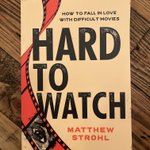
I'm delighted that my review of @strohltopia 's wonderful book "Why It's OK to Love Bad Movies" has just been published in the Journal of Aesthetics and Art Criticism! @ASA_aesthetics
doi.org/10.1093/jaac/kpac026

Two hours later and the concert is still going!
One more short intermission, and then Mendelssohn's Octet - a piece as philosophical as an instrumental composition can possibly be.
In case anyone wants to listen 'with' me: youtu.be/4E6RkWEKpVQ

1