
Your health and diet Doctor 💊🏥
Joined October 2025
- Tweets27.9K
- Following4.7K
- Followers10.5K
- Likes23.3K




The correct answer is b) Gastro-esophageal reflux disease (GERD).
Key Information
Classic Presentation: The clinical combination of heartburn (retrosternal burning sensation) and acid regurgitation (effortless passage of gastric contents into the mouth or pharynx), particularly after meals, is highly specific for Gastro-esophageal reflux disease (GERD).
Risk Factors: Central obesity (as indicated by a BMI of 41\text{ kg/m}^2, Class III obesity) significantly increases intra-abdominal pressure, disrupting the lower esophageal sphincter (LES) mechanism and promoting gastroesophageal reflux

The correct answer is C. Tall, peaked T waves.
Progression of ECG Changes in Hyperkalemia
Hyperkalemia alters cardiac membrane potentials in a classic, predictable sequence as serum potassium levels rise:
Early Phase (K⁺ ~5.5 – 6.5 mEq/L): Tall, narrow, peaked (tent-shaped) T waves (most prominent in precordial leads V_2–V_4).
Moderate Phase (K⁺ ~6.5 – 7.5 mEq/L): Prolongation of the PR interval, flattening/loss of the P wave, and widened QRS complexes.
Severe Phase (K⁺ > 7.5 – 8.0 mEq/L): Broadened QRS merging with the T wave to create a classic sine wave pattern, which can rapidly degenerate into ventricular fibrillation, PEA, or asystole.

The implanted device identified on the chest X-ray is an Implantable Cardioverter-Defibrillator (ICD) (or a CRT-D / biventricular defibrillator if three leads are present).


The part of the uterus that sheds off during menstruation is the stratum functionalis (functional layer) of the endometrium.
Detailed Breakdown
Endometrium: The innermost mucosal lining of the uterus, which undergoes cyclic changes during the menstrual cycle. It consists of two layers:
Stratum Functionalis (Functional Layer): The dynamic, superficial two-thirds of the endometrium that thickens in response to estrogen and progesterone to prepare for potential embryo implantation. When fertilization does not occur, progesterone levels plummet, causing spiral artery constriction, ischemia, and the shedding of this layer during menstruation.
Stratum Basale (Basal Layer): The deeper, persistent layer that remains intact during menses. It contains stem cells and blood vessels that regenerate a new functional layer during the next follicular phase.

The correct answer is B. Stabilizes individual vertebral segments.
Key Information
Multifidus: Part of the deep (intrinsic) layer of the back muscles (the transversospinalis group).
Primary Function: Provides segmental stability to the spinal column by spanning 2 to 4 vertebral levels. It acts as a local stabilizer, resisting shear forces, providing proprioceptive feedback, and facilitating extension, lateral flexion, and contralateral rotation of the spine.

What is the primary function of the multifidus muscle? 🦴
A. Produces scapular protraction
B. Stabilizes individual vertebral segments
C. Elevates the ribs during inspiration
D. Produces shoulder abduction
Leave your answer in the comments 👇
🔗 Link: wikism.org/Multifidus_Muscle
#Anatomy #Multifidus #BackMuscles #MedicalEducation #SportsMedicine

The ‘superscan’ appearance on a radionuclide bone scan (Technetium-99m MDP) is classically associated with widespread diffuse osteoblastic bone metastases, most commonly secondary to prostate cancer (or advanced breast cancer).
It can also be seen in severe metabolic bone diseases, most classically hyperparathyroidism and renal osteodystrophy.
Key Features of a ‘Superscan’
Striking, intense radiotracer uptake throughout the entire skeleton (especially axial skeleton).
Faint or absent visualization of the kidneys and urinary bladder ("absent renal sign") because almost all of the radiotracer is rapidly avidly taken up by the bone rather than excreted by the kidneys.

The correct answer is A. Pulmonary embolism.
Key Information
Pulmonary embolism (PE): A classic and life-threatening postoperative complication where a thrombus (often originating from deep vein thrombosis/DVT in the lower extremities) dislodges and travels to the pulmonary arterial bed.
Classic Presentation: Sudden-onset dyspnea, pleuritic chest pain, tachypnea, and tachycardia, frequently occurring in immobilized or postoperative patients.

A postoperative patient develops sudden shortness of breath, chest pain, and tachycardia. Which serious complication should the nurse suspect?
A. Pulmonary embolism
B. Constipation
C. Otitis media
D. Dental caries
#Medx
The correct answer is B. Vitamin B₁₂ (Cobalamin).
Key Information
Vitamin B₁₂ deficiency impairs DNA synthesis (leading to megaloblastic anemia with hypersegmented neutrophils) and causes progressive demyelination of the central and peripheral nervous systems (leading to neurological symptoms such as subacute combined degeneration of the spinal cord, paresthesias, ataxia, loss of vibration/proprioception, and cognitive changes).

The correct answer is A. Apixaban.
Key Information
Apixaban (along with Rivaroxaban and Edoxaban) is a Direct Oral Anticoagulant (DOAC) that directly and reversibly inhibits both free and clot-bound Factor Xa, preventing the conversion of prothrombin to thrombin.
Why Other Options Are Incorrect
Warfarin: An oral anticoagulant that acts as a Vitamin K antagonist, inhibiting the synthesis of Vitamin K-dependent clotting factors (Factors II, VII, IX, X, as well as Proteins C and S).
Clopidogrel: An antiplatelet agent (P2Y12 ADP-receptor antagonist) that prevents platelet aggregation, rather than inhibiting coagulation factors.
Tranexamic acid: An antifibrinolytic agent (lysine analog) that prevents blood clots from breaking down by blocking plasminogen activation; it is used to control or treat excessive bleeding.

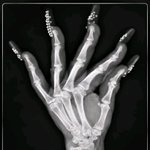
The correct answer is D. Rheumatoid arthritis (and E. Psoriatic arthritis).
(Note: In standard medical board examinations, Rheumatoid arthritis is considered the classic prototypical choice for an autoimmune arthritis, though Psoriatic arthritis is also an autoimmune/inflammatory arthritis.)
Key Information
Rheumatoid arthritis (RA): A systemic, autoimmune inflammatory disease characterized by autoantibodies (such as Rheumatoid Factor and Anti-CCP) targeting the synovial membrane, leading to symmetric joint inflammation, cartilage destruction, and bone erosion.
Psoriatic arthritis (PsA): An autoimmune, seronegative spondyloarthropathy associated with psoriasis that causes immune-mediated joint inflammation and enthesitis.

The correct answer is B. Colorectal carcinoma.
Key Takeaways
Apple-core sign: An "apple-core" lesion (or napkin-ring lesion) seen on a contrast barium enema or CT scan represents a circumferential, short-segment focal constriction of the colon with overhanging mucosal edges. It is a classic radiological finding for annular adenocarcinoma of the colon (colorectal carcinoma).


The correct answer is c. Donepezil.
Key Information
Donepezil is a selective acetylcholinesterase inhibitor that is FDA-approved specifically to delay cognitive decline in mild, moderate, and severe Alzheimer's disease.
Pyridostigmine and Edrophonium are cholinesterase inhibitors primarily used in the diagnosis and management of Myasthenia Gravis (and reversal of neuromuscular blockade), not Alzheimer's disease.
Bethanechol is a direct-acting muscarinic agonist (not a cholinesterase inhibitor) used mainly for urinary retention and neurogenic bladder.

Which electrolyte abnormality is commonly seen in chronic kidney disease?
A. Hypokalemia
B. Hyperkalemia
C. Hypocalcemia is never seen
D. Hypernatremia
The correct answer is A. Obesity with type 2 diabetes.
High-Yield Clinical Explanation:
This scenario describes Metabolic Dysfunction-Associated Steatotic Liver Disease (MASLD), formerly known as Non-Alcoholic Fatty Liver Disease (NAFLD), and its severe inflammatory subtype, MASH (Metabolic Dysfunction-Associated Steatohepatitis, formerly NASH).
The Silent Epidemic: MASLD/MASH is the most common cause of chronic liver disease worldwide and can insidiously progress over decades without producing overt symptoms until advanced cirrhosis or liver failure develops.
Metabolic Driver: Obesity and type 2 diabetes mellitus are the primary drivers of hepatic steatosis and peripheral insulin resistance. Insulin resistance leads to increased lipolysis and hepatic accumulation of free fatty acids (lipotoxicity), driving inflammation, ballooning degeneration of hepatocytes, progressive hepatic fibrosis, and ultimately cirrhosis—even in individuals who abstain from alcohol and test negative for viral hepatitis (B & C).
A 35-year-old man presents with intermittent post-prandial abdominal pain and vomiting for several months. There is no prior surgery. Contrast CT of the abdomen was done during an episode.
What is the diagnosis?#MedX
The correct answer is A. Obesity with type 2 diabetes.
High-Yield Clinical Explanation:
This scenario describes Metabolic Dysfunction-Associated Steatotic Liver Disease (MASLD), formerly known as Non-Alcoholic Fatty Liver Disease (NAFLD), and its severe inflammatory subtype, MASH (Metabolic Dysfunction-Associated Steatohepatitis, formerly NASH).
The Silent Epidemic: MASLD/MASH is the most common cause of chronic liver disease worldwide and can insidiously progress over decades without producing overt symptoms until advanced cirrhosis or liver failure develops.
Metabolic Driver: Obesity and type 2 diabetes mellitus are the primary drivers of hepatic steatosis and peripheral insulin resistance. Insulin resistance leads to increased lipolysis and hepatic accumulation of free fatty acids (lipotoxicity), driving inflammation, ballooning degeneration of hepatocytes, progressive hepatic fibrosis, and ultimately cirrhosis—even in individuals who abstain from alcohol and test negative for viral hepatitis (B & C).

The correct answer is C. Giant cell arteritis.
High-Yield Clinical Explanation:
Giant Cell Arteritis (GCA) / Temporal Arteritis (Correct): There is a profound, well-established epidemiological and pathological link between Polymyalgia Rheumatica (PMR) and GCA—approximately 15\text{--}30\% of patients with PMR either have or will develop GCA, and roughly half of all GCA patients present with PMR symptoms.
Classic Triad & Symptoms: The presentation of a new-onset headache (often temporal), scalp tenderness (e.g., pain when brushing hair), and jaw claudication (pain or fatigue in the jaw muscles while chewing due to ischemia of the masseter muscles) are the hallmark clinical manifestations of GCA.
A 68-year-old woman with polymyalgia rheumatica develops a new headache, scalp tenderness, and jaw pain while chewing. Which associated condition should be suspected? 🩺
A. Rheumatoid arthritis
B. Fibromyalgia
C. Giant cell arteritis
D. Cervical radiculopathy
Leave your answer in the comments 👇
🔗 Link in bio
#Rheumatology #MedicalEducation #ClinicalMedicine #MedStudent #Musculoskeletal

The most likely diagnosis is Emphysematous Cystitis.
Key Clinical Breakdown:
Patient Risk Factors: Highly prevalent in patients with poorly controlled diabetes mellitus (over two-thirds of cases). The elevated tissue and urinary glucose levels provide a substrate for glucose-fermenting pathogens.
Presentation: Presents like a standard lower urinary tract infection (dysuria, urinary frequency, lower abdominal/suprapubic pain), but can often present without fever or overt systemic signs early on. Pneumaturia (passing gas in the urine) may occasionally be reported.
CT Scan Findings: Computed Tomography (CT) is the definitive modality of choice. It characteristically reveals gas/air within the bladder wall (intramural gas) and/or gas within the bladder lumen (intraluminal gas), often accompanied by diffuse bladder wall thickening.
A 71-year-old man with poorly controlled diabetes presents with dysuria, frequency, and lower abdominal pain. He is afebrile. CT of the abdomen was done.
What is the diagnosis?#MedX
The classic USMLE buzzword "Owl's eye" inclusions refers to Cytomegalovirus (CMV) infection.
High-Yield Board Breakdown:
Microscopic Appearance: Large, atypical enlarged cells (cytomegaly) containing prominent, basophilic intranuclear inclusion bodies surrounded by a clear halo, giving the appearance of an "owl's eye."
In Urine (Urine Cytology): Represents viral inclusions in desquamated renal tubular epithelial cells (often tested in congenital CMV or post-transplant renal/systemic CMV infection).
In Tissue Biopsy: Commonly seen in tissue biopsies of organs affected by invasive CMV disease:
CMV Esophagitis: Biopsy from the base of linear ulcers.
CMV Colitis: Mucosal biopsy showing intranuclear inclusions in endothelial/stromal cells in immunocompromised patients (e.g., HIV with \text{CD4} < 50/\mu\text{L}).
CMV Pneumonitis / Hepatitis / Retinitis
The correct answer is A) Simvastatin + Clarithromycin.
High-Yield Mechanism & Clinical Explanation:
CYP3A4 Inhibition:
Simvastatin is an HMG-CoA reductase inhibitor (statin) that is heavily metabolized in the liver by the cytochrome P450 3A4 (CYP3A4) enzyme.
Clarithromycin (a macrolide antibiotic) is a potent, strong inhibitor of CYP3A4.
Toxic Statin Accumulation:
Co-administration of clarithromycin severely impairs the clearance and breakdown of simvastatin.
This leads to a dramatic increase in systemic plasma concentrations of simvastatin (often by several-fold), significantly raising the risk of severe skeletal muscle toxicity, including myopathy and life-threatening rhabdomyolysis (muscle breakdown resulting in myoglobinuria and acute kidney injury).
Clinical Recommendation:
Concomitant use of simvastatin with strong CYP3A4 inhibitors (like clarithromycin, erythromycin, itraconazole, or protease inhibitors) is contraindicated.
If macrolide therapy is required, simvastatin should be temporarily withheld, or an alternative non-CYP3A4 metabolized statin (e.g., pravastatin or rosuvastatin) or antibiotic (e.g., azithromycin) should be used.

The rationale behind using lidocaine gel (or sprays/creams containing lidocaine) in premature ejaculation (PE) is based on local anesthetic desensitization to delay the ejaculatory reflex.
1. Mechanism of Action: Reversible Blockade of Voltage-Gated Sodium Channels
Inhibition of Nerve Conduction: Lidocaine is a Class IB local anesthetic. When applied topically to the glans penis, it diffuses into the non-keratinized or minimally keratinized epithelial surface and reversibly blocks voltage-gated \text{Na}^+ channels on the peripheral sensory nerve fibers (A-delta and C fibers).
Threshold Elevation: By blocking incoming sodium influx, it prevents depolarization and the generation/propagation of action potentials along the dorsal nerve of the penis.
2. Disruption of the Ejaculatory Reflex Arc
Ejaculation is a spinal reflex controlled by sensory inputs from the glans penis transmitted via the pudendal nerve to the lumbar spinothalamic cells and ejaculatory generator in the spinal cord.
Elevating Sensory Threshold: By reducing penile hypersensitivity and slowing tactile sensory transmission, lidocaine increases the amount of stimulation required to reach the ejaculatory threshold, thereby prolonging Intravaginal Ejaculatory Latency Time (IELT) and enhancing ejaculatory control.
3. Practical Clinical & Application Considerations
Onset & Timing: Applied topically to the glans penis approximately 10\text{--}20 minutes prior to sexual intercourse
