

Anaesthetist |Council Member RSM | FPD| Lifestyle Medicine Physician | Forbes Coach |Keynote Speaker |Author|Ex Trustee & Council Member RCoA | Views my own
Manchester & Lake District
Joined May 2011
- Tweets3.2K
- Following1.7K
- Followers794
- Likes5.2K





The NASA sign about bees defying physics is a myth.
I find the mistake behind it more useful for clinicians than the quote.

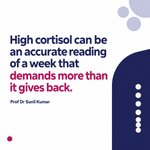
When we accept burnout as the cost of the job, we leave the job's design unexamined.
We're treating workload and recovery time as fixed.
Employers have responsibility for those conditions.
Patients need mental preparation as part of surgical care.
Anxiety and poor sleep affect recovery, yet receive less attention than blood pressure or haemoglobin.

I explored this in my piece for the Centre for Perioperative Care, which supports better care around surgery.
I set out evidence-based ways to support mental wellbeing before surgery and during recovery.
You can read it here:
cpoc.org.uk/mental-wellbeing
I wrote The Power of Preparation for Surgery for this reason.
In it, I give patients and families a clear plan for the weeks before an operation.
Alongside movement, nutrition and sleep, I include mental preparation.
You can find the book here:
amzn.eu/d/01Z3FD3k


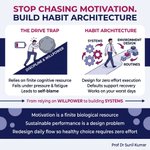
I lived a version of this myself with my own weight.
Change arrived when the conditions around me changed, and only then.
Prescribing more effort into an unchanged environment kept failing me.
I do not expect it to work better for someone with less room to move.