

Human Geneticist. Data Scientist. Professor @IcahnMountSinai @BronfmanInst
New York, NY
Joined April 2015
- Tweets925
- Following828
- Followers1.1K
- Likes1.8K





Ron Do retweeted

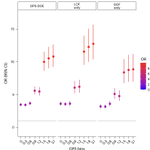
Rare disease patients often wait years for a diagnosis. How long, exactly? I’ll be presenting our systematic evaluation of diagnostic delay in rare disease s, across a health system and the US, at #ASHG2026 this Thursday at 2 PM in Room 710B. #RareDisease @DoGenetics
Ron Do retweeted

Nature research paper: Distinct genetic architecture in the tails of complex traits
go.nature.com/4v6KGUa

Ron Do retweeted
David Reich is back.
He and collaborator Ali Akbari just published a paper that overturns a long-standing consensus about human evolution — that natural selection has been dormant in our species since the agricultural revolution.
By scaling ancient DNA sequencing and developing a new statistical method, they found that selection has actually sped up.
Selection went especially bonkers during the Bronze Age (around 3,000 years ago).
That's when gene frequencies for everything from immune function to body fat to intelligence were most in flux.
Over the last 10,000 years, selection pushed the genetic predictor of cognitive performance up by roughly a full standard deviation — most of it between 4,000 and 2,000 years ago.
After we finished recording, David sketched out on a whiteboard his new heretical model about who the Neanderthals really were. Luckily, I took out my iPhone and managed to record it.
He thinks the standard story (that Neanderthals are some separate archaic lineage we interbred with a little) just doesn't fit the evidence. Instead, he proposes that Neanderthals are essentially genetically-swamped modern humans.
A small population somewhere around the Caucasus invented Middle Stone Age technology roughly 300,000 years ago and expanded outward. The ones that moved into Europe interbred with local archaic humans, got genetically swamped, and became Neanderthals. The same expansion went into Africa, met much more diverged archaic Africans, and that mixture became us.
This means Neanderthals and modern humans share the same cultural ancestry — the only difference is which archaic humans they mixed with afterward.
David is a brilliant and rigorous scholar. It was a real delight to learn from him again.
0:00:00 – Ancient DNA suggests strong selection over last 10,000 years
0:16:24 – Natural selection intensified during the Bronze Age
0:35:40 – Why didn't evolution max out intelligence?
0:58:00 – Evolution is limited by time, not population size
1:09:40 – Why no farming before the Ice Age?
1:17:52 – The Neanderthal puzzle David can’t stop thinking about
1:54:40 – The methodology behind this breakthrough
Ron Do retweeted

Delighted to have our work on 🧬 resilience to 🩸cancer led by @GauravA_UK & amazing collaborators, including @KharasLab, published in @ScienceMagazine: science.org/doi/10.1126/scie… 🧵

Ron Do retweeted

Modern GWAS can identify 1000s of significant hits but it can be hard to turn this into biological insight.
I'm excited to share our new work combining genetic associations and Perturb-seq to build interpretable causal graphs, out today in @Nature:

Ron Do retweeted
Successful drug development depends on identifying effective targets and optimizing drug design and clinical trial strategies. The authors review computational strategies, including ML, for integrating genetics into pharmaceutical pipelines go.nature.com/43VZslH

Ron Do retweeted

A nice weekend read on methods for prioritizing drug targets for complex diseases using human genomic data👇

Ron Do retweeted

We are pleased to announce that our new study explaining the missing heritability of many phenotypes using WGS data from ~347,000 UK Biobank participants has just been published in @Nature. Please check out our manuscript here: nature.com/articles/s41586-0….
Ron Do retweeted
New online! Genomics of drug target prioritization for complex diseases bit.ly/3JKy9DU

Ron Do retweeted

Genetic analyses of eight complex diseases using predicted continuous representations of disease. A study by @DoGenetics @IcahnMountSinai & others @CellRepMethods #ASHG25 hubs.li/Q03P9XMj0
Ron Do retweeted

🚨“Pathogenic” genetic variant does NOT = guaranteed disease 🚨
Yet, doctors and patients are still left to decide what to do with the label…
In our new @NatureGenet perspective, we explain why this is and how we can improve genetic risk interpretation🧵

Ron Do retweeted
It took a village! Forever grateful to @DoGenetics Lab @IcahnMountSinai including @DrDanielJordan @OmegaPetrazzini and collaborators @girish_nadkarni @JudyCho7 @WendyKChung. No better way to kick off internal medicine residency @BayviewMedicine @HopkinsBayview @JohnsHopkins 💪
Ron Do retweeted

AI + routine labs help clarify genetic risk. @SinaiGenetics modeled 1,600 variants across 10 diseases using 1M+ health records, moving past binary labels. mountsinai.org/about/newsroo… #precisionmedicine #genetics #AIinHealthcare #AIinMedicine @IainSForrest @DoGenetics

Ron Do retweeted

Genetic analyses of eight complex diseases using predicted continuous representations of disease dlvr.it/TM6v0l

Ron Do retweeted

Delighted to share the preprint on the largest obesity GWAS to date!
GWAS from >2 million participants
Key:
✳️13% increase in loci discovery
✳️Identified 11 obesity genetic clusters (endotypes)
✳️Obesity management should be as diverse as the condition itself
Thread👇

Ron Do retweeted

As we all age, we accumulate mtDNA mutations, but what underlies this hockey stick pattern? See our new pre-print: we treat mtDNA SNV burden as a "trait" and use GWAS to uncover the mechanism in blood. Led by newly minted MD-PhD @rahulg603 w/ @LabNeale.
shorturl.at/IqYY8

Ron Do retweeted

Another example of opportunistic A.I. applied to medical imaging. @NEJM_AI
Quantifying coronary artery calcium score from chest CT (nongated, not performed for this purpose)
ai.nejm.org/doi/full/10.1056…

Ron Do retweeted

Congratulations to @kiranmusunuru and Team on this terrific work to create a bespoke adenine base editor to help a baby. Remarkable story of translation of science to clinical impact.
I am particularly proud as Kiran was the first research trainee (post-doctoral fellow) in my laboratory when it started in 2008!
Just so awesome to see all that he has contributed over the years. Kudos.

CRISPR is used in landmark treatment to correct genetic misspelling of a single patient statnews.com/2025/05/15/cris… via @Jasonmmast

Ron Do retweeted
Great review of the evolving landscape of therapeutics targeting triglycerides & remnant cholesterol.
Human genetics has been key to shaping this field with discoveries of loss-of-function variants in APOC3, ANGPTL3, ANGPTL4 having directly triggered clinical development 🧬-->💊

Ron Do retweeted
New @NatureGenet study identifies RNU2-2 mutations as a cause of a severe neurodevelopmental disorder with #epilepsy. The same team previously linked RNU4-2 to NDDs, expanding the role of non-coding RNA genes in brain development: mountsinai.org/about/newsroo… #NDD #genetics
