

Docendo discimus. Mathematician. Amateur physicist. Program computers and reverse engineer them. Philosophical anarchist. Guitar player. Voluntarist. COYG.
Joined April 2023
- Tweets17.6K
- Following723
- Followers17.8K
- Likes26K



I'm seeing a lot of negative signals, today, in my feed, and if it's your case too, let me tell you; Never fall to despair, to dread, to anxiety, to demoralization, to the prophets of doom.
There's a lot that matters in this world, dare I say, there's a lot left to fight for in this world.
You still got that fire that was given to you a long time ago, you've got to keep it alive and bright, always remember that. 🔥
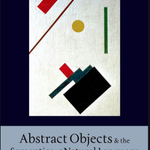
I haven't recommended anything on philosophy in a little while, therefore I'll have you check out 'Abstract Object and the Semantics of Natural Language' by Friederike Moltmann (Oxford University Press).
Outside of the aesthetically pleasing cover (a rarity for a technical book!), it's one of the most interesting take on philosophy and semantics that I've read in recent memories.
This book is a technically demanding affair, I must say, but a very rewarding read as well.
If you're into linguistics and philosophy, just like me, get this one.

The weakest part of my understanding of physics so far is still cosmology, so I've been trying my best to improve this lacuna of mine and I've been reading this primer titled ''Introduction to Cosmology'' by Lyth, which I would strongly suggest if you're a newcomer to the topic.
This is of course a short primer (50 pp), therefore this will have to be accompanied by a textbook, but it has done a good job speed running me through the basics.
If you got nothing planned this week end, you might want to pick this one up!
🔗👇


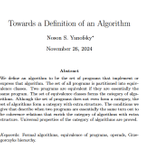
You might think it's obvious, but in this nice little primer titled ''Towards a Definition of an Algorithm'' by Yanofsky, you'll discover that the question of a definition for algorithms isn't so obvious, after all.
🔗👇

This is one of the most important result in the history of mathematics, Hilbert's 10th problem that is, which was ''resolved'' by Yuri Matiyasevich, who actually wrote this book (and of course let's forget about Julia Robinson, Davis, Putnam)!
This is another topic that needs more exposure, but in any case, all you need to get into this one is some elementary number theory and a good foundation in logic.

I started as a topologist, and with my mild struggles with dyslexia, I never thought that number theory would be for me, but then, through abstract algebra, I discovered algebraic number theory which made me fall in the love with the subject and I discovered that I had a certain talent for the topic itself, after all!
What really turned my head was both arithmetic geometry and Arakelov theory. I got this book by Dino Lorenzini titled 'An Invitation to Arithmetic Geometry' which focuses on the geometric dimension of the topic and the subject stayed me, until now!
Even when a topic doesn't seem to be for you, there might be a way in. Don't close the door on things you think are difficult too quickly, you never know, you might surprise yourself by how much you can accomplish.


René Frédéric Thom was a Field medalist, a differential topologist, and also, great intellectual inspiration of mine.
He was part of a generation of French mathematicians who had a wide range of intellectual interests, from topics in biology to philosophy proper.
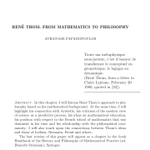
By searching on arXiv for material related to Thom, I found this very interesting, 44 pages article titled 'Rene Thom: From Mathematics to Philosophy', a great analysis of the philosophy that emerged out of his mathematical background!
Take a look, I'm sure you'll find great inspiration!
🔗👇👇👇


Yuri Manin has had an enormous impact on my life, my way of thinking, in mathematics, philosophy, and more.
He was a man with a great deal of knowledge in many fields and could weave them together in splendid fashion.
This is why, I want mathematicians and other technical people to accouter his genius and his range of interests, in order to inspire you to look further up the horizon.
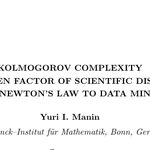
A good example of the wide range of his mind, is in this article titled ''Kolmogorov complexity as a hidden factor of scientific discourse: from Newton's law to data mining''.
If you read the article, right away, he's talking about history, the standard model, computer science, scientific theories, it's just amazing to read and it is inspiring.
And are in need of inspiration right now.
🔗👇👇

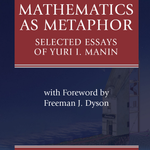
Due to the current discussion on the future of mathematics, it's obvious to me that it's time for many, to finally read ''Mathematics as Metaphor'', which are the philosophical reflections of Yuri Manin, one of the greatest minds of the 20th century, on mathematics.
Let's raise the level of the discourse.

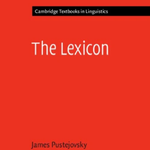
I've been fascinated by many topics in linguistics so far, but I've devoured ''The Lexicon'' by James Pustejovsky and Olga Batiukova, part of of fantastic ''Cambridge Textbooks in Linguistics'' series.
There are many interesting linguistic framework presented in the book, and I never realized how interesting the topic of ''the lexicon'' would be.
The construction grammar and the generative lexicon frameworks for example had me thinking, and still do! There was also an interesting dose of philosophy of language, history of the topic and more, so if you're syntax theory is not up to par just yet, you still can enjoy a few chapters.
Chapters recommendations for those who might not have the time to read this in totality: Lexicon and syntax, Lexicon and semantics, The structure of a lexical entry, Lexical aspects, tense, modality and General architecture of the lexicon.

I've always loved Jon Barwise description of mathematics as ''The Science of Abstract Object'' instead of the descriptions I often encounter, such as the commonly held description of mathematics ''as a language''.
I think that Barwise description widens the horizon of what mathematics is about, which I think is currently, of absolute importance.
Not trying to be Mr. contrarian, but the latest set of results from AI companies in mathematics isn't igniting any sense of doom in me, in fact, it's quite the opposite.
Let me introduce you to one of the most important idea in mathematics with this fantastic arXiv primer titled ''An Introduction to Modular Forms'' by Henri Cohen, in 58 pages.
Very well written, with complete beginners in mind, in the same style as ''Modular Forms: A Classical Approach'' by Cohen and Stromberg (AMS).
🔗👇👇

When I read that Sir Michael Francis Atiyah said ''The aspect of mathematics which fascinates me the most is the rich interaction between its different branches, the unexpected links, the surprises'', it changed my life.
One of those unexpected links, was found by Atiyah and Bott and is very well explained in this fantastic article titled '' Yang-Mills Theory and Tamagawa Numbers'' by Asok, Doran and Kirwan.
This one is for the curious mind, those unafraid of the challenges ahead, those ready to take their time to understand, those who are willing to stay with problems for longer.
🔗👇
