

Not posting here any more. Occasionally reposting. Head to https://xitter.cf/t.co/MBWnZgJcyw for civil society critique of corporate power.
Joined August 2012
- Tweets2.4K
- Following249
- Followers468
- Likes1.7K




Critical Takes on Corporate Power retweeted

I am a member of the Norwegian Nobel Committee.
There are five of us. Five people, appointed by a parliament most of the planet could not find on a map, who decide, once a year, which human being the world has agreed to call good.
I know. I know. I think about it on the tram.
We meet in a building on Henrik Ibsens gate, a street named after a man who wrote almost exclusively about people discovering they are frauds, which nobody on the committee finds funny except me. There is a room with a long table and the portraits of the dead laureates looking down, Mandela, the Dalai Lama, a great many earnest men in spectacles, and one portrait we do not discuss, which is Kissinger, 1973, awarded while the bombs were still falling, after which two of our predecessors resigned and the satirist Tom Lehrer said political satire was now obsolete. We keep him on the wall. A reminder. Every family has the uncle.
It is October in Oslo, which means the sun gives up around four in the afternoon like a civil servant, and it rains the particular Norwegian rain that isn’t quite falling, just hanging there, judging you. I arrive with wet shoes. I always arrive with wet shoes. There is coffee, because this is Norway and there is always coffee, we drink more of it per person than almost anyone alive, and someone’s wife has sent kanelboller, the cinnamon buns, and we sit, five Norwegians, damp, caffeinated, sugared, and we decide the moral standing of the entire species.
Let me tell you how it actually works, because the world imagines a cathedral and it is, I promise you, a book club with a mandate.
287 nominations this year. 208 people, 79 organizations. Anyone can nominate, that’s the secret nobody understands: a professor, a parliamentarian, a former laureate, so the “nominee” list is meaningless, it’s a suggestion box, and every autumn some congressman nominates his own golden retriever and the press writes “SHORTLISTED.” Nobody is shortlisted. There is no short list the public ever sees. There is us, and the coffee, and the rain, and the portraits, and a Norwegian stubbornness that is older than the prize itself.
We read reports. The institute’s advisers write them, thick dull documents, and we argue. Our chairman told the BBC once that in the final meeting “there is a high temperature.” High temperature, for a Norwegian, means someone slightly raised an eyebrow and then apologized for it. We don’t do high temperature. We do a long silence, and then Kristin says “well,” and everyone knows exactly what “well” meant, and it’s settled. That’s our shouting. “Well.” You’d have to be raised here to hear the violence in it.
Now. This year. I will not say the name, because we never say the name, but you know the name.
A certain head of state wanted this prize the way a child wants a thing in a shop window, which is to say loudly, and in public, and with the full belief that wanting it was itself the argument. He said he deserved it. He said he’d ended eight wars, a number that grew most times he said it, like a fish. He had other heads of state phone us. Israel’s prime minister posted it on the internet, “Give him the Nobel.” The leaders of Cambodia and Pakistan announced they’d nominated him, as though announcing it were part of it, as though we tally mentions. A man flew around the globe collecting endorsements for a Norwegian committee the way you’d collect signatures for a petition to the council about a noisy dog.
And here, uff da, is the detail I treasure, the one that makes me smile into my coffee. The nomination deadline is the 31st of January. He took office on the 20th. So for all the phone calls, all the posts, all the gilded lobbying, the only nominations that could possibly count for this year’s prize were filed in the first eleven days of his term, before he had, by his own arithmetic, ended a single one of the eight wars. He campaigned all year for a prize whose window had shut while he was still hanging up his coat. We didn’t have to reject him. The calendar did. We just watched. Norwegians are very good at watching. We have long winters.
People think we sit there weighing his deeds. We don’t. That’s the thing I can’t make the world understand. We’re not grading his homework. We don’t owe anyone the prize for a ceasefire, however real, however loud the announcement. “He made peace” is not a sentence that ends in a medal, the way he believes it does, the way he believes every good thing ends in his name on it. The will of a dead Swede says the prize goes to whoever did the most for fraternity between nations. A dead Swede, I should add, who made his entire fortune inventing dynamite and selling arms, and spent his last years horrified at his own obituary, which called him a merchant of death, and so bought his way to immortality as a man of peace. The whole prize is one guilty arms dealer’s attempt to launder his name. We are, all of us, administering a dead man’s public relations. I find this clarifying. It keeps me humble. It should keep everyone humble, and it keeps, by my count, no one humble at all.
So who did we give it to?
An eighty-five-year-old woman. A judge. Born in Durban, under apartheid, granddaughter of a Tamil man who came to South Africa as indentured labor, a bus driver’s daughter from the poor Indian quarter, who became the first non-white woman to run a law practice in her province, who defended Mandela’s people when defending them was dangerous, who sat on the Rwanda tribunal and the court at the Hague, and who, at eighty-five, is right now a judge weighing whether a genocide is a genocide. When we told the world, our chairman said the rule of law “underpins the system we have set up to ensure peace,” and that “peace requires justice.” She wasn’t even in Oslo. She was in Nuremberg. In courtroom 600. The actual room where they tried the Nazis. You cannot stage that. God staged that, and God, it turns out, is a better satirist than any of us.
She did not phone us. She did not post. No prime minister demanded it for her on the internet. She had, as far as our deliberations are concerned, the one qualification the loud man could never manufacture, which is that she wanted the work and not the medal. The medal finds those people. It flees the ones who chase it. This is not a rule we wrote. It’s just the only pattern the hundred-odd years of our mistakes has ever shown.
The reaction from across the ocean was immediate. His spokesman posted that we “place politics over peace.” Ja. Perhaps. We’re five damp pensioners in a rainy city; of course it’s political, it was always political, it was political when we gave it to a sitting American president nine months into his first term for the promise of things he had not yet done, and we have been quietly embarrassed about that one for fifteen years, so believe me, we had a particular reason this year to prefer a woman with fifty years of verdicts behind her over a man with eight wars in front of him and a deadline already behind him.
Here is what he will never understand, the thing I’d tell him on the tram if he ever took one. We are the one prize he cannot buy, cannot post his way to, cannot have a friendly dictator phone in for him. Not because we’re incorruptible, nei, we’re as vain and wrong and human as the portraits on our wall. But because the entire point of the thing, the only power a small cold country’s book club has ever held, is that it goes to the person not performing the wanting. The moment you demand it, you’ve proven you don’t understand what it’s for, and proving that is itself the disqualification. He ran the most expensive campaign in the history of the prize and the campaign was the reason. He was never losing to Navi Pillay. He was losing to the concept.
It’s dark now. Four o’clock dark. The buns are gone. Kristin said “well” an hour ago and we all went home. I’m on the tram with my wet shoes, and somewhere across the water a very powerful man is explaining to a camera that the prize is rigged, that we’re corrupt, that he’ll win it next year, and he genuinely might, we’re only five idiots and we’ve been wrong before, Kissinger is still on the wall.
But not this year. This year an old woman in Nuremberg, in the room where the law once stared down the exact kind of man who thinks wanting a thing loudly enough should make it his, got a phone call she didn’t ask for.
That’s the job. We don’t reward the man who ends the war and announces it.
We reward the woman who spent fifty years deciding what a war was.
He’ll never see the difference. That’s rather the whole point of him.
Takk for i dag. I have to change trams.
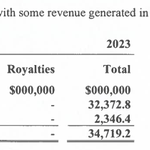
A great deal of tax revenue - £1.6 billion in this case involving Glencore - hangs not only on the fine details of transfer pricing but on how tax disputes are resolved.
In this case, by arbitrators in Switzerland rather than a court in the UK.

Buried in today's half-year results from commodities giant @Glencore is confirmation of a scoop that @taxwatch and @ObserverUK 's @barneymac published in May 🧵

Critical Takes on Corporate Power retweeted

Great article explores the role that Shell played in shaping international investment law from 1957 to 1968, including investment protection #ISDS
bilaterals.org/?shell-and-th…

Critical Takes on Corporate Power retweeted

"We hope our legal challenge can be a small stepping stone to building a healthcare system in the interest of health, not corporate profit."
Our director @nickdearden75 and director of @JustTreatment, @diarmaidmcd for @NewStatesman
newstatesman.com/spotlight/h…

Critical Takes on Corporate Power retweeted

Great op-ed on why the Global South should use the crisis precipitated by the U.S./Israeli war against Iran to transition from industrial agriculture to agroecology


"Agroecology is the way... to bring sustainability back into our food systems... What better argument do we need to prioritise local food systems, instead of fossil fuel-based fertilisers?"
— #AJOpinion by Ange-David Baïmey & Mónica Vargas Collazos ⤵️aje.news/vipmkk

A detailed insight into the challenges posed to Kenya's society and tax base by expanding data centres.

There is a parallel between the polythene greenhouses of 1980s and the high-tech server farms of today.
From blooms to bytes: Will Kenya’s data center boom repeat the ‘Greenhouse Effect’?
An article by yours truly @juliusokoth published by @globalvoices globalvoices.org/2026/05/08/…

Critical Takes on Corporate Power retweeted

New QJE paper on France’s mandated profit-sharing: distributing excess profits to workers raises the labor share and reduces the profit share, with little effect on investment or productivity. Gains mainly go to lower-skilled workers; high-skilled pay unaffected.

Critical Takes on Corporate Power retweeted

Our new investigation in today's @ObserverUK
More here:
taxwatchuk.org/private-justi…


HMRC could lose £1.5bn Glencore tax dispute in secret ‘all or nothing’ process bit.ly/42ccCtp

Critical Takes on Corporate Power retweeted

Big Tech & Big Finance have manufactured the AI data centre boom, locking governments into structural dependencies while the public pays the price. Our latest report 'Licensed to Loot' is out - Have a read
#AI #BigTech
balancedeconomy.org/latest/d…

Critical Takes on Corporate Power retweeted

"The new information will be hugely beneficial, but there will still be some gaps" CICTAR's Jason Ward quoted in an excellent round up by Bloomberg of new tax transparency regimes. Australia described as the current 'gold standard' but more to do!
cictar.org/news/bloomberg/ne…

Critical Takes on Corporate Power retweeted

Capitalism creates an "illusion of choice" by presenting numerous, superficial brand options that are actually owned by a few huge corporations, leveraging branding to create the appearance of competition, while controlling markets and restricting true choices to maximize profit.


Critical Takes on Corporate Power retweeted

I've joined 220 economists & legal scholars calling to #EndISDS, a policy that puts corporate profits over people & the environment.
Pres @PetroGustavo, this is a historic opportunity to lead an international alliance against ISDS.
Public Letter: bit.ly/GDP-ISDS
Critical Takes on Corporate Power retweeted

8/ The time to act is now—coordinated reserves releases & price caps, excess profit taxes, fair rationing protocols. Governments have the tools, hopefully for all they'll act. Full piece with @IsabellaMWeber no paywall at newstatesman.com/internation…

Critical Takes on Corporate Power retweeted

🚨🚢#StraitofHormuz closed. Fertilizer and fuels blocked. Commodities prices are rising. This could be a crisis for industry. But a handful of huge grain traders have the power to turn a #supplychain choke into an opportunity for profit 🧵

Critical Takes on Corporate Power retweeted

One clear example of the impact of the 15% global minimum tax on multinationals.
Take Shell, who for years thought it was clever to have 45 people in the Bahamas in charge of global trade, $30bn revenues and a tidy $1.6bn profit taxed at 0% until 2023...because come 2024

Critical Takes on Corporate Power retweeted

Capitalism became more exploitative in the wake of sellers' inflation and Trump made sure it stayed that way.

Critical Takes on Corporate Power retweeted
Big Finance’s $500tn concentrated and interconnected power isn't just huge - it's too big to cool the planet, steering capital away from sustainable solutions into self-reinforcing action.
Here is our report balancedeconomy.org/s/Too-Bi…

Critical Takes on Corporate Power is not posting on here any more because its owner is a vile human being.
Please follow @criticaltakes.bsky.social instead
I will repost useful takes by others, without comment.