QFB Doctorado en Inmunología

Joined November 2009
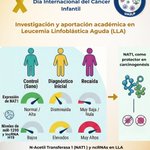
El 15 de febrero enmarca el Dis Internacional del Cáncer Infantil y nos señala sobre la relevancia de detectar a tiempo y ofrecer mejores estrategias de tratamientos para niñas, niños y adolescentes. La leucemia linfobástica aguda es el principal tipo de cancer infantil.
1
24
Diana Portales-Pérez retweeted
🤖 La #InteligenciaArtificial está transformando la #Salud En #GacetaMedicaMex estamos preparando un número especial sobre la #IA en Salud y nos encantaría conocer tu #investigación ¡Envíanos tus artículos originales, fecha límite el 31 de octubre! 👇 gacetamedicademexico.com/fil…
7
12
409
Diana Portales-Pérez retweeted
In ER-positive, HER2-negative advanced breast cancer, giredestrant, an ER degrader and full ER antagonist, plus everolimus led to longer progression-free survival than standard endocrine therapy–everolimus; safety was similar. Full phase 3 evERA Breast Cancer trial results and Research Summary: nej.md/47ryfbF
4
28
1
79
18,207
Diana Portales-Pérez retweeted
The interplay between the microbiome and immune cells in metabolic homeostasis and disease dlvr.​it/TVpFy1
19
69
5,016
Diana Portales-Pérez retweeted
El abordaje del sobrepeso y la obesidad va más allá del peso: abarca aspectos metabólicos, mecánicos, mentales y sociales Conoce el protocolo del PRONAM para una detección, clasificación y tratamiento integral. Consulta el protocolo completo en: pronamsalud.csg.gob.mx
31
88
2,630
Diana Portales-Pérez retweeted
A "normal" mammogram interpreted by AI can accurately forecast high-risk of breast cancer in the next 5 years. Approved by FDA, now becoming available. But it should be free and part of every mammogram readout. Front page @nytimes today, by @RoniNYTimes gift link nytimes.com/2026/10/01/well/…
21
105
9
366
30,188
Diana Portales-Pérez retweeted
En el 2001, la primer editorial de la revista @NatRevImmunol mencionaba: "todavía no sabemos cómo estimular al sistema inmune para eliminar el cáncer". 25 años después, una nueva editorial reconoce que ese avance llegó. Estos son los tres tipos de inmunoterapia que hoy están en la clínica. 1- INHIBIDORES DE CHECKPOINT Los checkpoints son frenos naturales del sistema inmune: moléculas como CTLA-4 y PD-1 que evitan que los linfocitos T ataquen de más. Los tumores los aprovechan para esconderse. Los inhibidores son anticuerpos que bloquean esos frenos, así los linfocitos que ya están cerca del tumor pueden seguir atacando. Ipilimumab, anti-CTLA-4, fue el primero aprobado, en 2011 para melanoma. Los anti-PD-1 y anti-PD-L1, como pembrolizumab y nivolumab, llegaron después. Por esto, James Allison y Tasuku Honjo recibieron el Nobel de Medicina en 2018. 2- CÉLULAS CAR-T Se toman linfocitos T del propio paciente, se les incorpora en el laboratorio un receptor sintético (el CAR, chimeric antigen receptor) que reconoce una proteína de la superficie de las células tumorales, se multiplican y se reinfunden. Son células vivas que funcionan como medicamento. La primera aprobada por la FDA fue Kymriah, en 2017, para leucemia linfoblástica aguda en chicos y jóvenes. Hoy tiene indicaciones en leucemia, linfoma y mieloma. Sus límites son el costo y efectos secundarios graves, como el síndrome de liberación de citoquinas. 3- VACUNAS CONTRA EL CÁNCER No son las vacunas preventivas de siempre. Son terapéuticas: buscan entrenar al sistema inmune para atacar un tumor que ya existe. Son vacunas personalizadas de neoantígenos, diseñadas para cada paciente a partir de las mutaciones de su tumor. La vacuna de melanoma de ARNm que $MRNA y $MRK anunciaron en agosto de 2026 es el único ejemplo actual que haya superado un ensayo de fase III. Esperemos que en la editorial de los 50 años, los avances hayan sido suficientes para que el cáncer sea un problema resuelto. doi.org/10.1038/s41577-026-0…
1
6
21
980
Diana Portales-Pérez retweeted
CD1 proteins on so-called antigen-presenting cells display lipids from pathogens to T cells to drive protective immune responses, but they also trigger skin inflammation in response to some lipids. Learn more: scim.ag/4rK8tc7 @NewsfromScience
4
51
3
260
57,371
TKTL1-driven #Glycolysis increases lactate and promotes #Immunosuppressive dendritic-cell signaling in #HCC. Targeting the TKTL1–HIF-1α–HK2 axis and lactate reprograms the #TumorMicroenvironment to enhance PD-1 blockade. #STTT #OpenAccess: doi.org/10.1038/s41392-026-0…
5
8
431
Diana Portales-Pérez retweeted
Coupling and uncoupling cell cycle and metabolism in CD8+ T cells dlvr.it/TVhMB2 #immunology
1
60
2
172
8,155
Diana Portales-Pérez retweeted
Good morning mito-folks, don't miss this rich selection of papers related to #mitochondrialmedicine presorted by @Bims_BiomedNews biomed.news/bims-mitmed/2026… The predicted interactome of the human mitochondrial proteome
4
12
1
38
3,145
Diana Portales-Pérez retweeted
1
10
Diana Portales-Pérez retweeted
抗がん剤をつないだ薬は、細胞に飲み込まれて初めて効く――その前提が外れた。 抗体薬物複合体(ADC)は、がんの目印に取りつき、細胞の中に飲み込まれてから積み荷の抗がん剤を放つ。この仕組みが成り立つ目印は、全体の1割ほどしかない。飲み込まれにくい目印だと、薬が外れて体から早く消えてしまう。 Zhibo Liu氏らのチームが示したのが、飲み込まれなくても薬を放つ設計。目印の受け皿にはまった瞬間、その内側にあるアミノ酸が自ら薬を切り離す。鍵が鍵穴に入ると、鍵穴の側が荷物を受け取る形。 がんの周りの細胞に出る目印(FAP)で試すと、腫瘍の中の抗がん剤の量は従来型の5.9倍。腫瘍と肝臓の濃度比は55倍になり、使える最大量も増えた。複数の腫瘍モデルで、ほぼ完全に消えたという。 飲み込ませて放つ、から、触れて放つ、へ。狙える的が、1割の外へ広がるかもしれない。 ※動物の腫瘍モデルでの結果で、ヒトでの治療効果は未検証。患者由来の検体では、目印の検出に成功した段階。 出所:Nature(2026/8/26)A binding-to-release strategy for targeted anticancer drug delivery nature.com/articles/s41586-0… @Nature
1
33
3
152
17,216
Diana Portales-Pérez retweeted
Immune cells fighting a long infection or cancer eventually burn out and stop working — a big reason some cancers escape the immune system entirely. Folks from St. Jude found a single gene acting as the burnout switch, and turning it off let exhausted immune cells snap back into fighting shape, dramatically improving survival in mice with cancer and chronic infections. nature.com/articles/s41586-0…
3
29
1
122
6,435
Diana Portales-Pérez retweeted
A new generation of radiotherapies promises a more targeted attack on cancer. Learn more on #WorldCancerResearchDay: scim.ag/3KGrg6K
4
25
3
114
12,623
Diana Portales-Pérez retweeted
Lograron convertir células de glioblastoma en células presentadoras de antígeno @CellPressNews El glioblastoma es un tumor "frío" que presenta pocos antígenos y evade al sistema inmune, por eso es difícil de abordar con inmunoterapia. Con un screen de CRISPR encontraron cuatro factores de transcripción que alcanzan para convertir células de glioblastoma en células dendríticas. En varios modelos de ratón eso generó inmunidad antitumoral sistémica y duradera, y sumó efecto a los inhibidores de checkpoint. Es en ratones, así que falta. Pero es por acá 👍 doi.org/10.1016/j.xcrm.2026.…
5
40
2
198
7,542
Diana Portales-Pérez retweeted
Among children with high-risk B-cell acute lymphoblastic leukemia, two cycles of blinatumomab led to a higher 4-year event-free survival than two cycles of chemotherapy (83.0% vs. 70.3%), with a lower risk of serious infection. Full phase 3 AIEOP-BFM ALL 2017 trial results and Research Summary: nej.md/4dBfwOk
2
21
1
95
20,727
Diana Portales-Pérez retweeted
New research from @theNASciences and @theNAMedicine member Stanley Cohen and colleagues describes a microvesicle-based platform that delivers gene-silencing RNA, a step toward improving RNA-based therapeutics. In @PNASNexus: ow.ly/fRs550ZKNBi
1
6
3,220