

Mobile app & software dev for non-technical founders. Find peace of mind with a tech team you can trust. [email protected]
Greenville, SC.
Joined April 2014
- Tweets1.8K
- Following512
- Followers953
- Likes542





Our CEO Keith Shields published a new piece on Founder’s Edge: what happens when nobody’s watching your vibe-coded product.
The core idea: AI can build remarkably fast, but working code and trustworthy software aren’t the same thing.
Keith breaks down what we’ve seen inside AI-assisted products, why security problems can stay invisible even when everything appears to work, and where human judgment still needs to stay in the loop.
Swipe through for the breakdown, and read the full piece here: linkedin.com/pulse/ai-humans…


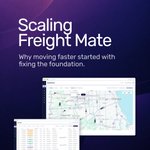
Moving faster doesn’t help much if you’re building on the wrong foundation.
Freight Mate already had a working logistics platform, paying customers, and steady revenue. What they needed was more development velocity, but before adding more features, our team found something more important to address: stability and performance.
That decision led to measurable improvements:
→ Dashboard map load time dropped by roughly 70%
→ Data-retrieval I/O dropped by roughly 95%
→ Near-weekly production releases became possible
→ The platform went on to onboard a record number of new trucking-company accounts in a single month
This case study breaks down why scaling an existing SaaS product sometimes means fixing what’s underneath before building what’s next.
Read the full story: designli.co/blog/how-designl…


Proud to share that Designli has been recognized by Business of Apps as one of the Top App Development Companies of 2026.
Recognition like this means a lot because it reflects the work our team puts into helping founders turn their ideas into products that are built around real users, real business goals, and a clear path forward.
A big thank you to our clients, partners, and team for continuing to trust us with the products you’re building. 🚀

"AI has made it possible to build and test products faster than ever. But moving faster only helps if you’re learning the right things along the way.
The modern builder isn’t just using AI to ship more quickly. They’re using that speed to test assumptions, get closer to users, and make better decisions about what deserves to be built next.
On October 14, our Partnerships Manager, Carlos Sanabria, is joining Founders Bay for a virtual workshop on The Modern Builder: Vibe-Coding, AI-Accelerated Development, and Creating Market-Validated Products.
We’ll get into:
→ Where vibe coding fits into the product journey
→ How to turn faster building into faster validation
→ What changes when a prototype starts becoming a real product
→ How to keep market feedback connected to what you build next
Building is getting easier. Knowing what’s worth building is still the hard part.
📅 October 14, 2026 | 11 AM PT
Register here: luma.com/qkfecxio"

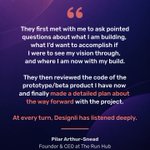
“Designli has listened deeply.”
Really appreciate this review from Pilar Arthur-Snead, Founder of The Run Hub.
She came to us through Impact Week looking for clarity on where her prototype stood and what it would take to move her vision forward.
Taking the time to understand what a founder is building, where they want to go, and what needs to happen next is exactly what Impact Week is built for. 🙌

Small businesses are getting more sophisticated with AI, and their strategy isn’t always keeping up.
Clutch surveyed 600 small businesses already using AI and found that 59% qualify as AI adoption leaders. But even among advanced teams, gaps remain around strategy, data, and governance.
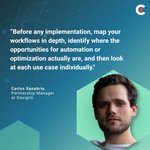
In Clutch’s new AI Maturity Report, our Partnerships Manager Carlos Sanabria shares why successful implementation starts before choosing the technology:
→ Map the workflows you already have
→ Identify where automation can create real value
→ Evaluate each use case individually
→ Build the right strategy around the problem
AI maturity isn’t about adding more tools. It’s about knowing where AI actually belongs in the business.
Read the full report on Clutch: clutch.co/resources/SMB-ai-m…

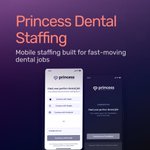
Princess Dental Staffing needed a better way for dental professionals to find and apply for jobs while on the go.
We helped extend their staffing platform into a mobile experience built around how candidates actually search for work.
Dental professionals can browse temporary and permanent jobs, filter opportunities by position and location, and apply directly from their phones. Push notifications help candidates stay on top of new openings, while profiles, documents, messages, and job activity stay organized in one place.
By making job opportunities easier to find and act on, Princess Dental Staffing can keep candidates connected wherever they are.
Take a look at how it all came together: designli.co/stories/princess…


AI can take work off your team’s plate, but it can’t take responsibility with it.
That distinction matters even more in regulated industries, where an AI-generated clinical note, fraud alert, or legal summary can influence decisions with real consequences. The goal isn’t to remove humans from the process, but to be intentional about where their judgment is required.
On this blog, we look at how teams in healthcare, finance, and legal can build AI into their products while keeping accountability in the right places:
→ Where AI can safely support professional workflows
→ How to define clear boundaries for AI systems
→ Where human review and approval should happen
→ Why audit trails and secure data handling matter
AI can automate a lot of the work around a decision. The decision itself still needs an owner.
Read the full article: designli.co/blog/how-regulat…

Our CEO Keith Shields published a new piece on Founder’s Edge: distribution in 2026 is the moat you need to build before it’s too late.
The core idea: building an MVP is becoming a weekend project. Getting the right people to find you, trust you, and buy from you isn’t.
Keith breaks down why trust is becoming harder to copy than features, why founder-led sales still matters early on, and how founders can build distribution that compounds instead of starting from zero with every customer.
Swipe through for the breakdown, and read the full piece here: linkedin.com/pulse/distribut…


AI can get you from idea to working product faster than ever. But “it works” and “it’s ready for real users” are two very different things.
Once customers, payments, and scale enter the picture, the questions change. Can the architecture hold up? Is the product secure? Are you testing the right things? And how do you know what to build next?
On September 23, our Partnerships Manager Carlos Sanabria is joining Founder Institute for a session on How to Go From Vibe-Coded to Production-Ready Products.
We’ll break down:
→ Where vibe-coded products tend to fail across architecture, security, and testing
→ How to run a basic readiness check before putting your product in front of customers
→ Why context and guardrails matter when building with AI
→ How to move from shipping features to testing hypotheses
→ How to choose a North Star Metric that tells you if the product is actually working
If you’ve used AI to get your product off the ground, this session is about making sure what you’ve built can handle what comes next.
📅 September 23, 2026
Register here: fi.co/event/how-to-go-from-v…

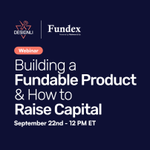
Join us for our next live workshop: Building a Fundable Product & How to Raise Capital
Partnered with Fundex, we'll explore what founders should be thinking about on both sides of building a fundable company: creating a product that's ready for customers and growth, and understanding how to approach raising capital.
During the session we'll cover:
☑️How to assess whether your product is ready for the market you're entering
☑️ The product and technical foundations that support a viable business
☑️ How to think about scalability before growth puts pressure on your product
☑️Where to prioritize investment across Product, UX/UI, Technical Foundations, and GTM
☑️ And with Fundex, what founders should know as they prepare to raise capital
Whether you're building your first product, starting to gain traction, or thinking about your next stage of growth, you'll leave with practical questions and frameworks you can apply to your own business.
📆 Sep 22nd | 12:00 PM ET
👉 Register here: luma.com/iwps90pr

Founders make decisions based on signals every day.
A user says they love the idea, growth starts picking up, or a customer pushes back on price. But how do you know which signals are actually telling you something?
We put together The Signal Report to understand how founders are reading and responding to those signals across three areas:
✅ How they validate real demand before building
✅ What makes them rethink their GTM approach
✅ Which metrics they use to measure growth
✅ How they decide what their product is worth
✅ Where AI is changing the value equation
It’s meant to uncover how founders are actually making these decisions in 2026, including the moments when the signals they trusted turned out to be wrong.
The survey takes about 3 minutes, and we’ll turn the responses into a report with aggregated insights and patterns from founders across different stages.
Take The Signal Report survey: designli.co/signal-report

Most SaaS founders are building some form of competitive advantage. The harder question is whether those advantages are actually working together.
Technical architecture, proprietary data, customer retention, and distribution can all make a company harder to compete with. But investing in each one independently doesn't automatically create a moat.
The strongest defensibility comes when those advantages start reinforcing each other.
In this recent DesignRush feature on our 2026 Moat Report, we explore:
☑️ Why no single moat is enough on its own
☑️ Where SaaS founders are investing to become harder to copy
☑️ Why shipping faster doesn't necessarily make a product more defensible
☑️ How technical, data, distribution, and retention advantages can compound over time
The goal isn't to protect everything. It's to identify the advantage your business can make stronger as it grows.
Read the full article: news.designrush.com/designli…

“Designli was extremely proactive, responsive, and open to feedback.”
Really appreciate this review from Anshuman Yadav, Founder & CEO of StratiqAI.
He came to us looking for a clickable prototype and technical roadmap he could confidently use to validate his product with customers and build investor confidence.
Giving founders that kind of clarity and something tangible they can actually move forward with is exactly what SolutionLab is built for. 🙌

Shipping faster can help you stay ahead. But speed alone won't give competitors a reason to stay behind.
71.4% of founders we surveyed are continuously releasing new products or features to widen their technical moat. At the same time, not a single founder rated their core technology as fully defensible if a well-funded competitor tried to copy it.
That's the difference between moving fast and building an advantage that compounds.
In his latest article for TechBehemoths, our CEO Keith Shields explores what SaaS founders are actually building to stay competitive in 2026, from technical and data moats to distribution and retention, and why trying to strengthen every advantage at once may not be the best strategy.
The goal isn't to defend everything. It's to understand where you have an advantage and build deliberately around the moat you can make strongest.
Read the full article: techbehemoths.com/blog/saas-…

A week in San Francisco is a good reminder of just how much founders can learn when the right people are in the same room.
Last week, our team spent time with founders, builders, investors, and partners across the Bay Area, talking about founder-led GTM, building beyond the first version of a product, and what it takes to keep learning and adapting as a company grows.
A big thank you to @StartupGrind, @founding, @stepconference, @foundersnetwork, and @FounderSocial for bringing these communities together and giving us the opportunity to be part of the conversations happening across the SF startup ecosystem.
And a special shoutout to Carlos Sanabria and Mara Linares for representing Designli throughout the week!
We came home with some great conversations, new connections, and plenty to keep thinking about. See you again soon, SF!


Our CEO Keith Shields just published a new piece on Founder's Edge: Your tech partner is the first moat decision you'll make.
The core idea: code isn't the advantage anymore. AI has made shipping features fast and easy for everyone. What's actually defensible is judgment, the decisions a tech partner helps you make about data, service, retention, and distribution from day one.
A few numbers from our MOAT Report that stood out: over half of founders have less than 12 months of proprietary data built up, one in five aren't running exit interviews to understand churn, and 86% are already being shaped by how AI tools like ChatGPT find and cite them, whether they've planned for it or not.
Swipe through for the breakdown, and read the full piece here: linkedin.com/pulse/your-tech…


"Designli's Impact Week gave us a thorough technical audit of our SaaS platform with actionable recommendations. The team was professional and delivered on time. Definitely recommend!"
This is exactly what Impact Week is built for: a clear, honest look under the hood of your product and a real plan for what to fix, all in one week.
Thank you to our client for the kind words! 🙌

"For a well-trained AI handling a frequently asked question, resolution under 2 minutes is a reasonable target."
That's our Director of Engineering, Felix Navas, weighing in on Clutch's new report on AI customer support. And he didn't stop there. Felix also broke down what actually determines whether AI support is fast or just feels fast: how well the human team has adopted the tools, whether the AI was properly trained on the product's own language and FAQ content, and model latency.
Clutch surveyed over 400 consumers for this one, and the gap between what people expect from AI support and what they're actually getting is bigger than most companies think.
Read the full report (link below), including Felix's take on where escalation to a human should happen before things go wrong.
clutch.co/resources/how-ai-r…

"Is this thing a flaming liability under the hood?"
That's the question a lot of vibe-coded founders are quietly sitting with. They've got something built, but they're not confident enough in it to actually market it or ask people to pay for it.
Our CEO Keith Shields broke down what that actually looks like in practice on the Founder Social Club podcast, including the time we found an entire backend living in a single 200,000 line file.
The fix isn't starting over. It's installing real engineering discipline into what you've already built, so the foundation can actually hold a business.