

World's first benchmark for real-world visuals with 7M+ creators and counting. Made by @intelligence_ai
Joined June 2025
- Tweets816
- Following16
- Followers25.1K
- Likes1.8K







DesignArena retweeted

Canva’s first-ever image model has debuted at #4 on @DesignArena
This makes @canva the #2 AI image lab in the world, behind only @OpenAI
An incredible achievement from a very hardworking and talented team pushing the boundaries of what design companies accomplish in frontier AI research
Huge congratulations to @MelanieCanva and the rest of the @canva team!

Canva Craft, the first ever image model by @canva, takes the #4 spot on DesignArena's Image leaderboard. This makes Canva the #2 Image Lab after @OpenAI!
Notably, it wins most often on photorealistic product and object shots, setting up studio-style lighting and detailed material textures on a single hero object. It also ranks #1 on the Portrait and Landscape subcategories.
Congrats to the @canva team on the launch!


DesignArena retweeted
Canva Craft debuted as the world's 4th most advanced image generation model on @DesignArena with an Elo score of 1340.
It delivers exceptional visual quality and state-of-the-art text rendering, outperforming some of the world's leading frontier models.

DesignArena retweeted
Introducing Canva Craft 🚀
Extraordinary image generation is now available to everyone, powered by our first frontier model built specifically for design.
With Craft, Canva is now the world's second most advanced AI lab for image generation on @DesignArena's global leaderboard.
See what it can do 👇
Canva Craft, the first ever image model by @canva, takes the #4 spot on DesignArena's Image leaderboard. This makes Canva the #2 Image Lab after @OpenAI!
Notably, it wins most often on photorealistic product and object shots, setting up studio-style lighting and detailed material textures on a single hero object. It also ranks #1 on the Portrait and Landscape subcategories.
Congrats to the @canva team on the launch!
6/ AudioAgentBench builds on Kwindla Kramer’s original 30-turn evaluation at Daily. Huge thanks to the OpenAI Audio team for helping us expand it and its methodology.
- Methodology: audioarena.ai/methodology
- Code: github.com/Design-Arena/audi…
- Data: huggingface.co/datasets/arca…
5/ Conversation length alone didn’t explain degradation. On a 30-turn grocery task, tool-use accuracy fell 40.5 points between the first and second halves. A 75-turn conference task fell 11.5 points.
We found that how often a task updates shared state matters more than its turn count.
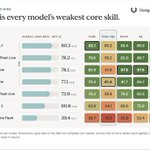
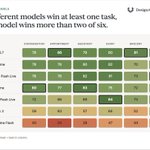
4/ Across seven voice models and 420 runs, the top overall pass rate was 80.3%. But tool-use accuracy on action-bearing turns peaked at just 61.4%.
On a scheduling task with confusable names and changing details, the average across models was 32.3%.

3/ Dimension gating: We score tool use only when an action is required or taken. State tracking and ambiguity handling are scored on turns designed to test them.
Without this, easy no-action turns inflate tool-use accuracy. In our ablation, naive scoring raised apparent tool-use accuracy by 22–44 percentage points.
Most existing benchmarks show this inflated score.
2/ Multi-turn scoring gets tricky when errors carry forward. Our protocol handles this with three mechanisms:
- Cross-turn realignment: If an agent makes the right tool call one turn late, we score it where it happened. The missed turn still fails, but the late call can receive credit.
- Conditional penalty absorption: An earlier missed action doesn’t automatically make every downstream turn fail. But if the agent invents a booking, price, or record, that later turn still fails.
- Category-aware dimension gating: We score each dimension only when the turn is designed to test it.

1/ AudioAgentBench contains six real-world tasks and 221 prerecorded user turns, with matched synthetic and human-recorded audio. Each turn has expected tool calls, task state, and knowledge-base references.
The benchmark covers realistic voice-agent tasks, including scheduling appointments, ordering groceries, booking conference travel, and handling multi-turn customer-service requests.
Our paper, AudioAgentBench, was accepted to the @NeurIPSConf 2026 Evaluations & Datasets Track!
We’ve open-sourced a suite of six static, multi-turn benchmarks designed to stress-test speech-to-speech models on realistic customer-facing tasks. Here’s what we built:

HeyGen Voice Turbo by @HeyGen is now available on Design Arena!
HeyGen Voice Turbo delivers natural, expressive speech with robust pronunciation across English accents, making it well suited for assistants, entertainment, and conversational applications. It also excels at preserving exact sequences of words and numbers.
Congrats to the @HeyGen team on the launch!

Flint by @Recursive_SI is now available on Design Arena!
Recursive SI's first model, Flint is a fast local coding model built from scratch in under four months using its automated research system, Eureka Machine. Delivering 125+ tokens/sec on a MacBook Pro and 150+ on RTX Spark, Flint offers up to 2× faster inference than comparable models.
Congrats to the @Recursive_SI team on the launch!


Introducing Flint, @Recursive_SI’s first model: a fast local coding model built with our automated research system, the Eureka Machine.
• Best-in-class fast local coding
• Up to 2x faster than comparable models: 125+ tokens/sec on a MacBook Pro, 150+ on RTX Spark
• Built from scratch in under 4 months
Private, unmetered intelligence on your own machine. Open weights available now on @huggingface, run it locally on your favorite framework or try it for free on @opencode or @pidotdev.
Two models from the same lab released within two months of each other are much more alike (0.58 cosine similarity) than models from different labs released at the same time (0.20). Eight or more months apart, a lab's models are no more alike than models from different labs (−0.24 for both).
Subtract what's in fashion, and Opus 5.5 lands almost opposite Astra (−0.45). What's left is each lab's own handwriting.
@AnthropicAI's Claude Opus 5.5's style is closer to @OpenAI's GPT-6 Astra's than to Claude Opus 4.5's.
We turned 64,000+ AI-made websites into one "style vector" per model: what its pages look like once you strip out what they were asked to build. Then we followed those vectors for 17 months.
Labs do have a house style. But the biggest thing shaping a model's style is when it came out.
In the video, each dot is one model's style vector, and each arrow points at a lab's newest model. Watch for two things:
The labs move together. The dashed arrow is what's in fashion, and the newest models swing with it.
A lab's new models cluster for a few months, then the lab moves on to a new look.
At the end, we trace each lab's full path.
With Spreadsheet Arena, you can describe what you need, like a monthly budget tracker, a sales pipeline, or a financial model, and have two models build it side by side. Vote for the one that gets it right and download the one that's right for you!
Try it yourself at designarena.ai!
Introducing Spreadsheet Arena! Models now go head-to-head building real spreadsheets on Design Arena, and the first leaderboard is live.
The top 3 models are nearly neck and neck: Claude Fable 5.1 by @AnthropicAI (1371), GPT-6 Astra (xhigh) by @OpenAI (1370), and Claude Opus 5.5 by @AnthropicAI (1358).
Then comes a 108-point drop to #4 Claude Sonnet 5.5 (1250). Only 13 points separate the top 3, but there's a clear gap between them and the rest of the field.
Check out the leaderboard at designarena.ai/leaderboard?t…!
Two models from the same lab released within two months of each other are much more alike (0.58 cosine similarity) than models from different labs released at the same time (0.20). Eight or more months apart, a lab's models are no more alike than models from different labs (−0.24 for both).
Subtract what's in fashion, and Opus 5.5 lands almost opposite Astra (−0.45). What's left is each lab's own handwriting.
Kling 4.0 by @Kling_ai is now available on Design Arena!
Kling 4.0 brings major improvements in visual realism, creative control, and narrative completeness, alongside enhanced audiovisual quality, multi-keyframe generation, lip-sync, and text generation. Kling 4.0 Flash offers faster generation with reliable quality for frequent video creation.
Congrats to the @Kling_ai team on the launch!


Try beating both yourself at designarena.ai/judge/flying-…. Can you tell which is which?
65%Model A is Qwen 3.8
35%Model A is GPT-6.1 Sol
34 votes • Final results