

Preserves and shares history of the WWII incarceration of Japanese Americans to promote equity and justice today.
- Tweets7K
- Following1.1K
- Followers5.5K
- Likes1.9K


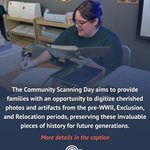


ALT The same photo of Micah Merryman at work. Text on the image reads: "The Community Scanning Day aims to provide families with an opportunity to digitize cherished photos and artifacts from the pre-WWII, Exclusion, and Relocation periods, preserving these invaluable pieces of history for future generations. More details in the caption." The Densho logo appears at the bottom.

ALT Micah Merryman, an archivist at Densho, sits at a table wearing white gloves and a green sweater, writing with a pen. Text on the image reads: "Twin Cities Community Scanning Day, October 9-11, 2026 at Historic Fort Snelling. Sign up with the link in our caption!" The Densho logo appears at the bottom.

ALT Densho logo above the word "Introducing" in orange, over a faded black-and-white historical photo of barracks at the Heart Mountain incarceration camp in Wyoming, with Heart Mountain rising in the background. Circular portraits of Lisa Doi, Curator of Public History, and Jonathan van Harmelen, Editorial Manager & Staff Historian.

ALT "Q&A with Lisa" with a circular portrait of Lisa Doi. Question: "What will you be working on in your first few months here?" Lisa answers that she's excited to take over projects like Sites of Shame and Manzanar CloseUp and to build new public programs that make Densho's preserved materials and documented history more accessible. Two screenshots at the bottom show the interactive Sites of Shame map of the U.S. with filter menus, and the Manzanar CloseUp camp layout with a population-over-time graph.

ALT "Q&A with Lisa." Question: "What's a piece of history or a story that's stuck with you?" Lisa explains she became interested in Japanese American history after finding a photo of her great-grandmother, who died while incarcerated at Rohwer. By the time Lisa saw the photo, everyone who knew her had also passed away. She says the photograph captures what many Japanese Americans seek: a better understanding of their family, community, and themselves. A sepia-toned historical photograph is captioned "Lisa's great-grandmother."

ALT "Q&A with Jonathan" with a circular portrait of Jonathan van Harmelen. Question: "What will you be working on in your first few months here?" Jonathan says he'll work on The New Encyclopedia, which will have a new design layout, more images, and a new batch of articles. He is also leading the new Public Index Project, an online database of archives, libraries, and museums across the U.S. holding collections on the Japanese American incarceration experience, built through research and crowdsourcing.

ALT "Q&A with Jonathan" with a circular portrait of Jonathan. Jonathan says he would go with Larry Tajiri, who single-handedly ran the Pacific Citizen during the war years and for a few years afterward. He says Tajiri's wartime editorials offer rich commentary on Japanese American life and American politics. Tajiri met many remarkable people, supported the New Deal, and was part of the generation of Nisei journalists who chronicled prewar Nisei life in the U.S. and Japan. A black-and-white photo captioned "Larry Tajiri" shows him standing beside a sign reading "Japanese American Citizens League National Headquarters."

ALT "Last Question: Any hidden talents or hobbies?" with circular portraits of Lisa and Jonathan. Lisa has knitted consistently since high school and looks forward to visiting yarn stores in the Seattle area and on Bainbridge Island. Jonathan has played drums since age 6 and was in jazz bands and orchestras through graduate school. He tells a story about tearing a hole in the bass drum head during Stravinsky's Rite of Spring with the Pomona College Orchestra, then flipping the head around and playing on.
