

Giving Proper Military Perspective in Different Defense Discussions from the Philippines and the Indo-Pacific region
Zamboanga City, Philippines
Joined September 2019
- Tweets5.5K
- Following206
- Followers3.5K
- Likes10.2K





Pitz Defense Analysis retweeted

SeaLight Investigation: A Conspiracy Made in 🇨🇳#China
Whoever wrote the obviously fake 🇵🇭Teodoro letters thinks in Chinese official lingo, argues like China's foreign ministry and found his distributors among Beijing's friends.
Imagine the #Philippines' Harvard Law-trained defense secretary Gilberto Teodoro writing a formal, unclassified letter to an obscure 🇺🇸US Embassy officer -- on official letterhead and over his own signature -- to confess to everything his critics say about him.
That's what the "Teodoro letters" ask you to believe, but whoever made them forgot to cut off the "Made in China" tag.
The letters don't read like a Filipino official, or frankly anyone proficient in English. They read like Chinese bureaucratese translated word for word from Mandarin.
One sentence pairs "complete qualifications" with "good reputation," a stock formula Chinese agencies use when choosing contractors.
The May letter calls Washington "the US side", while the Armed Forces of the Philippines is inverted into the "Philippine Armed Forces" by its own Secretary; and what the China Coast Guard does in the West Philippine Sea is referred to as "law enforcement."
Oh, and the author has a real problem with the article, "the". Almost as if it was written by someone whose language doesn't have an equivalent.
In other words, someone used to reading Chinese accounts in the Chinese language.
The July letter even recasts Beijing's own talking points about the July 20 clash as a Teodoro confession. Because that's totally what a highly educated Filipino politician and attorney would do. 🙄
And the people who had the letters first? All friends of Beijing, without exception.
The Philippine Department of National Defense says the letters are fake. They clearly are, and they're bad fakes at that ... right down to the 100% identical signatures.
The more interesting question is who wrote them. SeaLight Director @GordianKnotRay lays out the evidence, and it points directly back to Beijing.
Full investigation at the link in the comments below. 👇
🤖 Made with AI

Pitz Defense Analysis retweeted

Tinuruan ako ng aking mga magulang na huwag magsalita ng masama laban sa matatanda. Pero since nagmumura na si Lola, let me respond.
Una, your statements proved only one thing: kung bakit you were not able to at least be the National Security Adviser kahit one year man lang. Imagine mas galit pa kayo sa akin kaysa sa China.
Pangalawa, i can still remember why you asked me bakit kita tinatanong (“Why me?”) about our deployment in the WPS to respond to China’s presence that i have to remind you that you were the chairperson of NTF-WPS during that time.
Pangatlo, im wondering bakit mo ako bina-badmouth ngayon. Pero na-realize ko rin: siguro kailangan mo talaga ng support, ang mahal na kasi ng diesel. Pasensya na, maam, di ko na po kayo nabigyan ng gas slips.
Anyone who was part of the NTFWPS dyirng her time as NSA would definitely state that she never did anything to stand up for our rights in the WPS. We need to remember that the transparency initiative in the WPS only started when she was replaced and when Gen Eduardo Año took over.

Pitz Defense Analysis retweeted
A major 🇨🇳#PRC maritime militia rotation has begun in the #SouthChinaSea, with 24 of the large Qiong Sansha Yu ships leaving 3 ports on Hainan Island headed SW toward the Spratly Islands & Scarborough Shoal.
Meanwhile, 8 militia ships have left Scarborough toward Hainan. It is likely that we'll see similar departures begin from the Spratlys once the ships headed that way get closer.

Pitz Defense Analysis retweeted

WATCH: Senator JV Ejercito posts a video calling out Chinese Ambassador Jing Quan to “go home”.
“West Phillpine Sea is ours. Go home!” Ejercito writes on his Instagram caption.
Courtesy: JV Ejercito/Instagram
Visit gmanetwork.com/news for more updates.
Pitz Defense Analysis retweeted

ALARMED BY PH NAVY? 🇵🇭
At least nine Chinese maritime assets were monitored near Bajo de Masinloc, also known as Scarborough Shoal, in the West Philippine Sea on Friday, October 16.
These included four People’s Liberation Army Navy (PLAN) warships, one of which was a supply vessel; two China Coast Guard (CCG) ships; two unmanned aerial vehicles (UAVs); and one maritime patrol aircraft.
The Philippine Navy’s BRP Miguel Malvar continues conducting maritime patrols around Bajo de Masinloc to uphold the country’s territorial integrity and maritime interests. @ABSCBNNews


Pitz Defense Analysis retweeted
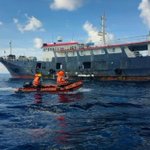
PCG SUCCESSFULLY DRIVES AWAY CHINESE FISHING VESSEL AND FOUR SMALL BOATS FROM TERRITORIAL SEA OF LAWAK ISLAND
The Philippine Coast Guard (PCG), through its personnel stationed on Lawak Island, successfully drove away Chinese fishing vessel (CFV) YUETAIYU 63168 and its four (4) deployed small boats from the territorial sea of Lawak Island on 15 October 2026.
This morning, PCG personnel deployed on Lawak Island launched a rubber boat to document and drive away the Chinese fishing vessel, which had been anchored within the territorial sea of the island. Upon arrival at the vessel's location, the PCG team found four (4) small boats scattered in the vicinity, assessed to have been launched from CFV YUETAIYU 63168 and engaged in fishing activities.
The PCG team issued repeated radio challenges to the Chinese fishing vessel, circling it three (3) times, but the vessel did not respond. The team then proceeded to drive away the four small boats operating in the area.
The PCG team did not leave the area until the Chinese fishing vessel heaved in its anchor and departed. The four small boats were monitored returning to their mother vessel, which then weighed anchor and left the territorial sea of Lawak Island. The PCG team returned to Lawak Island without any untoward incident.
Lawak Island is an integral part of the Municipality of Kalayaan, Province of Palawan. Under international law, the Philippines exercises full sovereignty over its territorial sea, where no foreign vessel may fish without authorization. The deployment of small boats from a Chinese mother vessel to conduct fishing activities in these waters is a violation of Philippine laws, including the Philippine Fisheries Code and the Philippine Maritime Zones Act.
This operation follows a series of recent operations by the PCG in the Kalayaan Island Group, including the repelling of Chinese Maritime Militia Vessel (CMMV) 9622 and its sampans from Kota Island on 28 September and 09 October 2026, and of five (5) foreign fishing vessels from the same island on 11 October 2026.
Under the leadership of PCG Commandant Admiral Ronnie Gil Gavan, the PCG continues to monitor CFV YUETAIYU 63168 for any further movement and will sustain its vigilance against unauthorized fishing and other intrusions by foreign vessels in the Kalayaan Island Group.
This operation was carried out in accordance with the guidance of President Ferdinand R. Marcos Jr., who, in his State of the Nation Address on 27 July 2026, vowed that the Philippines will not surrender or waver in defending its territory and maritime rights in the West Philippine Sea, in adherence to international law and the 2016 Arbitral Award.

Pitz Defense Analysis retweeted

🇨🇳China's Imperial Proconsul Speaks: 🇵🇭Filipinos should feel "fortunate" because, "If we want to use force, we may easily win."
#China's ambassador to the #Philippines, Jing Quan, told Filipino journalists yesterday that they should "feel fortunate that you have a neighbor like China," explaining that "if we want to use force, we may easily win, but no, we will not choose to use force."
This is not the language of a diplomat sent to respectfully negotiate with a sovereign nation, but of a proconsul sent to pacify an unruly colony.
In the Roman Empire, a proconsul governed a conquered province, and his job was "pacification"--the Latin word for peace. The empire meant it literally: a province was only "at peace" only when its people stopped resisting imperial rule.
A pacification campaign follows a familiar pattern: remind the people how much force you have and present your "restraint" as a gift; demonize those who resist as "troublemakers"; praise and reward the "grateful" locals who cooperate; blame unrest on outside "agitators"; and preach the virtues of accepting the imposed "peace."
Observe how Beijing is following its pacification program for the West Philippine Sea:
✅ Threats of force: China says it "will not choose" to use force, yet its coast guard and militia routinely do so. Last October a coast guard ship water-cannoned and rammed a Philippine fisheries vessel anchored off Pag-asa, an island with a civilian population. In July, a Chinese officer struck a Philippine Navy sailor on the head with a baton near Ayungin Shoal. Last month a coast guard ship rammed another fisheries vessel delivering fuel to fishermen just 54 nautical miles off Palawan. Beijing calls this "law enforcement", but the message is explicit: be grateful we're *only* injuring your sailors and damaging your ships. In this narrative, you see, restraint is not a duty under the UN Charter or even the 2002 Declaration on the Conduct of Parties in the South China Sea, but a favor the imperial power grants and can punitively withdraw from ungrateful subjects.
✅ Blaming the troublemakers: Every pacification campaign needs a few rabble-rousers to demagogue and discredit, so it picks a vocal few and makes silencing them the price of “peace.” Foreign Minister Wang Yi laments how "certain forces ... deliberately stir up trouble". The embassy calls Defense Secretary Gilberto Teodoro the "real troublemaker" and accuses Rear Admiral Jay Tarriela of "poisoning public opinion," even asking whether he has "something wrong with his head." The Global Times dismisses them as "a handful of buffoons" and wants Manila to "exercise stricter discipline" over their remarks.
✅ Naming the outside agitators: Empires routinely attribute indigenous resistance to nefarious foreign forces. Moscow called Hungary's 1956 uprising a Western imperialist plot. Beijing blamed Tibet's 2008 protests on the "Dalai clique" and Hong Kong's 2019 protests on America's "black hand." The charge turns patriotic citizens who resist colonial rule into foreign agents & their legitimate grievances into foreign schemes. In the West Philippine Sea, the colonial troublemakers are "parroting external talking points" to "serve the interests of their masters" and "act on the instructions of external forces."
✅ The cooperative locals: A benevolent proconsul rewards “friends” who help pacify the resistance. "Friends of the Chinese Embassy" awards honor cooperative local media figures as well as other civic, business and education leaders. Last year, officials of the Federation of Filipino-Chinese Associations of the Philippines took their oaths of office directly from China's previous ambassador. His successor, Jing Quan, summoned executives from 8 Chinese-language news outlets to the embassy just after arriving, where they pledged to "cooperate closely" with the embassy. At Ateneo University just days ago, Ambassador Jing urged the assembled representatives of universities, Confucius Institutes, Chinese-language schools and community groups to "resolutely do the right thing".
✅ The promised peace: "We love peace," Jing proclaimed, just a week after his coast guard spent nearly 10 hours forcibly obstructing a medical evacuation from Ayungin Shoal--before graciously giving the Philippines "permission" to evacuate its own sailor from its own outpost inside its own exclusive economic zone. Beijing has long pledged to make the South China Sea "a sea of peace, friendship and cooperation," and now calls for a "new narrative" of peace. But peace, in the new-narrative imperial vocabulary, means exactly what it meant for Rome: Philippine waters will be "at peace" when Filipinos stop resisting China's claims to its waters and the legions deployed to pacify them.
A diplomat seeks to persuade a sovereign government through respectful negotiation. A proconsul pacifies a population under the ever-present threat of violent action.
The Philippine Department of Foreign Affairs noted that the ambassador's "poor choice of words" would "seem to convey a thinly veiled threat of the use of force."
The DFA was being very diplomatic. Jing's words were hardly a one-off slip of the tongue.
In January, the embassy warned Filipinos to "think about Ukraine, Venezuela, Gaza, and Greenland," and said "the Philippines should feel fortunate to have a neighbor like China." In May, Jing himself made the same argument in print, and this month he said it on camera.
That's because in a pacification campaign, the threat of force is central to the message.
Pacification follows occupation, and China's occupation of the West Philippine Sea is real and accelerating. The attached maps clearly show the China Coast Guard's sovereignty assertions blanketing the sea across the West Philippine Sea, and now even enveloping the Philippines' northernmost province of Batanes.
Beijing is turning to the population on shore to persuade them to accept this maritime occupation as permanent, and to be grateful it isn't even more violent.
The Philippines is a sovereign country with its own internationally recognized exclusive economic zone and a binding UN-sanctioned arbitration ruling that upholds its maritime entitlements. Officials who defend these rights are not troublemakers, and Filipinos owe no gratitude to the imperial power that stole their sea.
"The Chinese Embassy is not a guest," the embassy wrote this week. "It is the representative of China." I’ve worked in embassies, and we always understood that we were always to speak and behave accordingly, as guests of the countries that accepted our credentials.
President Marcos accepted Jing Quan's credentials last December. He was accredited as ambassador to a sovereign nation, not appointed as imperial proconsul to pacify a renegade province.


Pitz Defense Analysis retweeted

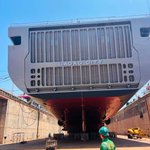
FV101 Scorpion loaded onto a transporter. 12 units will be reactivated to serve both as a training platform and a complement for the bigger and more modern ASCOD 2 Sabrah. The FV101 is light enough to be able to run around and engage in anti-insurgency operations nationwide.


Pitz Defense Analysis retweeted
Read on SeaLight: "The Philippine Teacher Recall: China Plays the "Safety" Card ... Again": sealight.live/posts/the-phil…
🤖 Made with AI

Pitz Defense Analysis retweeted
SeaLight notes with considerable amusement the @Chinaembmanila's habit of writing its own questions and then answering them.
Its latest goes a step further: the claim that Chinese teachers are leaving the Philippines "out of deep concerns for personal safety" appears only in the imaginary journalist's question the Embassy wrote for itself. The spokesperson's answer never has to back it up.
So here is a question the Embassy did not write: What role does it play in carrying out Article 38 of the Chinese Communist Party's Regulations on United Front Work in the Philippines?
Article 38 directs the Party's overseas Chinese affairs work to "cultivate resources in overseas Chinese affairs," and guide "overseas Chinese" toward "the modernization of the motherland" and "preserving and promoting the unification of China."
Which Chinese-Filipino organizations, community leaders, schools and teachers in the Philippines does the Embassy work with under that mandate? What guidance, funding or other support does it provide, directly or through proxies? And what keeps legitimate educational exchange from being drawn into a foreign government's political agenda?
SeaLight has no objection to good-faith people-to-people exchanges, including Chinese-language education. But these programs should disclose their ties to foreign governments and parties, including the Chinese Communist Party and its United Front Work Department.
Our exhaustively sourced investigation clearly documented that the same Chinese university that labeled the Philippines' Batanes province as Chinese is also training Manila's Chinese teachers, and was itself "jointly constructed" with the help of the CCP's United Front Work Department according to its own web site.
Schools and parents deserve to know that.
Beijing has used "safety" as a shield for its political retaliation before, including in the Philippines. During the 2012 Scarborough Shoal standoff, it issued a "safety" warning for the Philippines while directing Chinese travel agencies to suspend tours. It also tightened inspections of Philippine bananas due to invented "health" concerns.
It has run the same playbook against South Korea over U.S. missile deployments, Australia over its call for a COVID-19 inquiry, Palau over its Taiwan policy and Japan over its prime minister's Taiwan remarks. Each time, warnings about Chinese citizens' "safety" was accompanied by retaliatory tourism, education or trade pressure.
This time it involved removing Chinese-language teachers, and then blaming that on the investigators who surfaced the political program it has been running under the cover of educational outreach.
Real safety threats should be clearly documented and addressed. We're quite sure the Philippine government would follow those up aggressively, but the Embassy has provided no such specifics.
Scrutiny of a foreign government's influence programs is not hostility toward ethnically Chinese people.
Nor should the Embassy blame investigators for the hostility Beijing itself has created. China's relations with the Philippines and its neighbors have been poisoned mainly by its aggressive, expansionist conduct at sea and its broader campaign of coercion, disinformation and political warfare on land.
The Embassy aggravates political tensions when it tries, directly or through proxies, to enlist so-called "overseas Chinese" in the PRC's geopolitical causes. Chinese-Filipinos ought not be exploited as instruments of Beijing's foreign policy. Their identities, loyalties and politics are their own.
SeaLight stands by its reporting, which is fact-based, exhaustively sourced and available (below in the comments) for researchers, journalists and the public to read and reach its own conclusions.
Meanwhile, we eagerly wait for the Embassy's answer to actual reporters' questions ... questions the Embassy it didn't write itself.

Pitz Defense Analysis retweeted
🚨NEWS ALERT: Chinese Commercial News (菲律賓商報), a Manila-based Chinese-language daily, reported Oct. 2 that the Federation of Filipino-Chinese Chambers of Commerce and Industry (FFCCCII) and the Philippine Chinese Education Research Center (PCERC) have decided to withdraw Chinese volunteer and dispatched teachers from Chinese-language schools nationwide. The paper puts the number at about 150 and says teachers were returning to China in groups throughout Oct. 1.
(Chinese Commercial News link in comments below)
The paper blames SeaLight director Ray Powell and Defense Secretary Gilberto Teodoro Jr. for this action. It says their repeated "attacks on Chinese-language education" left teachers' families fearing for their safety, and that FFCCCII could not refuse the families' requests to bring them home. Its headline calls their scrutiny a continuing smear of Chinese-language education. The article names no teacher, family member or school official, and it cites no specific threat or safety incident.
The paper calls reports of a Philippine expulsion or a Chinese government recall "utter nonsense." It says the host organizations made the decision and notified the Chinese Embassy and other Chinese authorities before writing to schools. The schools' own letters, reported Oct. 1 by Bilyonaryo and Abante, describe it differently. Jubilee Christian Academy told parents its teachers had been "unexpectedly recalled by their sending organization." Immaculate Conception Academy said FFCCCII had informed it that the teachers "need to return to China immediately." Neither school gave a reason. Schools are turning to online Chinese classes and substitute teachers in the meantime.
The article quotes Secretary Teodoro's Sept. 26 warning that educational exchanges could be used to gather information. It leaves out his clarification, reported by the Manila Times, that he was describing information about possible activities, "not necessarily established evidence of wrongdoing," and his statement that "we don't want to create an atmosphere of xenophobia."
SeaLight stands by its reporting. Our work on the PRC state and United Front-linked institutions that train teachers for Philippine Chinese schools is fact-based and exhaustively researched, drawing on those institutions' own records. No one has refuted the facts we have reported.
Mr. Powell has emphasized repeatedly most Chinese-Filipinos are "loyal and patriotic Filipinos" who "have every right to take pride in their heritage," but that foreign government influence campaigns should not get a free pass to hide behind local civic groups.

Pitz Defense Analysis retweeted
PCG DISRUPTS AND DRIVES AWAY CHINESE RESEARCH VESSEL JIA HAI KE 7 FROM ITS LOITERING POSITION OFF BATANES DESPITE CHINA COAST GUARD SHIELDING
The Philippine Coast Guard (PCG) successfully disrupted the unauthorized marine scientific research (MSR) of the Chinese research vessel JIA HAI KE 7 and compelled it to leave the position it had held off Itbayat, Batanes, for four days.
At about 11:42 AM today, 01 October 2026, JIA HAI KE 7 departed its loitering position about 37 nautical miles northwest of Itbayat at a speed of 4.6 knots. This is the first time the vessel has moved from the area since the PCG discovered its presence on Monday, 28 September. Its departure followed sustained pressure from BRP Teresa Magbanua (MRRV-9701) and PCG Islander 251, which were deployed this morning to challenge the vessel, disrupt its illegal MSR, and drive it away from Philippine waters.
BRP Teresa Magbanua has since been shadowing JIA HAI KE 7 and continuing its maneuvers to drive the research vessel out of the Philippine Exclusive Economic Zone (EEZ). China Coast Guard vessel CCG-2503 has repeatedly tried to shield the research vessel and block the PCG ship.
Despite the CCG vessel's blocking maneuvers, BRP Teresa Magbanua made its closest approach yet, coming within 50 yards of JIA HAI KE 7. At that time the research vessel was about 40 nautical miles west-northwest of Amianan Island, Batanes.
The continued escort of JIA HAI KE 7 by a China Coast Guard vessel again raises serious questions. Why would a government law enforcement ship go to such lengths to protect a supposedly privately owned research vessel that has been conducting illegal MSR over the undersea cable corridors of the Luzon Strait?
Under the 1982 United Nations Convention on the Law of the Sea (UNCLOS) and the Philippine Maritime Zones Act, no foreign vessel may conduct marine scientific research in the Philippine EEZ without the express consent of the Philippine government. The Department of Foreign Affairs (DFA) has confirmed that no such consent was given to JIA HAI KE 7.
BRP Teresa Magbanua will continue to shadow and drive away JIA HAI KE 7 until it exits the Philippine EEZ.
This operation is in accordance with the guidance of President Ferdinand R. Marcos Jr. to protect the country's maritime domain and not to tolerate any unauthorized foreign research within Philippine waters.
Pitz Defense Analysis retweeted
UPDATE: The Philippine Coast Guard successfully drove away Chinese research vessel Jia Hai Ke 7 from waters off Itbayat, Batanes on Thursday, after challenging and disrupting its unauthorized marine scientific research.
The BRP Teresa Magbanua closed in, repeatedly challenged the vessel by radio, and deployed a RHIB to disrupt its activities.
During the operation, China Coast Guard vessel 2503 arrived and positioned itself near the two vessels, seemingly shielding the research vessel.
At around noon, Jia Hai Ke 7 left the waters off Itbayat and headed north, accompanied by the CCG.
(📹 PCG) @ABSCBNNews
Pitz Defense Analysis retweeted

A DC think tank recently proposed the US cut alliances, let China have Taiwan, and pull back to the 'second-island chain' (for starters.) This is an idea that could have come straight from Beijing. It's a bad one.
asiatimes.com/2026/09/examin…

Pitz Defense Analysis retweeted
This is Batanes. Home of the Ivatans. The Ivatans are Filipinos. And Batanes is, and always will be, part of the Philippines. 🇵🇭

Pitz Defense Analysis retweeted
Ambassador Jing Quan, anong kachinongalingan na naman ito? Aminin niyo na lang — chinongaling ba kayo, o hindi niyo lang talaga binasa ang UNCLOS?
Ang JIA HAI KE 7 ay 37.84 nautical miles lang mula sa Itbayat, Batanes. Under Article 56 ng UNCLOS, ang coastal State — ang Pilipinas — ang may sovereign rights at jurisdiction sa EEZ nito, kasama na ang marine scientific research. Under Article 246, kailangan ng CONSENT ng Pilipinas bago mag-MSR sa aming EEZ. Walang permit. Walang consent. Walang jurisdiction ang China dito.
Tandaan niyo: ang Batanes ay wala kahit sa loob ng sarili niyong ilegal at imbentong nine-dash line — na binasura na ng 2016 Arbitral Award. Ngayon, gusto niyo pang palawakin hanggang Luzon Strait?
At huwag niyo kaming lokohin sa "normal navigation." Ang normal na barko, hindi nag-i-spoof ng AIS position, hindi nag-loiter sa ibabaw ng submarine cable corridor, at sumasagot sa radio challenge. Ginawa ng JIA HAI KE 7 ang kabaligtaran ng lahat ng iyan.
Hindi "nag-hype" ang Pilipinas. Kayo ang nag-i-invent ng jurisdiction sa Batanes. Tigilan niyo na ang KACHINONGALINGAN na iyan!

Pitz Defense Analysis retweeted
🚨 SEALIGHT INVESTIGATION: 🇨🇳Beijing's "Backbone Force" in 🇵🇭Manila
You've probably never heard of the Federation of Filipino-Chinese Associations of the Philippines, or the big Southeast Asian conference it just hosted in Manila, where a Chinese Party-state official instructed delegates to "tell China's story".
In fact, even if you belong to one of the more than 200 ethnically Chinese civic groups it claims to speak for, you may not have heard of it.
The federation's leaders appear to want it that way. After all, nearly everything it publishes is in Chinese ... because although it is virtually unknown to most Filipinos, FFCAP is very important to Beijing.
China's embassy helped create FFCAP in 1977, and its ambassador personally swore in its current officers. Three quarters of its trustees are Chinese citizens.
In 2023 the United Front Work Department hosted a large FFCAP delegation at UFWD headquarters in Beijing, where a council chaired by a CCP Politburo Standing Committee member called it the "backbone force" in the Philippines for its fight against Taiwan independence.
FFCAP's official government filings say it exists to promote "camaraderie." They leave out its pledges to advance China's agenda for Taiwan "under the guidance of the Embassy," and a ₱1.5M gift worth more than twice its reported annual income.
Next June FFCAP turns 50. Once again most Filipinos won't hear about the celebration -- which is sure to be big, lavish and include UFWD leaders from across the region -- because it won't be reported in a language they understand.
But if you read the full SeaLight investigation (link in the comment below), you'll know where to look! 🔍
#UnitedFront #China #Philippines #Taiwan #CCP #ForeignInterference

Pitz Defense Analysis retweeted
🇨🇳@Chinaembmanila invokes the little-known "Chinese Festival Annex" to the 2002 Declaration on the Conduct of Parties in the South China Sea.
🤖 Made with AI

Pitz Defense Analysis retweeted
🚨How Can the 🇵🇭 Philippine Defense Secretary Convince Lawmakers to Invest in Defense?
Philippine Defense Secretary Gibo Teodoro answers a question from SeaLight Executive Director @GordianKnotRay on how to convince Filipino lawmakers to invest in defense.
Secretary Teodoro emphasizes the need to invest in Philippine infrastructure, connectivity, secure communications technology, and storage facilities. He adds that the Philippines' unique geography—an archipelago of more than 7,600 islands—requires the armed forces to adapt to uphold their operational mandate.
Share your thoughts below 👇