

We promote, protect, & strengthen the work of human rights defenders (#HRDs) in the East & Horn of Africa sub-region. Retweets aren't endorsements.
Kampala, Uganda
Joined July 2011
- Tweets8.5K
- Following1.6K
- Followers24.2K
- Likes2.1K

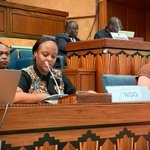


We delivered an oral intervention following the presentation of the Activity Report of the Special Rapporteur on the Rights of Women in Africa.
In our statement called for stronger protection of Women Human Rights Defenders (WHRDs), including integrating their protection into the monitoring of the implementation of the Maputo Protocol. We also raised concerns about the risks facing WHRDs in Ethiopia and Sudan, as well as restrictions on women’s civic participation in Zimbabwe and highlighted growing technology-facilitated gender-based violence.
#DDATACHPR89 #ADATACHPR89


We delivered an oral intervention following the presentation of the Activity Report of the Special Rapporteur on Human Rights Defenders and Reprisals in Africa, Hon. Remmy Ngoy Lumbu, under Item 7.
In the intervention, we highlighted the deteriorating situation of human rights defenders across Africa, noting that over the past six months alone, more than 43 violations against HRDs had been documented. We raised concerns about increasingly preventive restrictions on civic space, attacks on defenders and journalists, and the use of legal and administrative measures to deter peaceful protest, advocacy and dissent. Drawing on developments across the continent, the statement called on the African Commission to strengthen its response in protecting human rights defenders and civic space, and ensure that States translate their commitments under the African Charter into tangible action.
#DDATACHPR89 #ADATACHPR89
The Chairperson of the East and Horn of Africa Human Rights Defenders Network (EHAHRD-Net) @kamau_dk delivered DefendDefenders and AfricanDefenders' statement under Item 4 on the Human Rights Situation in Africa.
The statement highlighted the persistent gap between human rights commitments and implementation, including conflict, repression and the disproportionate impact on marginalised communities. It also raised concerns over internet shutdowns, biometric surveillance, weak data protection and the use of AI without adequate human rights safeguards.
Among others, the statement called on the Commission to strengthen oversight, transparency and accountability around emerging technologies and ensure effective remedies for technology-related human rights violations.
Click this link to read the full statement; defenddefenders.org/defendde…
#DDATACHPR89 #ADATACHPR89

DefendDefenders retweeted

Today, the Sudan Human Rights Defenders Coalition (SudanDefenders) launched its report, “The Situation of Human Rights Defenders, Emergency Response Rooms Members, and Humanitarian Workers in Sudan during the Armed Conflict,” on the sidelines of #ACHPR89 in Dakar, Senegal.
The report examines developments affecting Sudanese human rights defenders and humanitarian workers since January 2026, highlighting their critical role in protecting communities, documenting violations, and advancing accountability.
The launch featured presentations by:
* Abuhorira Abdelrahamn on documented violations against human rights defenders and emerging patterns of abuse.
* Nour Mohamed on the situation of Emergency Response Rooms (ERRs) members and humanitarian workers.
* Rounag Shimilia on the report’s key findings and recommendations.
@Kaka_Estella, Advocacy, Research and Communications Manager at DefendDefenders, reaffirmed the organization's commitment to supporting Sudanese human rights defenders at regional and international levels and encouraged greater engagement with available protection mechanisms.
Closing the event, @bikjo, Coordinator of AfricanDefenders, officially launched the report, paying tribute to the courage and resilience of Sudanese human rights defenders who continue to document violations and atrocities despite immense challenges and security risks. He also encouraged reflection on the recognition and inclusion of emerging groups defending human rights that may not fall within traditional definitions of human rights defenders.
📖 The report is available in English and Arabic on the SudanDefenders website.
🔗sudandefenders.org/a-report-…
#Sudan #HumanRights #SudanDefenders #HRDs #ACHPR89 #DefendDefenders #AfricanDefenders #Accountability #HumanitarianAction #ERRs
اليوم، أطلق التحالف السوداني للمدافعين و المدافعات عن حقوق الإنسان (SudanDefenders) تقريره بعنوان: "وضع المدافعين عن حقوق الإنسان، وأعضاء غرف الاستجابة للطوارئ، والعاملين في المجال الإنساني في السودان خلال النزاع المسلح"، وذلك على هامش أعمال الدورة 89 للجنة الأفريقية لحقوق الإنسان والشعوب(#ACHPR89) في داكار، السنغال.
يستعرض التقرير التطورات التي أثرت على المدافعين عن حقوق الإنسان والعاملين في المجال الإنساني في السودان منذ يناير 2026، مسلطًا الضوء على دورهم المحوري في حماية المجتمعات المحلية، وتوثيق الانتهاكات، وتعزيز جهود المساءلة.
وشهدت فعالية إطلاق التقرير مداخلات من:
* أبو هريرة عبد الرحمن حول الانتهاكات الموثقة بحق المدافعين عن حقوق الإنسان والأنماط الناشئة لهذه الانتهاكات.
* نور محمد حول أوضاع أعضاء غرف الاستجابة للطوارئ والعاملين في المجال الإنساني.
* رونق شميلة حول أبرز نتائج التقرير وتوصياته الرئيسية.
كما أكدت إستيلا كانسيمي، مديرة المناصرة والبحوث والاتصالات في DefendDefenders، التزام المنظمة بدعم المدافعين عن حقوق الإنسان السودانيين على المستويين الإقليمي والدولي، وشجعت على الاستفادة من آليات الحماية المتاحة لتعزيز السلامة والأمن.
وفي ختام الفعالية، أعلن جوزيف بيكاندا، منسقAfricanDefenders، الإطلاق الرسمي للتقرير، مشيدًا بشجاعة وصمود المدافعين عن حقوق الإنسان السودانيين الذين يواصلون توثيق الانتهاكات والفظائع رغم التحديات والمخاطر الأمنية الجسيمة. كما دعا إلى التفكير في سبل الاعتراف وإدماج المجموعات الجديدة والناشئة التي تدافع عن حقوق الإنسان، رغم أنها قد لا تندرج ضمن التعريفات التقليدية للمدافعين عن حقوق الإنسان.
📖 التقرير متوفر باللغتين العربية والإنجليزية على موقع SudanDefenders.
🔗 sudandefenders.org/a-report-…
#السودان #حقوق_الإنسان#SudanDefenders #ACHPR89 #المدافعون_عن_حقوق_الإنسان #غرف_الاستجابة_للطوارئ #المساءلة #العمل_الإنساني#DefendDefenders #AfricanDefenders


Yesterday, on the margins of #ACHPR89, our conversation on Emerging Technologies and Human Rights in Africa brought together more than 50 human rights defenders, civil society representatives and digital rights experts.
Participants shared experiences of how emerging technologies are shaping their work and affecting people’s ability to exercise and enjoy their rights.
The discussion also explored data protection, accountability and States’ responsibilities as public services and systems become increasingly digitised, alongside the human rights implications of AI, surveillance and other emerging technologies.
It concluded with recommendations to bolster the African Commission’s response through stronger monitoring of digital rights violations, accountability and guidance, and closer engagement with States and civil society, helping ensure that existing digital rights commitments translate into meaningful protection.
#DDATACHPR89 #ADATACHPR89
Over the past five years, the digital era has evolved at an unprecedented pace. But this transformation has not come without consequences for human rights.
As artificial intelligence, social media, digital surveillance, biometrics and other emerging technologies reshape how we communicate, access information and participate in public life, they are also creating new and evolving threats to human rights, civic space and the safety of human rights defenders and civil society.
Over the same period, the African Commission on Human and Peoples’ Rights (ACHPR) has taken important steps to respond, adopting resolutions addressing AI, robotics and other emerging technologies (2021); digital violence against women (2022); mass and unlawful targeted communication surveillance and its impact on human rights in Africa (2023); internet shutdowns and elections (2024); digital violence against women (2024); data access in the digital age (2024); technology companies’ responsibility to maintain information integrity (2025); and public-interest content in the digital era (2025).
These resolutions demonstrate an evolving recognition of the human rights implications of the digital age. Yet the question remains: how effectively are these commitments being implemented, and are they keeping pace with the threats we are witnessing today?
Many of the concerns identified in these resolutions continue to affect communities, human rights defenders and civil society, while new challenges are emerging with the rapid development and deployment of AI, digital surveillance, social media platforms, algorithmic systems and other technologies.
The question now is: how can the African human rights system keep pace with this rapidly evolving digital landscape?
This afternoon, we invite you to join us in a conversation on: Emerging Technologies and Human Rights in Africa: How can the African Commission on Human and Peoples’ Rights bolster its response to promote and protect digital rights in Africa?
Together, we will reflect on the implementation and impact of existing African Commission resolutions, discussing whether they are translating into meaningful change and stronger protection for communities, human rights defenders and civil society, and how the Commission can bolster its approach to addressing ever-evolving digital threats. The conversation will also consider the responsibilities of States, technology companies and other stakeholders in ensuring that technological advancement does not come at the expense of human rights.
Venue: Room C005, King Fahd Hotel, Dakar
Date: 14 October 2026
Time: 12:30–2:00 PM
#DDATACHPR89 #ADATACHPR89

The Chairperson of the East and Horn of Africa Human Rights Defenders Network (EHAHRD-Net) @kamau_dk delivered DefendDefenders and AfricanDefenders' statement under Item 4 on the Human Rights Situation in Africa.
The statement highlighted the persistent gap between human rights commitments and implementation, including conflict, repression and the disproportionate impact on marginalised communities. It also raised concerns over internet shutdowns, biometric surveillance, weak data protection and the use of AI without adequate human rights safeguards.
Among others, the statement called on the Commission to strengthen oversight, transparency and accountability around emerging technologies and ensure effective remedies for technology-related human rights violations.
Click this link to read the full statement; defenddefenders.org/defendde…
#DDATACHPR89 #ADATACHPR89
Earlier today, after 22 years, the African Commission on Human and Peoples’ Rights convened its 89th Ordinary Session in Dakar, Senegal. The session, running from 12 to 21 October, comes as the African human rights system marks 45 years since the adoption of the African Charter and 40 years since its entry into force.
With a record-high 1,959 participants, the highest participation recorded at an ACHPR session, states, AU institutions, NHRIs, civil society, human rights defenders and other stakeholders are gathered in Dakar. During the opening ceremony, one message was echoed by most speakers: human rights commitments must translate into tangible change in people’s lives.
#DDATACHPR89 #ADATACHPR89


DefendDefenders retweeted
Report Launch: The Situation of Human Rights Defenders and Humanitarian Workers in Sudan
Sudan Human Rights Defenders Coalition (SudanDefenders) invites you to attend the launch of its report on the situation of human rights defenders, members of Emergency Response Rooms, and humanitarian workers in Sudan during the period January to October 2026.
The report highlights the key challenges and violations faced by human rights defenders and humanitarian workers amid the armed conflict, and examines their impact on efforts to document violations, protect rights, and respond to humanitarian needs.
Speakers
•Ronag Shamila: Pan-African feminist, mediator, and human rights defender; Founder and Chairperson of ERD.
•Abu Huraira Abdelrahman Ibrahim: Sudanese lawyer and human rights defender; Program Coordinator at the Khatim Adlan Center for Enlightenment and Human Development and Board Member of Sudan Defenders.
•Noura Mohamed: Feminist, human rights defender, and legal assistant.
Event Details
📅 Date: Wednesday, 14 October 2026
🕝 Time: 2:30 PM – 4:00 PM
📍 Venue: Room C005, King Fahd Conference Center, Dakar, Senegal
We look forward to your participation in this event, which sheds light on the realities facing human rights defenders and humanitarian workers in Sudan and provides an opportunity to discuss ways to strengthen their protection and support their efforts.
@DefendDefenders , @AfricaDefenders @hivos @NPASudan @DutchMFA @EU_SUDAN #ACHPR89
إطلاق تقرير: أوضاع المدافعين والمدافعات عن حقوق الإنسان والعاملين في المجال الإنساني في السودان
يدعوكم التحالف السوداني للمدافعين والمدافعات عن حقوق الإنسان لحضور فعالية إطلاق تقريره حول أوضاع المدافعين والمدافعات عن حقوق الإنسان، وأعضاء غرف الاستجابة للطوارئ، والعاملين والعاملات في المجال الإنساني في السودان خلال الفترة من يناير إلى أكتوبر ٢٠٢٦.
يستعرض التقرير أبرز التحديات والانتهاكات التي تواجه المدافعين والمدافعات عن حقوق الإنسان والعاملين في المجال الإنساني في ظل النزاع المسلح، وانعكاساتها على جهود توثيق الانتهاكات، وحماية الحقوق، والاستجابة للاحتياجات الإنسانية.
المتحدثون
•رونق شميلة: نسوية أفريقية شاملة، وسيطة ومدافعة عن حقوق الإنسان، ومؤسسة ورئيسة منظمة ERD.
•أبو هريرة عبد الرحمن إبراهيم: محامٍ سوداني ومدافع عن حقوق الإنسان، ومنسق البرامج بمركز الخاتم عدلان للاستنارة والتنمية البشرية، وعضو مجلس أمناء سودان ديفندرز.
•نورا محمد: نسوية ومدافعة عن حقوق الإنسان ومعاونة قانونية.
تفاصيل الفعالية
📅 التاريخ: الأربعاء 14 أكتوبر 2026
🕝 الوقت: 2:30 - 4:00 مساءً
📍 المكان: قاعة C005، مبنى الملك فهد للمؤتمرات، داكار - السنغال
نتطلع إلى مشاركتكم في هذه الفعالية التي تسلط الضوء على واقع المدافعين والمدافعات عن حقوق الإنسان والعاملين في المجال الإنساني في السودان، وتفتح المجال للنقاش حول سبل حمايتهم ودعم جهودهم.

Over the past five years, the digital era has evolved at an unprecedented pace. But this transformation has not come without consequences for human rights.
As artificial intelligence, social media, digital surveillance, biometrics and other emerging technologies reshape how we communicate, access information and participate in public life, they are also creating new and evolving threats to human rights, civic space and the safety of human rights defenders and civil society.
Over the same period, the African Commission on Human and Peoples’ Rights (ACHPR) has taken important steps to respond, adopting resolutions addressing AI, robotics and other emerging technologies (2021); digital violence against women (2022); mass and unlawful targeted communication surveillance and its impact on human rights in Africa (2023); internet shutdowns and elections (2024); digital violence against women (2024); data access in the digital age (2024); technology companies’ responsibility to maintain information integrity (2025); and public-interest content in the digital era (2025).
These resolutions demonstrate an evolving recognition of the human rights implications of the digital age. Yet the question remains: how effectively are these commitments being implemented, and are they keeping pace with the threats we are witnessing today?
Many of the concerns identified in these resolutions continue to affect communities, human rights defenders and civil society, while new challenges are emerging with the rapid development and deployment of AI, digital surveillance, social media platforms, algorithmic systems and other technologies.
The question now is: how can the African human rights system keep pace with this rapidly evolving digital landscape?
This afternoon, we invite you to join us in a conversation on: Emerging Technologies and Human Rights in Africa: How can the African Commission on Human and Peoples’ Rights bolster its response to promote and protect digital rights in Africa?
Together, we will reflect on the implementation and impact of existing African Commission resolutions, discussing whether they are translating into meaningful change and stronger protection for communities, human rights defenders and civil society, and how the Commission can bolster its approach to addressing ever-evolving digital threats. The conversation will also consider the responsibilities of States, technology companies and other stakeholders in ensuring that technological advancement does not come at the expense of human rights.
Venue: Room C005, King Fahd Hotel, Dakar
Date: 14 October 2026
Time: 12:30–2:00 PM
#DDATACHPR89 #ADATACHPR89
The Minister of Justice of the Republic of Senegal, Moussa Sarr, officially opened the session on behalf of the President of Senegal. Reflecting on the anniversary of the African Charter, he emphasised that the effectiveness of a human rights protection system should not be measured by the number of legal texts or institutional sessions, but by “what it concretely changes in the lives of people.”
In his remarks, he identified five priorities for strengthening human rights protection. The first was the implementation of decisions and recommendations,which he said requires continued dialogue between States and the African Commission. The second was the protection of civic space, stressing the importance of open and safe public debate and guarantees for freedom of expression and association, with national human rights institutions and civil society playing an essential role in translating international commitments into local realities.
The third priority was social and economic justice, emphasising the indivisibility and interdependence of human rights. He noted that civil and political rights lose their substance when access to education and decent living conditions is not guaranteed. The fourth was the independence of the judiciary, which he linked to the protection of rights and freedoms, strengthening public trust in the justice system and combating impunity.
The fifth priority focused on emerging challenges, including artificial intelligence and technological developments, climate change and statelessness. He stressed the need for Africa to respond to these challenges while drawing on its own values and ensuring that human rights remain central.
#DDATACHPR89 #ADATACHPR89

Hon. Commissioner Idrissa Sow, Chairperson of the African Commission on Human and Peoples’ Rights recalled the Charter’s role in establishing a coherent continental system for the promotion and protection of human and peoples’ rights, emphasising its recognition of the interdependence of civil and political rights with economic, social and cultural rights, as well as the responsibilities individuals have towards others and their communities.
At the same time, Hon Sow drew attention to persistent challenges, including armed conflicts, humanitarian crises, restrictions on civic space, obstacles to citizen participation, and restrictions affecting civil society organisations. He stressed that while States have a responsibility to protect their populations from terrorism and violent extremism, security measures must respect human rights, the rule of law and civilian protection.
Addressing discrimination and xenophobia, which have recently featured prominently in public discourse and mainstream media, Hon Sow made a strong call for African solidarity, stating: “No African should be rejected or discriminated against because of his nationality or his origin.” He stressed that Pan-Africanism cannot simply be proclaimed in texts but must be reflected in people’s everyday lives.
Concluding his remarks, Hon Sow reflected on the future of the African Charter, noting that “its future remains to be written” and will depend on the breadth of collective commitment.
#DDATACHPR89 #ADATACHPR89


In his remarks, H.E. Ambassador Willy Nyamitwe, Chairperson of the AU Permanent Representatives Committee (PRC), gave a brief reflection on the Pre-Session Forum of States Parties to the African Charter on Human and Peoples’ Rights, held from 10 to 11 October ahead of the opening of the public session. He highlighted the Forum as an important space for State Parties and the African Commission to reflect openly on the challenges facing the Commission in carrying out its mandate and to identify realistic solutions together.
He reaffirmed the commitment of the PRC, to continue facilitating the Forum. He noted that the Forum could serve as a regular platform for reflection on ways to strengthen the ACHPR’s operational capacities and facilitate the promotion of its mandate in Member States.
Turning to the broader human rights landscape, Ambassador Nyamitwe painted a picture of a continent confronting conflict, forced displacement, climate change and the upheavals of the digital age, stressing the need to view peace, security, human rights and development as interconnected priorities.
As he put it: “Peace, security, human rights and development are not in competition. They advance together or they decline together. This is the meaning of Agenda 2063.”
He concluded by calling for renewed commitment to the African human rights system and for the recommendations emerging from the Dakar discussions to receive due consideration by the relevant AU policy organs and be translated into “concrete and meaningful action.”
#DDATACHPR89 #ADATACHPR89


Professor James Mouangue Kobila, Chairperson of @NANHRI40 , highlighted the growing challenges confronting the human and peoples’ rights agenda across the continent, including shrinking civic space, armed conflicts and emerging threats linked to technology. He noted that while “digital technologies create unprecedented opportunities for participation, access to information and innovation,”they have also opened up new avenues for harm, including technology-facilitated violence.
He cautioned that internet disruptions and restrictions on access to information, particularly during periods of political tension and conflict, undermine transparency and public participation. He recommended that the African Commission and Member States strengthen legal frameworks and public policies designed to prevent such violence and ensure effective protection for populations, in full respect of human and peoples’ rights.
#DDATACHPR89 #ADATACHPR89

During the opening ceremony of the 89th Ordinary Session of the African Commission on Human and Peoples’ Rights (ACHPR89), Madam Hannah Forster, delivered the statement on behalf of the NGO Steering Committee, giving a brief summary of the NGO Forum’s deliberations and highlighted the resolutions and recommendations adopted during the Forum.
Reflecting on the discussions in Dakar, she emphasised that the past three days had made it clear that “Africa does not lack human rights commitments. The urgent challenge is to implement them.” She stressed that the recommendations and resolutions emerging from the Forum should not remain declarations on paper, but must translate into institutional action and measurable improvements.
Forster also expressed concern over the continued challenges facing human rights defenders and civic space, calling on the African Commission to strengthen its protection mechanisms, respond effectively to reprisals and intensify monitoring of human rights violations, including cases of transnational repression.
#DDATACHPR89 #ADATACHPR89

Earlier today, after 22 years, the African Commission on Human and Peoples’ Rights convened its 89th Ordinary Session in Dakar, Senegal. The session, running from 12 to 21 October, comes as the African human rights system marks 45 years since the adoption of the African Charter and 40 years since its entry into force.
With a record-high 1,959 participants, the highest participation recorded at an ACHPR session, states, AU institutions, NHRIs, civil society, human rights defenders and other stakeholders are gathered in Dakar. During the opening ceremony, one message was echoed by most speakers: human rights commitments must translate into tangible change in people’s lives.
#DDATACHPR89 #ADATACHPR89
On Saturday, the NGO Forum preceding the 89th Ordinary Session of the African Commission on Human and Peoples’ Rights (ACHPR89) came to a close, bringing three days of dialogue, learning, advocacy, and collective action to an end.
The Forum brought together more than 350 participants from across the globe. Human rights defenders, civil society organisations, legal experts, and other stakeholders convened to reflect on pressing human rights concerns, exchange experiences, and develop collective recommendations for engagement with the African Commission.
Held under the theme, “Assuring Sustainable Water Availability and Safe Sanitation Systems to Achieve the Goals of Agenda 2063,” the Forum highlighted the importance of access to water and safe sanitation as fundamental human rights. It also created space for discussions on the broader challenges affecting human rights, democracy, and civic space across the continent.
Listen to Faith and @AdamuUsmanGarko , two mentees under our Roots of Resilience Mentorship Program, as they share their experiences from Day 2 of the Forum and reflect on the conversations that stood out for them.
Maria Kaddu, @CharmAfric Coordinator, also reflects on how the consortium’s engagement in the Forum supports its mission to strengthen the resilience and effectiveness of journalists, human rights defenders and their organisations, helping to foster more democratic societies.
The Forum’s final day featured presentations from special interest groups and the submission of recommendations to the Commission. The day's deliberations culminated in the adoption of nine thematic resolutions, including those addressing the protection of human rights defenders, transnational repression, enforced disappearances, and freedom of religion or belief, as well as three country specific resolutions on Somalia, Guinea Bissau, and Madagascar.
Later today at the opening of the 89th Ordinary Session of the ACHPR, these resolutions will be presented to the Commission for consideration. The Commission retains the mandate and authority to determine whether and how the resolutions will be advanced within its own processes.
As our delegation participates in ACHPR89, our advocacy continues, ensuring that the priorities and concerns raised during the Forum remain firmly on the continental human rights agenda.
#DDatACHPR89 #ADatACHPR89
DefendDefenders and AfricanDefenders are in Dakar, Senegal, participating in the NGO Forum preceding the 89th Ordinary Session of the African Commission on Human and Peoples’ Rights (ACHPR), taking place from 8–10 October 2026.
As part of our delegation, we are joined by five mentees from our Roots of Resilience Mentorship Programme from Libya, Nigeria, Zambia, Zimbabwe, and Botswana, bringing their perspectives, experiences, and commitment to advancing human rights across Africa.
Listen as our mentees share their reflections on Day 1 of the NGO Forum, where human rights defenders, civil society actors, and other stakeholders gathered to discuss the state of human rights and democracy across the continent.
The first panel discussion of the day provided an overview and update on the situation of human rights and democracy in Africa through sub-regional focal point reports. Our Senior Programme Officer, Walda Shaka, presented an overview of the human rights context in East and the Horn of Africa, highlighting key developments and challenges affecting the region.
The day's panels explored a range of critical human rights issues, including water justice and democratic inclusion for communities discriminated against on the basis of work and descent; an Afro-feminist perspective on shrinking civic space and protecting freedom of expression, association, and assembly; the implications of conflicts and unconstitutional changes of government for peace, security, and governance; and the promotion of economic, social, and cultural rights in the context of armed conflict.
Over the three days, the forum's discussions will be guided by this year's African Union theme, “Assuring Sustainable Water Availability and Safe Sanitation Systems to Achieve the Goals of Agenda 2063,” highlighting the importance of equitable access to water and sanitation in advancing human rights and inclusive development.
#DDatACHPR89
#ADatACHPR89
#RootsOfResilience