
MLE with a focus on Computer Vision. Patent-holder. Inventor of SOTA algorithm. Sick with Long COVID since September 22.
Joined August 2025
- Tweets1.2K
- Following954
- Followers229
- Likes5.4K




Psychiatry keeps running into an inconvenient problem: the immune system refuses to respect the boundary between "mental" and "physical" disease.
Zeyu Liu and colleagues used Mendelian randomization to test whether genetically determined antiviral antibody responses influence psychiatric disease. The idea is simple: if inherited variants that shift an immune trait also shift disease risk, that points more strongly toward causality than an ordinary correlation.
One interesting result is that antibodies against different stages of the same virus pointed in different psychiatric directions. Higher genetically predicted antibodies against EBNA-1, a protein associated with EBV's latent, mostly silent state, were linked to lower ADHD risk. Higher antibodies against ZEBRA, the switch that pushes EBV into active lytic replication, were linked to higher anorexia risk.
One caveat is that the antibody GWAS was relatively small, with roughly 8,000 participants at most, so we are still waiting for replication in larger cohorts. Antibody responses also reflect broader immune biology, including antigen presentation, B/T-cell responses and viral control.
But the study makes a larger point. The brain is not an isolated organ that suddenly becomes "psychiatric" when symptoms appear. Its function is continuously shaped by the immune state of the host. Figuring out which immune mechanisms sit behind associations like these will require proper immunophenotyping, functional assays and measurements of viral state alongside psychiatric cohorts.
In other words, immunologists need to be in the room or psychiatry is not going to figure this shit out.
doi.org/10.1007/s00406-026-0…

The current treatment landscape is so full of copium and weak effect sizes, regardless of where you look. Waiting for 2041 when GPT-Ehrlich collaborates with Eli Lilly to bring us the all-in-one pill.
Measuring all blood cells together may hide some of the most interesting immune abnormalities in disease.
Shams and colleagues investigated this in newly diagnosed, untreated multiple sclerosis patients. Instead of analyzing blood as one mixture, they purified four immune populations: CD4 T cells, CD8 T cells, B cells and monocytes, then measured their proteins separately using mass spectrometry.
This is considerably more laborious. Each population requires isolation, quality control and separate proteomic preparation. But the reward is knowing which cells actually carry a disease-associated signal.
All four populations showed distinct proteomic abnormalities. Monocytes and B cells had the strongest overlap with genetic MS risk factors. Computational analysis also implicated monocytes as major signaling senders and B cells as central participants in an altered immune communication network.
Earlier proteomic studies had already identified abnormalities in isolated MS T cells. Comparing four populations now provides a broader picture of how different immune compartments may participate in the same disease.
Why not just measure whole blood? Red blood cells dominate its cellular protein content, while plasma proteomics mostly captures circulating proteins. Even an unsorted immune-cell mixture can dilute changes restricted to a particular population, or average away opposing changes between cell types.
doi.org/10.1038/s43856-026-0…
Lawrence retweeted

皆様に、今夜に対応して頂きたい大至急のお願いです。
多くのウェブサイトで使用されているPHPに関し、PHPのセキュリティチームが、重大な2件の脆弱性に関する注意喚起を行っています。
公開しているウェブサイトでPHPを使用しているか確認し、今夜、10月21日午後11時(日本時間)に公開される修正パッチについて、可及的速やかに適用できるよう準備をお願いします。
修正パッチを速やかに適用することが困難な場合は、例えばウェブサイト等を一時的に停止させることも、リスクを低減させるための有効策の一つと考えられます。
国家サイバー統括室のXアカウントでも関係する情報を発信していますので、そちらも参考にして下さい。
国家サイバー統括室(注意・警戒情報)(@cyber_forecast) / X

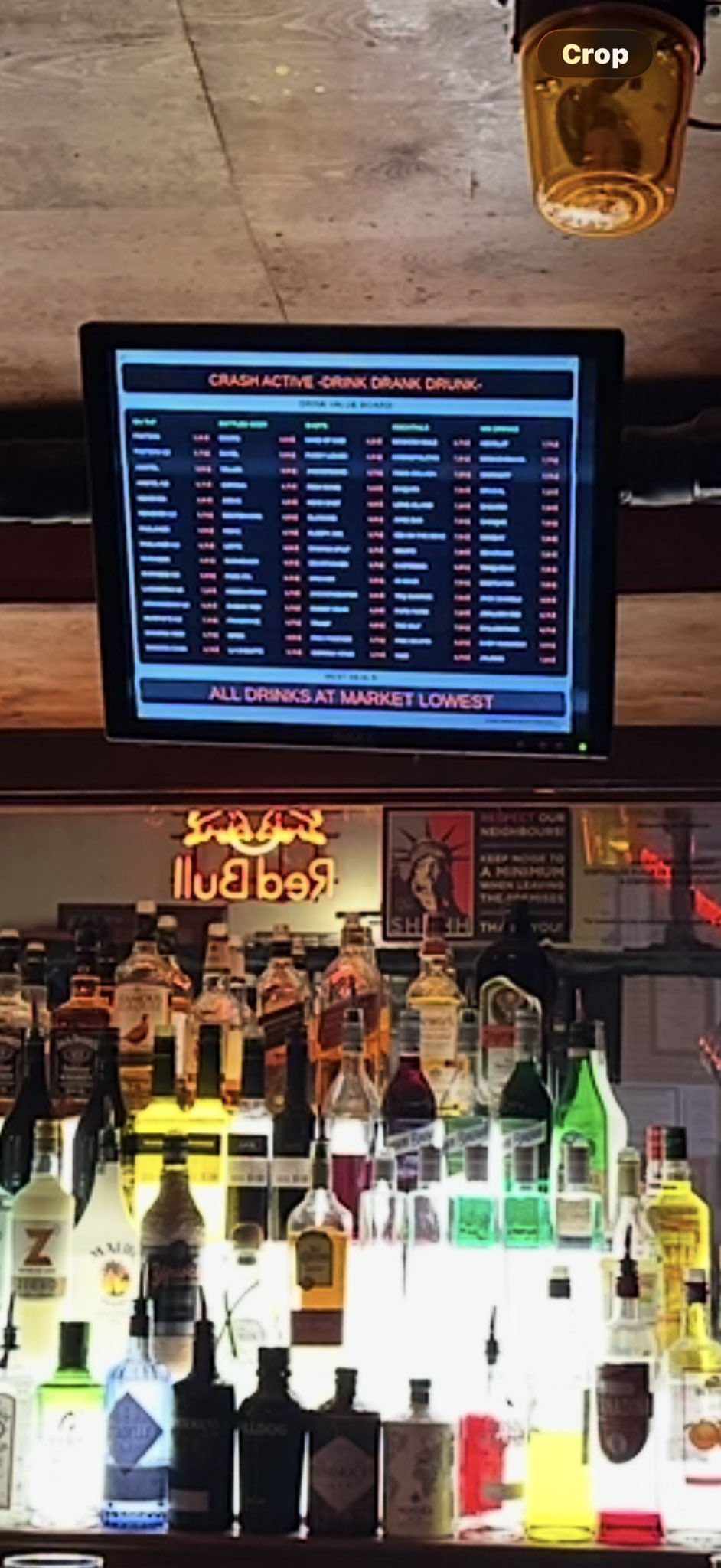
POV: You go for a drink next to your local Quant shop.

Was recently at a bar where drinks were dynamically priced,
i.e. the more people bought a particular drink, the more expensive it became (price would then decayed over time towards a floor).
Fascinating to watch a few market mechanisms play out in a bar:
People ventured outside their usual orders in search of cheaper alternatives, often discovering new favorites in the process.
Others treated rising prices as signals of quality, happily paying premiums to try expensive drinks they’d never had before.
More experienced drinkers behaved like value investors, picking up underpriced drinks they already knew were good while everyone else chased the popular ones.
Price discovery, information leakage, herding, and utility trades all unfolded over rounds of drinks.
More bars should try this.



Lawrence retweeted

DAS!
ME/CFS ist G93.3, nicht F48.0:
Warum ein falscher ICD-Code Rente, GdB und Versicherungsschutz kosten kann!
anwalt.de/rechtstipps/me-cfs…

Not only who has it, but to create a proper Biobank to study it. The EU is failing at this once again because it's reusing UK Biobank data and slapping new measurements from different people on top. All we need is 1500 people, SOTA multi-omics, and 15-20 million USD.
Lawrence retweeted

📢 RASSEMBLEMENT & MOBILISATION COUCHÉE À RENNES 🪧
Après 2 ans de discussions sans suite avec l'ARS Bretagne, nous nous mobilisons !

Fair, but we'd probably have to pass through complete human obsolescence on the way. And that future isn't exactly around the corner.
Almost sounds like you believe in the great replacement theory, which has been thoroughly debunked. Respectfully, I don't think continuing this thread would be fruitful.
journals.plos.org/plosone/ar…
You're sampling people in proportion to how much attention they attract as opposed to how common they are.

Lawrence retweeted

First X take: biology/medicine is a harder science than the fields classically considered harder like math and physics
Unlike those fields, there’s not a consistent, predictive, manipulable language to describe biological systems and prove corollaries with. Without it, we have to rely completely on empirical trends and fuzzy language. I don’t believe it’s impossible; it’s a result of us not being able to fully define all the individual processes and their interactions that make up a biological system
I think building that language is the holy grail of computational biology
I also think this is a somewhat LLM-legible task: establishing a set of principles that recapitulate known experimental phenomena and then show it generalizes. The principles might be super complex, perhaps each being an Alphafold-shaped model, but as long as it’s computable it’ll still be amazing
It could perhaps even have some uncertainty baked in
(Semantically I’m defining biology as the study of biological systems, and medicine as the study of human health. I also realize I’m kinda reframing it as a physics problem)
Only works if you have biological data. I don't see anyone seriously investing in multi-omics profiling of various disease. If you wanna do this properly, it would cost 15-20 million per disease.
I would venture a guess and say this lasts until a transhumanist inflection point. Human ability won't stagnate, unlocking key biological problems will elevate us to the next stage where previously difficult, unattainable problems become feasible again. However, I agree that a temporary loss in identity is a likely scenario.