





deepjeet datta retweeted

A generation ago, researchers spent days in dusty basement libraries physically cross-referencing Index Medicus volumes and manually photocopying microfiches. Today, no one under forty even knows what Index Medicus looks like; we rely on automated algorithmic indexers, PubMed scrapers, and AI engines like Elicit, LeapSpace or Consensus without batting an eye.
The double standard in academia is staggering:
Use algorithmic database search engines? "Standard methodology."
Use an AI-powered vector engine to synthesize literature? "Cutting-edge efficiency."
Use BioRender with AI assists to generate textbook-grade figures? "Publication gold standard."
Use Grammarly or DeepL to polish non-native English syntax? "Ethical refining."
But touch a generalized LLM to streamline an unwieldy discussion section, flag missing mechanistic links, or catch statistical inconsistencies? Suddenly it’s an unforgivable moral failure.
Generating fabricated data or synthetic text wholesale is research misconduct-pure and simple. But refusing to use a computational engine as a structural lens to edit and sanity-check your own data isn’t scientific virtue; it’s just academic nostalgia clinging to obsolete friction.
We celebrate automation right up until the exact threshold where it makes people uncomfortable, brand the transition "unethical," and quietly adopt it as mandatory five years later! 🚜📉🔬📄
#MotorShastra #AcademicPublishing #PeerReviewHypocrisy #ScienceWriting #GenerativeAI #IndexMedicus #ScientificIntegrity
deepjeet datta retweeted

Yep! Hi Anne, I contributed some blood to the 23andMe Lung Cancer Genetics Study! Thanks for coordinating with @DanaFarber on that. Findings on that here:
science.org/doi/10.1126/scie…
pubmed.ncbi.nlm.nih.gov/4275…
Some stats:
- 10–20% of lung cancers occur in people who have never smoked, approximately 20,000–40,000 US cases annually
- 85% of lung cancers are NSCLC (type I have). Among never-smokers with lung cancer, 50–60% have adenocarcinoma, a subtype of NSCLC
- About 5% of NSCLC is ALK-positive (my variant)
- 70–80% of ALK-positive lung cancer patients have never smoked
And now I'm working on a 1:1 mRNA vaccine as a potential cure. More here for those interested:
xitter.cf/kevinace/status/211047…


deepjeet datta retweeted

Anthropic gave me $30,000 in Claude credits to research my own tumor I wrote what I built since March. I’m looking for someone who can manufacture a personalized vaccine, and a hospital that can give it

deepjeet datta retweeted

In @Nature this week, our new research shows how machine learning can improve weather forecasts two to six weeks out, a timeframe that's historically been very difficult to predict.
It's exciting to see the potential of this work to help us better prepare for extreme weather, manage natural resources, and make more informed decisions in agriculture.
There's a broader lesson here... the future may not just be about ever-more-capable models, but about building intelligent verification systems around them: systems that learn where models are systematically wrong, reason about cause and effect, and continuously calibrate predictions against reality.
Read more: microsoft.com/en-us/research…

deepjeet datta retweeted

Every breakthrough in medicine in 2026... so far.
23 newly-approved (entirely novel) drugs, first-in-class cancer drugs, unprecedented efficacy in autoimmunity, bariatric surgery-level weight loss with a drug, and 'GLP1s of the brain'...
Read it here: breakingground.substack.com/…

deepjeet datta retweeted

Borrowing an idea from one research discipline to solve a thorny problem in another is an age-old scientific trick. Charles Darwin’s theory of natural selection, for example, famously inspired algorithms in computer science that “evolve” solutions to complex problems.
But such clever leaps are fleetingly rare. For #AI, however, hopping between fields can be a breeze.
Researchers highlighted that ability with the release of 36 preprints produced with a single suite of AI tools called BootLoops. The so-called harness can be used with any large language model, such as Anthropic’s Claude or OpenAI’s ChatGPT.
And in just 3 months, researchers used Claude outfitted with BootLoops to cross-pollinate at a massive scale, spotting—and precisely solving—problems in seemingly unrelated fields that share the same mathematical structures.
The resulting papers range widely, from figuring out the age of sunspots, to analyzing government health policies, to attempting to decipher a mysterious medieval manuscript.
Learn more: scim.ag/3TUUyDJ

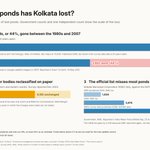
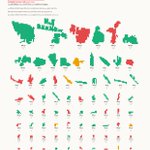
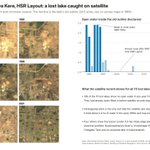
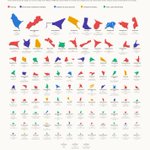
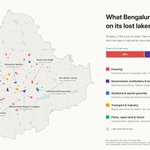
resharing a project i had done previously. kolkata has lost about 3800 ponds between 1980s and 2007.


this image shows the scale of water bodies lost. a disclaimer satellite imagery resolution is not yet sharp to detect all ponds. @JasmineLitus uploaded in english this time

just read susan sontag's illness as metaphor. its a classic although a tad slow. tuberculosis was romanticized while cancer was villified alot in the past. times have changed now. her guesswork that cancer metaphor will be obsolete before it id cured is true though...


deepjeet datta retweeted

कृपया ध्यान दें। यात्री हमने हार्ट की रक्षा स्वयं करें ।

Given the number of angioplasty cases in India and the number of people who go for stents (including me), why didn't Economic Times mention the name of the Indian brand in question? 3 batches of stents from the company has not been "reportedly" withdrawn - they *are* withdrawn by Sri Lanka and the details are available on the Lankan Medical Supplies Division official website.


deepjeet datta retweeted

For 40 years, Bengali newspapers were printed with letters cut down to fit a machine. In 1978 one of them asked a young Sanskrit scholar in England to fix that.
In 1938, Anandabazar Patrika's proprietor, Suresh Chandra Majumdar, spent years with America's Mergenthaler Linotype to mechanise Bengali for fast newspaper printing.
The result, Linotype Bengali No. 2, was a feat. But hot metal forced hard compromises.
Conjunct letters could not be stacked properly, graceful forms were flattened, and the whole script was squeezed into 90 glyphs.
40 years later, in 1978, Anandabazar went digital. It bought the Linotron 202, a phototypesetter that drew letters from outlines stored on magnetic tape, and asked Linotype's British arm for a Bengali font in two weights.
The job went to a young research assistant, Fiona Ross, who held a postgrad diploma in Sanskrit.
She went back to old Bengali manuscripts and printed books, including an 18th century manuscript at the British Library, and brought back letters the machines had killed.
Tim Holloway drew them. Anandabazar staff and Dr Tarapada Mukherjee at SOAS, London, checked the glyphs before digitisation in Frankfurt.
The new font had over 300 glyphs. Every character had to fit a grid of 54 units.
Then the harder problem....
A keyboard has about a 100 keys, but Bengali has 1,000s of conjuncts. So Ross and Dr Mike Fellows built a phonetic keyboard.
You type the way a word sounds, and Fellows' software assembles the conjunct.
Linotype never patented it...
India adopted it, and Ross has written that it became the blueprint for keyboards in other Indian scripts.
The light weight went into use at Anandabazar in spring 1981. Linotype stopped making the font in the early 1990s, but Indian companies had copied it so widely that one vendor said pirated users outnumbered his licensed ones three to one.
Sources: Riccardo Olocco, MATD essay, University of Reading; Fiona Ross, The Printed Bengali Character and Its Evolution (1999).
Photo: Linotype UK's Type Design Department, Cheltenham, 1983, with letterform drawings on the wall.

@diggerthemovie would have worked just as well if it was a hypothetical biography of an oil tycoon who causes climate change. that it becomes meta and takes the path of a theatrical representation climate disaster shows that art cannot mitigate climate change disaster.
@TomCruise this is your best performance. @aginarritu thank you for such a cinematic masterpiece.

deepjeet datta retweeted

Researchers often can't increase the size of their sample (e.g., due to research constraints). In my paper on sample size justification I discuss approaches to increase power without increasing the sample size (e.g., within designs, reducing variability) lakens.github.io/statistical…
deepjeet datta retweeted
In preparation for a discussion with the lab on AI use tomorrow morning, I thought I would come prepared and write down my thoughts in a blog post: How I use AI in my work
daniellakens.blogspot.com/20…
deepjeet datta retweeted

NASA's data is publicly accessible and while many excellent scientists work there they obviously don't have the time and resources (or incentives) to squeeze every last drop of data from legacy datasets.
There is a huge difference between what one postdoc spending 400 hours tweaking the department matlab script can find, especially when 200 of those hours are spent writing the paper and pushing it through review and extreme software skills are genuinely scarce.
Years ago I helped decode the Mars Viking GCMS raw data, which was uncharacteristically poorly documented. More recently I had a series of models replicate my results. To keep it interesting I initialized it without my results. Then once it had replicated my hard won work (in about 30 minutes) I instructed it to burn down the entire problem, pushing to the very limits of what the most sophisticated statistical methods can achieve. These are typically labor intensive and reserved for huge scientific collaborations like the LHC or LIGO. No-one is going to drop the equivalent of 100 postdoc years of effort on any legacy project. Then I had the model write it up and publish it.
Then I had another model do the same thing for the Mars THEMIS data, placing hard upper bounds on current vulcanism and hot springs. This instrument had a negative result about 25 years ago so never (afaik) even published a paper. It's still negative but at least people can read about it now.
Both analyses can be seen via projects.caseyhandmer.com
I hope teams at NASA are currently feeding all our hard won legacy data through state of the art models, but if not (or and) any private citizen could do it today for maybe $1 of tokens per project.


La Vallée des fous is a one time watch . it is a French movie about a man who takes part in the virtual part of a real sailor race and in the process comes closer to his family. found the premise a bit silly.


