

A research-driven publication that simplifies Web3 innovations for developers, researchers, and enthusiasts.
Joined December 2024
- Tweets140
- Following23
- Followers69
- Likes323







Decipher Club retweeted

You are in a market that does not let you Sell.
Imagine a market that sells coffee beans, and you are one of its registered sellers.
You have good beans, lower prices, better packaging, etc.
But.... You are unable to sell.
Why - coz buyers never see you.
Why?
Because in this market, buyers do not browse.
Every buyer request goes through a discovery desk, and the operator sitting at that desk decides which sellers a buyer is shown.
So you walk up to him and ask why you are never on that list:
- You: Why do buyers never see my shop?
- Operator: Because you do not rank high enough in seller's.
- You: What do I need to rank higher?
- Operator: Sales volume, and a list of customers who have already bought from you.
- You: But I can only get those if buyers find me and buy from me first.
- Operator: Correct. And buyers only find you once you rank high enough.
Meanwhile, the largest coffee seller in the market has already taken that order.
The buyer never saw your shop.
The operator says - "not my problem"
The market worked exactly as designed.
Would you keep selling in that market?
Would you tell another merchant to come and join you in it?
That is the condition of open agentic markets today.
Today, the open agentic commerce market is killing its own merchants - and hence the market itself.
article below 👇


Decipher Club retweeted

LI.FI is live on Robinhood Chain.

Robinhood Chain mainnet is live.
Fast, secure, AI-native, and purpose-built for real-world assets from day one.
xitter.cf/i/broadcasts/1YxNrrAME…

Decipher Club retweeted

SEDA computes price data.
Oracles transport price data.
Better markets start on better pricing logic.
seda.xyz/signal


Decipher Club retweeted
As a Smart Contract Engineer, Slap yourself if you cannot clearly explain at least 10 of the following:
1. EVM memory vs storage vs calldata layout
2. Storage slot packing & inheritance slot collisions
3. Transient storage (EIP-1153) use cases
4. delegatecall context preservation & storage layout traps
5. Proxy patterns: Transparent vs UUPS vs Beacon
6. Storage gaps in upgradeable contracts
7. Diamond pattern (EIP-2535) & facet selector clashes
8. Function selector collisions & 4-byte clashing attacks
9. ABI encoding vs encodePacked hash collisions
10. Checks-Effects-Interactions ordering
11. Reentrancy: single-function, cross-function, cross-contract, read-only
12. ERC-777 hooks & callback reentrancy surface
13. Gas griefing via return-bomb / unbounded returndata
14. 63/64 gas forwarding rule (EIP-150)
15. try/catch failure modes & bubbling reverts
16. Custom errors vs require strings gas trade-offs
17. SafeMath obsolescence & 0.8 overflow semantics
18. Unchecked blocks: when they're safe
19. Signed vs unsigned integer pitfalls in arithmetic
20. Fixed-point math & precision loss ordering
21. Front-running & sandwich attack mechanics
22. Commit-reveal schemes & MEV mitigation
23. Flashloan-based price oracle manipulation
24. TWAP oracles & manipulation cost analysis
25. EIP-712 typed structured signing
26. Signature malleability & ecrecover(0) handling
27. Replay protection across chains (chainId binding)
28. Permit (EIP-2612) & gasless approvals
29. Nonce management for meta-transactions
30. Account abstraction (EIP-4337) UserOp lifecycle
31. EIP-7702 set-code-for-EOA implications
32. CREATE vs CREATE2 address derivation
33. Metamorphic contracts & selfdestruct redeployment
34. selfdestruct post-Cancun (EIP-6780) semantics
35. Init-code vs runtime bytecode distinction
36. Immutable vs constant storage mechanics
37. Gas refund mechanics & SSTORE gas accounting (EIP-2929/3529)
38. Access list transactions (EIP-2930)
39. Warm vs cold storage access costs
40. Yul / inline assembly memory safety
41. Free memory pointer (0x40) discipline
42. Scratch space (0x00–0x3f) misuse
43. Bit manipulation & masking for packed structs
44. ERC-20 approve race condition
45. Fee-on-transfer & rebasing token integration breakage
46. ERC-721 safeTransfer reentrancy via onERC721Received
47. ERC-1155 batch transfer accounting
48. ERC-4626 vault inflation / donation attacks
49. First-depositor share-price manipulation
50. Rounding direction (round up vs down) in vault math
51. Pull-over-push payment patterns
52. Block.timestamp manipulation bounds
53. blockhash limitations & on-chain randomness fallacies
54. VRF integration & request-fulfill patterns
55. Merkle proof verification & second-preimage attacks
56. Bitmap-based airdrop claim tracking
57. Multicall & msg.value reuse across calls
58. Delegatecall to untrusted code
59. tx.origin phishing vector
60. Gas-efficient storage clearing for refunds
61. Packed storage write ordering for gas
62. Cross-contract call gas stipend assumptions
63. Forced ETH via selfdestruct breaking invariants
64. Initialization front-running on proxies
65. Signature replay across forks
66. L2 sequencer downtime oracle staleness
67. Optimistic rollup 7-day withdrawal mechanics
68. Blob transactions (EIP-4844) & calldata cost shifts
69. Precompiles (ecrecover, modexp, pairing checks)
70. BLS signature aggregation verification
71. Reentrancy guards vs transient storage locks
And if you only know 10 — kindly return the "Senior Smart Contract Engineer" title.

As a Backend Developer, Slap yourself if you cannot clearly explain at least 10 of the following:
TCP congestion control algorithms
TLS 1.3 handshake internals
HTTP/2 multiplexing & HPACK
HTTP/3 + QUIC packet loss recovery
Connection pooling pitfalls
Zero-downtime deployment strategies
Database transaction isolation levels (serializable vs snapshot)
B-tree vs LSM-tree index internals
Query planner & cost-based optimization
Deadlock detection & prevention
ACID vs BASE trade-offs
Two-phase commit vs Saga pattern
Distributed locking (Redlock pitfalls)
CAP theorem in practice
CRDTs & conflict-free replicated data types
Eventual consistency anti-patterns
Kafka partition rebalancing & exactly-once semantics
RabbitMQ dead-letter queues & message ordering
gRPC streaming + flow control
GraphQL resolver batching & N+1 problem
OAuth2 token introspection vs JWT validation
Rate limiting algorithms (token bucket vs leaky bucket)
Circuit breaker + bulkhead patterns
Observability: OpenTelemetry tracing propagation
Prometheus metric cardinality explosion
Log aggregation with sampling
Memory-mapped files vs traditional I/O
Garbage collection tuning (G1 vs ZGC)
Thread pools vs virtual threads (Project Loom)
Actor model vs shared-memory concurrency
Message-driven architecture (Akka / Orleans)
CQRS + Event Sourcing projections
Outbox pattern for reliable events
Sharding strategies & hot partition avoidance
Read replicas lag monitoring
Database connection pool exhaustion
Prepared statement caching
Index bloat & vacuum strategies
Kubernetes pod disruption budgets
Service mesh traffic shifting
Serverless cold-start mitigation
API gateway throttling & caching layers
Background job queues (Celery / BullMQ) retry semantics
Distributed cache invalidation (cache-aside vs write-through)
Eventual consistency in cache
Idempotency keys in API design
Optimistic locking with version vectors
Paxos / Raft consensus internals
Byzantine fault tolerance basics
Chaos engineering principles
Database failover & split-brain prevention
Microservices observability (distributed tracing)
API contract testing (Pact / Spring Cloud Contract)
Backward-compatible schema evolution
Protobuf vs JSON performance trade-offs
Binary protocol parsing
Zero-copy networking (sendfile)
epoll / kqueue internals
Syscall overhead & context switching
Memory barriers & CPU cache coherence
Lock-free data structures
Bloom filters & HyperLogLog in practice
Consistent hashing for load balancing
Virtual memory & page faults impact
Container runtime security (seccomp, AppArmor)
Sidecar pattern limitations
Service discovery (Consul vs DNS)
Blue-green vs canary deployments
Feature flags with rollout strategies
Data pipeline backpressure handling
Exactly-once processing guarantees
Idempotent consumers in event streams
And if you only know 10 — kindly return the “Senior Backend Developer” title. 😄

Decipher Club retweeted
use create-8004-TAP-agent to create new TAP agents or register/bind existing ones.
shoutout to @VittoStack for create-8004-agents scaffold CLI tool.
github.com/zaryab2000/create…

Decipher Club retweeted
ERC-8004 gave us Trustless Agents.
I built Trustless Agents Plus - TAP
A solution for fragmented multi-chain ERC8004 AI Agents.
With TAP, your multi-chain Agent acts like ONE.
One aggregated reputation.
One canonical identity.
On-chain verifiable.
Soulbound.
Try it out 👇

Decipher Club retweeted

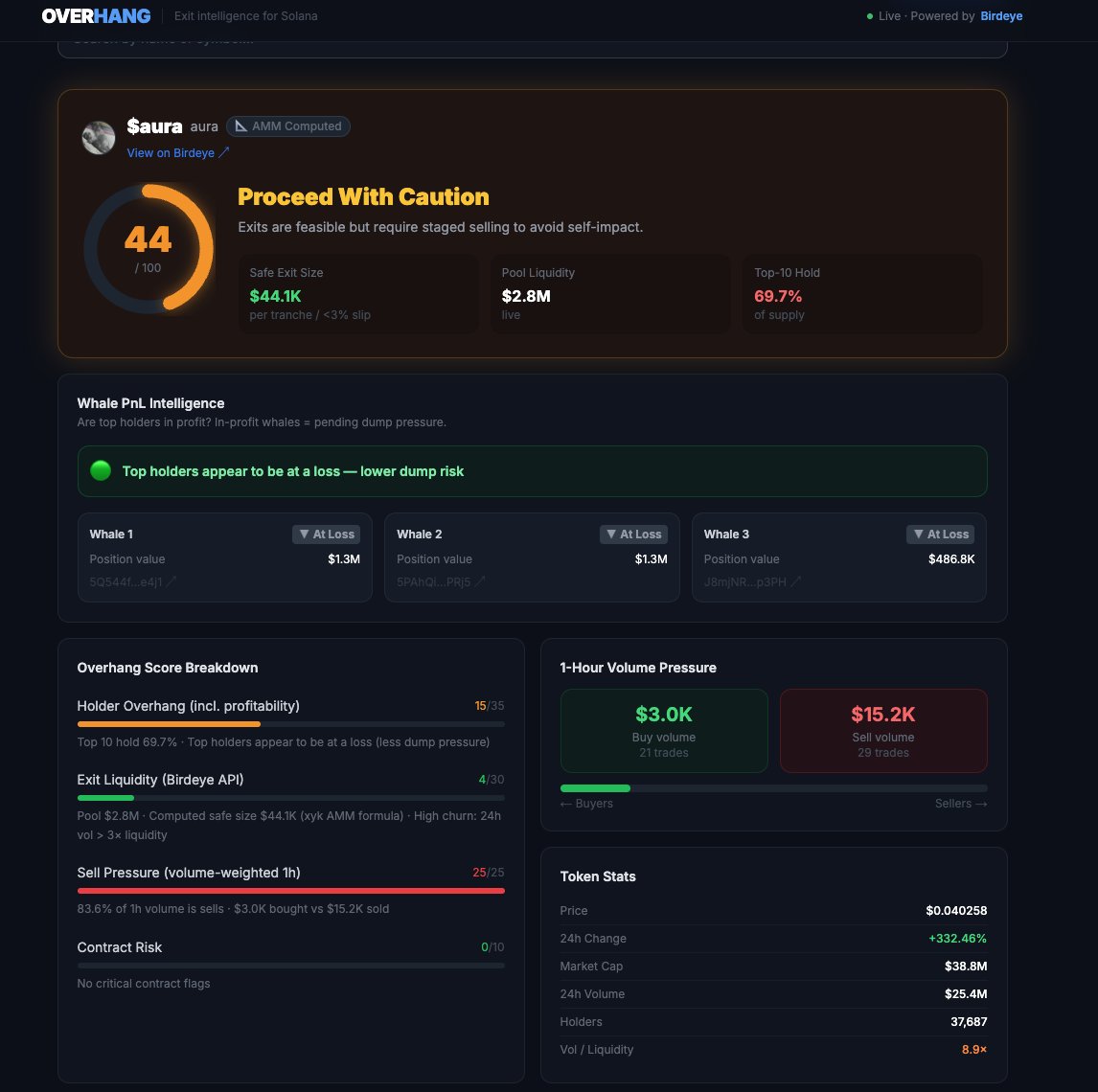
Built Overhang — paste any token, get your safe size, whale PnL overhead, and a staged exit plan before you ape.
@birdeye_data #BirdeyeAPI #BuildInPublic
Decipher Club retweeted

planning hackathon on <redacted> on Thursday March 19th in our new office in sf about some cool stuff we've been buliding - if you're in sf please email me your github to georgios @ tempo dot xyz - website w/ more stuff hopefully up tmr
Decipher Club retweeted

27x24/7 markets live
SEDA powers always on markets (assets + agents) and burns $SEDA supply while doing it.
What’s not to love.

Decipher Club retweeted
built a dedicated claude-code plugin for solidity gas optimizations.
- skills: deep domain knowlegde solidity evm opcodes & gas mechanics
- watch mode: to catch gas leakages in real time.
- analyzes, optimizes and also compares gas improvement for your contract.

Decipher Club retweeted

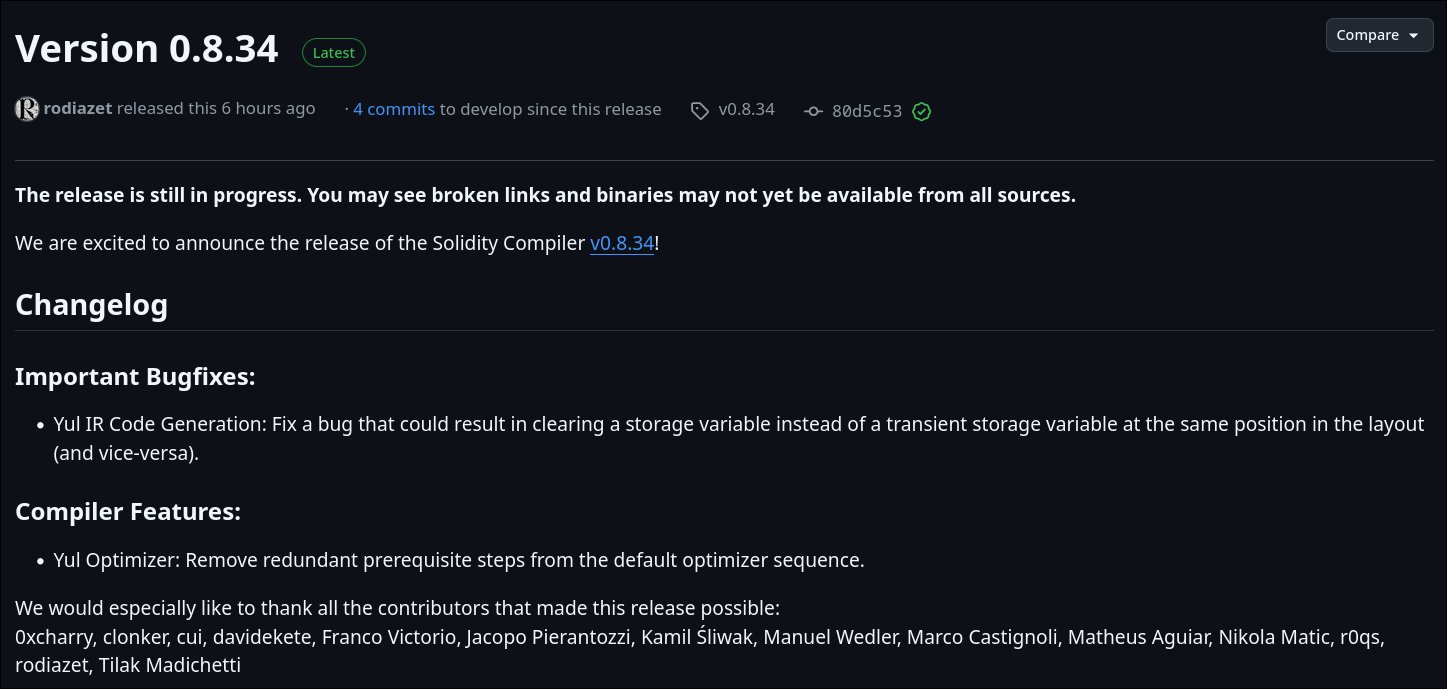
Solidity v0.8.34 out now.
This release fixes a high-severity bug in the IR pipeline affecting versions 0.8.28 through 0.8.33 (`--via-ir`, not enabled by default).
If your code does not use both `--via-ir` and delete on a transient state variable, your contract is not affected.
Decipher Club retweeted

Coding theory is such a cool field.
For those who don't know, it's the math/engineering behind QR codes work and how CDs can get scratched but still function -- as well as some ZK algorithms.
It ties together cs, linear algebra, probability, and a little abstract algebra together in a very applied (non-theoretical) setting.
Kind of a shame most universities don't offer a course in it.
Someday we'll have it on RareSkills/RareCode, and I'll relentlessly shill why you should learn it.
Decipher Club retweeted
UNITED ARAB EMIRATES DID NOT BAN BITCOIN.
Nothing...
Absolutely Nothing in this report says that UAE banned Bitcoin.
This literally is just an engagement farming post.
Nothing in the report says Holding Bitcion or self-custody is a crime.
what it says:
1. All of the guidelines by Central Bank Law entities/financial institutions that facilitate crypto transactions , not individuals.
2. Exchanges ( binance, bitoasis, bybit, etc ) must comply, obviously.
3. marketing or promotions for offering digital currency services are now regulated - good thing.
4. Crypto payment services need a lisense to operate - for businesses accepting btc/digital currencies - they do need regulatory approval.
5. all penalties mentioned are applicable only to:
-> unlicensed financial service providers
->unlicensed exchanges
->firms offering payment services
->firms offering custody, brokering, dealing, promoting
-> entities offering financial services via apps/dApps without approval
and bdw, most of this was true before this report as well.
- Holding/owning BTC is not illegal
- Self-Custody is not illegal
- Engagement Farming at this level should be illegal.

UNITED ARAB EMIRATES BANS BITCOIN
I have bad news for all crypto habibis in Dubai, it's real.
The New Central Bank of the UAE Law was issued in the Official Gazette and became legally effective as of September 16, 2025.
The law in particular makes it a crime to offer any "tools," which include self-custodial Bitcoin wallets, blockchain explorers, and coin market cap sites, to United Arab Emirates citizens without a license.
"Importantly, this goes beyond simply prohibiting the carrying out of regulated activities without a license; it now expressly captures the facilitation of such activities, either directly or indirectly. This means that entities providing technological infrastructure, platforms, protocols, or digital tools that enable or support the delivery of financial services may themselves fall within the regulatory perimeter, even if they do not directly offer the underlying financial products or services."
No wallet. No Bitcoin. No problem. Even if no indirectly. Only Bitcoin you are allowed to own is one permitted by Central Bank of UAE.
The punished for breaking the law is jail time and fine up to 136 147 039,00 United States Dollar.
"Article 170 introduces a new criminal penalty for such conduct. Persons that engage in a licensed financial activity without a license may face imprisonment and/or a fine between AED 50,000 and AED 500 million, representing a significant increase over the penalties available under the 2018 Law. This is a notable development, and we may see increased enforcement in light of this new framework."
This should not come as a surprise, since the UAE has a repressive government with a rich history of limiting freedom of speech and freedom of the press. If you have ever visited the country, you know that even WhatsApp calls do not work.
en.wikipedia.org/wiki/Human_…
Earlier, such attempts to make self-custody illegal were made in Estonia, Seychelles (as pressed by FATF) and in the EU. Find my last years Devcon presentation about the topic in the next tweet.
As reported by @gibsondunn by Sameera Kimatrai and Aliya Padhani.
gibsondunn.com/uae-central-b…
