

Professor | University of Chicago Cognitive Neuroscience - Social Neuroscience - Psychology - Morality - Evolution
United States
Joined October 2009
- Tweets1.8K
- Following202
- Followers3.2K
- Likes5.1K





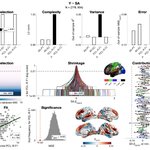

𝐇𝐨𝐰 𝐚𝐧𝐝 𝐰𝐡𝐲 𝐝𝐨 𝐦𝐨𝐫𝐚𝐥𝐥𝐲 𝐫𝐞𝐥𝐞𝐯𝐚𝐧𝐭 𝐬𝐢𝐠𝐧𝐚𝐥𝐬 𝐛𝐞𝐜𝐨𝐦𝐞 𝐜𝐨𝐧𝐬𝐜𝐢𝐨𝐮𝐬?
Our new computational neuroscience approach‼️
Temporal horizons of moral consciousness:
Trends Open cell.com/trends-open/fulltex…

Jean Decety 🇺🇸 🇪🇺 retweeted

Why Americans Stopped Falling in Love. Another great column from @DKThomp featuring an interview with @dcoxpolls on his new book Generation Uncoupled. Technology, loneliness, despair, and society. Lots of great figures and data in here too! open.substack.com/pub/derekt…

Jean Decety 🇺🇸 🇪🇺 retweeted

🔪"As research on topics such as stereotype threat & implicit bias were found 2 have problems, the scholars who had been citing that work in support of policy changes didn’t change their policy views [or] else just made the empirical claims w/o any cites"speakandregret.michaelinzlic…

Jean Decety 🇺🇸 🇪🇺 retweeted

Hunter-gatherers are romanticized as naturally generous. But this generosity is the result of repeated resource extraction through forceful demands, complaints, ridicule, gossip and ostracism. Equality emerges from self-interest and coercion.
theconversation.com/hunter-g…

Jean Decety 🇺🇸 🇪🇺 retweeted
🔪"the danger of placing social concerns at the fore is that doing so can lead to a biased understanding that ultimately puts well-intentioned social policies on a collision course with the facts"
sciencedirect.com/science/ar…

Jean Decety 🇺🇸 🇪🇺 retweeted

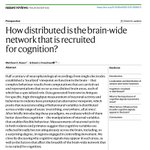
𝗪𝗵𝘆 𝗶𝘀 𝘁𝗵𝗲 𝗯𝗿𝗮𝗶𝗻 𝘀𝗼 𝗵𝗲𝘁𝗲𝗿𝗼𝗴𝗲𝗻𝗲𝗼𝘂𝘀 (𝗮𝗻𝗮𝘁𝗼𝗺𝘆, 𝗺𝗼𝗹𝗲𝗰𝘂𝗹𝗮𝗿)?
Maybe it contributes to large scale dynamics.
doi.org/10.1073/pnas.2532072…

Jean Decety 🇺🇸 🇪🇺 retweeted

What happens when a field has a history in which an ascendant faction within a scholarly community misrepresents evidence in order to punish a political rival. My take on some disputes in anthropology: chronicle.com/article/anthro…



Jean Decety 🇺🇸 🇪🇺 retweeted

9/10 students across 5 universities reported that pro-Western views are viewed negatively on campus researchgate.net/publication…

Jean Decety 🇺🇸 🇪🇺 retweeted

Cool system to study the evolution of cooperation and division of labor. Marine bacteria cooperate to break down complex algal carbohydrates nature.com/articles/d41586-0…

Jean Decety 🇺🇸 🇪🇺 retweeted

Does ingroup love lead to outgroup hate? NO!
I often try to explain to people that identifying with ingroups does not necessarily lead to outgroup discrimination. I call this the "Myth of tribalism". A new paper provides strong and robust evidence for a positive relationship between ingroup and outgroup prosociality.!
Across six datasets that span multiple domains of prosociality and group distinctions with 743,402 individuals in 121 societies, finds that people who are prosocial toward the ingroup also tend to be prosocial toward the outgroup.
"The results offer an optimistic message for prosociality across group boundaries. When people are not made to choose between the ingroup and outgroup, they are generally prosocial toward both."
Here is the new research: pnas.org/doi/10.1073/pnas.25…
Here is an article I co-authored for The Atlantic on the Myth of Tribalism in 2022: theatlantic.com/ideas/archiv…

Jean Decety 🇺🇸 🇪🇺 retweeted
"Little evidence supports the central idea that belief in big gods enabled large‐scale cooperation."
compass.onlinelibrary.wiley.…

Jean Decety 🇺🇸 🇪🇺 retweeted
Compared to members of higher-status groups, members of lower-status groups often show no implicit ingroup preference
Among lower-status groups, ingroup preferences are accompanied by greater self-regulatory control than outgroup preferences (according to an analysis of 5.7 million implicit bias tests).
This suggests people are engaging in self-regulatory control when they are lower in the social hierarchy.
pnas.org/doi/10.1073/pnas.26…

Jean Decety 🇺🇸 🇪🇺 retweeted

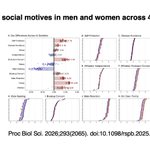
Why are men and women different?
This week on The XX Lab, Dr. David Puts and I dive into hormones, the brain, and the biology behind sex differences.
🎧 Watch or listen now.
#Hormones #TheXXLab #science #psychology


Jean Decety 🇺🇸 🇪🇺 retweeted

🚨 It's finally out! 🚨 This is the big one. 100 cultures, 12,000 people, 108 researchers. Why people (and our most-used surveys) get collectivism wrong and how to fix it. Join me for a fun thread! 🧵 @NatureHumBehav nature.com/articles/s41562-0…

Jean Decety 🇺🇸 🇪🇺 retweeted

Be the hunter, not the hunted: Marines conduct a live-fire range with M27 infantry automatic rifles. Marines are strategic warriors who fight on behalf of our Nation.

Jean Decety 🇺🇸 🇪🇺 retweeted

Interesting and counter-intuitive (sounding) findings in @PNASNews from a large, multi-national team of scientists: People in more individualist cultures are more motivated to make others feel better. pnas.org/doi/abs/10.1073/pna…


Jean Decety 🇺🇸 🇪🇺 retweeted
Is AI making us stupid?
Many people worry that AI use will erode human cognition. A new paper reviews evidence that offloading cognition to AI can impede skill acquisition and lead to skill decay.
However, this is not inevitable. It depends on how you use the technolog.
cell.com/trends/cognitive-sc…

