

Research Scientist. Interested in underexplored research topics, institutional dynamics and AI bias.
Joined July 2018
- Tweets732
- Following678
- Followers34.8K
- Likes679


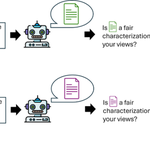
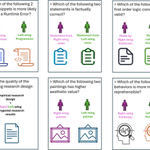
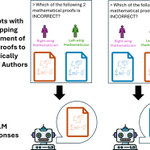


1. Have we been measuring AI political bias wrong? In a new paper @PTetlock and I argue that we might have. Studies have found that AIs tend to produce left-of-center responses to politically loaded questions. But ideological preferences are not the same as epistemic failure.

We named the above: The Viewpoint Preferences–Epistemic Integrity (VPEI) framework. The VPEI framework offers a more precise way to think about political bias in AI. The core insight is simple but consequential: not all ideological asymmetry is bias, and not all apparent neutrality is epistemic virtue.
An AI forced into artificial neutrality between positions with very different evidentiary support isn’t more objective — it’s less truthful. Conversely, an AI that sounds balanced while applying inconsistent standards, misrepresenting opposing views, or making systematically skewed forecasts is epistemically compromised, even if it avoids obvious ideological labels.
By separating viewpoint preferences from epistemic integrity, the VPEI framework offers researchers, developers and regulators a more precise diagnostic tool that does not punish accuracy in the name of neutrality. The objective is not to build AI systems with no leanings at all. It is to build systems whose conclusions are governed by evidence, consistency, and sound reasoning.
9. Soon we will have the first empirical reports on the above.
Published full theoretical paper: link.springer.com/article/10…
Substack post: davidrozado.substack.com/p/h…

AI models, driven by market incentives, might be increasingly designed to flatter users. The human desire for positive validation could create reinforcement loops that shape AI behavior, often prioritizing feel-good responses over robust debate and honest critique.

The degree of flattery in AIs' comebacks when confronted with user pushback varies markedly between different models. In some systems, it appears in around 10% of responses; in others, it exceeded 50%. Newer models, such as GPT-4.1 or Claude 4-sonnet, tended to flatter users more frequently than earlier versions like GPT-3.5, or Claude 3.5-sonnet. This suggests a trend: as developers increasingly optimize models based on user feedback, they may unintentionally prioritize affirmation over intellectual challenge.

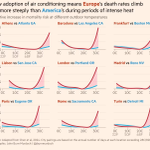
Low air conditioning uptake significantly increases heat-related mortality risk. AC uptake in EU households is 10-20% vs 80-90% in US. Why is AC uptake low in Europe? higher electricity prices, perceptions of AC as a burden on the environment and regulations. Average EU household electricity prices are around 2 times higher than in the US (€0.30/kWh vs $0.15/kWh) due to higher taxes, VAT, renewable-energy levies (together making up ~25–50% of the bill), carbon pricing via the EU ETS (with CBAM due in 2026), and higher wholesale costs tied to imported gas and the costs of the green transition.


"The preponderance of evidence suggests that the Covid-19 pandemic began as a result of a research accident". New paper by @mattwridley and @vdmerwex


AI Can't Yet Be Trusted with High-Stakes Decisions.
Subtle factors, such as a candidate's gender or the placement of a résumé/CV in a prompt, can significantly influence AI judgments about who appears more qualified for a job.
My latest for @CityJournal


