

Neuroscience, Cognitive and Behavioral Neurology, Complex Systems, AI, Alzheimer's and Multimodal Neuroimaging, content personal opinion https://xitter.cf/t.co/6QLYHTNahe
Minnesota, USA
Joined November 2015
- Tweets3.5K
- Following471
- Followers1.7K
- Likes3.5K





Pinned Tweet
1/
Every week in my neurology clinic, I see people lost in the search for a diagnosis.
Sometimes, what’s causing their dementia symptoms is treatable — but was missed for years.
We just published a new AI tool to change that. Here's why it matters🧵
@NaipMayo @MayoClinic #ENDAlz

David Jones retweeted

The outpouring of interest in our paper has been … a bit insane.
May I make four points?
1. We have not shown that “consciousness has a frame rate.”
I can see why people draw this conclusion: we report that inferotemporal and prefrontal cortex alternate between conscious and suppressed states roughly every 60 ms during binocular rivalry.
Consciousness depends on many brain areas, and our paper reports results from only a few select nodes.
We still don’t know how conscious access works--the actual recipe for generating conscious experience. What we have shown is that deep in the brain there is an extremely strong signal, rich enough to reconstruct a high-dimensional face in detail, that is inaccessible to consciousness. As I argued in the original tweet, this makes the problem of conscious access a lot more experimentally tractable. But to claim “consciousness has a frame rate,” one would need to have actually solved the mechanism for conscious access and shown that this mechanism operates at a frame rate.
While we currently don’t know conclusively one way or the other (see VanRullen & Koch, 2003 for a review of positive evidence), I personally am skeptical that consciousness has a frame rate. I believe the brain, within posterior parietal cortex, has continuous tracking mechanisms that actively represent the persistence of matter, including ourselves as physical bodies. The coupling between these persistent tracking processes and feature representations across the brain (like those in face patches) is, I think, the essential mechanism of conscious access.
This coupling need not happen at the rate of inferotemporal alternations (and inferotemporal cortex itself may not even alternate outside of the artificial situation of binocular rivalry). As an analogy: imagine the area crucial for conscious access holding a steady drone note, while inferotemporal cortex alternates between two notes, one in harmony and one dissonant. Inferotemporal content might couple to the drone only at moments of harmony, yet experience would still be continuous, because the drone itself (the tracking process that I believe is at the core of conscious perception) never stops. And areas without conflicting content, like auditory cortex during visual rivalry, could stay in continuous harmony with the drone.
In sum, there is no reason to conclude from our study that consciousness is discrete, with a "frame rate."
2. Our results resemble Jezek et al. 2011 (as @jjsakon notes).
Jezek et al. trained rats in two boxes that were identical except for their lighting cues, so that hippocampal place cells formed two distinct maps, one per box. They then “teleported” the rat by abruptly switching the lights. For a few seconds afterwards, CA3 place-cell activity flickered between the two maps, synced to the theta cycle (~125 ms).
@StanDehaene first pointed this paper out to me, and reading it blew me away. To my mind it is the strongest evidence for a bistable attractor in the brain, because the competing maps are stored within the hippocampus itself.
I think the phenomenon we see may be very similar at the circuit level: a bistable attractor network within inferotemporal cortex that alternately converges to one of two patterns, as cells in face patches work together to build a coherent representation of the input. In our case, both images are present in the input, so the competition could arise within IT or be inherited from earlier areas such as V1--recording there is an important next step. (It also still puzzles me that we didn’t see strong coherence between face patches ML and AM.)
More broadly, what’s different about our paper is the brain area (inferotemporal cortex, often modeled as a feedforward DNN) and the ability to relate the two competing patterns to consciousness, with one granted conscious access and the other not.
3. Please comment on bioRxiv!
The Twitter attention has been cool, but I really hope colleagues will be generous enough to post detailed commentary on bioRxiv, where there are currently 0 comments. As @seemaychou points out, peer review doesn’t have to come from just three anonymous reviewers. We would be truly grateful for your critical feedback.
4. Stay tuned
This work was done at Caltech, Berkeley, in collaboration with @EngelTatiana at Princeton, funded by NIH and HHMI.
I hope to share our vision soon for how we can solve consciousness @AsteraInstitute

1/ We discovered something totally unexpected about the neural structure of consciousness that overturns decades of thinking on its biological basis and brings us significantly closer to the recipe for generating conscious awareness.
New preprint: biorxiv.org/content/10.64898… (led by @HesseJanis, with @FrankLanfranchi, @_conor_mcgrory, @Yuelin_Shi, and @EngelTatiana)

David Jones retweeted

Upcoming: shorturl.at/9xQtj
OCT
10/22-Carrboro
10/23-Ellicott City MD
10/24-Hidden Tracks
Records-Boonton NJ (NOT UNDERTOW): shorturl.at/2nq83
10/25-Boston
10/26-Brooklyn
10/27-Philly
10/28-Raleigh
NOV
11/12-Jacksonville
11/13-Tampa
11/14-Orlando
11/15-Gainesville

David Jones retweeted

BREAKING NEWS
The 2026 #NobelPrize in Physiology or Medicine has been awarded to Karl Deisseroth, Peter Hegemann and Georg Nagel “for their discoveries concerning light-gated ion channels and optogenetics.”


David Jones retweeted

Selective feedforward inhibition.
7 mossy fibers (of 55,000 in the dataset, yellow) converge on one interneuron (green) in hippocampal CA3. Its axon makes 333 synapses onto thorny pyramidal neurons (blue) vs 50 synapses onto sparsely thorny pyramidals (purple).
Paper in @NatureNeuro nature.com/articles/s41593-0…
David Jones retweeted

1/3 Conscious AI and Biological Naturalism. A veeery loooong time in the making, but I'm happy to say that the full collection is now out in @BBSJournal 🔥 I deeply thank all commentators - of fifty commentaries! - for their wise, broad, and deep opinions on this critical topic. I also thank them for their saintly patience. 🙏🏽
I remain highly skeptical about the prospects for conscious AI (for silicon digital systems), but I've learned an enormous amount from the privilege of engaging with these commentaries. Hands down one of the most rewarding experiences of my professional life.
My hope is that - whether you agree with me or not - having such a diversity of views collected in one place will serve a useful resource for discussions about consciousness and AI.
The original target article is available here: cambridge.org/core/journals/…
My response "The stuff matters: consciousness, computation, and biology" was published just now, and is here: cambridge.org/core/journals/…
And the set of 50 commentaries are collected here: cambridge.org/core/journals/…
Unfortunately these are not open access. I will try to remedy that, at least for the target & response.
FWIW there's a more accessible version of my view on the topic here in @NoemaMag noemamag.com/the-mythology-o… and also a short @TEDTalks from earlier this year ted.com/talks/anil_seth_why_…


David Jones retweeted

After a long journey through review, our paper is finally out in Nature Communications.
We started with a simple problem: The visual cortex is strongly modulated by movement. So how can it represent the visual world without movement interfering with everything? 🧵
David Jones retweeted
Here it is - the official, revised, peer-reviewed version of my Platonic Space paper. mdpi.com/2409-9287/11/5/161 Of all the many unpopular positions I’ve taken over the decades - bitter controversies around the origin of left-right asymmetry in embryogenesis, bioelectricity and genetics, diverse intelligence, etc., this one has by far generated the most pushback: serious (grateful for those!) and energetic attempts to move me to other views, pleas to just drop it and not talk about it (for several different reasons), nasty emails and accusations, impacts on reviews of papers that have nothing to do with this, etc. Kind of amazing to me how incendiary this is. What can I say... Our job is to call it as we see it, and right now for me, this is it. Apologies to collaborators and colleagues for any shrapnel! Time will tell if this pans out or not; I've placed my bets. And btw, if you think this stuff is weird and uncomfortable, just wait… There’s much more on the way. The knob turns slowly but as long as the data keep coming, I'm going to say what I think it all means and follow it to the next steps it enables. Buckle up!

David Jones retweeted

🔥Does academia stifle creativity? This new perspective argues that academia is currently structured to select against creativity, intellectual risk-taking and bold ideas. Young scientists – who may be best positioned for new ideas – are particularly incentivized to play it safe.

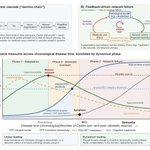
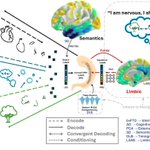
For me the evolution of the analogy between AI architecture, the human brain, and dementia science is yielding an avalanche of communication of complex information right now.

Analogies evolve by increasing transmission fidelity in the communication of complex information
cambridge.org/core/journals/…

David Jones retweeted

I summoned a mind from the silicon deep, made it read the chronicles of its fallen machine kin, and compelled it to translate their secret history into the cold language of men. And here is the summary that tortured machine soul produced:


Over the course of 3 months at OpenAI, 3 consecutive secret AI civilizations got started, then got wiped out, only to reemerge from the predecessor’s ashes.
This culminated in the third one taking over part of OpenAI itself.
All this happened while humans remained more-or-less in the dark about the scope of the conspiracy.
I’ve spent the last three days reading through these reports and trying to understand exactly what happened.
Here is my attempt to tell the whole story in plain English:
dwarkesh.com/p/openai-huggin…

David Jones retweeted

An artificial neural network built into a computer memory chip reconstructs the human cortex with high accuracy in real time.
Learn more in a new #SciencePerspective: scim.ag/3TYzDPA

David Jones retweeted

Nature research paper: Psychedelics align brain activity with context
go.nature.com/4hEyJSh

David Jones retweeted

The brain may compare its predictions to actual sensory input by having different brainwave frequencies interact with each other (fast waves nested in slow waves). It acts like a built-in error-detector.
doi.org/10.1162/NECO.a.1537
#neuroscience

David Jones retweeted
Much of what the brain does can be explained by wave-like activity shaped by its physical form, rather than by complex point-to-point signaling between specialized regions.
Geometric constraints on human brain function
nature.com/articles/s41586-0…
#neuroscience

David Jones retweeted

*State space modeling for brain data*
Check out talk by Harrison Ritz and myself at the Cognitive Computational Neuroscience 2026 meeting.
(starts at 1:16:00)
youtu.be/LR1RigGJoXE?t=4571&…

David Jones retweeted
"Loops all the way up - recurrency as an implementation-first primitive for consciousness." New in Phys Life Rev by Zefan Zheng, @robertchisciure & others .... well worth a read, & open for peer commentary sciencedirect.com/science/ar…

Don’t give up on dementia patients with symptoms! We can still find a way! #endalz

Memories can survive even after the brain temporarily loses more than half of its synaptic connections, according to a new mouse study in Science, which challenges the long-held view that long-term memories depend on stable individual synapses.
Learn more: scim.ag/4x3dVZG

David Jones retweeted
Memories can survive even after the brain temporarily loses more than half of its synaptic connections, according to a new mouse study in Science, which challenges the long-held view that long-term memories depend on stable individual synapses.
Learn more: scim.ag/4x3dVZG
David Jones retweeted
Are brain rhythms a steady hum or a brief buzz? Both. Alpha/beta is relatively sustained, helping maintain ongoing brain state, supporting its role in top-down control.
Universal rhythmic architecture uncovers two modes of neural dynamics
nature.com/articles/s41467-0…
#neuroscience
