

💡 Insights with Python & ML | ✨ Tips & Quizzes on Excel, SQL, Power BI, Tableau | 📊 Making Data Analysis Simple & Impactful
Toronto
Joined February 2022
- Tweets354
- Following78
- Followers36
- Likes408





Pinned Tweet
𝗗𝗮𝘆 1 𝗼𝗳 30 𝗗𝗮𝘆𝘀 𝗼𝗳 𝗣𝘆𝘁𝗵𝗼𝗻
Start learning Python from scratch. Today, we cover your first program, variables, data types and objects.
Read, practice and test your knowledge.
What's your Python goal?
#Python #30DaysOfPython #LearnPython
Suparna Chowdhury retweeted

AI SYSTEM DESIGN ROADMAP
│
├── 1. FOUNDATIONS
│ ├── AI, ML, Deep Learning & Generative AI
│ ├── Mathematics, Statistics & Probability
│ ├── Python, NumPy & Pandas
│ ├── Neural Networks & Transformers
│ └── LLM Fundamentals & Tokenization
│
├── 2. AI MODEL ARCHITECTURE
│ ├── Model Selection & Evaluation
│ ├── LLMs, SLMs & Multimodal Models
│ ├── Embedding Models & Rerankers
│ ├── Fine-Tuning, LoRA & PEFT
│ └── Model Serving & Inference
│
├── 3. DATA ENGINEERING
│ ├── Data Collection & Ingestion
│ ├── Data Cleaning & Preprocessing
│ ├── Data Labeling & Governance
│ ├── Feature & Embedding Pipelines
│ └── Data Quality & Versioning
│
├── 4. LLM APPLICATION ARCHITECTURE
│ ├── Prompt Engineering
│ ├── Structured Outputs & Function Calling
│ ├── RAG (Retrieval-Augmented Generation)
│ │ ├── Document Chunking
│ │ ├── Embeddings & Vector Databases
│ │ ├── Hybrid Search & Reranking
│ │ └── Retrieval Evaluation
│ ├── AI Agents & Tool Use
│ ├── Memory & Context Management
│ └── Multi-Agent Systems
│
├── 5. SYSTEM ARCHITECTURE
│ ├── Requirements & Workload Estimation
│ ├── Monoliths, Microservices & Modular Design
│ ├── API Gateway & Model Gateway
│ ├── Synchronous & Asynchronous Processing
│ ├── Message Queues & Event-Driven Systems
│ ├── Caching & Semantic Caching
│ ├── Load Balancing & Autoscaling
│ └── Distributed Systems & Fault Tolerance
│
├── 6. STORAGE & INFRASTRUCTURE
│ ├── SQL & NoSQL Databases
│ ├── Vector Databases
│ ├── Object Storage & Data Lakes
│ ├── GPU / CPU Compute Infrastructure
│ ├── Containers & Kubernetes
│ ├── Cloud Platforms
│ └── Model Serving Infrastructure
│
├── 7. AI EVALUATION & OBSERVABILITY
│ ├── Offline & Online Evaluation
│ ├── Accuracy, Relevance & Groundedness
│ ├── Hallucination Detection
│ ├── LLM-as-a-Judge
│ ├── Tracing & Distributed Logging
│ ├── Latency, Throughput & Token Usage
│ └── A/B Testing & Continuous Evaluation
│
├── 8. SECURITY & GOVERNANCE
│ ├── Authentication & Authorization
│ ├── Prompt Injection Defense
│ ├── Data Privacy & PII Protection
│ ├── Secrets & Key Management
│ ├── Guardrails & Output Validation
│ ├── Model Supply Chain Security
│ └── Responsible AI & Compliance
│
├── 9. PERFORMANCE & COST OPTIMIZATION
│ ├── Quantization & Distillation
│ ├── Batching & Parallel Inference
│ ├── Model Routing & Cascading
│ ├── KV Caching
│ ├── GPU Utilization & Throughput
│ ├── Token Budget Optimization
│ └── Quality–Latency–Cost Trade-offs
│
├── 10. MLOps & LLMOps
│ ├── CI/CD & Model Versioning
│ ├── Automated Testing & Evaluation
│ ├── Model Deployment & Rollbacks
│ ├── Data & Prompt Versioning
│ ├── Drift Detection & Monitoring
│ └── Continuous Improvement
│
└── 11. END-TO-END AI SYSTEM DESIGN
├── AI Chatbot / Customer Support
├── RAG-Based Knowledge Assistant
├── AI Coding Assistant
├── AI Search & Recommendation Engine
├── Document Intelligence Platform
├── AI Agent / Workflow Automation
├── Real-Time Voice AI System
├── Multimodal AI Application
├── Large-Scale AI Inference Platform
└── Production-Ready AI SaaS
├── Requirements & Architecture
├── Data & Model Pipeline
├── APIs & Infrastructure
├── Security & Evaluation
├── Scaling & Cost Optimization
└── Reliability & Production Monitoring
Follow @e_opore to learn more. Bookmark and share for more people to master it.
Day 7 of 30 Days of Python: Tuples & Sets
Learn immutability, hashability, set operations and efficient membership checks.
📖 Read the article and share your answers in the comments! 💬
🔖 Save & share!
#Python #LearnPython #30DaysOfPython

𝗗𝗮𝘆 6 𝗼𝗳 30 𝗗𝗮𝘆𝘀 𝗼𝗳 𝗣𝘆𝘁𝗵𝗼𝗻
Master Python lists: indexing, slicing, mutability, copying, etc. Test your knowledge with tricky Python challenges.
Can you predict the outputs?
#Python #LearnPython #30DaysOfPython #DataScience
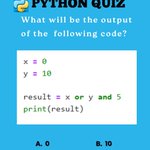
What will be the output of the following Python code?
print(1 < 2 == True)
#Python #PythonCoding
0%True
100%False
0%1
0%2
1 votes • 4 daysPython 3.15 introduces explicit lazy imports — a useful feature for improving startup performance.
Normally, Python loads a module when it encounters an import statement.
Lazy imports defer loading until the imported name is first used.
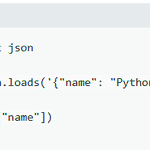
lazy import json
data = json.loads('{"name": "Python"}')
print(data["name"])
Python defers loading json until json is first accessed.
Why does this matter?
• Potentially faster application startup
• Avoids loading unused modules upfront
• Gives you more control over import timing
Have you explored lazy imports yet?
#Python #Python315 #code

𝗗𝗮𝘆 5 𝗼𝗳 30 𝗗𝗮𝘆𝘀 𝗼𝗳 𝗣𝘆𝘁𝗵𝗼𝗻
Explore int, float, bool & str with practical examples and tricky Python challenges.
Why does 0.1 + 0.2 not equal exactly 0.3? Can you predict the outputs?
#Python #LearnPython #30DaysOfPython #DataScience
𝗗𝗮𝘆 4 𝗼𝗳 30 𝗗𝗮𝘆𝘀 𝗼𝗳 𝗣𝘆𝘁𝗵𝗼𝗻
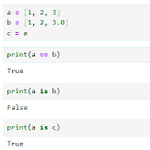
Explore mutability, object references, copying, identity & type conversion with practical examples and tricky Python challenges.
Can you predict the outputs?
#Python #LearnPython #30DaysOfPython #DataScience

𝗗𝗮𝘆 3 𝗼𝗳 30 𝗗𝗮𝘆𝘀 𝗼𝗳 𝗣𝘆𝘁𝗵𝗼𝗻
Explore identity, assignment, bitwise operators & precedence with practical examples and tricky Python challenges.
Can you predict the outputs?
#Python #LearnPython #30DaysOfPython #DataScience

Day 2 of 30 Days Of Python: Python Operators
Explore arithmetic, comparison, logical & membership operators and test your skills with tricky Python challenges.
Can you predict the outputs?
#Python #LearnPython #30DaysOfPython #LearnPython #DataScience
𝗤𝘂𝗶𝗰𝗸 𝗣𝘆𝘁𝗵𝗼𝗻 𝘁𝗲𝘀𝘁 🐍
𝗪𝗵𝗮𝘁’𝘀 𝘁𝗵𝗲 𝗼𝘂𝘁𝗽𝘂𝘁: 𝗔, 𝗕, 𝗖 𝗼𝗿 𝗗?
x = 10
def func():
x += 5
return x
print(func())
Lock in your guess below before checking the answer! 💬
#LearnPython #CodingTips #DeveloperCommunity #SoftwareEngineering #PythonProgramming #CodeNewbie
.
.
.
.
𝗘𝘅𝗽𝗹𝗮𝗻𝗮𝘁𝗶𝗼𝗻:
x = 10 creates a global variable x.
Inside func(), Python sees x += 5.
x += 5 means x = x + 5, so Python treats x as a local variable inside the function.
But the local x has not been assigned a value yet when Python tries to evaluate x + 5.
x += 5 inside the function does not automatically modify the global x.
So, the code raises
𝗨𝗻𝗯𝗼𝘂𝗻𝗱𝗟𝗼𝗰𝗮𝗹𝗘𝗿𝗿𝗼𝗿: cannot access local variable 'x' where it is not associated with a value
