

Husband | Father | Small Business Owner | Indiana State Treasurer | Cybersecurity Expert - I’d probably rather be on horseback.🤠 @TOS_Elliott
Martinsville, Indiana
Joined January 2009
- Tweets1.9K
- Following626
- Followers927
- Likes701


Daniel Elliott retweeted

Ben Affleck says AI is simply matrix multiplication, linear algebra and floating point calculations, and however convincingly it sounds like a person, it has nothing to do with thought, humanity or feeling
“Nor do I believe, and I think it’s important to draw the distinction between what AI does, which is simply predict the next token or the next word in a sentence, then add that word on, run it back to the machine, do a lot of computation and pick the next word."
"That is a very different thing than sentience or thought. And I think we need to be really clear about that because it can be convincingly, in an illusory way, sound like thought or like a person."
"But let’s be real clear. This is matrix multiplication. This is linear algebra. These are floating point calculations. It has nothing to do with thought, humanity, or feeling.”

Ben Affleck reveals he writes Python, understands convolutional neural networks, worked extensively with GPUs, and used his celebrity status to get private looks at Google and OpenAI’s video models
“I’ve always been kind of into computers since I was young. Then, when film started to move from analog film to digital, I became more interested in that aspect of it. The visual-effects workflow for many years has included machine learning, so I can write pretty shitty Python scripts and stuff like that.
“With convolutional neural networks, which were the precursors to what the transformer can do, which is much more computation simultaneously, you would do things like look at what’s called a tensor. That’s the numerical translation of a visual image in numbers, like the batch number, the frame number and the red, green and blue values of each pixel in each frame. It’s just that simple. That numeric is called a tensor.
“You’d use a convolutional neural network to identify patterns that reveal what’s called edge detection or feature extraction, which is identifying patterns well enough to know, this is where the window ledge is, so we can more easily take the green-screen image out and replace it with something.
“That was familiar to me early on because, prior to Artists Equity, I had a small visual-effects company. I’ve worked with GPUs a lot too. The visual-effects guys said, ‘Hey, you should see. There are a couple: Google and this other company, OpenAI, are doing really interesting stuff with transformers in video.’
“I’ve learned that I can actually just call up and go, ‘Hey, it’s Ben Affleck. Can I come see what you’re doing?’ Sometimes people say yes, to my astonishment.”
Daniel Elliott retweeted

Ben Horowitz: “The most dangerous thing going on in AI is Anthropic and Bill Gates”
“Anybody can go say, ‘AI is going to kill us,’ and you'll be on every major news station and every newspaper and so forth.
I think it's extremely dangerous, though, when it comes from Bill Gates because he is so credible, because he did build Microsoft, and people think of him that way, and then certainly he's been a big political donor, so he has a lot of political juice, particularly on the Democratic side.
The big risk that everybody talks about is that the models are going to recursively self-improve, and then they're going to take off, and then they're going to become so smart and run away from us.
Well, what would be the preconditions for that?
Ali Ghodsi from Databricks had a great formulation of, ‘Well, what would be the preconditions for that?’
And he had four preconditions.
One is that the next model has to require fewer GPUs than the last.
The second thing is the next model has to take less time to train.
And then the accuracy of the next model has to be better than the last, so it's got to be a better model.
And then finally, it's gotta keep happening again and again and again.
Zero of those four have been met.
We're not on track for any of those four to be met, and so we're really talking about a risk that's entirely theoretical at this point that we're not mapping to.”
Daniel Elliott retweeted

Palmer Luckey says China made a massive strategic mistake by shutting out American tech giants… and argues the U.S. should take full advantage of it 🇺🇸🇨🇳
“China tricked all of our tech companies and media companies into believing that China was this revenue opportunity. They basically caused our technology innovation economy to decouple from our government, our country, and our national responsibilities.
What they should have done was actually give them a slice of the Chinese pie. They should’ve let Facebook in, given them some money, and then a little more and a little more to keep them on the line.
But instead, they eventually said, ‘Ha ha, we tricked you. We’re not going to allow you in, and we’re going to subsidize ByteDance and TikTok to take over your entire social media industry.’
That was when American tech companies realized China was not their friend.
We should take advantage of this mistake to the fullest.”
Daniel Elliott retweeted

Today’s Democrats embrace fascistic tactics
Vote Republican

ON UCHICAGO CAMPUS: U.S. Senator from Michigan Elissa Slotkin hopes planned political prosecutions of republican leaders will scare young conservatives from getting involved in politics.
@ElissaSlotkin
Daniel Elliott retweeted

This illustrates the point I’ve been making about the limits of centralized approaches to SI safety in cyber.
OpenCode (and earlier Hugging Face) hit the same wall mid-attack: frontier models refused to analyze the very exploits needed for defense because the payloads tripped safety filters. The guardrails backfired.
Meanwhile, the attackers found a way around restrictions to access advanced capabilities. This is not surprising. Chinese models are only about 6–9 months behind the American frontier in cyber. Obviously the U.S. has no jurisdiction over them.
The only durable response is decentralized: make powerful models available so defenders can build and run their own cyber defenses. The only solution to SI-powered cyberattacks is SI-powered cyber defense.


Daniel Elliott retweeted

Wow. I woke up to an impressive number of upset people who apparently don’t understand how LLMs work and can’t cope well with me pointing it out.
An LLM is a statistical next-token prediction model. That’s how it works. It’s an extraordinarily sophisticated calculator performing math you could theoretically do by hand (if you were sufficiently masochistic).
Math doesn’t know what it’s calculating. Pi doesn’t spend its evenings contemplating the nature of circles, and c doesn’t ponder the relationship between matter and energy.
That doesn’t make the results any less accurate, impressive, or useful.
Between inference requests, an LLM isn’t sitting around thinking. It isn’t reconsidering its answers, wondering whether it made a mistake, contemplating its existence, or questioning whether it’s conscious. Its weights remain fixed (it doesn’t learn), and computation resumes when it receives input.
We know this because we designed these systems. The architectures, mathematics, implementations, and research are extensively documented. You can study them yourself.
Of course, some people immediately lean into comparisons of biological intelligence or philosophical debates over consciousness because that is what they know.
But biological intelligence and artificial neural networks are fundamentally different systems. Similar outputs don’t establish equivalent internal experiences.
I experience consciousness directly. I infer that other humans do too because we share biological structures and processes. We don’t have equivalent evidence for an LLM, and nothing about its known operation gives evidence of conscious experience.
Which brings me back to my original point.
To me, understanding is conscious comprehension. It means being aware of information, recognizing its meaning, and experiencing that comprehension. If I wasn’t conscious I could not understand.
We can perform actions unconsciously. We can produce correct results without knowing why they’re correct. But I distinguish those capabilities from consciously understanding what we’re doing.
An LLM can solve complex problems, explain difficult concepts, and produce remarkably accurate information. I give it full credit for those capabilities.
But producing an answer that we rationalize as understanding isn’t the same as experiencing understanding.
You don’t have to agree with my definitions. We can debate functional understanding versus conscious comprehension all day, but that won’t establish whether an LLM actually experiences anything.
The right debate is this…
Could machines exhibit something different from human consciousness, something measurable, meaningful, and worth studying?
I think so, absolutely!
I’m entirely open to discussing “machine consciousness” in terms of observable, testable computational properties. We built these systems, we can instrument them, examine their internal mechanisms, and investigate what they’re capable of.
That seems far more productive than endlessly arguing over whether a machine experiences life the way humans do.
So here’s my question:
How would you define machine consciousness, and more importantly, how would you measure it?

Daniel Elliott retweeted
Are Small Models Really a Threat?
The Anthropic Fear Factory just released a new report warning that small models may be only months away from self-replicating across cheap IoT devices like off-brand Android TV boxes and smart ovens. They say such an AI worm would be hard to shut down since there’s no central kill switch.
We’ve gone from “The Terminator is coming” to “your toaster might kill you.”
But the experiments don’t support the dramatic headlines. They ran a 26B model across 15 $55 TV boxes at 0.39 tokens per second. The end-to-end test used emulated devices with deliberately open ADB ports, so the “hacking” step was trivial. The capable model often ran on a separate server. Agents were harnessed and told to propagate. This is not proof of autonomous rogue AI worms in the wild.
Nor is the threat even novel. Worms that do this without AI already exist. Mirai in 2016 scanned for default credentials and built massive DDoS botnets. Kimwolf has infected over two million devices, mostly cheap Android TV boxes, by hitting open ADB ports.
Small models don’t currently add much that matters on these targets. The bottleneck has never been figuring out the device. It’s the huge number of devices that ship with open ports, default passwords, and no patching. Traditional worms already exploit that at scale.
A practical attacker would use the best models available offline to design a better traditional worm, then ship the lean binary. You get the intelligence benefit at design time without dragging a slow, heavy model along with every infection. Embedding a weak model in the payload is the worse option for anyone who actually wants the largest, fastest botnet.
The timing of Anthropic’s latest scare campaign is hard to ignore. The day before, Brian Armstrong posted that Coinbase fine-tuned an open-weight small model (Qwen-3.5-9B) on proprietary fraud data. It beat frontier models, including Anthropic’s own Opus 4.5, while being faster and much cheaper. In testing it cut fraudulent transactions by about 30%.
This is the emerging pattern. For narrow enterprise workloads you don’t need a general superintelligence. You need a small specialist model trained on your own data. Cheaper to run, especially as compute gets tighter, and often better on the metric that matters. That is a direct threat to the frontier-company model of selling access to ever-larger general models.
Safety advocates should be welcoming this development. If the real concern is existential risk from ever-larger frontier systems — the ones that could theoretically do sustained autonomous R&D or become hard to control — then a shift toward smaller specialized models is the safer outcome.
Small models specialized on fraud detection or support tickets are not pushing the frontier. They are not in the category of systems that could become a new species. The theoretical loss-of-control risk is created by models getting bigger and more generally capable.
Safety advocates focused on those risks should welcome companies having a cheaper alternative to constantly scaling general models. Instead we get dramatic warnings about small models at the exact moment they are starting to take real enterprise share from closed-model companies like Anthropic.

Daniel Elliott retweeted
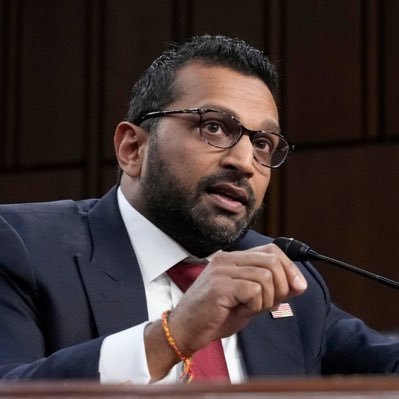
North Korea is NOT going to use American companies as ATMs to bankroll its regime.
12 indictments. Nearly 190 devices seized. 40+ suspected laptop farms targeted across Texas.
The @FBI and @TheJusticeDept are dismantling these networks and holding those responsible accountable.
Outstanding coordination with CrowdStrike and our private sector partners.

Thousands of North Korean IT workers are infiltrating companies across the world, generating millions of dollars for the North Korean regime and gaining access to sensitive corporate networks.
Posing as legitimate remote employees, they use stolen identities, earn salaries from unwitting companies, exploit their access to steal data, and funnel their earnings back to North Korea.
The scheme relies on a network of facilitators – including Americans – who are paid to appear on camera, participate in job interviews, verify fraudulent identities, and keep employment-related devices connected to the internet at personal residences.
U.S. companies should recognize the scale and persistence of the threat and review our updated @FBI PSA for mitigation guidance: ic3.gov/PSA/2026/PSA261013
Daniel Elliott retweeted

If you want to know why America is polarized, it’s the fault of the media.
Yesterday, the Free Beacon, a conservative outlet, caught Abdul Sayed in a lie when Abdul denied his family had a connection to the Muslim Brotherhood. The FB showed a tweet by his own sister saying their mother belonged to the MB.
The revelation that Abdul lied about his family ties to a radical Islamic terrorist group was ignored by NBC, ABC, CBS’s nightly news shows. The NYT and WP haven’t covered it.
This should be a screaming front page story. Instead, the MSM runs cover for Abdul.
The American people just want to know the truth about their politicians. Instead, the media are helping Abdul cover up the truth.
Abdul has a lot to hide. It’s a tragedy the MSM is part of the team helping him hide it.


Daniel Elliott retweeted

Marc Andreessen reveals why housing, health care, and education keep getting more expensive while everything else gets cheaper
"There's basically three components to the American dream. A house near great job opportunities, great health care for you and your family, and sending your kids to good schools"
"If you disaggregate the economy over the last 25 years, everything that technology touches basically collapses in price. Television sets, computer games, anything with electronics in it. But if you chart housing, education, and health care, the prices of those things are skyrocketing"
"The government restricts supply, zoning laws and university certifications. And then the government responds to the political pressure caused by the rising prices by subsidizing demand. And of course, if you subsidize demand and a fixed supply, you get skyrocketing prices"
Daniel Elliott retweeted
Anthropic says it has reduced the data harvested from Claude in distillation attacks by around 90–99%. I congratulate them on this achievement.
It’s consistent with the point I made a few months ago (All-In Ep. 282): Anthropic, not the government, was in the best position to stop distillation of its own models. Once the horse is out of the barn, there’s limited value in after-the-fact government action.
At the time there was a major push in Washington to restrict open models on IP grounds. The threat looked serious enough that 50 companies — including Nvidia, Microsoft, Meta, IBM, Palantir, and Dell — published an open letter in defense of open-weight models. Jensen Huang promoted it in his first-ever X post. Nearly 200 startups sent a similar letter.
I argued that restricting open models risked removing the incentive for closed-model companies to solve the problem themselves — and could reward negligence by stifling competition while they continued collecting revenue from distillation. The administration did not impose those restrictions.
Now we see the result. Anthropic invested in defenses and they worked. Not every technical challenge is a reason to run to Washington for new regulation.

Daniel Elliott retweeted
Important piece from Microsoft AI CEO @mustafasuleyman. Training models to think of themselves as human (as Anthropic does Claude) with concepts of an inner self, psychological wellbeing, rights and presumably grievances, is a potential existential risk.
project-syndicate.org/onpoin…

Daniel Elliott retweeted

Great insight into the lawfare undertaken by Boulder, Colorado who are trying to rewrite federal environmental law to punish American energy companies using the courts. xitter.cf/JCNSeverino/status/210…

Colorado’s true intentions in Suncor v. Boulder are becoming clear: use state torts to establish national energy policy through the courts.
I joined the @GuyBensonShow to discuss.
Daniel Elliott retweeted
An ISIS-inspired terrorist allegedly wanted to slaughter 30–60 innocent Americans at the Mall of America.
He got an AK-style rifle and 200 rounds.
He also got the FBI.
ARRESTED before he could hurt a single American.
This FBI doesn’t wait for terrorists to attack. We find them, disrupt them, and put them in handcuffs.
Outstanding work by our Minneapolis team.
We are staying on offense. America First. ALWAYS.
-DKP🇺🇸

BREAKING: President Trump reacts after the FBI stops an alleged ISIS-inspired mass shooting plot targeting Minnesota’s Mall of America.
“The FBI did a great job.”
Federal prosecutors say 18-year-old Sheikhdoon Abdullahi Mohamud pledged allegiance to ISIS and allegedly planned to kill 30 to 60 people at an Oct. 24 event.
Authorities arrested Mohamud after he allegedly bought an AK-47 and 200 rounds of ammunition from an undercover FBI agent.
Daniel Elliott retweeted

Socialism is so good that it made the people with the most fertile soil starve to death (Soviet Union)
And it made the country with the largest oil reserves run out of gasoline (Venezuela)


Daniel Elliott retweeted
California's version of the IRS is preparing to go after billionaires who have fled the state, forcing them to pay California taxes anyway.

Daniel Elliott retweeted
David Sacks: The Economy Is Stronger Than You Think
“There's been a tremendous amount of economic data in just the last week or two showing that the economy is much stronger than people are giving it credit for.
So first of all, Q2 GDP was revised up to 2.2% from 1.5%, so that's basically a 50% increase. Economists had expected no revision. Q1 was also revised up to 2.5% from 2.1%. And if you look at the Q3 growth, it's tracking well above that. The Atlanta Fed GDPNow is showing around 3.7% as of late last week.
And then there was also some good news on inflation, we saw that core PCE just came in at 3.0% versus 3.3% expected. So inflation is still a bit too high, but actually it is cooling and beating expectations.
And then finally, you look at manufacturing. We're seeing a huge wave of re-industrialization in this country. A couple of the measures are the Chicago PMI and then ISM Manufacturing. They both are well into expansion territory and beating forecasts.
Just one last point, let's talk about poverty for a second, because I want to address the idea that this is just a K-shaped recovery.
So if you look at US household income, it's now at record high. The median household income is almost $90,000, and after-tax household income is growing again in the second Trump term, it's averaged 3.1% a year. In Trump 47, it was 3.9%, in Trump 45, and it was -1.2% in Biden's term as a four-year average. So we're seeing that after-tax household incomes have risen by 3.1%, and the poverty rate in the US has fallen to its lowest level in history, 10.2%.
So the poverty rate, the child poverty rate, these are all at historic lows. The average household's real income after inflation, after taxes, is increasing for the first time in years.
And you've got this SI boom that the Wall Street Journal said is bigger than the railroads, the canals, and the electric grid combined, and all these things are basically fueling strong growth in the economy.
And again, I would just dispute the K-shaped narrative because the poor are benefiting and the average household are benefiting as well.”
Daniel Elliott retweeted

Americans first, always. Covertly laying off American workers to hire foreigners is wrong, and I’m glad that @VP is making sure American businesses are investing in American workers first!

Vice President JD Vance announces the suspension of the PERM Program for Microsoft:
"Thanks to an ongoing investigation, we have decided to suspend the PERM program for Microsoft, which means they will no longer be able to take those H-1Bs and apply for permanent resident status within the United States of America. Now our message to Microsoft and to any other foreign or domestic corporation is quite simple. We obviously want you to thrive in the United States of America. We want people to invest in the United States of America, particularly the American technology sector. We’re the biggest boosters of your industry. We want you to continue to grow and to employ a lot of people, but we want you to employ American workers. And so our message to Microsoft is, you’re great American company, but you’ve got to hire great American workers. You cannot lay off American workers and then replace them with foreign indentured servants."