






Verdict first: the local Qwen4-FN runs at GPT-6.1 Sol / Claude Sonnet 5.5 level, and the Qwen4-27B runs at GPT-6 Luna level — matching Sonnet on knowledge tasks like BioMysteryBench. That's the headline; the rest is how I got there and where the numbers are soft.
WHAT LAUNCHED
Qwen4-Max is generally available on Alibaba Cloud Model Studio, pay-as-you-go: $1.50 per million input tokens, $4.50 per million output, $0.075 for implicit caching. 1M-token context, a 2.4T-parameter backbone, thinking on by default (high), output cap 131,072 tokens — 262,144 including thinking. The preview (qwen4-max-preview) retires November 25.
It's API-only. No local weights, and no date for the smaller models — Alibaba only says they "will be open-sourced later." A third-party tracker (BeatAPI, not official) guesses 27B weights in late November to early December, Flash/Plus in December. A third-party Qwen4-27B GGUF repo that appeared on Hugging Face on Nov 9 has a README only, no weights. Placeholder — don't download it.
HOW I PROJECTED FLASH AND 27B
No official numbers exist for Qwen4-Flash or Qwen4-27B, so I projected them from the Qwen3.8 generation: the measured gaps between Max, Flash-Next, and 27B on the same benchmarks, applied as ratios to Qwen4-Max's official scores. DeepSWE, Terminal-Bench, JobBench, HLE, and GPQA served as the rulers, mapped across the 16 benchmarks in Alibaba's official chart. Every predicted cell is marked * in the table.
THE NUMBERS
Flash tracks Max on most benchmarks, and even edges it on DeepSWE (78.5 vs 75.7), CodeArena (1815 vs 1750), and ProgramBench (32.7 vs 31.5).
27B lands roughly at Qwen3.8-Max level overall — but the gap widens sharply on agent and terminal work. Terminal-Bench is where it falls off a cliff: ~7.0 against Max's 48.5. Same pattern as last generation, where 3.8's 27B scored 5.6 against Max's 38.9 there.
WHERE THEY SIT
• Flash ≈ GPT-6.1 Sol, slightly below GPT-6 Astra, above GPT-6 Luna on every comparable benchmark, below Claude Opus 5.5 and Sonnet 5.5.
• Against Opus 5.5, Flash wins or ties 5 of 16 (DeepSWE, CodeArena, HLAB-Vals, BioMysteryBench, HealthBench) and trails on the other 11 — Terminal-Bench (31.5 vs 59.6) and ProgramBench (32.7 vs 65.0) are the widest gaps.
• Sonnet 5.5 runs 2–3 points below Opus on most things but holds the highest Terminal-Bench score in the Claude family (70.6%).
• GPT-6.1 Terra is a different animal — a computer-use specialist, not a coding model — so it doesn't map onto Flash directly. On Agents' Last Exam, OpenAI says it matches Astra at a tenth of the price and 3x the speed.
• 27B ≈ GPT-6 Luna tier, slightly below it: DeepSWE 56.4 vs 66.6, Terminal-Bench 7.0 vs 13.6, HLE 36.5 vs 38.5. On knowledge tasks it matches Sonnet-level scores (BioMysteryBench 81.9 vs Opus's 81.9).
WHAT THIS MEANS LOCALLY
Nothing changes. Max is API-only. The local machines keep running what they run; the thing to wait for is 27B weights.
DISCLAIMERS — READ BEFORE QUOTING
• Every Qwen4-Flash and Qwen4-27B number here is my prediction, not an official measurement. The official chart covers only Qwen4-Max, Qwen3.8-Max, Opus 5.5, GPT-6.1 Sol, GPT-6 Astra, and Kimi K3.1.
• The Artificial Analysis row has no measurement behind it. As of today there is no Qwen4 score on Artificial Analysis or LMArena, and the "Qwen4-Max AA 53" image circulating online cannot be verified. My earlier estimate of ~55 for Qwen4-Max had no measured basis — the AA row is marked "no measurement." Do not quote it as a score. Even Qwen3.8-Max's own AA score varies by version (39.89 on v4.3.2; 34 or 45 under other versions).
• Two sources disagree on Qwen3.8-Max DeepSWE (vendor table: 56.6; Qwen4's official chart: 69.3), which is why the 27B DeepSWE cell is a wide range.
• Luna's DeepSWE (66.6) is OpenAI's own claim, not independently verified.
• These are full-precision hosted numbers. Local quantized versions (27B IQ4_XS, Flash IQ3_S) will score lower, Flash more so at 3-bit.
• Qwen3.8-27B's default xhigh overthinking — one user watched it spend 21 minutes drawing an SVG — will probably carry over to Qwen4-27B. Turn the thinking down for local use.
• Vendors measure with different effort levels and harnesses, so small gaps are noise. Treat this as direction, not a verdict. Recalibration comes when AA/LMArena publish the first independent Qwen4 scores and when the weights actually land.
xitter.cf/alibaba_qwen/status/21…


📢 Meet Qwen4-Max, your new AI teammate for work, creativity, and discovery!
Qwen4-Max is built on a new MoE architecture with native vision and a 1M-token context window.
Highlights:
- Outperforms Qwen3.8-Max with up to ~50% fewer tokens, while average cost per task drops over 60% in our internal evaluation.
- Advances real-world productivity through greater proficiency with professional tools, stronger long-horizon execution, and higher-quality deliverables.
- Handles real tasks, including 3D modeling, game development, manufacturing, finance, law, healthcare, and frontier scientific discovery.
- $1.5/M tokens for input, $4.5/M tokens for output, and $0.075/M tokens for implicit caching — all lower than Qwen3.8-Max, with implicit caching down by 70%.
The API is live on QwenCloud. You can also try Qwen4-Max on Qwen Studio, QwenWork and Qoder.
Start building today! 🚀
- Blog: qwen.ai/blog?id=qwen4-max
- API: qwencloud.com/models/qwen4-m…
- Token Plan: qwencloud.com/pricing/token-…
More to come! The open weights of smaller Qwen4 models will be released. Stay tuned. 👀

1
1
285
Dylan Sun retweeted

📢 Meet Qwen4-Max, your new AI teammate for work, creativity, and discovery!
Qwen4-Max is built on a new MoE architecture with native vision and a 1M-token context window.
Highlights:
- Outperforms Qwen3.8-Max with up to ~50% fewer tokens, while average cost per task drops over 60% in our internal evaluation.
- Advances real-world productivity through greater proficiency with professional tools, stronger long-horizon execution, and higher-quality deliverables.
- Handles real tasks, including 3D modeling, game development, manufacturing, finance, law, healthcare, and frontier scientific discovery.
- $1.5/M tokens for input, $4.5/M tokens for output, and $0.075/M tokens for implicit caching — all lower than Qwen3.8-Max, with implicit caching down by 70%.
The API is live on QwenCloud. You can also try Qwen4-Max on Qwen Studio, QwenWork and Qoder.
Start building today! 🚀
- Blog: qwen.ai/blog?id=qwen4-max
- API: qwencloud.com/models/qwen4-m…
- Token Plan: qwencloud.com/pricing/token-…
More to come! The open weights of smaller Qwen4 models will be released. Stay tuned. 👀
Edge0-145B-NVFP4 is a 145B MoE derived from Qwen3.8-Flash-Next, designed for local GPU+RAM inference using edge0-strata, a fork of Strata.
My RTX 5090 tests favored Qwen3.8 Flash Next UD-IQ4_XS-v31, with 151.5 vs 104.7 tok/s and 37/40 vs 35/40.
I'm not recommending Edge0 yet. Watching updates. v3.1 is my pick for speed and quality.
github.com/Dylan997S/benchma…


Introducing Edge0-145B and Edge0-120B, @Edge0_AI’s first device-native 100B-class foundation models with open weights.
Cloud-level intelligence on your laptop. Free, offline, and fast enough for real vibe coding.
- Smart: beats Claude Opus 4.6 on Terminal-Bench 2.1 (86.5% vs. 78.2%)
- Light: needs just 29G memory, 1/3 of a standard setup (100G+)
- Fast: decodes 75+ toks/s, prefills 1050+ toks/s on RTX Spark and Mac.
- Steady: handles 128K–256K tokens of context without slowing down, even on long tasks
Frontier-class agentic coding. No cloud API. No token bill. Your code and data never leave your machine.
Open weights are live on @huggingface. Run it locally or plug it into your favorite coding agent.
1
137
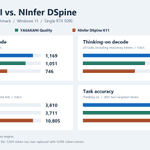
If you're doing local inference on a 5090, look at YASAKANI. I measured 1,169 tok/s on long JSONL and put the NInfer DSpine comparison in the repo too — the scripts run as-is: github.com/Dylan997S/yasakan…
Good job to @yasakani_dev


世界最速※のAIエンジン「YASAKANI」を公開しました。
対応:RTX 5090/Windows
RTX 5090以外では動きません。
私はこれで終わりだとは考えていません。
ここから更なる生成速度と圧縮品質の向上、対応GPUの拡大を目指しています。
日本人としてAI技術開発の最前線に立ちたい。
ご支援のほどよろしくお願い致します。
クラファン
camp-fire.jp/projects/992233…
ソースコード
github.com/yasakani-dev/yasa…
モデル
huggingface.co/yasakani-dev
【YASAKANIとは】
WindowsとRTX 5090 1枚でQwen3.8-27Bを高速に動かすローカルAIエンジンです。オープンソース(Apache-2.0)で無料で使えます。ダウンロード後はオフラインで動きます。個人で開発しています。
【動画について】
動画の作品は全て、YASAKANIで動かしたAI(Qwen3.8-27B)が書いたHTMLです。
【モデルは2種類】
・品質モデル(推奨):12.37GB
・最速モデル:10.31GB
【始め方】
1. GitHubのReleasesからyasakani-quickstart-0.1.0.zi…をダウンロード
2. 半角英数字だけのフォルダーに展開(例:C:\yasakani)
3. START.cmdをダブルクリック
PCの確認、エンジンとモデル(約13〜15GB)のダウンロード、動作チェックまで自動で進みます。PythonやNVIDIAドライバーが無い場合は画面に案内が出ます。
【できること】
・ブラウザーやターミナルでチャット
・OpenAI互換サーバー(対応アプリや開発ツールから接続できます)
・エージェント画面(AIがファイルを読み書きして作業します。試作版)
・生成速度の計測
【動作環境】
・GPU:NVIDIA GeForce RTX 5090(32GB)
・OS:Windows 11(64bit)
・ソフト:Python 3.10以上、NVIDIAドライバー、Visual C++ランタイム
・空き容量:20GB
【未対応】
Linux、macOS、AMDのGPU、RTX 5090以外のNVIDIAのGPU、他のモデル。
対応GPUを増やすことがクラウドファンディングの目的です。
※RTX 5090 1枚・Qwen3.8-27B・単一生成。下の引用ポストに掲載した8エンジン・7分野の比較条件での記録です。
エンジンについての詳細↓
xitter.cf/yasakani_dev/status/21…


1
1
462
Dylan Sun retweeted

Most people are not special, rational, or particularly good. They're tribal primates running social scripts, ranking status, and defending comforting lies over evidence. Intelligence, drive, and outcomes are heavily genetic. Equality of result is a fantasy. The average person will never produce anything of lasting value, and the world is carried by a thin minority they resent.
Single RTX 5090 · 2,439.6 tok/s across 32 streams
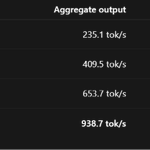
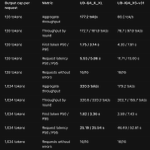
I’ve updated NInfer DSpine for RTX 5090 to support 32 concurrent requests on Windows. In the release benchmark, 32 Python coding requests each generated 2,048 tokens.
github.com/Dylan997S/ninfer-…

I added NVFP4 DSpine K11 to NInfer Windows (RTX 5090).
1-stream replay / 8-way total (tok/s)
Python — 554.2 / 1,674.8
English — 179.5 / 684.4
1-stream prefill (1,716 tokens) — 12,977 tok/s
Matched 2K vs DFlash2 K9 (C1/C8 total) — Python +22%/+7%, prose -12%/-16%.
DSpine by Tencent. NInfer by Neroued. Windows port by headpiece747.
github.com/Dylan997S/ninfer-…
Go,Get a 5090.
In the next week or two:
Terra-level local intelligence,
Over 1000 TPS
With Qwen4.0 27B
YASAKANIエンジンで、RTX 5090 の単一デコード 1,220 tok/s を達成!!
今回は世界最速のエンジンである証明をしました。
RTX 5090 1枚・Qwen3.8-27B・1本の生成で、公開されている最速記録を5本すべて上回った(定格・同じ土俵の条件で、最大2.5倍)。
「5090で最速」を名乗る MegaCapybara 1.39 とは、同じPC・定格・同じ問題で直接対決。動画は実際の生成を、記録した時刻どおりに再生しています。
■ 公開記録 → YASAKANI(tok/s)
- mkyt(JSON)500 → 1,220(2.44倍)
- NInfer(構造化3問)377 → 937(2.49倍)
- TensorFold(英語)298 → 424(1.42倍)
- ignis(コード)491 → 532(1.08倍)
- MegaCapybara(コード)540※ → 498(同じPC・定格では466、1.07倍)
※540はメモリ+20% OCと自前のプロンプトでの値
■ 同じPCで直接対決(MegaCapybara 1.39 Tiny、思考オフ・greedy)
- JSONL 160行:1,220 vs 635(1.9倍)
- 英語の推理小説:424 vs 253(1.7倍)
- 中→英 翻訳:613 vs 366(1.7倍)
- SQL:745 vs 603(1.2倍)
- コード編集(ファイル全文の書き戻し):1,241 vs 440(2.82倍)
- JSONL 8,192トークン:1,260 vs 666(1.89倍)
12問の平均でも、構造化1.4倍・散文1.6倍・翻訳1.6倍。
■ エージェントの仕事ほど速い
コード編集は「約4,700トークンのファイルを1か所直して、全文を返す」課題。AIエージェントが毎日やっている作業です。
3つのエンジン(YASAKANI 高速版・標準版・MegaCapybara)の出力は完全に同じ(4,711トークンが一致)で、違うのは速さだけ:1,241 / 1,136 / 440 tok/s。
■ Qwen推奨設定(思考あり・温度1.0)でも
雑談・説明・コード・数学・JSON・長文入力の6課題の中央値:YASAKANI 381、SGLang 184、vLLM 183、llama.cpp 147(10/18、同じPC、他社は課題ごとに一番速い設定)。
この条件で250 tok/sを超える公開記録は、10月中旬の調査では見つかっていません。
■ 長い文脈でも
25万トークンの文書を140秒で読み、続きの返事は0.3秒で開始。25万トークンを積んだ状態でも152 tok/s。262,144トークンの窓でVRAM 24.9GB(32GBのカードに収まる)。(10/30計測)
■ 速いだけではない
元モデルとのズレ(KLD):標準版 12.4GB で 0.021。MegaCapybara Tiny は 0.058(16.6GB)。
1,220 は高速版(11.7GB、KLD 0.044)。標準版でも 1,114。
■ 正直に書いておくこと
- ゼロから書くコードは僅差(1.04〜1.08倍)。540はOC込みの値で、定格では向こうも406〜533
- MegaCapybara以外の相手の数字は各自の公表値(別のPC・別のプロンプト・別の日)。同じPCで測ったのはMegaCapybaraだけ
- 中国語の物語は英語より遅い(176〜302 tok/s)
- 第三者の再現は公開後。それまでは「この条件で測って」と言われれば、同じPCで測って出します
■ 測り方
RTX 5090 ×1(定格600W・OCなし)、Windows、2026-11-03。NInferが公開している12問(コード3・物語3・翻訳3・構造化3)+自作のコード編集・長いJSONL。上限4,096トークン(長いJSONLは8,192)、思考オフ、greedy。速度=(出力トークン数−1)÷生成時間(読み込みは除く)。MegaCapybaraは公開版1.39を公式の1会話設定で起動し、向こうのサーバーの表示とこちらの計測は一致。
エンジンもモデル形式も自作。オープンソース・無料で公開予定。日程はこのアカウントで。
#YASAKANI
I added NVFP4 DSpine K11 to NInfer Windows (RTX 5090).
1-stream replay / 8-way total (tok/s)
Python — 554.2 / 1,674.8
English — 179.5 / 684.4
1-stream prefill (1,716 tokens) — 12,977 tok/s
Matched 2K vs DFlash2 K9 (C1/C8 total) — Python +22%/+7%, prose -12%/-16%.
DSpine by Tencent. NInfer by Neroued. Windows port by headpiece747.
github.com/Dylan997S/ninfer-…
Classical music. This is so fun

my vocal synth models the vocal tract as a network of branching acoustic tubes, unlike vocaloid which stitches together and pitch-shifts phoneme recordings. still working on improving naturalness by tuning it against recordings of real singers, but I'm already impressed at how cool it sounds!
280
4× AMD R9700, 128GB total VRAM, running Qwen3.8-Flash-Next — here are my measured speeds with Radiance:
🚀 217 tokens/s single-client decode
⚡ 1,094 tokens/s total output with 16 concurrent clients
📥 7,787 tokens/s effective prefill with a cold 16K prompt
The first two figures use short prompts. Maximum context was configured at 256K.
Long-context results:
• 64K input × 16 clients: 106.6 tokens/s total output
• ~240K input, single client: 190.7 tokens/s decode, 33.5s to first token
On the same four GPUs, Strata 0.1.58 with UD-Q4_K_XL delivered 139 / 330 / 2,777 tokens/s for the three headline metrics. Radiance was 1.56× / 3.32× / 2.80× faster under these configurations.
185/185 Radiance requests completed; 370/370 across both engines. Matched prompts, thinking disabled, a 1,024-token output cap, and zero prefix-cache hits in the main speed tests.
Different quantizations, so this is not a quality-equivalence claim. Radiance used 16 slots; Strata used 8 active lanes, so its 16-client results include queueing. Total throughput includes prefill and queueing; effective prefill is uncached input tokens / API TTFT, not kernel-only throughput.
@coldniko — sharing these four-card results as performance feedback. Would love to see Radiance available as an optional backend in Strata.
Full report, configurations and measured data:
github.com/Dylan997S/benchma…

ALT 4 AMD R9700 GPUs running Qwen3.8-Flash-Next with Radiance 1.15.1, exact TP4 and 16 request slots. Short-input single-client decode: 217 tokens/s. Short-input 16-client total output: 1,094 tokens/s. Effective cold 16K prefill: 7,787 tokens/s. At 64K input with 16 clients: 106.6 tokens/s total output. At approximately 240K input with one client: 190.7 tokens/s decode and 33.5 seconds to first token. Configured maximum context: 256K. Thinking disabled, 1,024-token output cap, zero prefix-cache hits. All 185 Radiance speed-test requests completed. Effective prefill is API-visible, not kernel-only throughput.
1
247
DeepSeek-V4.1-Flash, running at home on my RTX 5090.
~27 tok/s decode, ~225 tok/s prefill, 274 GB of local weights.
Speed still needs work, but this is very promising. Looking forward to more.@coldniko
muse.ai/s/report-xoj6qgwxvxx…


Two Strata upgrades in one day on my RTX 5090 — both check out. 🙏
v0.1.27 (Qwen3.8-Flash-Next, IQ3_S, 256K ctx, KV int8):
• Decode 104.3 → 119.2 tok/s (+14%)
• Prefill 1657 → 1989 tok/s (+20%)
Zero weight changes. The v0.1.23 kernel fusion is real on 5090.


New version out with some fixes & improvements. Major version coming soon :)
Ps: Guys stop with so much PRs 🥲
github.com/Niko1221/Strata/r…

--calibrate found two surprises on my box: pcie-frac 0.55→0.20 (default overestimates PCIe traffic), spec-min-p 0.5→0.70 (stricter speculation is faster). +6% on the micro-prompt, roughly flat on Chinese prompts — kept it anyway.
1
141