

FPIC utilizes a holistic approach to education serving Indigenous students, focusing on their physical, mental, emotional, and spiritual well-being.
- Tweets293
- Following60
- Followers71
- Likes66







ALT text: In 2021 237,420 Indigenous people reported speaking an Indigenous language. This represents 13.1% of the Indigenous population and about 0.65% of the entire Canadian population. illustration: outline of the side profile of a speaking person

ALT text: Many of these languages existed only as spoken languages. However, at least two (Ojibwe and Mi'kmaq) had pre-colonial writing systems. There are also several forms of modern written Indigenous language typically referred to as Syllabics. illustration of a squiggly line and a pen.

ALT text: At least three kinds of indigenous sign language are also used across Canada. Plains Sign Language, Plateau Sign Language, and Inuit Sign Language. illustration of 2 hands gesturing vaguely.

ALT text: International Mother Language Day. February 21st logo: the first peoples Indigenous Centre graphic: outline of the side profile of a speaking person.

ALT text: International Mother Language Day. Celebrated on February 21st, IML Day was established by the United Nations Educational, Scientific and Cultural Organization (UNESCO) to promote and recognize linguistic diversity around the globe and promote multilingualism. Within the bounds of Canada, there are over 70 Indigenous languages. illustration: outline of the side profile of a speaking person

ALT slide 3 text: These languages belong to 12 larger language families. Algonquian, Inuit, Athabaskan, Siouan, Salish, Tsimshian, Wakashan, Iroquoian, Michif, Tlingit, Kutenai and Haida. illustration: outline of the side profile of a speaking person


ALT on a light brown background. the first people's indigenous centre logo. title: Contemporary Afro-Indigenous identity 1/7 glossary text: This is the first of seven posts in a series exploring Contemporary Afro-Indigenous identity to start we would like to provide a small glossary of concepts and terms that are important to understand as we learn about this nuanced topic.

ALT title: blood quantum text: Blood quantum is a controversial way of measuring the amount of Indigenous ancestry in a person. It's used to determine a person's legal rights to resources allocated to native people in Canada. It is viewed as controversial because the initial assignments of many people's blood quantum were arbitrary and/or inaccurate. Some feel blood quantum has the end goal of "erasing" Indigenous people as they intermarry into other cultures.

ALT title: the one-drop rule text: The one-drop rule was a legal principle of racial classification that was prominent in the 20th-century United States. It states that even one distant Black ancestor (one drop of Black blood) was all it took to make someone black. This line of thinking was used to enforce racist laws and uphold segregation.

ALT title: the concept of race 1/2: text: Race is a relatively new social and political construct. The concept of race was not regularly used until the 1600s. At this time it was largely used to group people of shared geographic location or cultural practice. The modern concepts of "Whiteness", "Blackness", or any other overarching race did not emerge until it was politically advantageous to separate people during the colonization of the Americas.

ALT title: the concept of race 2/2: text At this time race was switched to a categorization based on phenotypic (physical) features. The concept of race we have now is fluid and changes regularly as people and cultures do and is by no means scientific or consistent. No race has been identified as having any biological genetic difference.

ALT citations Hollinger, D. A. (2005). The one drop rule & the one hate rule. Daedalus, 134(1), 18-28. Retrieved from http://search.proquest.com.dproxy.library.dc-uoit.ca/scholarly-journals/one-drop-rule-amp-hate/docview/210579647/se-2 Race. (n.d.). Retrieved from https://www.genome.gov/genetics-glossary/Race Historical foundations of race. (n.d.). Retrieved from https://nmaahc.si.edu/learn/talking-about-race/topics/historical-foundations-race Historical foundations of race. (n.d.). Retrieved from https://nmaahc.si.edu/learn/talking-about-race/topics/historical-foundations-race Ellinghaus, K. (2017). Blood Will Tell: Native Americans and Assimilation Policy (1st ed.). Lincoln: UNP - Nebraska. https://doi.org/10.2307/j.ctt1qv5ptw


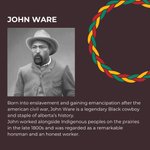
ALT Title: John Ware Image: black and white photo of a Black man wearing rancher clothes. Text: Born into enslavement and gaining emancipation after the american civil war, John Ware is a legendary Black cowboy and staple of alberta’s history. John worked alongside Indigenous peoples on the prairies in the late 1800s and was regarded as a remarkable horsman and an honest worker.


ALT Text: Bears have particular significance to the anishnawbe (and many other indigenous peoples) for several reasons. Illustration of the two cubs. Text: One bing their strong maternal and protective instincts, and how htis symbolizes protection and strength. Another is the significance bears play in our traditional medicines.

ALT Illustration of blueberries and a fish. Text: Around bear moon, in thanks for the medicines and teachings ceremonies are held to honour the bear. Songs are sung and traditionally barries and fish are left as offerings.

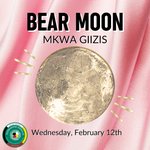
ALT Background is a pink silk cloth. This will be the same for all slides. Title: bear moon. Mkwa Giizis. Below: cut out photo of the full moon. Text: wednesday, february 12th. Bottom left corner holds the First Peopls Indigenous Center.

ALT Text: Winter is a time of rest for the earth and beings that inhabit it. February is when this period of rest comes to an end. Bear moon is just around the time when mother bears first bring their now slightly grown cubs out of their dens for the first time. Illustration of a mother bear, a cub running, and a cub standing on their hind legs.

ALT Illustrations of mountains, trees, and birds with the same bear family from before in the center. Text: When a mother bear brings her cubs out she is introducing them to all the plants, animals, and spirits that will help sustain them. It is the first start of new life.

ALT Text: Braided Histories: Black and Indigenous Connections

ALT Text: ½ THE Bonga FAMILY Three old black and white photos each of a single person, two men and a woman. The photos are captioned with their names. Marguerite (Bonga) Fahlstrom, George Bonga, Stephen Bonga.

ALT Text: 2/2 Today Bungo Township in Cass County, Minnesota is named after George and his family as a tribute to the legacy they left. George and Stephen went into the fur trade. George also worked as a translator for the American government. He was involved in court cases and treaty negotiations. Marguerite married a Swedish tradesman and was one of the few free black women living and working in Fort Snelling while she lived there.

ALT Graphic of a braid what is made of yellow red and green strands Text: It is impossible to see the full picture of either Black or Indigenous history on Turtle Island without understanding that they are deeply intertwined. Over this month we want to expand on several topics regarding these stories and connections, but for now, heres some history tidbits.

ALT Title: Mathieu Da Costa Image: realistic illustration of a Black man wearing a wide-brim hat. Text: Historians often sight him as the first recorded black man in Canada. Mathieu was a free Black African man who worked as an interpriter between settlers and indigenous groups in the early 1600s. Da Costa’s life is fairly shrouded in mystery as documentation on him suddenly stops after one of his employers filed a lawsuit against him.

ALT Title: Crispus Attucks Image: black and white illustration of a Black man wearing formal clothes. Text: Born roughly 1723 he was an American sailor of African and Native American descent. He is traditionally regarded as the first person killed in the Boston Massacre, and as a result, the first American killed in the American Revolution.

ALT Title: Mary Ann Shadd Cary Image: black and white image of a woman. Text: Educator, Publisher, Lawyer, and Abolitionist. Mary Ann was the first Black women n North America to publish and edit a newspaper, The Provincial Freeman. She testified before Congress in support of womens voting right and founded the Colored Women's Progressive Franchise in 1880. Mary Ann is remembered as a vocal and crucial activist for Black and Indigenous rights as well as women’s rights and actively participated in aiding the Underground Railroad.

ALT Title: John Ware Image: black and white photo of a Black man wearing rancher clothes. Text: Born into enslavement and gaining emancipation after the american civil war, John Ware is a legendary Black cowboy and staple of alberta’s history. John worked alongside Indigenous peoples on the prairies in the late 1800s and was regarded as a remarkable horseman and an honest worker.


ALT Graphic of a man facing a silhouette version of himself. Text: Once you examin your own truths you are able to begin being honest with others. You can make decisions and speak words that are honest to your truth.

ALT Text: Sabe teaches us not only about ourselves but how being true to ourselves is crucial to being in community with others and living a good life. Below, a graphic of a length of chain. The chain is blue except for the center one which is orange. Below in orange the text: your strength. Next to an = sign and blue text that says community strenth.

ALT Text: He is also an example of a common indigenous learning philosophy that includes individuals discovering conclusions for themselves. Graphic of a man sitting and thinking with sabe behind him. A thought bubble appears over his head with an orange heart in it. His chest holds another orange heart. Text: the idea being that a lesson will be more impactful if every individual has seen it for themselves in a way that is personal and impactful to them

ALT Title: Honesty. Gwayakwaadiziwin. An illistration of sabe/a bigfoot like creature. Text: Living honestly, to others and yourselves walking, speaking, and acting in truth.

ALT Text: Sabe gives us the teaching of honesty. Sabe is often said to appear to people when they are in need of guidance. Illustration: an orange silhouette of a person with sabe behind them. To the right a dotted path that leads to a heart. Below, text: For this reason sabe is often associated with personal journeys, or appears in stories while a protagonist is on a solo journey

ALT Graphic of a dumbbell. Text: Sabe reminds us to strengthen our moarals, stay true to what we know is right, and to speak and act in accordance with that truth. Graphic of a speech bubble and a silhouette of a man running.

ALT Test: The first step you must take is to be honest with yourself. 4 illustrations of people sitting and thinking. Below, text: Spend time examining what you know in your heart and your spirit. Look at what you’re doing. Are you honest with yourself? Are you living in your truth? Is there something you should or should not be doing for yourself?

ALT Text: The selflessness of a wolf in caring for it’s kin is what helps wolves survive as a species. Humans are like this to. Humans have thrived because we communicate and care for each other. Graphic: illustration of several people with lines connecting them in a web

ALT Illustration of a wolf. Text: The wolf asks us to be humble enough to appreciate and work for all of creations best interests.

ALT On a white background, title: Humility, Dabasendiziwin. Under an illustration of a wolf. Words below: Living selflessly and respecting your place in creation The bottom right corner haolds the first peoples indigenous center logo.

ALT Text: The wolf is the teacher of humility and knowing ones’ place within creation. The wolf demonstrates a strong network of kinship, respect, and love for ones children and elders. Image: title: how a wolf pack travels. Below 14 images of wolves arranged in a group. Foyer smaller wolves in the center are labled young. Two at the fron atr labled elders. The rest of the pack are adults.

ALT text: The wolf strives to teach us that our roll in a community is valued the same as all the others, And that you as an individual could not exist without the rest of your community. Graphic: there are three wolves one a young one, an adult, and an elder. Arows point between the wolves communicating that the adult cares fro the young and elders, the elder once cared for the adult, and that the baby will eventually care for the adult.

ALT Background: this will be consistent for all slides. Light yellow background with organic yellow squiggles and yellow stars. Top right corner: the First People’s Indigenous Center logo. Title: jordan;s principle. Bottom left corner: the jordan’s principle logo.

ALT Title: What is jordan’s principle? Text: A government program created in 2007 to help First Nations children access funding for essential services in a timely manner.

ALT Title:Who’s Jordan? Text: Jordan River Anderson was a boy from Norway House Cree Nation and his story is what sparked Jordan's Principle. Jordan was born with complex medical complications. When he was 2 doctors deemed it safe to move him to a home care facility.

ALT Text: However, the provincial and federal governments could not agree on who was responsible for footing the bill. For three years Jordan was in the hospital unnecessarily. Jordan lived and died in the hospital he was born in, never getting to live with family in a home.

ALT Text: Outrage over Jordan's case and the many cases like his eventually led The House of Commons to create Jordan’s Principle. The program has since expanded and has fulfilled over 8 million requests for necessary care or equipment from First Nations youth.

ALT Title:CONTACTS: Text: Number: 1-855-572-4453 Website: canada.ca/jordans-principle.

ALT A dark brown background with yellow and green floral designs. Title: welcome. Below an image of a smiling women. Below text: Rachel Taunton. Indigenous Communities Outreach Coordinator

ALT A dark brown background with yellow and green floral designs. A yellow text box hold brown text: Rachel is a proud member of the Bear Clan of the Mohawks of Kanesatake. In recent years, she has deepened her connection to her roots and community, embracing new opportunities to learn and grow within her culture. She holds a Bachelor’s in Anthropological Archaeology and a Master’s in Cultural Studies from Trent University. Her studies have taken her across the world-from presenting at conferences in Liverpool to excavating in Poland and Sierra Leone!

ALT A dark brown background with yellow and green floral designs. A yellow text box hold brown text: Beyond academics, Rachel has a passion for beading, gaming, and true crime stories! She shares her home with two beloved dogs, Juneau and Magnolia, and is always up for discussing horror movies and adventure games. Need someone to nerd out with over research? Rachel will drop everything to listen intently-no matter the field! Join us in giving Rachel a warm welcome to the Durham College community!


