

The latest in business, real estate, education, investments, tech and entrepreneurship, brought to you daily. Stay sharp!
Nairobi, Kenya
Joined September 2018
- Tweets4.3K
- Following157
- Followers1.4K
- Likes2.5K





Pinned Tweet
The Weekly is up! We did the Nairobi Metropolitan Area Commercial Office Report. Occupancy rates declined by 3.3% to 80.5% in 2019, from 83.8%, in 2018. Asking rents declined by 4.3% to an average of Kshs 97 per SQFT from Kshs 101 per SQFT in 2018.
bit.ly/3dNwURy

1. The Monetary Policy Committee (MPC) is set to meet on Tuesday, 8th October 2024, to review the outcome of its previous policy decisions and recent economic developments, and to decide on the direction of the Central Bank Rate (CBR).
cytonnreport.com/research/cy…
3. We expect the MPC to cut the Central Bank Rate (CBR) to the range of 12.25%-12.50% on the back of Rate cuts by global giant economies and the need to support the economy by adopting a more accommodative policy that will ease financing activities.
Please find our note on this meeting here: cytonnreport.com/research/cy…
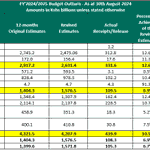
1. Treasury has gazetted the exchequer issues as of end of August 2024, highlighting that total revenue (excluding grants and borrowings) collected amounted to Kshs 331.6 bn, a 12.6% target attainment of the estimated Kshs 2.6 for the year, and 75.8% of the prorated Kshs 2.3 tn

The Energy & Petroleum Regulatory Authority (EPRA) has just released the Fuel prices for the period between 15th August 2024 and 14th September 2024, indicating that the prices will remain unchanged from the July prices.

Super Petrol, Diesel, and Kerosene will continue retailing at Kshs 188.84, Kshs 171.60 and Kshs 161.75 per litre respectively.
Cytonn Report retweeted

In our Cytonn Report this week, we analyzed the performance of Kenya’s Equities, Fixed Income, and Real Estate markets for the week ended, with a special focus on the Review of Kenya’s Public Debt Profile 2024. Below are the highlights.;
a) Fixed Income:
During the week, T-bills were oversubscribed, with the overall oversubscription rate coming in at 131.9%, a reversal from the undersubscription rate of 87.4% recorded the previous week. Investors’ preference for the shorter 91-day paper persisted, with the paper receiving bids worth Kshs 25.8 bn against the offered Kshs 4.0 bn, translating to an oversubscription rate of 645.3%, higher than the oversubscription rate of 272.1% recorded the previous week. The subscription rates for the 182-day and 364-day papers decreased to 41.5% and 16.9% respectively from the 72.6% and 28.4% respectively recorded the previous week. The government accepted a total of Kshs 22.9 bn worth of bids out of Kshs 31.6 bn bids received, translating to an acceptance rate of 72.5%. The yields on the government papers recorded a mixed performance, with the yields on the 364-day paper increasing by 2.4 bps to 16.92% from the 16.90% recorded the previous week, while the yields on the 182-day and 91-day papers decreased by 0.2 bps and 2.2 bps to 16.85% and 16.00% respectively from 16.85% and 16.02% respectively recorded the previous week;
In the primary bond market, the government is looking to raise Kshs. 50.0 bn through the reopened infrastructure bonds IFB1/2023/6.5 with a tenor to maturity of 5.8 years and IFB1/2023/17 with a tenor to maturity of 15.7 years. The bonds will be offered at fixed coupon rates of 17.9% and 14.4% for the IFB1/2023/6.5 and IFB1/2023/17 respectively. Given the current market conditions and the recent bond issues, we expect the average rate of accepted bids for the two bonds to come in at a range of 17.85%-17.95% for the IFB1/2023/6.5 and 14.45% - 14.85% for the IFB1/2023/17;
During the week, Cameroon announced the issuance of a USD 550.0 mn Eurobond with a tenor of 7 years at a coupon rate of 9.5% and a yield of 10.75%, becoming the fifth country in the Sub-Saharan Africa (SSA) region, following Ivory Coast, Benin, Senegal, and Kenya to tap into the international capital markets in 2024. The bond was undersubscribed, with the undersubscription rate coming in at 98.9%, receiving USD 550.0 mn (332.2 bn CFA Francs) of the CFA 336.0 bn offered initially. The issuance was conducted through a private placement, with Citigroup Global Markets Ltd serving as the sole placement agent and arranger alongside Cygnum Capital Middle East;
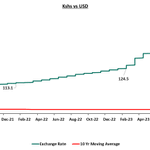
Also, we are projecting the y/y inflation rate for July 2024 to come in at the range of 4.7% - 5.0% mainly on the back of the weakening of the Kenya Shilling against the US Dollar having recorded a 2.4% month-to-date decline to Kshs 132.6 as of 26th July 2024 from the Kshs 129.5 recorded at the beginning of the month, a contrast to the 0.5% gain recorded last month and the 15.6% year-to-date gain from the Kshs 157.0 recorded at the beginning of the year;
b) Equities:
During the week, the equities market was on a downward trajectory, with NASI being the biggest decliner by 4.0% while NSE 10, NSE 25, and NSE 20 declined by 3.4%, 3.1%, and 1.6% respectively, taking the YTD performance to gains of 19.5%, 17.2%, 13.3%, and 11.0% for NSE 10, NSE 25, NASI, and NSE 20 respectively. The equities market performance was driven by losses recorded by large-cap stocks such as Safaricom, KCB, and Equity of 8.2%, 7.3%, and 3.4% respectively. The performance was, however, supported by gains recorded by large-cap stocks such as DTB-K and Bamburi of 0.8% and 0.4% respectively;
During the week, British American Tobacco Kenya Plc released their H1’2024 financial results, recording a 24.3% decline in Profits after Tax (PAT) to Kshs 2.1 bn, from Kshs 2.8 bn recorded in H1’2023. The decline in PAT was majorly attributed to the 6.5% decrease in Gross Sales to Kshs 19.6 bn in H1’2024 from Kshs 21.0 bn recorded in H1’2023;
c) Real Estate:
During the week, Faulu Microfinance Bank, a subsidiary of Old Mutual Group, announced a range of innovative financial solutions including unsecured loans, customized financial packages for property improvement, and payment plans aligned with rental income cycles aimed at addressing gaps in service access for landlords, agents, and other stakeholders in Real Estate development and management;
Additionally, Megna Homes, a Mombasa-based developer announced plans for the construction of a modern 816-unit gated community project in Kisauni. The project dubbed ‘Santana’ is set to be launched in August 2024 and is expected to be complete by the end of 2 years at Kwa Sonko in Bakarani along the Old Mombasa-Malindi Road;
On the Unquoted Securities Platform, Acorn D-REIT and I-REIT traded at Kshs 24.5 and Kshs 22.0 per unit, respectively, as per the last updated data on 26th July, 2024. The performance represented a 22.5% and 10.0% gain for the D-REIT and I-REIT, respectively, from the Kshs 20.0 inception price. Additionally, ILAM Fahari I-REIT traded at Kshs 11.0 per share as of 26th July, 2024, representing a 45.0% loss from the Kshs 20.0 inception price;
d) Focus of the Week:
Kenya is one of the fastest growing economies in Sub-Saharan Africa, having registered a growth rate of 5.0% in the first quarter of 2024. Despite being one of the fastest growing economies in Sub-Saharan Africa with a projected economic growth rate of 5.0%, above the region’s average of 3.7%, Kenya is grappling with a high debt burden, facing elevated risk of debt distress and significant challenges in managing its public debt, which has increased rapidly in recent years. As per the latest data from the Central Bank of Kenya (CBK), the total public debt stood at Kshs 10.6 tn as of June 2024, compared to Kshs 10.3 tn recorded in June 2023. Notably, external debt reduced by 5.2% during the period to Kshs 5.2 tn in March 2024, from 5.4 tn in June 2023 attributable to the early partial repayment of the USD 2.0 bn Eurobond in February 2024. Consequently, the debt to GDP ratio has increased to 70.0% as of June 2024, 20.0% points higher than the International Monetary Fund (IMF) threshold of 50.0% for developing countries, though slightly down from the 70.8% recorded in June 2023. The rising public debt has raised concerns about its sustainability and implications for fiscal and macroeconomic stability. These concerns have seen credit rating agencies such as Fitch, Moody’s, and S&P Global maintaining Kenya’s credit outlook at negative, resulting in higher borrowing costs in the international market. Notably, earlier this month, Moody’s downgraded Kenya’s credit score by one scale to Caa1, from B3 on the back of the country’s inability to implement its fiscal consolidation measures focused on revenue, which are necessary to reduce overall debt. Additionally, S&P Global has scheduled a review on 23rd August 2024 to decide on Kenya’s sovereign credit rating. The firm may either downgrade Kenya’s B credit score to B- or maintain the current rating but keep it on downgrade warning with a negative outlook. S&P Global is adopting a wait-and-see approach to gain more clarity on the appropriation bill, spending allocations, the final budget, and the finance bill. With the withdrawal of the planned tax increases, Kenya’s government faces the challenge of prolonged fiscal deficits, which could further deteriorate the government’s public debt situation and worsen the debt vulnerability of Kenya. Consequently, in this week’s topical, we shall focus on the current status of Kenya’s public debt as at the end of FY’2023/2024. We shall also give our outlook on the country’s debt sustainability;
Click the link below to read the Cytonn Weekly report: cytonnreport.com/research/re…
and cytonnreport.com/topicals/re…
In our Cytonn Report this week, we analyzed the performance of Kenya’s Equities, Fixed Income, and Real Estate markets.
Click the link below to read the full Cytonn Weekly report: cytonnreport.com/research/re…

Cytonn Report retweeted
In our Cytonn Report this week, we analyzed the performance of Kenya’s Equities, Fixed Income, and Real Estate markets for the week ended, with a special focus on the Kenya Retail Report 2024. Below are the highlights;
a) Fixed Income:
During the week, T-bills were undersubscribed for the first time in three weeks, with the overall undersubscription rate coming in at 87.4%, a reversal from the oversubscription rate of 137.3% recorded the previous week. The yields on the government papers were on an upward trajectory, with the yields on the 364-day, 182-day, and 91-day papers increasing by 1.8 bps, 3.0 bps, and 2.6 bps to 16.90%, 16.85%, and 16.02% respectively from 16.88%, 16.82% and 16.00% respectively recorded the previous week;
Also, during the week, the Central Bank of Kenya released the auction results for the re-opened bond FXD1/2024/010 with a tenor to maturity of 9.7 years, and a fixed coupon rate of 16.0% and FXD1/2008/020 with a tenor to maturity of 3.9 years, and a fixed coupon rate of 13.8%. The bonds were undersubscribed with the overall undersubscription rate coming in at 48.9%, receiving bids worth Kshs 14.7 bn against the offered Kshs 30.0 bn. The government accepted bids worth Kshs 9.8 bn, translating to an acceptance rate of 66.5%;
During the week, the Central Bank of Kenya (CBK) released the annual bank supervision report for FY’2023, highlighting that the banking sector registered a decrease in profitability during the year, with profit before tax decreasing by 8.8% to Kshs 219.2 bn in 2023 from the Kshs 240.4 bn recorded in 2022. The sector’s capital and reserves increased by 6.8% to Kshs 980.2 bn in 2023, from Kshs 917.6 bn in 2022;
During the week, the National Treasury gazetted the revenue and net expenditures for the twelfth and final month of FY’2023/2024, ending 30th June 2024, highlighting that the total revenue collected as at the end of June 2024 amounted to Kshs 2,293.0 bn, equivalent to 93.2% of the revised estimates of Kshs 2,461.0 bn for FY’2023/2024
b) Equities:
During the week, the equities market recorded a mixed performance, with NSE 20 gaining by 0.3% while NASI declined the most by 1.3%. NSE 25 and NSE 10 both declined by 0.8% respectively, taking the YTD performance to gains of 23.7%, 20.9%, 18.1%, and 12.8% for NSE 10, NSE 25, NASI, and NSE 20 respectively;
c) Real Estate:
During the week, the Central Bank of Kenya (CBK) released The Bank Supervision Annual Report 2023 which indicated that; in 2023, the number of mortgage accounts increased by 2,229, representing an 8.0 % increase to 30,015 from the 27,786 recorded in 2022. Additionally, the value of outstanding Non-Performing Mortgage Loans increased by 7.9% to Kshs 40.8 bn in 2023 from Kshs 37.8 bn in 2022;
On the Unquoted Securities Platform, Acorn D-REIT and I-REIT traded at Kshs 24.5 and Kshs 22.0 per unit, respectively, as per the last updated data on 19th July, 2024. The performance represented a 22.5% and 10.0% gain for the D-REIT and I-REIT, respectively, from the Kshs 20.0 inception price. Additionally, ILAM Fahari I-REIT traded at Kshs 11.0 0 per share as of 12th July, 2024, representing a 45.0% loss from the Kshs 20.0 inception price;
d) Focus of the Week:
This week, we update our Kenya Retail Report 2023 with the Kenya Retail Report 2024 themed “Resilient and Evolving Retail Landscape”, in which we discuss the progress and performance of the Kenyan retail sector. This will be based on research that was conducted on nine nodes within the Nairobi Metropolitan Area (NMA), in addition to other key urban cities in Kenya including Kisumu, Nakuru, Mombasa, Eldoret, and the Mount Kenya Region. Based on this, we shall identify the market performance in terms of rents, occupancy rates, and rental yields, while updating on the key factors in the market driving their performance. According to the report, the Kenyan retail sector displayed a stable overall performance, with the average rental yield coming in at 7.6% in 2024, 0.1% points increase from 7.5% recorded in 2023. The average occupancy rate increased by 1.6% points, reaching 81.0% in 2024 from 79.4% in 2023, mainly driven by the rapid expansion of both local and international retailers;
Click the link below to read the Cytonn Weekly report: cytonnreport.com/research/ke… Topical: cytonnreport.com/topicals/ke…
In our Cytonn Report this week, we analyzed the performance of Kenya’s Equities, Fixed Income, and Real Estate markets for the week ended.
Click the link below to read the full Cytonn Weekly report: cytonnreport.com/research/ke… Topical: cytonnreport.com/topicals/ke…

Cytonn Report retweeted
In our Cytonn Report this week, we analysed the performance of Kenya’s Equities, Fixed Income and the Real Estate markets for the week ended 12th July 2024 as well as a report on Special Interest Group Funds in Kenya. Below are the highlights;
a) Fixed Income:
During the week, T-bills were oversubscribed for the second consecutive week, with the overall oversubscription rate coming in at 137.3%, higher than the oversubscription rate of 124.4% recorded the previous week. Investors’ preference for the shorter 91-day paper persisted, with the paper receiving bids worth Kshs 14.6 bn against the offered Kshs 4.0 bn, translating to an oversubscription rate of 364.7%, albeit lower than the oversubscription rate of 370.1% recorded the previous week. The subscription rates for the 182-day and 364-day papers increased to 100.6% and 83.0% respectively from the 94.2% and 56.3% respectively recorded the previous week. The government accepted a total of Kshs 30.2 bn worth of bids out of Kshs 32.9 bn bids received, translating to an acceptance rate of 91.8%. The yields on the government papers were on an upward trajectory, with the yields on the 364-day, 182-day, and 91-day papers increasing by 5.0 bps, 2.7 bps, and 0.9 bps to 16.88%, 16.82%, and 16.00% respectively from 16.83%, 16.80% and 15.99% respectively recorded the previous week;
During the week, the global ratings agency, Moody’s announced its revision of Kenya’s credit score, downgrading it by one scale to Caa1 from a credit rating of B3 while maintaining a negative outlook, on the back of the government's decision to forgo proposed tax increases through the Finance Bill 2024 and rely on expenditure cuts, significantly impacting Kenya's fiscal trajectory and financing needs;
During the week, the Kenya Revenue Authority (KRA) released the annual revenue performance for FY’2023/24, highlighting that revenue mobilization for the period grew by a notable 11.1% up from 6.4 % growth in the previous financial year, after KRA collected Kshs 2.4 tn compared to Kshs 2.2 tn in the previous financial year. This translates to a performance rate of 95.5% against the target;
b) Equities:
During the week, the equities market was on an upward trajectory, with NSE 20 gaining the most by 2.2% while NSE 10, NSE 25, and NASI gained by 1.9%, 1.9%, and 0.9% respectively, taking the YTD performance to gains of 24.6%, 21.9%, 19.6% and 12.4% for NSE 10, NSE 25, NASI and NSE 20 respectively. The equities market performance was driven by gains recorded by large-cap stocks such as Bamburi, KCB Group, and EABL of 37.9%, 6.7%, and 4.7% respectively. The performance was, however, weighed down by losses recorded by large-cap stocks such as Safaricom and ABSA bank of 1.4%, and 1.1% respectively;
Also, during the week, Amsons Industries (K) Limited of Tanzania announced its intention to acquire 100% of the ordinary shares of Bamburi Cement Plc with a par value of Kshs 5.0 each for a cash consideration. The offer value of Kshs 23.6 bn translates to a purchase price of Kshs 65.0 per share, which is 42.4% above the price of 45.7 as at one month ago. This offer has been made in accordance to the Capital Markets (Take-overs & Mergers) Regulations, 2002. This acquisition, if successful, will make Amsons Industries (K) Limited the sole owner of Bamburi Cement Plc;
c) Real Estate:
During the week, Finsco Africa, a Real Estate firm, announced that it recently secured a Kshs 5.0 bn deal with Atlanta-based Go Greenwood Bank LLC for onward long-term funding with a key focus on affordable housing targeting the lower and upper middle class.
During the week, TPS Eastern Africa, the owner of Serena hospitality brand, announced its plan to build a multi-purpose conference facility next to its Nairobi Serena Hotel. The facility, estimated to cost up to USD 30.0 mn (Kshs 3.9 bn), targets the meetings, conferences, and exhibitions market.
In the Regulated Real Estate Funds sector, under the Real Estate Investment Trusts (REITs) segment, ICEA Lion Asset Managers (ILAM) Fahari I-REIT was admitted to the Unquoted Securities Platform (USP) of the Nairobi Securities Exchange (NSE), following their delisting from the main investment market in February 2024. ILAM Fahari joined Acorn I-REIT, Acorn D-REIT, and the Linzi Sukuk in the USP, marking the first trading day in the segment;
On the Unquoted Securities Platform, Acorn D-REIT and I-REIT traded at Kshs 24.5 and Kshs 22.0 per unit, respectively, as per the last updated data on 12th July, 2024. The performance represented a 22.5% and 10.0% gain for the D-REIT and I-REIT, respectively, from the Kshs 20.0 inception price. Additionally, ILAM Fahari I-REIT traded at Kshs 11.0 per share as of 12th July, 2024, representing a 45.0% loss from the Kshs 20.0 inception price;
d) Focus of the Week:
Special interest group funds in Kenya, such as the Financial Inclusion Fund (Hustler Fund) and the Youth Enterprise Development Fund (YEDF), aim to promote financial inclusivity and support economic growth by providing accessible credit to marginalized communities. However, recent audits reveal significant issues with these funds, casting doubts on their transparency, accountability, and overall effectiveness. The Hustler Fund, for instance, faced scrutiny for its management and loan recovery processes, with inconsistencies in financial statements and systemic deficiencies in its loan management system. Similarly, the Youth Enterprise Fund has struggled with high default rates, unserviced loans, and questionable financial transactions, leading to concerns over its sustainability and operational integrity. These challenges highlight the critical need for robust oversight and improved governance to ensure these funds fulfill their intended purpose of empowering underserved populations and fostering economic development. This topical will delve into the various special funds examining the structures, operational sustainability, performance and offering insights into potential reforms for more effective management of special interest group funds in Kenya.
Click the link below to read the Cytonn Weekly report: cytonnreport.com/research/sp… , cytonnreport.com/topicals/sp…
In our Cytonn Report this week, we analysed the performance of Kenya’s Equities, Fixed Income and the Real Estate markets for the week ended 12th July 2024 .
Click the link below to read the full Cytonn Weekly report: cytonnreport.com/research/sp… , cytonnreport.com/topicals/sp…

Click the link below to read the Cytonn Weekly report, GDP note and the BOP note: cytonnreport.com/research/ke…, cytonn.com/uploads/downloads…
and,
cytonn.com/uploads/downloads… .

Cytonn Report retweeted
In our Cytonn Report this week, we analysed the performance of Kenya’s Equities, Fixed Income and the Real Estate markets for the week ended 5th July 2024. Below are the highlights;
a) Fixed Income:
During the week, T-bills were oversubscribed for the first time in four weeks, with the overall oversubscription rate coming in at 124.4%, a reversal from the undersubscription rate of 32.0% recorded the previous week. Investors’ preference for the shorter 91-day paper persisted, with the paper receiving bids worth Kshs 14.8 bn against the offered Kshs 4.0 bn, translating to an oversubscription rate of 370.1%, higher than the oversubscription rate of 109.0% recorded the previous week. The subscription rates for the 182-day and 364-day papers increased significantly to 94.2% and 56.3% respectively from the 14.9% and 18.3% respectively recorded the previous week. The government accepted a total of Kshs 27.9 bn worth of bids out of Kshs 29.9 bn bids received, translating to an acceptance rate of 93.4%. The yields on the government papers were on an upward trajectory, with the yields on the 364-day, 182-day and 91-day papers increasing by 3.9 bps, 3.1 bps and 1.0 bps to 16.83%, 16.80% and 15.99% respectively from 16.79%, 16.76% and 15.98% respectively recorded the previous week;
Also, during the week, the Central Bank of Kenya released the auction results for the tap sale issue for the FXD1/2023/002 bond with a tenor to maturity of 1.2 years, and a fixed coupon rate of 17.0%. The bond was undersubscribed with the overall subscription rate coming in at 2.4%, receiving bids worth Kshs 0.5 bn against the offered Kshs 20.0 bn. The government accepted bids worth Kshs 0.5 bn, translating to an acceptance rate of 99.8%. The weighted average yield of accepted bids for the FXD1/2023/002 came in at 17.1%, remaining unchanged from the last issue. With the Inflation rate at 4.6% as of June 2024, the real return of the FXD1/2023/002 is 12.5%;
During the week, the Kenya National Bureau of Statistics (KNBS) released the Q1’2024 Quarterly Gross Domestic Product Report, highlighting that the Kenyan economy recorded a 5.0% growth in Q1’2024, slower than the 5.5% growth recorded in Q1’2023. The main contributor to Kenyan GDP remains to be the Agriculture, Fishing and Forestry sector which grew by 6.1% in Q1’2024, lower than the 6.4% expansion recorded in Q1’2023. All sectors in Q1’2024, except Mining and Quarrying, recorded positive growths, with varying magnitudes across activities. Most sectors recorded a decline compared to Q1’2023 with Accommodation and Food Services, Mining & Quarrying and Construction Sectors recording the highest declines of 19.1%, 3.8%, and 2.9% points, respectively. Other sectors that recorded a contraction in growth rate, from what was recorded in Q1’2023 were Transport and Storage, Other Services and Public Administration sectors of 2.8%, 2.1%, and 1.8% points respectively;
During the week, the Kenya National Bureau of Statistics released the Q1’2024 Quarterly Balance of Payment & International Trade Report highlighting that Kenya’s balance of payments position improved by by 126.4% in Q1’2024, coming in at a surplus of Kshs 33.8 bn, from a deficit of Kshs 127.8 bn in Q1’2024, and a significant improvement from the Kshs 134.8 bn deficit recorded in FY’2023;
During the week, Stanbic Bank released its monthly Purchasing Manager's Index (PMI) highlighting that the index for the month of June 2024 sharply deteriorated, coming in at 47.2, below the 50.0 neutral, down from 51.8 in May 2024, signaling a deterioration in the operating conditions across Kenya;
b) Equities:
During the week, the equities market recorded mixed performance, with NSE 20 gaining by 0.2% while NASI declined the most by 0.4%; NSE 25 and NSE 10 declined by 0.2% each taking the YTD performance to gains of 22.3%, 19.6%, 18.5% and 10.0% for NSE 10, NSE 25, NASI and NSE 20 respectively. The equities market performance was driven by losses recorded by large-cap stocks such as EABL, Stanbic, and Equity Group of 2.4%, 1.1%, and 0.6% respectively. The performance was, however, supported by gains recorded by large-cap stocks such as Bamburi, KCB Group, and ABSA Bank of 6.7%, 2.4%, and 0.4% respectively;
Also, during the week, NCBA Group Plc announced the completion of its acquisition of 66.7% of the issued share capital of AIG Kenya Insurance Company Ltd from AIG MEA Ltd. As a result of this acquisition, AIG Kenya has become a wholly owned subsidiary of NCBA Group Plc. The transaction, which was finalized following meticulous regulatory scrutiny and corporate approvals, including clearances from the Competition Authority of Kenya, the Insurance Regulatory Authority, and the Central Bank of Kenya, solidifies NCBA Group Plc's position in the insurance market;
c) Real Estate:
During the week, the Kenya National Bureau of Statistics (KNBS) released the Q1’2024 GDP Report which highlighted that the Real Estate sector posted steady growth of 6.6% in Q1’2024, which is 0.7% points slower than the 7.3% growth registered in Q1’2023;
In the residential sector, Fairdeal Properties, a private construction company, launched a Kshs 2.0 bn affordable housing project in Bamburi, Mombasa County, which will see the construction of over 500 housing units;
On the Unquoted Securities Platform, Acorn D-REIT and I-REIT traded at Kshs 24.5 and Kshs 22.0 per unit, respectively, as per the last updated data on 28th June, 2024. The performance represented a 22.5% and 10.0% gain for the D-REIT and I-REIT, respectively, from the Kshs 20.0 inception price;
d) Focus of the Week:
Following the release of Kenya’s FY’2024/2025 National Budget, this week we analyze the fiscal components of the budget including revenue expectation, expenditure, and public debt. We shall also look at the key tax changes proposed in the withdrawn Finance Bill 2024
Click the link below to read the Cytonn Weekly report, GDP note and the BOP note: cytonnreport.com/research/ke…, cytonn.com/uploads/downloads…
and,
cytonn.com/uploads/downloads… .
In our Cytonn Report this week, we analysed the performance of the Global, the Sub-Saharan Africa Regional, the Kenya Macroeconomic, Kenya’s Equities, Fixed Income...
Click the link below to read the full Cytonn H1’2024 Markets Review: cytonnreport.com/research/cy…
Cytonn Report retweeted
5. During the week, the yields on Eurobonds were on an upward trajectory, with the yields on the 10-year Eurobond issued in 2018 increasing the most by 61.7 bps to 10.1% from 9.4% recorded the previous week, partly attributable to the ongoing finance bill protests in the country that have heightened instability and increased investor concerns

