

Father, husband, neonatologist and wannabe cosmologist. Tolerant of discomfort, comfortable with uncertainty and wary of extremes. 🇺🇸🇦🇷🐅
Fhloston Paradise 🌴🪐
Joined March 2017
- Tweets160
- Following492
- Followers150
- Likes455


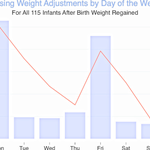




How do clinicians talk about nutrition for preterm infants in the #NICU?
Our @Ped_Research study found many interrelated discussions involving tradeoffs. nature.com/articles/s41390-0…

2) discussions reflect uncertainty and lack specificity;
3) fluid allowance, feeding tolerance, growth and metabolism are primary drivers of nutrition plans;
4) distinguishing whether measured weights indicate growth versus fluid retention or measurement error is challenging”
Gustave Falciglia retweeted

Me vuelve loco esa pierna derecha firme y protectora, para que rebote Harry Kane.
Gustave Falciglia retweeted
Algunas cosas del partido con Cabo Verde.
-De ninguna manera esperaba semejante nivel de angustia.
-Respeto total a Cabo Verde.
-Se pasó de ronda pero mi análisis, citando a Cobos, es no positivo.
-Argentina hizo lo mas difícil para esta clase de partidos: el primer gol.
-Todo lo que vino después fue una película inesperada, sufrida y casi papelonezca.
-La dupla de centrales fue los mas ofensivo del equipo sacando al 10.
-Muchos compañeros, en lugar de solo dársela a Messi, deberían copiar su hambre inoxidable.
-Messi corrió y mucho.
-El gol de Lionel tiene algo parecido al de Nigeria en 2018: gran pase largo, control demencial y definición rápida.
-Los aviones del mediocampo 2022 carretearon todo el partido.
-Paredes se pone solo.
-Creo fervientemente que parte del plantel subestimó al rival.
-El comienzo del ST fue el de un equipo relajado, como si ya estuvieran en el jacuzzi post victoria.
-Tardó Scaloni en los cambios.
-Estaban para salir Enzo o Alexis antes que De Paul.
-Nico González otorga algo distinto a Thiago Almada.
-El resumen de Thiago en estos 4 partidos es muy bajo.
-Julián entró mejor que en la fase de grupos.
-Lautaro no la encuentra y no lo buscan.
-El peor partido de Enzo en la selección.
-MacAllister no cambia de ritmo ni lastima con los pases. Mejoró cuando entró Paredes.
-Lisandro Martínez es es el nombre.
-La asistencia de Licha se suele ver en en el fútbol americano, pero con la mano.
-Ojalá lo de Medina no sea nada.
-Tagliafico entró y cumplió.
-¿Tienen prohibido patear al arco?
-El primer tiro (que no sea de Messi) fue de Paredes a los 92 minutos.
-El arquero de 40 años a partir de ahora se ganó un seguidor mas.
-Si pones a Molina y Montiel en una bolsa, metes la mano y sacas un problema.
-Las distracciones en defensa me preocupan mas que el siguiente rival.
-En cada pausa de hidratación desee que Scaloni los recontra cague a pedos a todos.
-Lo bueno: la resiliencia.
-El que hizo el 2-2 metió el gol mas espectacular en la historia de los mundiales.
-El festejo en la platea buscando a su pareja es todo lo que está bien.
-El cabezazo de Cuti cargó la barra de energía de 40 millones de personas.
-Al igual que en Miami, estaba todo dado para la tormenta perfecta.
-Dibu salvó la catastrofe y muchos infartos.
-Si Arabia Saudita fue el cachetazo de 2022 esto fue lo mas parecido a una trompada en la pera.
-Cabo verde es una brisa fresca en un fútbol de microchips y VAR semiautomático.
-Repetir como loros que se cumplió el objetivo es insuficiente.
-Me quedo con el enojo del capitán al final.
-A dar vuelta la hoja, dejar Instagram y poner las piernas en agua tibia.
-Cuiden al capitán.
-En México creyeron que podían festejar sin amenazar a nadie.
-Pero no.
-"Ya está", me repito en silencio.
-Nos vamos a dormir aliviados.
-Estamos vivos, se viene Egipto y como dijo Charly: la sal no Salah.


Gustave Falciglia retweeted

Norway wins the most medals at the Winter Olympics, with a population of just 5.6 million. People say it’s because Norway is a winter wonderland, but they’re also elite at triathlon, beach volleyball, cycling, and as the world is now seeing, soccer.
A big part of their success is how they treat youth sports—and it’s the opposite of what we do in the US and Canada. Here’s what we can learn from Norway:
1. Scorekeeping:
In the US: Youth sports tend to be hyper competitive even at early ages. Leagues almost always keep score.
In Norway: Scorekeeping isn’t even allowed until age 13.
Removing winners and losers keeps the focus on the process not outcomes. It keeps kids engaged longer because it minimizes pressure (and tears) and maximizes fun, learning, and growth. The goal isn’t to win a third grade championship. It’s to love sport and keep playing.
2. Trophies:
In the US: If you give everyone a trophy, you’re creating snowflakes who will never gain a competitive edge.
In Norway: Whenever trophies are awarded, they are handed out to everyone.
If getting a trophy makes young kids feel good, we should give them trophies. Maybe they’ll come back and play again next year!!
As for the creation of snowflakes with no competitive edge—Norway’s athletes are tough as nails and all they do is win.
3. Prioritizing Fun:
In the US: Far too often, the goal is to win.
In Norway: The national philosophy is “joy of sport.”
Youth sports in the US are driven by adults, ego, and money. Youth sports in Norway are driven by fun.
Only half of kids in the US participate in sports. The number one reason they drop out: because they aren’t having fun anymore. In Norway, 93% of kids participate in youth sports. Fun is the foremost goal.
4. Playing Multiple Sports:
In the US: There’s pressure to specialize early and play your best sport year round.
In Norway: Try as many sports as you can before specializing as late as college.
Norway encourages kids to try all types of sport. This reduces injury and burnout and increases all-around athleticism. It also helps promotes match quality, or finding the sport you are best suited for as your body develops, which is impossible if you commit to a single sport too early.
5. Affordability
In the US: There is increasingly a pay-to-play model with high fees for leagues, equipment, and travel. This excludes many kids from playing.
In Norway: It’s a national priority to keep youth sports affordable and therefore accessible for all.
Kids aren’t priced out, which creates opportunities for everyone to participate (and develop into athletes), regardless of their parents’ income level.
Norway’s sporting success isn’t just speculation or a nice story. A large body of research supports their approach:
• Studies show athletes who specialize later in life have a significantly higher chance of becoming elite.
• Soccer players whose motivation is primarily internal (versus external) have more than a 3x better chance of making it to an elite level.
• The number one predictor of whether or not kids stay in sport is are they having fun.
• Parents connect winning to having fun whereas kids say having fun is about being with their friends and learning.
We could learn a lot from Norway:
In the US, 70% of kids drop out of youth sports by age 13. This not only diminishes an elite-athlete pipeline, but it also destroys an opportunity for healthy habits and all the character lessons kids can learn from sport.
In Norway, lifelong participation in sport is the norm. The goal isn’t to have the best 9U team. It’s to develop the best athletes. Those are two very different things. And Norway has the medals to prove it.


Gustave Falciglia retweeted

Not that anybody asked, but the last time the @NYKnicks won a championship, the Periodic Table had 11-percent fewer Elements.

Time to consciously uncouple from @ab_peds


What would it mean for your NICU if the next generation of fellows had only 4 to 8 weeks of NICU exposure before starting fellowship?
That is the reality today. And now the ABP is proposing to shorten neonatology fellowship from three years to two. ONTPD leaders Dr. Patrick Myers, Dr. Heather French, and Dr. Melissa Scala ran the numbers and found that meeting the new clinical hour requirements would mean asking fellows to work at roughly double what is currently recommended for ICU physicians, while eliminating the scholarly activity requirement entirely.
You cannot manufacture a 22 weeker. You cannot schedule an ECMO run.
The program directors who train the people standing next to you in your NICU are asking for one thing right now: a seat at the table before these changes go through. This episode lays out exactly what is at stake, what the data shows, and what the community is proposing instead. If you care about who is taking care of your patients in five years, this conversation is for you.
🎧 Listen now: buff.ly/Td2Lqp8
#nicu #neonatal #babies #medicine #newborn #innovation #podcast

Gustave Falciglia retweeted

What would it mean for your NICU if the next generation of fellows had only 4 to 8 weeks of NICU exposure before starting fellowship?
That is the reality today. And now the ABP is proposing to shorten neonatology fellowship from three years to two. ONTPD leaders Dr. Patrick Myers, Dr. Heather French, and Dr. Melissa Scala ran the numbers and found that meeting the new clinical hour requirements would mean asking fellows to work at roughly double what is currently recommended for ICU physicians, while eliminating the scholarly activity requirement entirely.
You cannot manufacture a 22 weeker. You cannot schedule an ECMO run.
The program directors who train the people standing next to you in your NICU are asking for one thing right now: a seat at the table before these changes go through. This episode lays out exactly what is at stake, what the data shows, and what the community is proposing instead. If you care about who is taking care of your patients in five years, this conversation is for you.
🎧 Listen now: buff.ly/Td2Lqp8
#nicu #neonatal #babies #medicine #newborn #innovation #podcast


Gustave Falciglia retweeted

Last year students asked me a great and hard question: how, in this crazy environment, are we supposed to find and start our life's work? I wanted to give them real answers, so I wrote this book: nytimes.com/2026/04/19/busin…

Gustave Falciglia retweeted

1/ I’ve been thinking a lot about how we communicate health data and research shapes public trust & the ways oversimplification is leading to growing mistrust in science. A thread 👇️
@nytimes, Joseph Cooper is many things in @Interstellar engineer, a pilot, and a farmer—but, most importantly, he is a father.
Though Cooper may seem lost in space, he is ultimately driven by one goal: to reconnect with and save his children. @McConaughey convincingly captures the devotion of a desperate parent.
Gustave Falciglia retweeted
A seagull was hit by a football in Turkey, before being apparently revived by a player 🤯
Thanks to the quick actions of Istanbul Yurdum Spor's captain, there was a happier ending than after the Randy Johnson incident 🚑
Gustave Falciglia retweeted

Are you a pediatrician or a neonatologist considering a flexible schedule? Breaking Point to Breakthrough: balancing Flexible Scheduling and continuity of care by Drs. Kerri Machut and Ryan McAdams on balancing flexibility sciencedirect.com/science/ar… @JPediatr @AAPneonatal @WomenNeo

