

Market intelligence to power the AI era.
Joined June 2020
- Tweets1.3K
- Following227
- Followers13K
- Likes700


Currence retweeted

.@Currence_AI's Q3 tracker covers 363GW across 1,234 global hyperscale projects >50MW.
>25.9GW carries a 2026 COD, but ~13GW hasn’t broken ground and likely slips. I get +12GW as the rough full-year delivery ceiling, including ~1GW already live. The separate 16GW “credible” number is a weighted estimate of this cohort, not the current 16GW operating base.
>283.7GW is announced, 38.4GW under construction and 16GW operational. Only 0.5GW came online in Q2; delayed capacity rose 25% QoQ to 20.1GW and cancellations rose 66% to 4.5GW.
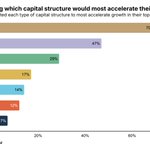
>Through 2032, 182GW is planned versus 101GW deemed credible. That means 55% credible and 45% at risk, despite the chart headline saying 55% is at risk. 36% of projects have no disclosed power strategy.
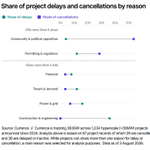
>Across 67 troubled projects, community and political opposition caused 52% of cancellations but 3% of delays. Construction and engineering caused 36% of delays; median slippage was 8.6 months against a 23.8-month median build.


Currence retweeted
We don't have much experience building 1GW+ power plants everywhere. There's a reason. Some of these new efforts are EXTREMELY ambitious. They may succeed, they may not.
But important to know that rate of change you are underwriting. @Currence_AI

Currence retweeted

Climate tech funding surges in H1 2026 on data center demand for power: report
esgtoday.com/climate-tech-fu…
@Currence_AI #climatetech #venturecapital #cleantech #datacenters #cleanenergy

Currence retweeted

good graphs as always from @Currence_AI's H1 climate tech investment report: VC investment surged 55% YoY (largely thanks to low-carbon data center deals) even as total deal count fell 25%. meanwhile, the sector continues to consolidate, with energy acquisitions on the rise


Currence retweeted

This was fun!

New interview series from CTVC unlocked. @schrep sat down with @KimberlyZou and @SophiePurdom to talk about making the shift from the digital economy to the physical economy
Currence retweeted
Base case mid-teens GW comes online with ~50% of pipeline being delayed or cancelled year-to-year for data centers.
So that JPM delay quote ("The latest analysis based on satellite images shows that over 60% of data center capacity planned for completion in 2027 has not begun construction with another 7% delayed" ) is from the Eye on the Market series by Cembalest who is great. They cite "SynMax Vulcan Platform / IRR Energy, April 9, 2026" - anyone familiar or have access? Looks like mid-teens still expected to come online (which corroborated my base case on bottom-up math which I've shared many times - will link).
Closest comp is @climatetech_vc data that showed only ~5GW of 16GW expected to come online was under construction. Dated 2/24/26.
Looks like GS has ~20GW (44GW->64GW) by end of '26 and also cite: "Only about 50-60% of data center capacity scheduled for the next one to two years is expected to come online on time amid delays and cancellations".


Currence retweeted

🎙️Ep229. Climate Tech reinvented: from green molecules to green electrons
#spotify open.spotify.com/show/4FDIRo…
#applepodcast podcasts.apple.com/gb/podcas…
@gerardreid14 and @MegaWattXinfo invite @KimberlyZou Sightline Climate @climatetech_vc to discuss the reinvention of Climate Tech

Currence retweeted

The story of climate tech funding in 2026 is a tale of two points on the development curve, @katie_brigham writes.
While later-stage funds are still making investments, early stage funding is suffering, which could spell trouble in the years to come:
heatmap.news/climate-tech/ea…

Currence retweeted

This is turning into a game of telephone.
Yes, this is true *if* you can unlock spare capacity on the system creatively. This is why data centers weren't a problem historically -- because there was lots of excess capacity on the system.
It's important to understand what GridCARE is arguing in the initial commentary. This requires data centers to actually do the hard work, in partnership with utilities, to uncover and certify new capacity through demand flexibility, distributed solutions, and grid-enhancing tech. I do not see many data center developers *actually* doing this work, aside from a couple hyperscalers.
This is not magic. It takes an industry-wide effort to put in the work.

Currence retweeted
There’s a lot of cognitive dissonance in the power debate right now.
On one side: data centers are framed as the source of all evil, driving electricity bills higher and consuming every incremental megawatt.
On the other: people still haven’t fully internalized what broad-based electrification and decarbonization actually require. Electric vehicles, heat pumps, industrial electrification, reshoring, transmission upgrades, battery manufacturing, air conditioning growth, etc. This was always going to be an enormous power demand story.
That’s why I keep coming back to the same point: AI/data centers may be one of the best things to happen to grid investment in decades.
For the first time in a long time, you have:
-governments prioritizing infrastructure
-corporates willing to sign long-duration power contracts at above market prices
-capital markets willing to fund generation/transmission
-customers that can actually support the returns needed for massive buildouts
Does it solve everything perfectly? Of course not. There will be bottlenecks, local stress, permitting fights, bad projects, longer thermal runoff period,and periods of volatility.
But absent another generational supercycle where incentives align across utilities, policymakers, infrastructure developers, and private capital, this may be one of the strongest opportunities we get to materially modernize and expand the grid, ever!
Also a little convenient how some of the loudest proponents of gas stove bans, EV mandates, and broad electrification are suddenly treating data centers as the sole culprit behind higher power prices.


Currence retweeted
This tweet struck a nerve (and it should) but people are conflating a bunch of things. Let me unpack.
Interconnection queues are speculative by nature. Tying into the grid for power has always been a speculative endeavor. Historically only 13-20% of proposed projects actually get built (per LBNL, which tracks ~97% of US generating capacity). Datacenters are downstream of that, and developers have been submitting applications across multiple regions and ISOs to maintain optionality, redundancy, and see who moves fastest. So ~50% being delayed or cancelled has a natural relationship to the speculative nature of project development. It's not all equipment shortages or pricing.
That said, the delays and cost inflation are real and they matter. We are still massively building out infrastructure. But 1-2+ year delays and ~2x+ cost increases on key equipment (power transformer unit costs up 77% since 2019 per Wood Mackenzie, distribution transformers up 78-95%) have a meaningful impact on project trajectory. Average time from interconnection request to commercial operation has more than doubled. Around 2 years for projects built in 2008. Over 5 years today.
The most important variable right now is time to power. Every MW/GW that isn't stood up is lost revenue for hyperscalers and neoclouds while demand outpaces supply. It's also meaningful because we're still in a race to prove scaling laws hold as cluster sizes grow and models get more sophisticated. Multi-year delays are big complications on both fronts.
Transformers were an issue before datacenters showed up. Much of the grid runs on aged equipment at both the transmission and distribution level. The average age of large power transformers in the US is ~40 years. 70% are 25+ years old. 55% of the ~60-80 million distribution transformers in service are older than 33 years (DOE/NREL, 2024). These businesses require skilled labor, high factory utilization to amortize costs, and expansions don't flip on overnight. Equipment doesn't sell at high margin. It's a historically low-margin, capital-intensive industry, so you live and die by cycles. The history is serious difficulties in downturns, which is why many of these businesses are focused on i) selling out capacity and ii) driving price for the first time in a long time. A lot of new capacity is being invested into but it takes years.
We exported many of these industries decades ago. China, Korea, Mexico. In 2019, only 18% of large power transformers used domestically were produced here. 82% were imported (DOE/Commerce). Today imports supply an estimated 80% of US power transformer demand (Wood Mackenzie). We have a single domestic producer of grain-oriented electrical steel. This isn't new. We stopped building and supporting domestic efforts long ago. Folks in the last presidential administration wrote reports on transformer supply chain vulnerabilities far before it was sexy to talk about them for data centers (shout out @JigarShahDC).
Finally, politics is no joke. I've been banging the drum for 12+ months that local NIMBY-ism was coming for data centers. $18 billion in projects have been blocked and another $46 billion delayed over the past two years (other sources at $100 billion+ delayed figures!). At least 12 states have filed moratorium bills in 2026 alone, with 300+ data center bills filed across 30+ states in just the first six weeks of the legislative cycle. The media cycle on exaggerated power bill inflation and data center water use is convincing many stakeholders that data centers aren't welcome.
Bottom line: i) the rate of delays and cancellations is a confluence of many factors and ii) the electrification import problem existed before data centers. Wanted to illuminate both for folks. I'll thread some of my posts over the years on all these fronts.

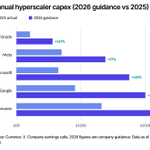
Nearly half of US data centers planned for this year are expected to be delayed or canceled. Not a capital availability or chip problem. It's transformers and electrical equipment. Lead times have gone from 24 months to five years. The big four are spending $650B+ in 2026 alone but can't actually source the gear domestically.
So we must buy from China. Ironic that the country the US has to beat in AI is also the country supplying the parts to build it.

Currence retweeted

👀 Microsoft potentially scrapping hourly clean energy goal
bloomberg.com/news/articles/…

Currence retweeted

Could the IPO window for climate tech startups finally be opening? It might be, but only for startups focusing on a specific industry. (I'll let you guess which one that is.) techcrunch.com/2026/04/25/th…

Currence retweeted

“Sir, nobody agrees with you at all. I know Donald Trump is telling you to tell people this, but now it looks like you’re just telling us this, which makes you look like a very uneducated person in a very powerful position. You should lose your job.”
Currence retweeted

You cannot buy a new gas turbine until 2030. Order books at GE, Siemens, and Mitsubishi stretch to 2029. Turbine prices have nearly tripled since 2019. Every AI data center needs power and every gas plant needs a turbine. And every turbine has one part that bottlenecks the entire industry: The blade. It has to survive in gas 500°C above the melting point of the metal it's made from and spin at up to 20,000 RPM under 10,000 g of centrifugal force. Each blade is grown as a single crystal of nickel superalloy, pulled through a vacuum furnace at 3 mm per minute. A set of blades costs $600,000 and takes 90 weeks to grow. The same metallurgy powers modern jet engines. Only 3 companies on Earth can build one. China spent $42 billion trying to catch up. They bought a Russian fighter engine, took it apart, and copied every part. Their copy ran 30 hours between overhauls versus 400 for the original. Modern Western engines run 4,000. You can reverse engineer the shape of a turbine blade. You cannot reverse engineer 60 years of metallurgy.

ALT Siemens SGT5-8000H gas turbine in assembly
Currence retweeted

It’s the age of electricity and America isn’t ready.
Virtually every goal that Americans care about requires big changes to the power grid. I’m in @nytopinion today on why power bills are going up, whether AI is to blame, & what we need to do about it:
nytimes.com/interactive/2026…


Currence retweeted
Starting the morning by listening to the 🐐 @TheNewGoldRush @climatetech_vc
Mark & team are all over this topic and if you are not reading The Power Stack newsletter they publish, you are missing out


Currence retweeted

Electrical Shortages Threaten Half of US Data Centers Planned for 2026
Analysts at Sightline Climate predict 30% to 50% of 16 gigawatts in planned data center capacity faces delays due to scarce electrical equipment needed for grid connections.
Above will become common in almost everywhere
There will be huge huge demand for anything related to power and electronics. This sector/theme gonna rule the countries for multiple years
~ Power producers
~ Power financiers
~ Power products / Transformers / Capital goods
~ Wires and Cables
~ Power accessories
~ Power transmission
~ etc etc etc
Look into the future business potential for a sector as a whole before finding individual companies.
#Investing #Business
Currence retweeted
"Sightline tracks 710 data center projects in the pipeline. Through 2030, developers have announced 102.3GW of capacity, but only 40.8GW qualifies as derisked" @climatetech_vc
