

CUDO delivers the full AI infrastructure stack for enterprise-scale AI, built on a power-first strategy and validated against NVIDIA reference architectures.
United Kingdom
Joined February 2024
- Tweets703
- Following680
- Followers911
- Likes4.8K


Pinned Tweet
What does it take to get AI infrastructure live?
Land. Power. Data centres. Networks. Compute. And, behind all of it, people who can make those pieces work together.
That’s the challenge we’re building CUDO around.
It means the work here rarely sits neatly in one box. Our teams are solving problems across the infrastructure stack, making decisions quickly and taking real ownership of getting things delivered.
So rather than tell you what it’s like to work at CUDO, we asked some of the people doing it. As CUDO continues to grow, we’re growing the team behind it too. We’ll be sharing more opportunities to join us over the coming weeks.
For now, meet some of the people building it.
AI demand moves fast. The infrastructure behind it runs on a different clock.
Power availability, grid connections and build timelines are shaping where new capacity can come online. Getting delivery right means bringing those decisions together with connectivity and compute from the outset.
That’s the work we do at CUDO Compute. We build and operate AI infrastructure, taking responsibility across the whole supply chain to get capacity live within the window customers need it.
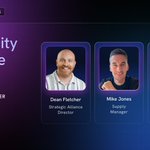
Dean Fletcher, Mike Jones and Kir Devaser will be at Capacity Europe in London on 13–15 October, meeting the partners who help make that delivery possible.
If you’re developing data centre capacity, securing power or connecting new sites, let’s talk about where we can work together.
Message the team to arrange a meeting.
#CapacityEurope

Building AI infrastructure means taking responsibility for how it performs once it goes live.
As an AI infrastructure owner-operator, CUDO builds and runs the clusters our customers depend on. We’re delivering a large-scale GPU project, and the engineering behind it needs to turn hardware into stable, tuned environments that can run real AI workloads.
That’s why we’re hiring an HPC Engineer.
Working alongside our Senior HPC Engineers, you’ll help get these clusters built and running well. You’ll also help shape how we deliver them: building automation, documentation and processes that our service team can operate and that we can carry into future projects.
The contribution goes beyond one deployment. It’s about building the engineering capability behind what CUDO delivers next.
If you enjoy solving difficult infrastructure problems and taking ownership of how your work performs in production, explore the role today: cudo.careers.hibob.com/jobs/…

AI assistant or human assistant. Which would you choose?
It's a question we put to Vicki Ivory MCIPD at DCD Group's DCD Connect London, and an interesting one for an industry that's right at the centre of AI's development.
Vicki brings a people perspective to the question, raising an interesting point about what we value in an assistant beyond simply getting the job done.
We're building the infrastructure to support increasingly capable AI systems, while also figuring out what that technology means for the way we work. And as those systems become more useful, the distinction between what we can delegate to AI and what we'd prefer to leave to a person becomes increasingly interesting.
Perhaps the more revealing question isn't which we'd choose, but what influences that choice.
Watch Vicki's take below.
As demand for AI grows, the infrastructure behind it is becoming far more visible. And with that visibility comes scrutiny.
Power consumption. Water. Land. Local communities. Sustainability.
They’re important conversations to have. But they don’t always tell the whole story of an industry working to build the infrastructure that an increasingly digital, AI-driven world depends on.
So at DCD Group's DCD Connect London, we asked people from across the ecosystem a different question:
If you could change someone’s perspective on the data centre industry, what would you say?
We put it to Grace Murphy, @CudoPete , Joel Farrington, Craig Duffie, Martyn Anstiss, @flowerpower_96, Spencer Lamb, Gary Negus, Vicki Ivory MCIPD, Anthony Hall MBA, Barry Kick and Richard Oakey.
Different people, different parts of the ecosystem and different perspectives on an industry that’s increasingly part of a much bigger conversation.
Here’s what they had to say.
A big thank you to everyone who took part across the ecosystem.
@Legrand | @nokia | @KaoDataDC | @Lenovo
Two identical GPU clusters. Same hardware. Same generation.
Very different results in production.
Because GPU count and spec sheets only tell you what the hardware could do. They don’t tell you what it will sustain once a real workload is running.
Fabric design. Collective communication. Storage throughput. Cooling. Power. Straggler detection. Runtime configuration. Day-to-day operations.
They all determine how much of the performance you paid for actually reaches the workload. The difference can be significant. Published examples covered in our latest blog show comparable-era training environments achieving dramatically different levels of useful GPU utilisation, while inference performance can shift materially on unchanged hardware simply through changes to the serving stack and configuration.
That changes the questions buyers should be asking.
Not just: How many GPUs? Which generation?
But: What throughput can this system sustain under load, and who is responsible for making sure it does?
Hardware sets the floor. Throughput is built.
Read why identical GPU clusters diverge in production, and what to look for beyond the spec sheet.
cudocompute.com/blog/why-ide…

Are we planning the UK's AI infrastructure around where compute is going, or only where it is today?
This week, our Chief Business Development Officer and Co-Founder, @CudoPete, joined industry leaders for the opening keynote panel of The Xcelerated Compute Show, exploring UK sovereign compute in the age of frontier AI.
The conversation moved across sovereignty, AI Growth Zones, power, domestic capacity and what the UK needs to build if it wants to capture more of the economic value created by AI.
But one of Pete's points looked beyond the infrastructure challenge immediately in front of us.
Right now, the direction of travel is towards increasingly power-dense compute. Pete pointed to the prospect of one megawatt racks within the next three to five years.
That creates an obvious question for an industry already working through constraints around land, power and grid capacity: how much further does that curve go?
Pete challenged the assumption that it only moves in one direction.
Emerging areas such as biological compute could eventually change the relationship between compute output and power density altogether. We could spend the next few years moving towards unprecedented densities, only for new architectures to begin pushing that requirement back down.
And when the infrastructure we are planning today will be operating for decades, that matters.
As Pete put it:
“How do we get ahead of this? And how do we change the future, not just in the UK, but across the world?”
The UK has the research capability, universities and talent to play a role in answering that question.
So while we absolutely need to solve for today's constraints, from deliverable power to the right locations for AI infrastructure, we also need to think further ahead.
What does the next generation of compute require?
What could come after it?
And are the infrastructure decisions we make today flexible enough for both?
Land takes years. Power takes years. Compute can change much faster.
Planning for AI infrastructure means planning for that difference.


The individual pieces of AI infrastructure can all look viable. The deployment can still be years away.
Land can be secured without deliverable power. Power can be announced without an energisation date. Data centre capacity can exist without the network, hardware or operational capability needed to turn it into usable compute.
That is the coordination problem sitting underneath the AI infrastructure build-out.
And it is showing up in the decisions companies are making. In our Land. Power. Compute. research, 96% of AI infrastructure decision makers said power constraints or geopolitics had already caused them to change infrastructure plans.
Because hyperscale AI does not buy land, power, data centres, networks and compute on separate timelines. It buys capacity against a deployment window.
The question is not whether each piece exists. It is whether they can be brought together in the right place, at the right time, with economics that work.
That is the conversation we are taking to DCD Connect London on 16–17 September.
@CudoPete, Kir Devaser, Kaitlin Argeaux, Mark Richman, Dean Fletcher, Barry Kick and Michael Jones will be there across both days. If you are working through where capacity is going, what will actually be deliverable and what has to line up to get compute live, find one of us.
And if you think the industry is looking at the wrong constraints, we especially want to hear why.

A power contract for a facility is a 10-15 year commitment. GPU roadmaps move on a much shorter cycle.
How do you future-proof a facility when the hardware moves faster than you can build one?
Barry Kick, our AI Business Development Director, puts it this way: “Efficient delivery of solutions that are close to value, powered by infrastructure that has the optimal technical and operational fit, that is the winning formula.”
You commit to a site, a substation and a power contract for the rest of the decade. Then you design the building for hardware that will be two generations old by the time the substation is energised, and may not exist yet when the drawings are signed.
You don't future-proof that by forecasting. Nobody is going to correctly call the rack density, the cooling regime and the power draw of a 2031 accelerator from a 2026 site plan.
What you can do is replace forecasting with situational awareness. Know what is actually deliverable rather than what is announced, where power genuinely exists, when a grid connection will realistically land, and what the build constraints are on that specific site.
Then design so that a hardware change costs you a retrofit and not a rebuild.
That challenge came through in our Land. Power. Compute. report too. Across 701 infrastructure decision-makers in the UK, US and Europe, power availability was the most cited deployment blocker. Because ultimately, the constraint is the chain, not the chip.


Compute capacity gets the headlines. Power availability is what actually decides who builds, where, and how fast.
Power availability and grid capacity now rank as the leading factors in AI infrastructure location decisions.
But having power on paper isn't enough.
A site needs the capacity to support the workload, a realistic route to getting that power online and the resilience to keep it running. Land without a clear power pathway is an option, not an asset.
As @WSP’s Anushka Devaser puts it:
“The biggest misunderstanding is assuming securing power is only about price or MW capacity.”
AI infrastructure needs more than an available MW figure. It needs firm, resilient power that can support the workload in practice.
That’s why land, power and compute need to be considered together. Decisions around one quickly affect what’s possible with the others.
Read our Land. Power. Compute. research below.


Announced power and power you can actually draw on are rarely the same number. That is what we want to talk about in Austin this week.
Power availability is the most cited deployment blocker across the US, UK and Europe. It stands at 32.1% according to the 701 AI infrastructure decision makers we surveyed for Land. Power. Compute. Which puts the risk in the chain, not the chip: whether the power behind the GPUs arrives inside your window.
That gap is our subject because we carry it. CUDO delivers the whole chain under one contract, land, power, data centre, network and compute on an SLA, inside the window you buy in. One accountable party rather than four.
Two views we are taking with us, on 2027 capacity: the number that matters is not what you have reserved, it is the date it energises. On placement: the workload and the deliverable power decide where compute sits, not land availability.
If you see it differently, we would like to hear it in the comments or in person. Dean Fletcher, our Strategic Alliance Director, and Mohamed Alibi, our Senior HPC Engineer, are at Metro Connect Fall and Datacloud USA.

21.3% → 55.2% MFU.
That’s more than a 2× difference in useful work on comparable-era hardware.
GPT-3 175B achieved 21.3% MFU. MegaScale reached 55.2%.
The difference is not just the GPU. It’s the system around it.
DeepSeek-V3 is a useful example.
It ran on 2,048 NVIDIA H800 GPUs, hardware built on the same Hopper architecture as the H100 but with NVLink bandwidth reduced from 900 GB/s to 400 GB/s for export compliance.
That single difference in interconnect reshaped the entire training strategy.
The team avoided tensor parallelism because it was inefficient under the constrained NVLink, built a bidirectional pipeline scheme to overlap computation and communication, and relied on eight 400G InfiniBand NICs per node to compensate for the loss of intra-node bandwidth.
The chip was nearly the same. The configuration determined what the cluster could actually do.
Even after that hardware-aware co-design, third-party analysis estimates the run landed at around 23% model FLOPs utilization, a figure the DeepSeek team never had to disclose and one that rarely appears in headline infrastructure specifications.
GPU model and count only tell part of the story. What matters is how effectively the entire system turns that hardware into useful compute.
Read the article below.


While the GPU shortage gets the headlines, having access to GPUs doesn’t mean much if the infrastructure isn’t ready to deploy them.
Power is becoming one of the biggest constraints.
Ben Stirk, Head of Enterprise and AI at @Arkdatacentres, put it plainly in our Land. Power. Compute. report:
“If you don’t already have power secured for a site, or if you haven’t already placed the orders to get it there, you aren’t just behind. You aren’t even in the race.”
The reason is simple. GPUs can be procured on relatively short cycles. Power can’t.
Securing enough power for high-density AI infrastructure can take years, which means decisions being made now can determine where organisations are actually able to deploy and scale later.
Our research backs this up. Across 701 AI infrastructure decision-makers surveyed with Censuswide, power availability is the leading factor influencing infrastructure location at 33.7%.
And when we looked at what is driving the cost of compute, 71% of selections were infrastructure-related. GPU pricing ranked sixth.
For organisations planning AI infrastructure, the challenge is no longer just securing the compute. It’s making sure the land, power and infrastructure are ready for it.
That’s what Land. Power. Compute. looks at: the constraints shaping where AI gets built, what it costs and how quickly it can scale.
Read the research below.

Two identical GPU clusters. Same datasheet. Different outcomes in production.
Any competent buyer can read the spec sheet and sign the purchase order. What separates the two clusters is everything that happens after: the fabric tuned to the topology, the collectives configured for the actual job, storage feeding data fast enough to keep the GPUs busy, stragglers caught before they cost you a day, the thermal envelope held under load.
In serving, it's the same story, the inference stack and precision matched to the workload, and a software stack mature enough to realise what the silicon promised.
The two diverge because that work is never identical.
The hardware is bought. The throughput is built.
Read the full breakdown below.

CUDO Compute retweeted

Advanced AI capabilities are no longer available only through closed third-party APIs.
Enterprises can choose where models run, how they are adapted and what happens to the data. That gives organisations greater control over a capability that is fundamental to how they operate.