

The AI-native platform for self-storage operators. Everything you need to operate, grow, and delight.
New York, NY
Joined November 2021
- Tweets253
- Following187
- Followers142
- Likes62





Pinned Tweet
Today, we're thrilled to announce our $63M Series A.
This accelerates our mission to build the future of self-storage with AI-native tech. With 400 operators and 500k units on our platform, we're just getting started.
Read more: cubbystorage.com/blog/cubby-…
youtube.com/watch?v=aj7gD7Cz…
"Storage was always incredibly profitable, and those profits masked the inefficiencies," says Robert Kapp, owner at Keep it Simple Storage.
When margins are fat, a slow process doesn't cost you anything you'd notice. Now storage is "a 6 to 10% margin game," and at that level operators are "forced to lean into technology."
Full conversation can be heard here: youtu.be/W2enxXkNgcQ
When you choose a FMS, your tenants' records, payment activity, and personal details move into someone else's systems. You should ask that vendor the same questions you'd ask about a facility's gates and cameras.
cubbystorage.com/blog/cubby-…

Reservations get treated as soft leads. The data says otherwise.
Across 6,300 reservations on Cubby between February and May, 54% turned into a move-in within 21 days. That's 1.8x the rate of an abandoned checkout and 9x the rate of a contact form.

The spread between operators was wide, from 42% to 67%, which is the interesting part. The reservation itself is worth a lot. What you do in the first 48 hours after it is worth more.
Full breakdown: cubbystorage.com/blog/self-s…

Most storage operators run some version of an agent incentive.
In this walkthrough, we describe a comp plan to Claude in plain English. Claude uses the Cubby Connector to build a live incentive tracker and publishes it to Canvas in Cubby.
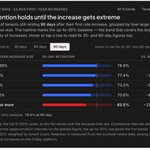
Most operators treat the first rate increase like a move-out trigger. So they delay it, shrink it, or skip it.
We pulled 74,000 leases across 68 operators on Cubby and followed every tenant from move-in through their first year.

Past 100%, those tenants retain about 16 points worse than everyone else.
So the routine increase, with 30 days' notice, costs you essentially no extra move-outs. The aggressive one does.

Full methodology, survival curves and the difference-in-differences model here: cubbystorage.com/blog/self-s…

Meet Lily, Ariana, and Kristen: three all-star members of our onboarding and implementation team. Don’t let the smiles fool you, this team works hard day-in and day-out to make sure switching to Cubby is seamless for our clients.


Read more about what it’s like to make the switch on the Cubby blog: cubbystorage.com/blog/switch…

A caller at 9pm wants a 10x10 and wants to move in tomorrow.
The AI agent's Sales skill walks that caller to a finished rental: the same move-in special you publish online, the coverage requirement, first-of-month billing set up.
Renters with two or more units hold about 21% of the space on Cubby, despite being just 10% of the total number of renters.
1/5 of your rent roll are people who rent more than one unit. A rate change or a move-out from that group lands harder than one from the other 90%.

Two missed calls is about where the phone stops being useful.
Across 319,000 tenant dials, stopping after two straight misses would remove 23% of the dialing and cost only 9% of live conversations. For the third attempt onward, a text or an evening call is the better bet.
Read our full analysis here: cubbystorage.com/blog/self-s…
Most operators want to know how their performance compares to the rest of the industry. The team at StorMark built a tool in Cubby Canvas to find out.

