

Funding and incubating high-impact cryopreservation research. https://xitter.cf/t.co/K08oTIetKN • $CRYO 🧊
Switzerland
Joined September 2022
- Tweets1.3K
- Following327
- Followers6.4K
- Likes4.4K




The cryopreservation field is heating up 🥶

A pig kidney was vitrified, stored at -150 °C for 366 days, rewarmed in under six minutes, and made urine again (albeit in reduced amounts).
The Bischof and Finger groups at the University of Minnesota, just posted a preprint on vitrification and nanowarming of ~100 g pig kidneys. The interesting thing is that's roughly human kidney size and about 100-fold larger than the rat kidneys from a few years ago.
The key factors that make this work are:
- A new CPA named “PEZ42” which allowed them to scale up to the 100 g kidney, which was not possible with M22
- Loading at temperatures below -15 °C to suppress toxicity.
- Annealing at -114 °C to avoid cracking.
- Their nanowarming technology (Iron oxide nanoparticles,RF coil, rewarming at ~32 °C per min).
How PEZ42 differs from M22: both include DMSO, ethylene glycol and the ice blockers X-1000 and Z-1000. But PEZ42 doesn’t include formamide, N-methylformamide, 3-methoxy-1,2-propanediol and PVP, and adds propylene glycol and a bit more Z-1000, and is less concentrated overall. PEZ42 is also less stable: M22 vitrifies at ~0.1 °C/min and needs only ~0.4 °C/min on rewarming. PEZ42 needs 2.3 °C/min on rewarming at the expected concentration. But that is not an issue in this case, since nanowarming achieves a warming rate ≈14x faster than that.
Short summary of the results: 8 kidneys on machine perfusion showed immediate blood flow and urine. Function was worse than after 24 h of cold storage. But it was similar to kidneys that only had CPA loaded and unloaded, but not cooled. 3 transplants into pigs made urine immediately over a 2 h observation.
The CPA-only comparison is the key result. If vitrification and rewarming add little measurable damage on top of the chemicals, the physics at this scale is largely handled.
There are a couple of caveats to keep in mind: it's a preprint, so no peer review yet, it was only one kidney at 366 days, no survival data, and the transplanted grafts showed more endothelial injury on histology than cold-stored ones.
So what does that mean for Human Biostasis (my take):
1) Humans, even brains, are still much bigger. And viability is not yet the primary endpoint for human Biostasis but rather complete perfusion and structural preservation.
2) Progress is always great. The Biostasis field is still small and every win makes it bigger.
3) The technologies developed can be translated to large(r) scale use in humans. At least fundamentally. Case in point: CPA toxicity during long perfusions is also our biggest unsolved problem.
4) There is still a lot to do. Remember that a brain is ≈1.4 kg and a body ≈70 kg, those kidneys were 100g. They also had under 10 minutes of warm ischemia and ideal perfusion under lab conditions.
So does biostasis “work” now? No. But every step that turns reversible organ cryopreservation into an engineering problem raises the odds that it will.
Paper: doi.org/10.64898/2026.10.07.…

CryoDAO retweeted

We've funded a lot of cool things at CryoDAO, I think these are my recent highlights:
1) Multi-Organ Cryopreservation + HIFU Rewarming: Despite recent progress, organ preservation is still an unsolved problem. Novel rewarming technology might help.
(With the University of Seville, Hospital Gregorio Marañon, University of Madrid)
2) CRYORAT: Trying to recover a whole organism from high subzero temperatures. Implications for space flight, cryopreservation, and organ preservation.
(With Advanced Neural Biosciences)
3) Total Recall: To test if the information underlying memory can be preserved and recovered after vitrification.
(With 21st Century Medicine, Cortical Labs)
All projects are here: cryodao.org/projects

CryoDAO retweeted

it's official: the biostasis @xprize is coming
winner of this year's visioneering, the prize will target organ biostasis in pig models to end the organ shortage and push the frontier of preservation
cryo is finally getting the momentum it deserves
CryoDAO retweeted
functional recovery of vitrified and nanowarmed human-scale pig kidneys from up to one year at -150 °C
it is increasingly clear that cryopreservation is the single best shot we have at defeating death in our lifetimes
biorxiv.org/content/10.64898…

Check out Total Recall on the CryoDAO website: cryodao.org/project/total-re…

Total Recall is upon us. 🧊🧠
View the full proposal and vote: snapshot.org/#/s:vote.cryoda…

officially announcing the next @cryodao research project:
$259,000 for "TOTAL RECALL" 🧊🧠
setting out to prove that complex mammalian memory can survive cryopreservation with legendary cryobiologist greg fahy and principal investigator regina monaco
two complementary approaches will be pursued: testing whether learned responses survive cryopreservation in neural cultures and/or hippocampal slices, and whether the molecular changes associated with training are preserved
together, these approaches target one of the central questions for cryopreservation: can the information underlying memory survive?

CryoDAO retweeted

What a fascinating chat with @emilkendziorra on the advances taking place with biostasis/cryopreservation and the quest to live forever.
Dude is a very fun listen.
Full episode here or wherever you get podcasts - corememory.com/p/hes-here-to…
I will be booking my place in Tomorrow Bio's vault with our @brexHQ card because it's that powerful. #brexpartner
CryoDAO retweeted

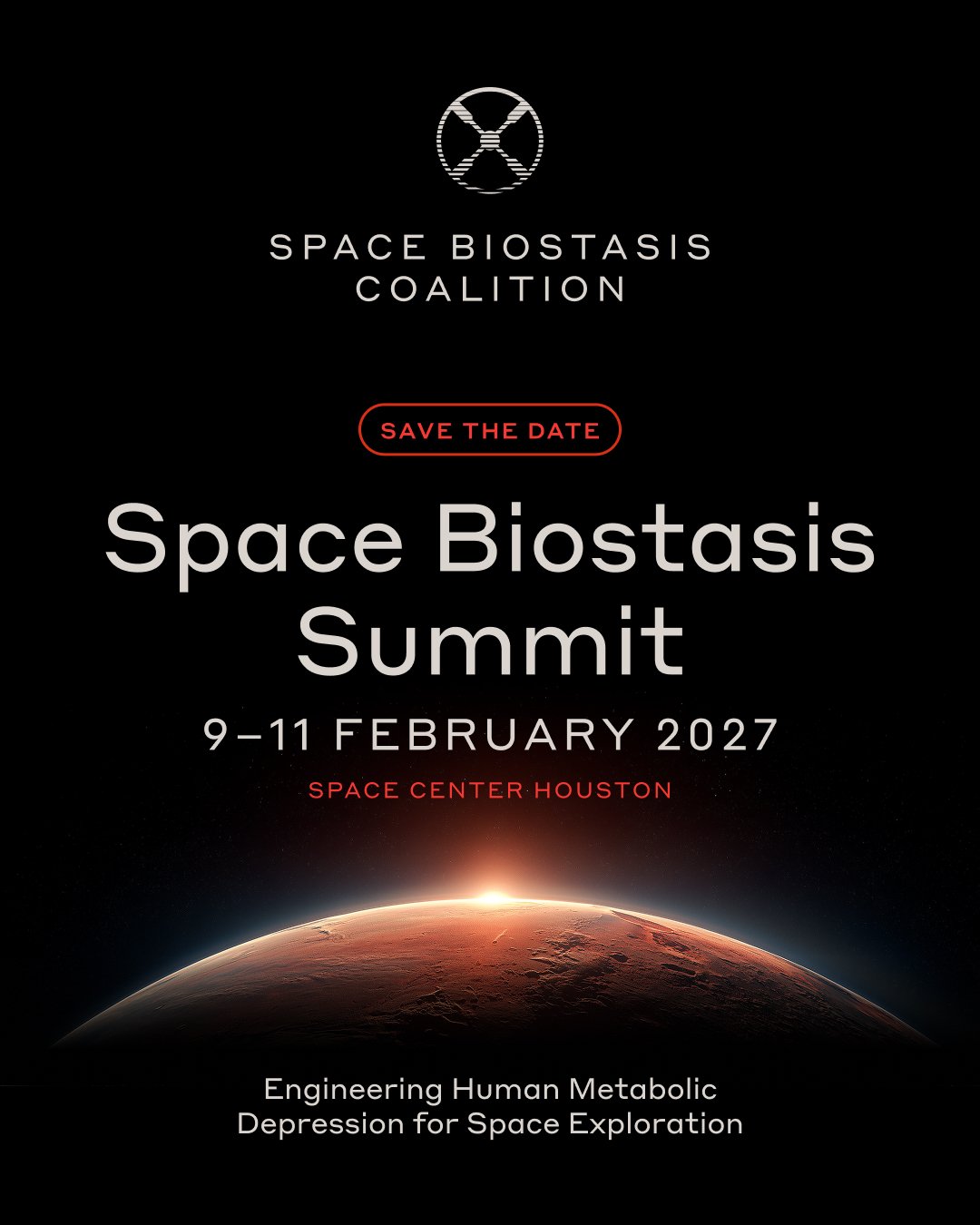
We're organizing the Space Biostasis Summit at Space Center Houston next year. Expect the top cryobiology and hibernation researchers presenting breakthroughs in metabolic depression (i.e. hypersleep) for space exploration, emergency medicine, and combat casualty care. NASA, ESA, DoW speakers will talk about national security implications, search and rescue, and Moon/Mars evacuation.
Let me know if you're interested in contributing to @spacebiostasis!

CryoDAO retweeted
on february 9-11, 2027…
space meets biostasis @spacebiostasis
announcing the official date for the upcoming space biostasis summit, hosted at space center houston in texas
we’re bringing together the top space agencies, scientists, cryobiologists, funders, and astronauts to discuss:
- human metabolic depression for space exploration
- the latest breakthroughs and recent progress in cryobiology
- space search and rescue and medical evacuation
we will kick off the coalition that will develop the biostasis technologies required to make humanity multiplanetary
(and even share our latest groundbreaking research in whole-organism cryopreservation & revival)
not one you will want to miss 🥶

Cryopreservation is hard.
Read: "Overcoming Perfusion Impairment in the Ischemic Brain: A Review"
🧊🧠
Cryopreservation is hard. Not least because perfusion under adverse conditions is difficult to do right. Ischemia is clearly the most common and most complex to handle.
We just published our thoughts here: "Overcoming Perfusion Impairment in the Ischemic Brain: A Review"
mdpi.com/2673-4087/7/4/89
Thanks to all co-authors: Andrew T. McKenzie, Aschwin de Wolf, Alexander Grotemeyer, and Alexander German


CryoDAO retweeted

HydraDAO: HYDRA-7: Kind Bio Integrated Organ Networks has PASSED
Bodyoids are a go🫘❤️🔥
snapshot.org/#/s:daohydra.et…
CryoDAO retweeted
Most of the problems in the Biostasis Roadmap are still open, two years after we published it.
I don't think that is a bad sign. A field that writes down its unsolved problems is in better shape than one that only publishes its wins. The roadmap was never meant to be a highlight reel. It was meant to be a to-do list.
Some items have moved. Others have not moved at all. There is still no standard metric for what "good enough" preservation even means, which makes almost every other question harder to answer.
We update every two years. The next version is in progress, out in a few months.
Roadmap here: mdpi.com/2076-3425/14/9/942

CryoDAO retweeted

"Space is vast. Mars is months away. The nearest star system is thousands of years out. And the human body wasn’t built for any of it." - our full talk at @VitalistBay is in the next comment
CryoDAO retweeted
The Berkeley Biostasis Classification is out.
For years the honest answer to "how close is biostasis?" has been wide range of positions that are difficult to compare. Fifteen of us met in Berkeley on May 18 to fix that.
The result is a 3x3 grid. Biological scope on one axis: CNS only (A), CNS plus peripheral nervous system and musculoskeletal system (B), whole organism (C). Scale on the other: small rodent, large mammal, human. Nine milestones, each a yes or no question with a defined experiment behind it.
The moonshot we argue the field should aim at is B1/C1: reversible cryopreservation of a small mammal with a behavioral test after rewarming. A rodent that can still solve a task settles the mammalian biostasis question in the affirmative. Every component technology exists in some form.
It is a proposal that will take a lot of time to fill with results. But it will be worth it.
DOI: 10.5281/zenodo.21514009 (zenodo.org/records/21514009)
Special thanks to Alex German for pushing this forward!
Picture half-related, me in Berkeley at the location of the declaration :)

"While reversible cryopreservation of organs has many beneficial applications, we here provide a classification for measuring progress toward biostasis of human persons, by scaling existing techniques to relevant biological systems of increasing scale."
zenodo.org/records/21514009

CryoDAO retweeted
in 2024 we set out with $1,000,000 and a dream to bring a non-hibernating mammal back from the frozen abyss for the first time in history
the most important experiments are happening as we speak
the rat will rise 🧊🐀

We're visiting the @thecryorat lab today. Custom equipment has arrived safely. Experts are reassembling the new perfusion pumps.
The key experiments are underway, folks. We shall soon have our cryo-rats and the answer we've been building toward for almost two years: "can we safely and reversibly preserve a mammal at high subzero temperatures?"
Stay tuned.