

We are the IUCN-SSC Crocodilian Specialist Group. Moving forward for crocodilian conservation since 1971. 🐊
Joined December 2019
- Tweets471
- Following23
- Followers784
- Likes460





Pinned Tweet
Dear CSG Members: Here is the most recent Newsletter 45(2) April - June 2026! 🐊
Follow the link here or in our profile:
iucncsg.org/365_docs/attachm…

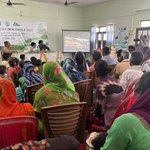
The Ghaghra (Saryu) River is home to the Gharial (Gavialis gangeticus), and serves as marginal habitat for the Mugger (Crocodylus palustris). To mark World Crocodile Day (17 June), an awareness event for Human-Crocodile Coexistence was organised by the TSA Foundation India...


Read more about these celebrations in our latest Newsletter: iucncsg.org/365_docs/attachm…
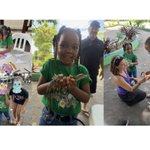
Conservation in Action! 🐊 American crocodile nesting study in the Dominican Republic and the World Crocodile Day celebrations that followed: The 2026 American crocodile nesting season in Lago Enriquillo concluded on 17 June, when the last nest was opened by the monitoring team.

As part of World Crocodile Day celebrations, an educational outreach activity was conducted on 20 June 2026 at the National Zoological Park. This event provided an opportunity to raise awareness and educate the public about the importance of conserving Crocodylus acutus.

Read more about this in our latest newsletter 45(2) April-June 2026 : iucncsg.org/365_docs/attachm…
World Crocodile Day is celebrated worldwide on June 17th.
There are 2 types of crocodiles called Gharials — the Indian Gharial uses its slender jaws and sharp teeth strictly to catch fish, however its look-alike cousin—the Sunda Gharial—uses their strong slender snouts to catch fish, as well as hunt monkeys and deer!
#WorldTomistomaDay

Secretive and handsome, the Sunda Gharial is disappearing from the swamp forests and freshwater rivers of Indonesia, Malaysia, and Brunei. World Tomistoma Day is celebrated on August 5th to highlight crocodile conservation, specifically of this unique endangered crocodilian.

Different crocodilians are designed to catch different types of prey items. The Indian Gharial (Gavialis gangeticus) has a long slender snout with lots of long slender teeth designed for catching fish.
Photo of young Indian Gharial by Pheobe Griffith

ALT Baby gharial crocodile catching a small fish in the floating vegetation.
Status Update on Critically Endangered Gharial in the Gandak Riverscape in Bihar, India, and it's looking good!
Read more here: iucncsg.org/365_docs/attachm…

ALT 3 Maps of the range of Gharial crocodiles.

ALT Gharial basking on a sand bar in the middle of a river.

ALT Multiple gharials basking on a sand bar along a river.
The Gharial (Gavialis gangeticus), a critically endangered crocodilian native to South Asia, has experienced severe range contractions over the past century primarily due to hunting for skins and trophies, followed by egg harvesting, river regulation, habitat alteration ...
Recovering the Estuarine crocodile (Crocodylus porosus) population in the Bhitarkanika National Park/ Wildlife Sanctuary in Odisha, India.
Read more here: iucncsg.org/365_docs/attachm…

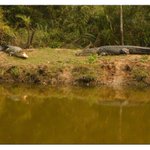
ALT Two crocodiles basking on a river bank.

ALT Map of the National Park and the Ekakula Bay Beach.
The “rear and release” program implemented since 1975 has resulted in the release of 3008 crocodiles around 1 m total length between 1977 and 2024 into Bhitarkanika wetlands. The FAO/UNDP, Government of India and state Forest Department program found this to be a success story...
This large freshwater crocodilian, the Malay Gharial or Sunda Gharial, lives in the slow-moving rivers and peat swamp forests of Malaysia, Indonesia, and Brunei. They are secretive and opportunistic ambush predators feeding mostly on fish, as well as birds and small mammals.

ALT Male Tomistoma crocodile lurking in the shallow forest water.
Conservation of Kalimantan's crocodiles - the Siamese crocodiles & Tomistoma - The Kalimantan Province of Indonesia comprises approximately 75% of the island of Borneo, and maintains a diverse fauna. Read more here: iucncsg.org/365_docs/attachm…

ALT Siamese crocodile on a bed of floating vegetation.

ALT Siamese crocodile on top of a nest mound by a river.

ALT Juvenile Tomistoma crocodile head.

ALT Tomistoma by a nest mound. Image from a game trail camera.