

Make every day cool! Imagine if you could avoid all of the stress that warm temperatures brings for you and your livestock? We make that dream a reality.
North America
Joined July 2019
- Tweets1.3K
- Following2.5K
- Followers553
- Likes481



Cooling events work. But what happens when the cooling stops? This SCR data shows heavy breathing dropping after cooling events, then increasing again before the next cooling event begins.What if cows didn't have to wait for the next cooling event? Continuous Cow Cooling with CCS

25
Cooling is important. Recovery is important.
Cows only have 24 hours in a day.
Every hour in the daily time budget already has a biological purpose.
Can cows stay cool and still have enough time to rest, ruminate, and recover?
Part 2 of our 3-part series: buff.ly/t76tgMY

15
The stall isn't just somewhere she spends time. It's where real recovery happens.
When cows lie down.
Cooling should not compete with recovery. It should support it.
Read Part 2 of our series: buff.ly/t76tgMY
Don't have time to read, LISTEN - buff.ly/TxqAxfu

7
A dairy cow only has 24 hours in her day. In Part 2 of this series, we explore an emerging question in modern heat stress management: Should cooling compete with recovery…or support it? READ: buff.ly/t76tgMY
Because heat stress is continuous. Prevention should be too.

14
For years, dairy cooling has focused on creating better cooling events.
But today’s cows are producing more milk, generating more metabolic heat, and facing longer periods of heat stress than ever before.
What happens between cooling events on your dairy?
Let’s talk about it.

19
Recovery doesn’t happen at the feed bunk.
It happens when she finally lies down. Today’s high-producing dairy cow generates metabolic heat 24 hours a day.
Part 1 of our new 3-part series:
READ HERE: buff.ly/0AeevX9
LISTEN HERE: buff.ly/RPWEOuY

18

Maybe the problem isn’t the cooling event. Maybe it’s the rest of her day.
Today’s high-producing dairy cow generates metabolic heat 24 hrs/day.
So maybe the conversation shouldn’t only be about creating cooling events.
It should be about helping cows stay comfortable 24 hrs/day

1
31
Part 1 of our new 3-part series explores why the future of heat stress management may be shifting from intermittent cooling events toward continuous comfort and recovery.
READ: buff.ly/0AeevX9
Because heat stress is continuous.
Prevention should be too.

7
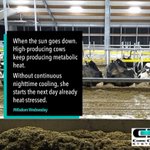
When the sun goes down,we think it cools off.But high-producing cows keep producing metabolic heat.Without continuous nighttime cooling,cows may begin the next day carrying heat stress from the day before.Heat stress isn’t just about hot afternoons. It’s about overnight recovery.

11
Monitoring core body temperature with rumen boluses showed the cows stayed cool all summer, even during severe heat stress conditions.
When cows stay comfortable:
• milk production improves
• reproduction improves
• recovery improves
Cool the Cow. Not the Barn.

16
NEW PODCAST EPISODE - Middle Eastern Dairy Trial Results:
Continuous Cooling vs. Leading Intermittent Cooling Systems
High-producing cows (45+ kg/day) under severe heat stress. Tune in to hear the results. Listen now: buff.ly/xYAyH0x
Continuously Cool the Cow with CCS

17
Many farms use intermittent cooling systems like bunk line soakers to help cows manage heat stress. But temporary relief and continuous comfort are not the same thing. Core Cool Systems focuses on continuously cooling cows, where they spend most of their time resting and eating.

18
FALSE.
THI shows current conditions. It does not measure accumulated heat load.
Core body temperature can remain elevated for hours, especially in high-producing cows during prolonged heat events.
That’s why continuous cooling and nighttime recovery matter.
23
In a Middle East dairy trial, continuous in-pen cooling reduced heavy breathing by up to 86 minutes/day compared to the leading cooling systems used in severe heat stress conditions. These were high-producing cows avg 45+ kg/day.Cool the Cow. Not the Barn. buff.ly/wEv4rt8

19
Many farms already have cooling systems. But cows are still struggling with heat stress during prolonged periods of severe heat.
What if cooling focused on continuously cooling the cow, not just temporary relief?
An on-farm trial challenges this: buff.ly/wEv4rt8

17
Many farms already have cooling systems. But severe heat stress still impacts cow comfort, recovery, & production.
A 2025 Middle Eastern dairy trial challenged some long-held assumptions about dairy cooling. Read the results: buff.ly/wEv4rt8
Cooling the Cow, not the barn

23
Many farms already have cooling systems. But severe heat stress still impacts cow comfort, recovery, and production.
So the real question is:
Is moving air enough?
Is intermittent soaking enough?
Trial results Monday.
Core Cool Systems. It’s about cooling the cow. Not the barn.

13
Many farms already have cooling systems. Yet cows are still struggling with heat stress every summer.
Maybe the question is not:“How do we cool the barn?”
Maybe the better question is:“How do we keep cows continuously cool & comfortable?”
It’s about cooling the cow. Not the barn.

23
