

@Confipaul09
Account based inNigeria!
About this account
- Account based in
- Nigeria
- Connected via
- Nigeria App Store
X says this location may be affected by a proxy or VPN.
Account-level information from X, not a live location or the device used for a specific post.
Lover of God/Content creator/Web3 & DeFi/ NFTs/Crypto/Blockchain enthusiast/Com Manager/Historian/ $ANKR/Brand Ambassador/Brand Ambassador /XION
Web3
Joined September 2018
- Tweets45.1K
- Following2.3K
- Followers3.2K
- Likes14K
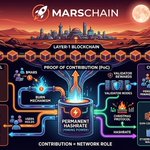





For those still finding Marschain difficult to understand, check this out 👇
@MarsChainDAO is an independent Layer-1 blockchain built around a unique concept called Proof of Contribution (PoC).
In simple terms, MarsChain believes that people who contribute to the network should receive a direct role in its operation.
You don’t have to rely on expensive mining machines, users can contribute by burning $MARS, which permanently removes those tokens from circulation and gives the contributor hashrate.
That hashrate allows them to participate in mining and receive network rewards.
The interesting part of MarsChain is its Burn-to-Hashrate model.
When you burn MARS, you are essentially exchanging the tokens for permanent mining power.
The more the network develops, the protocol adjusts the relationship between the amount burned and the hashrate received.
MarsChain also uses a 448-day halving cycle, meaning the amount of newly created MARS used as mining rewards is reduced over time.
Together with token burning, the goal is to create an ecosystem where supply becomes increasingly limited while contributors continue to participate in securing and operating the network.
MarsChain also has several additional mechanisms built around this core idea.
These include:
- Mining NFTs,
- personal mining pools,
- referral rewards,
- validator nodes,
- the Christmas Protocol and the Oracle Protocol.
Personal mining pools allow participants to grow their mining power through community participation, while validators help secure the network and receive a portion of network issuance.
The Christmas and Oracle mechanisms introduce additional periods of burning.
It also increases hashrate under specific conditions, giving MarsChain an great economic model that goes beyond simply holding a token.
Another important aspect is the technology behind the project.
MarsChain presents itself as an EVM-compatible Layer-1, meaning it is designed to support Ethereum-style wallets and smart contracts.
It has its own network, wallet and block explorer, while its node software is publicly available through its GitHub repository.
The project is therefore trying to build more than just a cryptocurrency.
It is attempting to create an entire blockchain ecosystem where users, miners, validators and developers can participate in different ways.
As a way of concluding, I will say that @MarsChainDAO is trying to create a system where contribution, scarcity and network participation are connected.
- You contribute by burning MARS,
- that contribution becomes hashrate,
- the hashrate gives you mining power,
- and mining produces rewards.
The model is certainly different from traditional Proof-of-Work or Proof-of-Stake, but like any relatively new blockchain.
In other words, MarsChain is not simply about buying a token; it is about participating in a blockchain economy built around the idea that your contribution to the network should give you a lasting role in that network.
#Marschain
🤝 Paid partnership

This is how I explain @MarsChainDAO to a friend who asked me about it:
Forget the price chart for a moment.
Once you actually use MarsChain, the underlying idea is much easier to understand than all the crypto terminology makes it sound.
The basic concept is simple: MarsChain uses a Proof of Contribution model where you burn MARS tokens to receive mining power.
And yes, I actually went through the process myself.
- You don't just hold MARS — you burn it to participate
This was probably the part that stood out to me most.
When I first burned my own MARS, it felt different from normal staking.
With staking, you're usually locking your tokens for a period and expecting to get them back. With MarsChain, the tokens you burn are permanently removed.
In return, you receive mining power that generates MARS over time.
So you're not simply buying MARS, putting it in a wallet and waiting. You're actually using the token to participate in the system.
That's what makes the model different.
- The 188-day calibration and 448-day halving have different jobs
This is one of the most important things to understand.
The 188-day calibration is designed to adjust the amount of mining power associated with burns as participation changes.
So if more people enter the system, the platform can adjust the mining economics rather than simply allowing increased participation to completely disrupt the expected payback period.
The target is roughly a 188-day payback window.
Then there's the 448-day halving.
Every 448 days, the amount of new MARS generated through mining is reduced by half.
So, in simple terms:
188 days = the system adjusts to changing participation.
448 days = new MARS production is gradually reduced over time.
They're not really doing the same job.
- Supply is affected from both sides
MarsChain has a maximum supply of 200 billion MARS.
But the interesting part isn't just the maximum supply.
It's what happens to the tokens as people use the platform.
When someone burns MARS, those existing tokens are permanently removed.
At the same time, mining creates new MARS for participants.
But that new production isn't constant forever. Every 448 days, the mining emission is cut in half.
So you have two things happening:
Burning removes existing MARS.
Halving reduces the amount of new MARS being created.
That's where the scarcity mechanism comes from.
- There are other incentives around the main system
The burn-and-mine mechanism is the core of MarsChain, but there are additional features built around it.
There are referral incentives, which can increase mining power when you bring other people into the ecosystem.
There are also NFT-related features and temporary events such as the Christmas Protocol, which provide additional ways for users to interact with the platform.
The common idea behind these features is to give people reasons to actually use MARS inside the ecosystem rather than simply hold it in a wallet.
So what did I take away from actually using it?
For me, the interesting part isn't even the price of MARS.
It's the way the pieces fit together.
You burn MARS → you receive mining power → you earn MARS over time → participation is adjusted through the 188-day calibration → and new token production is reduced every 448 days.
At the same time, the original MARS used for burning is gone permanently.
That's a fairly easy system to understand once you strip away the technical language.
Of course, whether the model remains economically successful over the long term is a separate question.
No mechanism automatically guarantees that a token will increase in value. Participation, demand, usage and the broader market still matter.
But after actually going through the platform and burning MARS myself, I can say the basic mechanics make sense to me.
It's not simply a "buy the token and wait" system.
The whole idea is built around contribution, commitment and continued participation.
🤝 Paid partnership

If you haven't heard of @MarsChainDAO, it's basically an EVM-compatible Layer 1 blockchain that changes how crypto mining works.
You don’t have to force people to buy loud, expensive hardware or setting up crazy rigs at home, they use a model where burning their tokens gets you permanent Hashrate.
The whole point is to destroy tokens to lower the supply while giving participants long-term block rewards.
I actually got into the ecosystem by joining two of their content campaigns.
I spent time making posts, helping out in the community, and completing the campaign tasks.
Winning a spot in the rewards pool and getting those tokens dropped into my wallet felt great, but I really wanted to test if the "burn for Hashrate" mechanism was as smooth as they said.
So instead of holding or selling, I took the tokens I earned and burned them straight on-chain.
Watching those coins get permanently destroyed was a bit wild at first, but seeing the active Hashrate instantly show up on my dashboard made it totally worth it.
It moved me from just being a regular community member to someone actually holding a piece of the network's mining power.
Going through that full loop showed me how @MarsChainDAO connects the dots.
You can put in work through community campaigns, get rewarded, and turn those rewards into lasting Hashrate.
It’s a straightforward setup, and actually doing it made me a real believer in what they're building.
🤝 Paid partnership


Confidence Paulinus retweeted

MARSCHAIN CREATOR CONTEST S3 IS LIVE!
🏆 100 Winners
💰 1,000,000 MARS ($11K) Reward Pool
Like and retweet this post, then create original content about MarsChain, share your knowledge, and compete for a share of the 1,000,000 MARS Reward Pool!
📝 REGISTRATION
Previous Participants:
forms.gle/KDwWC2YrBWNjB6hB6
First Time Participants:
forms.gle/Gk6Rfjn9e9io8dTP6
📌 How to participate, event details, and rules are provided in the registration form. Please read them carefully before submitting.
Your Voice Can Shape the MarsChain Community!

I have been finding prediction market projects very interesting lately so I want to start writing about them.
I will start with @Polymarket!
Polymarket is essentially a real-time prediction market where people trade on the outcomes of world events instead of company stocks.
Instead of betting on whether a share price goes up or down, users place trades on questions about politics, tech, culture, or the economy, like who will win an election or whether a specific law will pass.
The underlying mechanics run on crypto and smart contracts, which keeps things decentralized and transparent.
Every event is set up as a simple "Yes" or "No" share.
The price of these shares shifts between $0.00 and $1.00 depending on how likely traders think an outcome is, effectively acting as a live probability percentage.
What makes it unique is how it taps into the wisdom of the crowd.
Because traders are putting real money on the line, the shifting prices often reflect collective intelligence faster than traditional news outlets or opinion polls, turning financial incentives into an accurate forecasting tool.
In short, it sits at the intersection of information, finance, and probability.
It gives everyday people a way to hedge against real-world risks or simply profit off their knowledge, serving as a live dashboard for what the internet thinks will happen next.
#predictionmarket
🤝 Paid partnership

Let us be sincere, most chains ask you to buy hardware or lock tokens.
In @MarsChainDAO, participation starts with a burn. When you destroy $MARS, those tokens leave circulation.
In exchange, the protocol assigns you lasting hashrate.
That hashrate is your standing claim on block production and mining rewards.
There is no rig to maintain, no stake to freeze, and no waiting period to exit a lock.
The design is meant to connect two things that usually sit apart: shrinking supply and the right to produce what the network still issues.
A few structural points:
The token supply is fixed at 200 billion and is not designed to inflate.
Issuance halves every 448 days. Under the protocol’s own calibration, burned tokens are mapped to roughly 188 days of coin-denominated mining return if network conditions stay in line with the model.
Miners receive 75% of output; validators receive 25%.
Mining NFTs are functional credentials.
They identify a participant, grant access to mining, and sit at the center of personal mining pools.
Referral contribution is handled at the protocol layer.
When someone you bring in burns tokens and receives hashrate, extra hashrate can be credited up the invite path, commonly described as 50% to the direct inviter and 25% one level above, minted by the system rather than taken from the invitee’s existing allocation.
The everyday loop is straightforward: burn tokens, reduce circulating supply, hold permanent hashrate, collect a share of daily output, and grow the pool as others contribute.
Two additional protocols sit on top of that daily burn.
Christmas Protocol is a scheduled window: a large portion of circulating supply is burned and hashrate is multiplied across an eight-day period.
Oracle Protocol is the stress trigger. If price falls far enough from its all-time high and stays there long enough, another forced contraction event begins.
Ordinary user burns tighten supply continuously.
The two protocols add larger, rule-based shocks.
That is the argument behind Burn to Mine. Deflation is treated as the source of value.
Participation is not passive holding. It is the act of removing supply and keeping a durable claim on what the chain continues to produce.
Follow the project directly:
1. X: @MarsChainCN
2. YouTube: @MarsChainCN
3. Telegram: t.me/MarsChain5
4. Create Wallet: marschain.net

MarsChain × AirdropComic
Note: this post will not just be about the partnership but to explain Marschain in detail.
Happy to see @AirdropComic come on as a community partner with @MarsChainDAO.
This isn’t just about getting more eyes on the project.
The point is to put MarsChain in front of people who actually show up, try the product, and stay around.
That’s why AirdropComic members will have a dedicated community airdrop, a simple way to step into the ecosystem and see how it works instead of just reading about it.
What makes MarsChain different is Proof of Contribution.
On most chains, you either buy expensive mining rigs or lock tokens to participate.
Here the rule is simpler: burn $MARS, get permanent hashrate.
That burn is not a fee that sits in a treasury.
The tokens leave circulation. In return, you receive hashpower that stays with you.
That hashpower is your share of block production and mining rewards.
- No hardware.
- No staking lock.
- No unbonding period.
You contribute supply, the network gives you production rights.
A few details that matter:
• Supply is capped at 200 billion. It does not inflate.
• Output halves every 448 days.
• Hashrate is calibrated so that, under the protocol’s model, burned tokens map to about 188 days of coin-based mining return if network conditions hold.
• Miners take 75% of output. Validators take 25%.
• Mining NFTs are not just pictures. They are the access pass for mining, identity, and personal mining pools.
• If someone you invite burns and gains hashrate, the pool can credit extra hashrate up the invite chain (commonly described as 50% to the direct inviter and 25% one level further), minted by the protocol rather than taken from your existing share.
So the loop is: burn → fewer tokens in circulation → permanent hashrate → daily mining share → invite others → more contribution and more scarcity.
On top of that sit the dual protocols.
Christmas Protocol is a calendar event that burns a large slice of circulating supply and multiplies hashrate during an 8-day window.
Oracle Protocol is the downside trigger: if price falls hard enough from ATH for long enough, another forced deflation event kicks in.
Regular user burns shrink supply every day. The two protocols add bigger, scheduled shocks.
That’s the idea behind Burn to Mine, deflation is value. Participation is not just holding. It is removing supply and earning a lasting claim on what the network still produces.
Real communities. Real participation. Real contribution.
Don’t forget to: 👇
Follow the Twitter account @MarsChainCN.
2. Follow the YouTube account @MarsChainCN
3. Join the TG group t.me/MarsChain5
4. Download the Mars Wallet marschain.net
#MarsChain #MARS #AirdropComic

I’ve been looking at how @MarsChainDAO thinks about network rewards, and the framing is different from the usual setups.
A lot of chains lean on compute (Proof of Work) or capital lockup (Proof of Stake). MarsChain is experimenting with Proof of Contribution.
The idea starts with $MARS. Instead of buying rigs or staking, you burn $MARS and receive hashrate. Burned tokens are removed from supply.
Flow in plain terms: burn $MARS → get hashrate → that hashrate can earn rewards.
That creates a loop: supply shrinks, a new contributor joins, and they get earning power through hashrate.
Hashrate issuance also adjusts as more people join and total hashrate grows, so early users don’t get a permanently widening advantage over later ones.
Supply controls include a 200 billion $MARS cap, block rewards halving every 448 days, plus the Christmas Equation and Oracle Equation, which add extra reasons to burn by offering more hashrate.
Referrals work through NFTs: you can earn extra hashrate when people you invite become active, without taking rewards from those new participants.
So the model ties three pieces together: contribution as participation, burning as scarcity, and hashrate as the path to earn.
The token is meant to be the contribution mechanism, not just something you hold.
Whether it scales is an adoption question.
As an alternative to standard mining or staking, Proof of Contribution is still an idea worth watching.
#Marschain

Took some time off CT. It feels good to be back.
I have something interesting to share with you about Marschain.
@MarsChainDAO takes a different approach to how blockchains reward people who help keep the network running and growing.
Most chains rely on either raw computing power (like Bitcoin) or locked-up capital (like Proof of Stake systems).
MarsChain is testing something else: Proof of Contribution.
It all starts with the $MARS token. Instead of buying mining hardware or staking tokens, you burn $MARS and get hashrate in return.
Once those tokens are burned, they’re gone for good.
The basic flow is simple:
Burn $MARS → receive hashrate → that hashrate can earn rewards.
What makes it interesting is the loop this creates.
Burning reduces the total supply, the network gains a new contributor, and that person gets earning power through hashrate.
MarsChain also adjusts how hashrate is handed out as more people join and overall hashrate increases.
This helps keep early participants from locking in a permanent, growing edge over everyone who comes later.
Supply is kept under control in a few ways.
There’s a hard cap of 200 billion $MARS tokens.
Block rewards get cut in half every 448 days, slowing the rate of new tokens entering circulation.
On top of that, the Christmas Equation and Oracle Equation create extra reasons to burn tokens by offering additional hashrate in return.
Referrals add another incentive. Through NFT-based referrals, you can earn extra hashrate when people you bring in become active, without taking any rewards away from the new participants themselves.
In short, MarsChain links three things together:
- Contribution drives participation,
- Burning builds scarcity,
- Hashrate creates the chance to earn.
The token isn’t just something you hold, it’s the actual way you contribute to the network.
Whether this model can hold up and scale over time is something only real adoption will show.
Still, as an alternative to the usual mining or staking setups, Proof of Contribution is a fresh idea worth a closer look.
#Marschain

Confidence Paulinus retweeted
MARSCHAIN COMMUNITY CREATOR CONTEST IS LIVE
Create content that helps more people understand MarsChain. Share your knowledge through a tweet, thread, or video and compete for rewards.
REWARD ALLOCATION
1st Place — 25,000 MARS
2nd Place — 18,000 MARS
3rd Place — 15,000 MARS
4th–10th — 6,000 MARS each
11th–20th — 4,000 MARS each
21st–50th — 2,500 MARS each
51st–100th — 1,700 MARS each
HOW TO PARTICIPATE
1. Like & retweet this post
2. Create content about MarsChain tweet, thread, or video
3. Submit your content link through the form below
4. Read the Creator Contest Guidelines carefully before submitting
forms.gle/3UGxY1idGUww6MyG7
Turn your knowledge into content.
Turn your content into rewards.
The event will run for 14 days, starting from the time the announcement is posted.

For some time now, I have been seeing a lot of post about @HyperliquidX being a prediction platform.
In this post, I will bring clarity to this misconception.
Hyperliquid is a crypto exchange best known for fast trading and perpetual futures.
But through a massive upgrade called HIP-4, it built out a native prediction market feature right inside its platform.
This does not make it a prediction market entirely.
Instead of treating prediction markets as a separate betting app, Hyperliquid bakes them directly into the same trading engine you’d use for buying Bitcoin or Ethereum.
Let us look at how Hyperliquid’s Prediction Markets Work
Hyperliquid calls these "Outcome Markets".
The logic is simple and works just like a standard prediction market, but with crypto-exchange mechanics:
> The Core Concept (YES or NO): You are trading the likelihood of real-world events, like whether the U.S. inflation rate drops, if Bitcoin hits a certain price by Friday, or who wins an election.
> Prices Equal Probabilities: Every market trades between $0.00 and $1.00.
- If a "YES" contract on an event is trading at $0.70, the market is saying there’s a 70% chance it happens.
- If you buy at $0.70 and the event actually happens, the contract settles at $1.00, giving you a 30-cent profit. If it doesn't happen, it settles at $0.00, and you lose your initial $0.70.
> No Debt, No Liquidations: Unlike high-risk crypto futures where a bad trade can wipe out your whole account via liquidation, these prediction markets are fully collateralized.
The absolute most you can lose is whatever you paid to buy the contract.
In conclusion, @HyperliquidX isn't just a prediction market as most people think, but it has added prediction markets directly to its financial engine.
It allows active traders to hedge their crypto portfolios and speculate on macro, political, or financial news all in one place without needing to switch over to a separate betting site.
🤝 Paid partnership

I’ve been thinking a lot about how the XRP Ledger is stepping up as a real settlement layer for Bitcoin.
It’s kind of wild when you stop and look at it, this network that was built for fast, efficient payments is now opening the door for Bitcoin in a way that feels natural and practical.
We’re talking about $1.2 trillion of the hardest asset ever created being able to move over to the XRP Ledger and settle in just seconds.
No long waits, no friction that usually comes with moving something that valuable. It just works.
And on top of that, you can actually earn yield on native BTC, up to 14% APR.
That’s not some wrapped version or complicated derivative; it’s the real thing, sitting there and working for you.
Bitcoin never had any of these options before. It does now.
And yeah, I work for @xora_finance the team behind making this possible.
🤝 Paid partnership

Bitcoin holds over $1.2 trillion in total market cap, making it the most secure and battle-tested digital asset on the planet.
Yet, for over a decade, BTC holders have faced the same fundamental bottleneck: your choices were largely limited to holding passively in cold storage or navigating complex, high-friction cross-chain setups just to find real utility.
The XRP Ledger is completely changing that dynamic by stepping up as a high-speed execution and settlement layer for Bitcoin.
By leveraging
- XRPL’s sub-second settlement speeds, - enterprise-grade architecture,
-and minimal transaction costs,
Bitcoin liquidity can finally move with the speed modern finance demands.
We aren't just talking about simple transfers, we are talking about unlocking up to 14% APR yield on native BTC, giving long-term holders a way to generate serious returns without giving up liquidity or flexibility.
This is where @xora_finance comes in as a major catalyst.
By building the first true neobank ecosystem on the XRP Ledger, Xora is bridging the gap between store-of-value assets and active daily utility.
Whether it's seamless yield generation, automated security protocols, or real-world spending rails, Xora is laying down the exact infrastructure required to tap into trillion-dollar liquidity pools.
Bitcoin has never had a fast, high-yield settlement environment quite like this before, until now.
Discover more: xora.finance
🤝 Paid partnership


The XRP Ledger is a settlement layer for Bitcoin.
$1.2 trillion of the hardest asset ever built can reach the XRP Ledger, settling in seconds.
Earning up to 14% APR yield on native BTC.
Bitcoin has never done any of that, it does now.
xora.finance/
The biggest hurdle for utility tokens has always been the lack of real-world endpoints.
If you can't use a token to pay for basic living expenses, its utility is limited.
You end up stuck in a cycle of trading back and forth on exchanges.
@MegPrimePay solves that problem by connecting tokens straight to traditional banking.
Their system lets you send payments directly to any US-based bank account.
Which means your landlord or service provider doesn't even need to touch crypto.
You pay through the app, the transaction settles on traditional rails, and you earn $MPP rewards.
It turns every major monthly bill into a verified payment event.
Building a distribution model around stuff you already pay for every month.
It’s a simple, grounded way to bridge digital assets with daily life.
US users can download the app and receive $50 on a $25 deposit.
Everywhere else, $MPP is live on Coinbase Wallet and Uniswap.
🤝 Paid partnership


Token distribution based on verified payments only. $MPP is here to redefine the utility token.
Pay for your rent, mortgage, everyday spending through the MegPrime Pay app by sending tokens to any U.S-based bank account, and stack rewards.
Join the movement today
Sign up for the MegPrime Pay app and start spending your crypto in everyday life.
app.MegPrimePay.com
U.S. users can purchase $MPP directly in the app. BONUS Deposit $25 to receive $50.
Global users can buy $MPP through Coinbase Wallet or on Uniswap.
Most people think DeFi is only for trading on decentralized exchanges.
They assume it’s too technical for regular, day-to-day spending.
So digital assets end up sitting idle in wallets instead of being used.
What @MegPrimePay is building changes that perception completely.
They are bringing decentralized finance straight into your monthly budget.
Allowing you to earn rewards on real-world purchases without relying on traditional banks.
It turns routine expenses into a way to build up your crypto balance.
Instead of just holding, your assets actively work for you every day.
That’s how decentralized payments reach mainstream adoption.
US users can grab 50inMPP by depositing $25 inside their app.
Everywhere else, $MPP is live on Coinbase Wallet and Uniswap.
🤝 Paid partnership

Cut out the middleman. Spend totally DeFi. Stack crypto rewards.
Sign up for the MegPrime Pay app and start spending your crypto in everyday life.
app.MegPrimePay.com
U.S. users can purchase $MPP directly in the app. *BONUS* Deposit $25 to receive $50.
Global users can buy $MPP through Coinbase Wallet or on Uniswap.
If you ask me, I will say that the 35% growth isn't just a win on paper.
It proves that regulatory clarity breeds real confidence and institutional momentum for the entire XRP ecosystem.
As holding XRP becomes a clearer long-term play, the conversation naturally shifts from just holding to actually putting those assets to work.
That is where @xora_finance comes in.
By building the first true neobank on the XRPL, Xora gives holders a way to earn up to 22% APY on their XRP without lock-ups, paired with everyday utility like crypto debit cards and automated security.
Shoutout to the Xora team for constantly sharing these crucial market updates and building the exact infrastructure needed to unlock XRP's next phase of growth.
🤝 Paid partnership


Rent is usually the single largest expense people face every single month.
You pay it, the money leaves your account, and you never see any return on it.
It's just a constant financial drain.
@MegPrimePay is turning that routine expense into an actual opportunity.
By offering rewards up to $800 a month on housing payments, they're giving real value back to users.
And having 6x BKFC champion Britain Hart co-sign the mission adds serious visibility.
The best part is there are no rigid lock-ups on what you earn.
You take your rewards and apply them wherever you need them most.
It’s a straightforward approach to making digital finance work for regular people.
This is what utility looks like when a project focuses on everyday lifestyle costs.
US residents can take advantage of the $25 deposit promo inside their app.
Everywhere else, $MPP is live on Coinbase Wallet and Uniswap.
🤝 Paid partnership

6x BKFC world champion, Britain Hart, stands with MegPrime to fight for financial freedom.
Earn up to $800/mo in crypto on your rent payment, then put your rewards toward whatever you want, whenever you want.
Sign up for the MegPrime Pay app and start spending your crypto in everyday life.
app.MegPrimePay.com
U.S. users can purchase $MPP directly in the app. *BONUS* Deposit $25 to receive $50.
Global users can buy $MPP through Coinbase Wallet or on Uniswap.
If you want to know whether a project will survive long-term...
Look at how they handle their token supply.
Uncontrolled inflation destroys value faster than almost anything else.
M
@MegPrimePay is tackling this issue with a very transparent rule.
They use Gross Payment Volume (GPV) to govern their treasury minting.
The math is simple: verified usage determines everything.
Once daily settled transactions pass $10M on the MegPrime Z5 protocol...
An additional 5,000 $MPP can be minted for every $100k above that mark.
If the volume isn't there, the new supply doesn't get created.
It creates a direct link between network adoption and token issuance.
This is what sustainable, activity-based tokenomics actually looks like.
US users can take advantage of the 50MPP bonus right inside their app.
Global community members can pick it up via Uniswap or Coinbase Wallet.
🤝 Paid partnership

How is MegPrime's "GPV" redefining the utility token?
Gross Payment Volume (GPV) is the total value of verified transactions that settle in $MPP on the MegPrime Z5 protocol.
Once daily GPV exceeds $10 million, new MPP can be minted into the treasury according to a fixed formula: 5,000 $MPP for everyday additional $100,000 in daily GPV.
GPV connects $MPP to real payments. Verified usage—not speculation—determines when new MPP can be minted.
Real usage -> Higher GPV -> Activity-based token issuance.
Join the movement today👇
Download the MegPrime Pay app and start spending your crypto in everyday life.
app.MegPrimePay.com
U.S. users can purchase $MPP directly in the app. *BONUS* Deposit $25 to receive $50.
Global users can buy $MPP through Coinbase Wallet or on Uniswap.

I am so much looking forward to this. I am willing to see what it holds for the community and Crypto Twitter.
With the buzz on the timeline, it definitely looks like a great project; therefore, I believe in it.

Applications are now open.
Some will visit.
Some will apply.
A few will be chosen.
Apply for the role that fits you.
Art contest participants submit your entries.
The first wave won’t stay open forever.
wreckersoneth.com